For a jawline consultation near Cheltenham after previous care, reconstruct four stages: the original concern, what was done and when, how the area changed as it settled, and the exact question you have today. Records are useful, but an honest sequence can still clarify what is known and uncertain when details are incomplete. Corey Anderson RN combines this history with current front, angled and profile assessment, movement, health, medicines, dental and jaw context, risks and the features you want to preserve. Suitable care can be planned when individual assessment and informed consent support it.
Why Reconstruct Previous Care?
Today’s jawline cannot be interpreted only from a memory of whether earlier care felt successful. The starting concern, timing, course and current question provide a more reliable clinical history.
The aim is not to judge another practitioner. It is to understand the present lower face safely and accurately.
What Are The Four Stages?
| Stage | Useful detail | Question it answers |
|---|---|---|
| Original concern | Where and what you noticed | What was the starting point? |
| Care and date | Area, date, clinic and records if known | What context can be confirmed? |
| Settling course | Changes across days, weeks or months | How did the area evolve? |
| Current question | The feature or uncertainty that matters now | What needs assessment today? |
How Do You Recall The Original Concern?
Describe the location and the words you used before care: jaw border, jowl, chin support, width, skin or jaw to neck transition. Say whether it was long standing or a recent change.
Ordinary pre-care photographs can help when their angle, expression and lighting are understood.
Which Care Details Matter Most?
Bring the date, area discussed, practitioner or clinic, records and product information if available. Approximate information is still useful when clearly labelled as uncertain.
Do not guess a product or amount. Corey can separate confirmed details from recollection.
How Do You Describe The Settling Course?
Record what changed first, what settled gradually and what remains noticeable now. Include review dates and advice, as well as swelling, tenderness, firmness, altered sensation, asymmetry or function changes when relevant.
A sequence is more useful than compressing the entire experience into one word.
What Is Today’s Exact Question?
Today’s question may be about a persistent border interruption, a new side difference, width, skin, chin relationship, review timing or simply understanding the current anatomy.
Write it in one sentence. It does not need to assume that further care is required.

What If Records Are Incomplete?
Bring what you have and identify what remains unknown. Dates can sometimes be narrowed using appointment messages, receipts or photographs without inventing clinical details.
Uncertainty becomes part of the assessment and can be handled through further information, adjusted timing or another clinical review when useful.
How Is The Current Jawline Assessed?
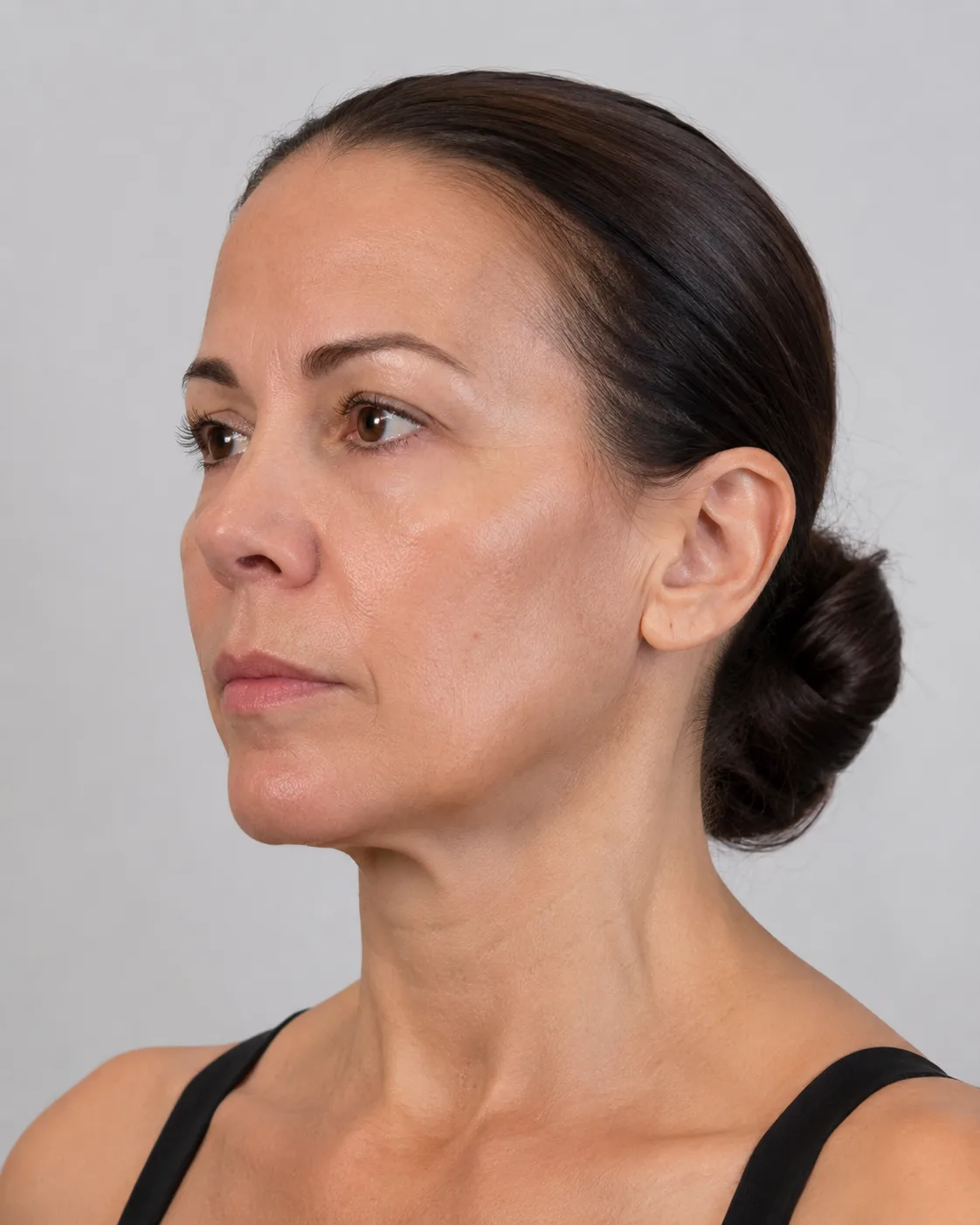
Corey compares front, angled and profile views at rest and during natural movement. He considers chin support, jaw angle, chewing muscle, skin, soft tissue, upper neck and dental or jaw context.
The current assessment is then compared with the reconstructed history, while acknowledging any information that cannot be verified.

Cheltenham Previous Care Questions
What are the four stages of previous care reconstruction?
They are the original concern, what care occurred and when, how the area changed while settling and the exact question you have today. Together they provide a clearer history than a single memory of the result.
What if I do not know the product or amount?
Do not guess. Bring the clinic name, approximate date, area and any available records. Corey can label confirmed details and uncertainties separately and incorporate that distinction into assessment and timing.
How should I describe the settling course?
Describe what changed first, what evolved gradually and what remains noticeable. Include review dates, advice and relevant swelling, tenderness, firmness, altered sensation, asymmetry or function change.
Do I need before photographs?
No. Ordinary earlier photographs can help establish the starting point when their angle, lighting and expression are understood, but they are not essential and do not set an individual result target.
What if my current question differs from the original concern?
That is important to record. The current question may involve another part of the border, side difference, width, skin, chin relationship or review timing. Corey assesses today’s concern rather than assuming it is unchanged.
Does previous care change risk discussion?
It can change anatomy, interpretation, uncertainty, timing and relevant risks. Corey explains what is known, what remains unclear and how that affects realistic limits before any suitable option is considered.
Is Core Aesthetics located in Cheltenham?
No. Core Aesthetics is in Oakleigh. Check the journey from your actual starting point and whether returning for planned review is practical. This page does not imply the clinic operates in Cheltenham.
Which Guide Fits The Current Question?
Read the Melbourne jawline guide for the broad service question, the jawline consultation guide for process, the Cheltenham jaw muscle guide when function or width is central, and the jawline aftercare guide for general review information.
This page provides general education and does not diagnose a lower face concern, confirm suitability or replace personal medical advice. These cosmetic procedure guidelines inform the consultation process. See the Ahpra guidelines for registered health practitioners who perform non-surgical cosmetic procedures and the TGA guidance for advertising health services involving therapeutic goods.
Is this for you?
Consider booking a consultation if
- Adults who want jawline, chin, jowl, jaw muscle and lower face context assessed before treatment discussion
- Patients comparing local access with practitioner verification and review planning
- Patients with previous treatment who may need records review, waiting or original clinic review
- People open to exploring jawline, chin support, skin quality and lower-face balance, suitable options, timing and review needs
This may not be for you if
- People asking for a predetermined plan without assessment, consent or risk discussion
- People seeking a promised sharper jawline before consultation
- People wanting public prescription product advice or product led recommendations
- People with urgent medical, dental, infection, pain or jaw symptoms who need appropriate medical or dental care
Suitability is confirmed at consultation. This list is general guidance, not a substitute for clinical assessment.