For a jawline consultation near Dingley Village, check whether the concern remains consistent across four factors: viewpoint, lighting, natural movement and time. A border that changes with camera angle or head turn may involve perspective; a feature that appears only in side light may be shadow led; movement can shift the lower cheek and neck relationship; and time distinguishes a familiar feature from a recent change. Corey Anderson RN combines this pattern with direct structural assessment, health, medicines, dental and jaw context, previous care, risks and preservation priorities. Suitable care can be planned when individual assessment and informed consent support it.
Why Audit Consistency?
A jawline can appear definite in one mirror and less distinct in another. Comparing the conditions reveals which part of the concern is stable and which part changes with observation.
Variability does not make a concern unreal. It improves the question brought to assessment.
What Are The Four Consistency Factors?
| Factor | Keep consistent | Observe |
|---|---|---|
| Viewpoint | Camera distance and head height | Which border feature persists? |
| Lighting | Direction and intensity | Which part is shadow dependent? |
| Movement | Natural speech, smile and turn | How does the line shift? |
| Time | Comparable ordinary records | Is it familiar, gradual or recent? |
How Does Viewpoint Change The Border?
Camera distance, lens, head height and rotation alter apparent width and definition. A close low camera can enlarge the lower face, while a turn brings one jaw angle closer than the other.
Corey compares front, angled and profile views without treating any one photograph as definitive.
What Does Lighting Change?
Front light can flatten small surface transitions, while side or overhead light creates stronger shadows beneath the jaw and beside the chin. The anatomy has not necessarily changed when the shadow changes.
Neutral clinical lighting provides a useful reference, not a beauty standard.
How Does Natural Movement Affect The Line?
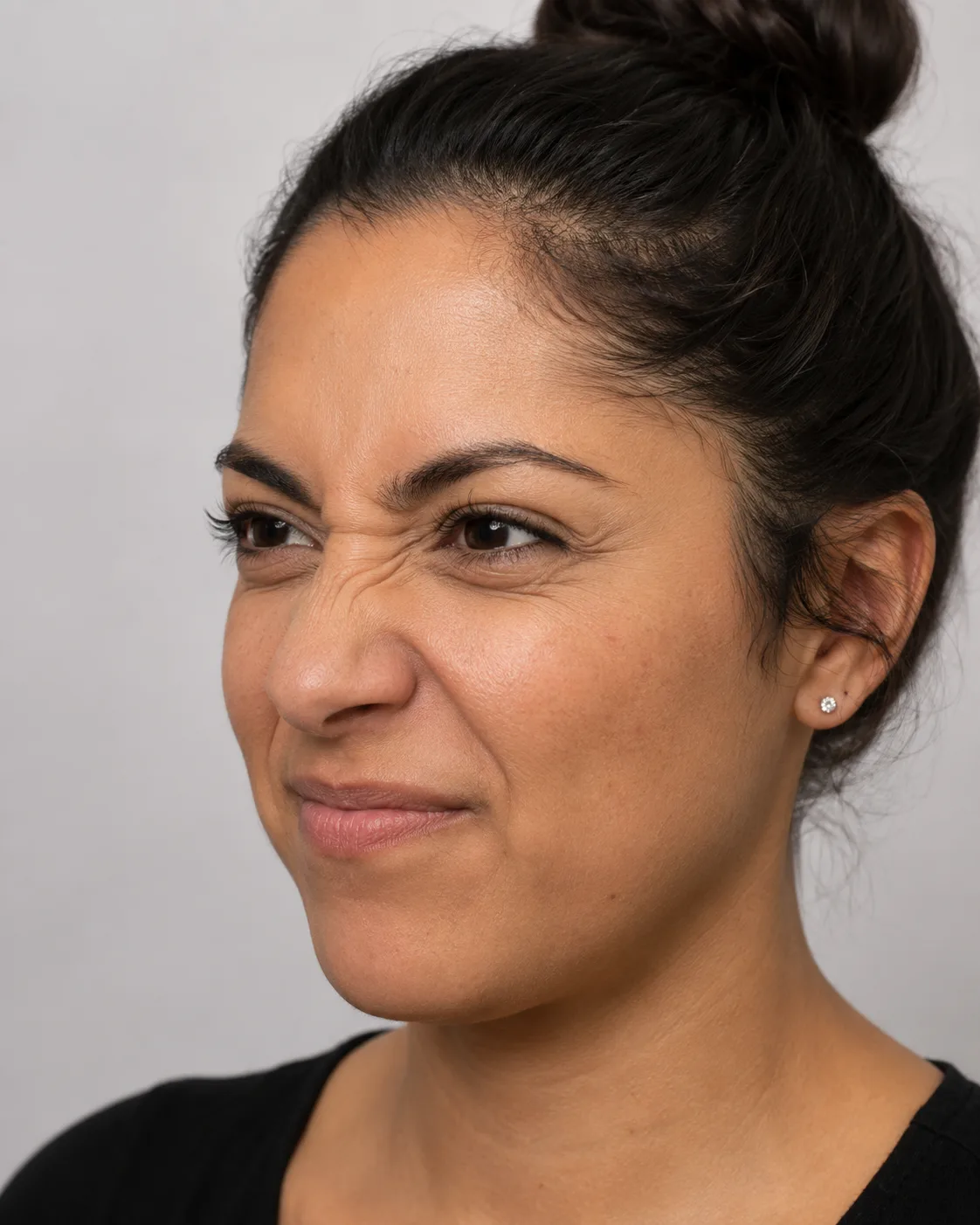
Speech and smile move tissue beside the mouth and chin. A head turn changes perspective, and swallowing briefly changes the jaw to neck surface.
Corey observes comfortable ordinary movement rather than asking for repeated or extreme performance.
What Does Time Add?
A long standing border, a gradual change and a recent unfamiliar difference carry different histories. Approximate timing is useful even when an exact date is not available.
New pain, swelling, bite change or altered sensation should be stated clearly so appropriate clinical context can be incorporated.
How Do You Record The Pattern Without Overchecking?
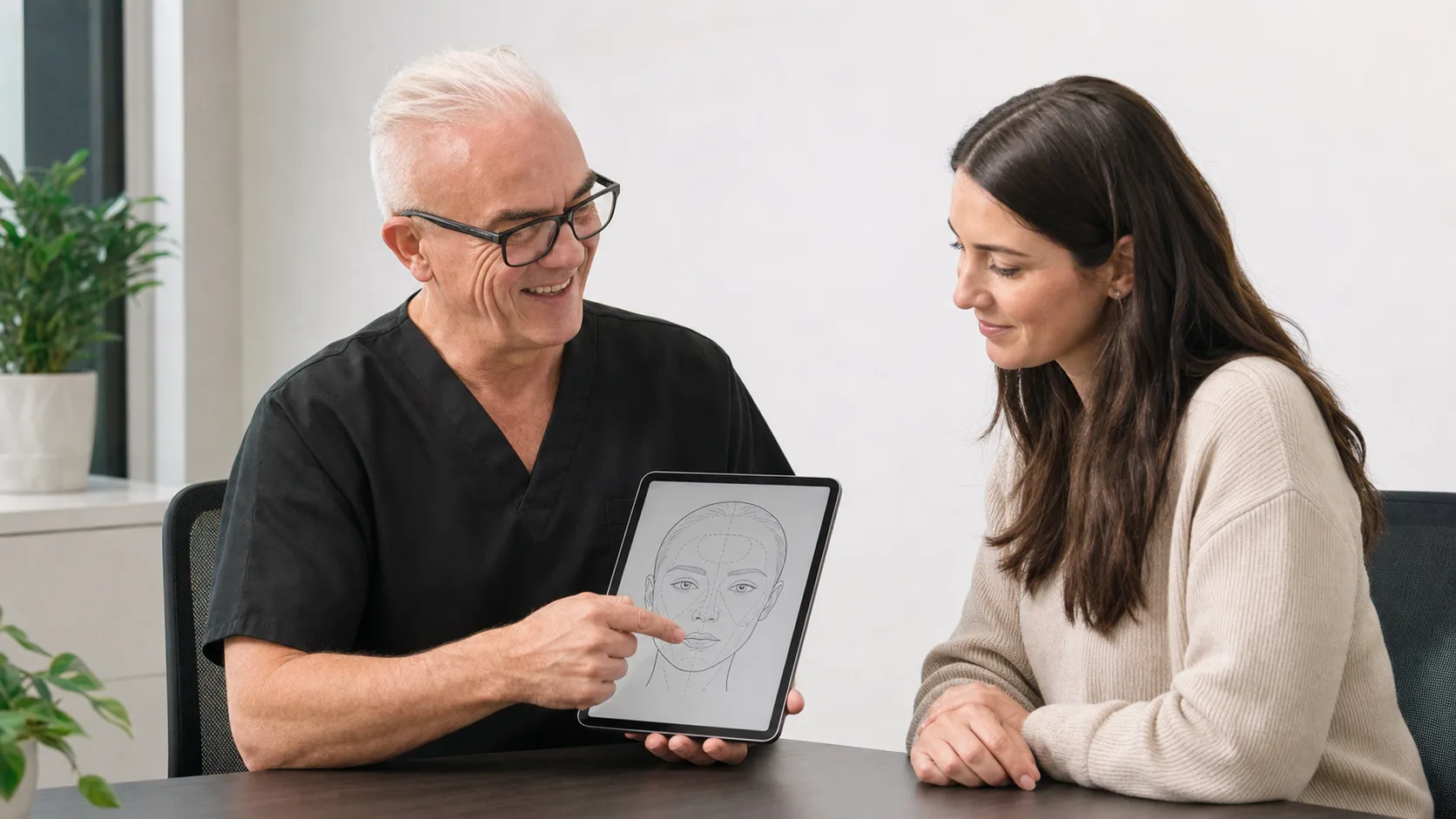
One ordinary example for each factor is enough. Note where the concern appears and whether it remains similar; there is no need to repeatedly pose, clench or search for the least flattering light.
The audit is preparation for assessment, not a home diagnostic test.
Which History Sits Beside Consistency?
Bring current medicines and supplements, allergies, relevant health, skin, dental and jaw history and previous facial care with approximate dates. Include ordinary older photos or records if they help describe change.
Corey considers chin support, jaw angle, chewing muscle, skin, soft tissue, jowl transition and upper neck alongside the pattern.

Dingley Village Jawline Consistency Questions
What are the four factors in the jawline consistency audit?
They are viewpoint, lighting, natural movement and time. Comparing all four shows which part of the concern remains stable and which part changes with observation or everyday facial activity.
How can camera viewpoint affect the jawline?
Lens distance, head height and rotation alter apparent width and definition. A close low camera can enlarge the lower face, while a turn brings one jaw angle closer than the other.
Why does lighting change the border?
Front light can flatten transitions, while side or overhead light creates stronger shadows beneath the jaw and beside the chin. A changing shadow does not necessarily mean the anatomy changed.
Which movements are observed?
Corey may observe ordinary speech, a natural smile, comfortable head turn and swallowing. These actions move different lower face and upper neck relationships without requiring extreme or repeated performance.
Why does timing matter?
A familiar long standing border, a gradual change and a recent unfamiliar difference have different histories. Approximate timing helps even when an exact date is unavailable.
Do I need many photos for the audit?
No. One ordinary example for each factor is enough. Repeated posing, clenching or searching for unflattering light can distort the question and is not needed for direct assessment.
Is Core Aesthetics located in Dingley Village?
No. Core Aesthetics is in Oakleigh. Check the journey from your actual starting point and whether returning for planned review is practical. This page does not imply the clinic operates in Dingley Village.
Which Guide Matches The Consistent Feature?
Read the Melbourne jawline guide for the broad service question, the jawline consultation guide for process, the Dingley Village jaw muscle guide when clenching or width is central, and the jowl guide for a border interruption beside the chin.
This page provides general education and does not diagnose a lower face concern, confirm suitability or replace personal medical advice. These cosmetic procedure guidelines inform the consultation process. See the Ahpra guidelines for registered health practitioners who perform non-surgical cosmetic procedures and the TGA guidance for advertising health services involving therapeutic goods.
Is this for you?
Consider booking a consultation if
- Adults who want jawline, chin, jowl, jaw muscle and lower face context assessed before treatment discussion
- Patients comparing local access with practitioner verification and review planning
- Patients with previous treatment who may need records review, waiting or original clinic review
- People who want jawline, chin support, skin quality and lower-face balance assessed before choosing the next step
This may not be for you if
- People asking for a predetermined plan without assessment, consent or risk discussion
- People seeking a promised sharper jawline before consultation
- People wanting public prescription product advice or product led recommendations
- People with urgent medical, dental, infection, pain or jaw symptoms who need appropriate medical or dental care
Suitability is confirmed at consultation. This list is general guidance, not a substitute for clinical assessment.