For a jawline consultation near Mount Waverley, compare the relaxed lower face with four ordinary motions: speech, a natural smile, swallowing and comfortable head turn. Speech and smile move tissue above the border, swallowing briefly changes the upper neck, and head turn alters how angle, chin and side difference are seen. These changes are normal observations, not diagnoses. Corey Anderson RN combines them with assessment of jaw and chin structure, chewing muscle, skin, health, medicines, dental and jaw history, previous care, risks and the features you want to preserve. Suitable care can be planned when individual assessment and informed consent support it.
Why Assess A Jawline In Motion?
The jawline belongs to a face that speaks, smiles, swallows and turns. A still profile can locate a concern but cannot show how the border behaves during ordinary life.
Movement adds functional and social context without asking you to perform exaggerated expressions.
What Does Each Motion Reveal?
| Motion | Visible change | Assessment question |
|---|---|---|
| Speech | Lower cheek and chin tissues move repeatedly | Where does the border soften or remain stable? |
| Natural smile | Cheek and mouth area lift | Does the jowl or chin transition change? |
| Swallow | Upper neck moves briefly | How does the jaw to neck junction behave? |
| Head turn | Near and far sides change perspective | Which side difference remains meaningful? |
What Does Speech Show?
Speaking moves the chin, lower lip and tissue beside the mouth in small repeated patterns. The internal jaw border may soften or shift while the outside silhouette remains familiar.
Corey observes normal conversation rather than asking for a rehearsed facial pose.
How Does A Natural Smile Affect The Border?
A smile lifts the cheek and changes the lower cheek to jawline transition. It can deepen or soften the area beside the mouth and alter natural side differences.
The aim is to preserve recognisable expression while understanding the concern.
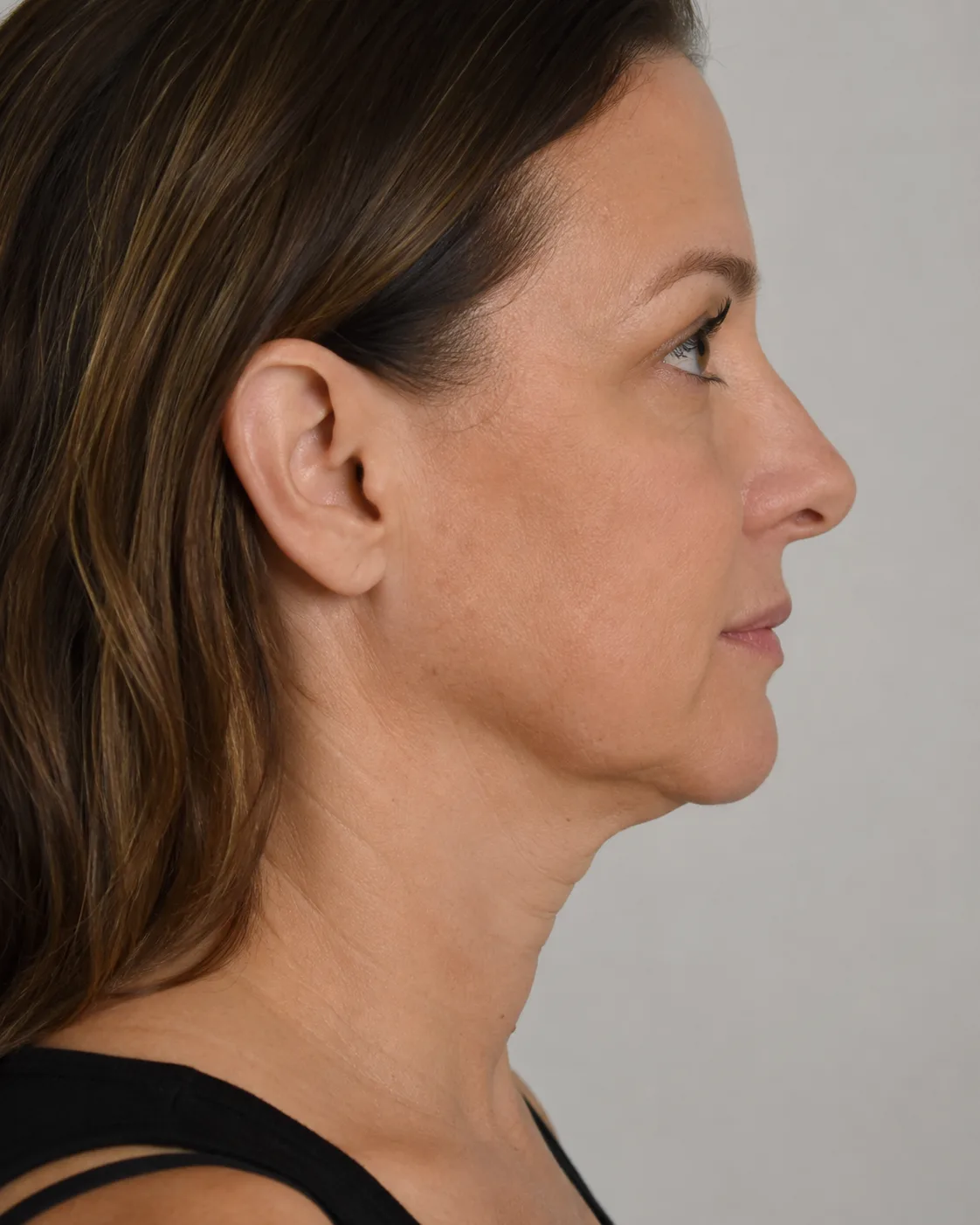
Why Include Swallowing?
Swallowing briefly moves the structures below the jaw and changes the upper neck surface. This normal action can show why a single frozen frame does not represent the area continuously.
Corey observes comfortable natural movement and does not use swallowing as a self test or diagnosis.
What Changes During A Head Turn?
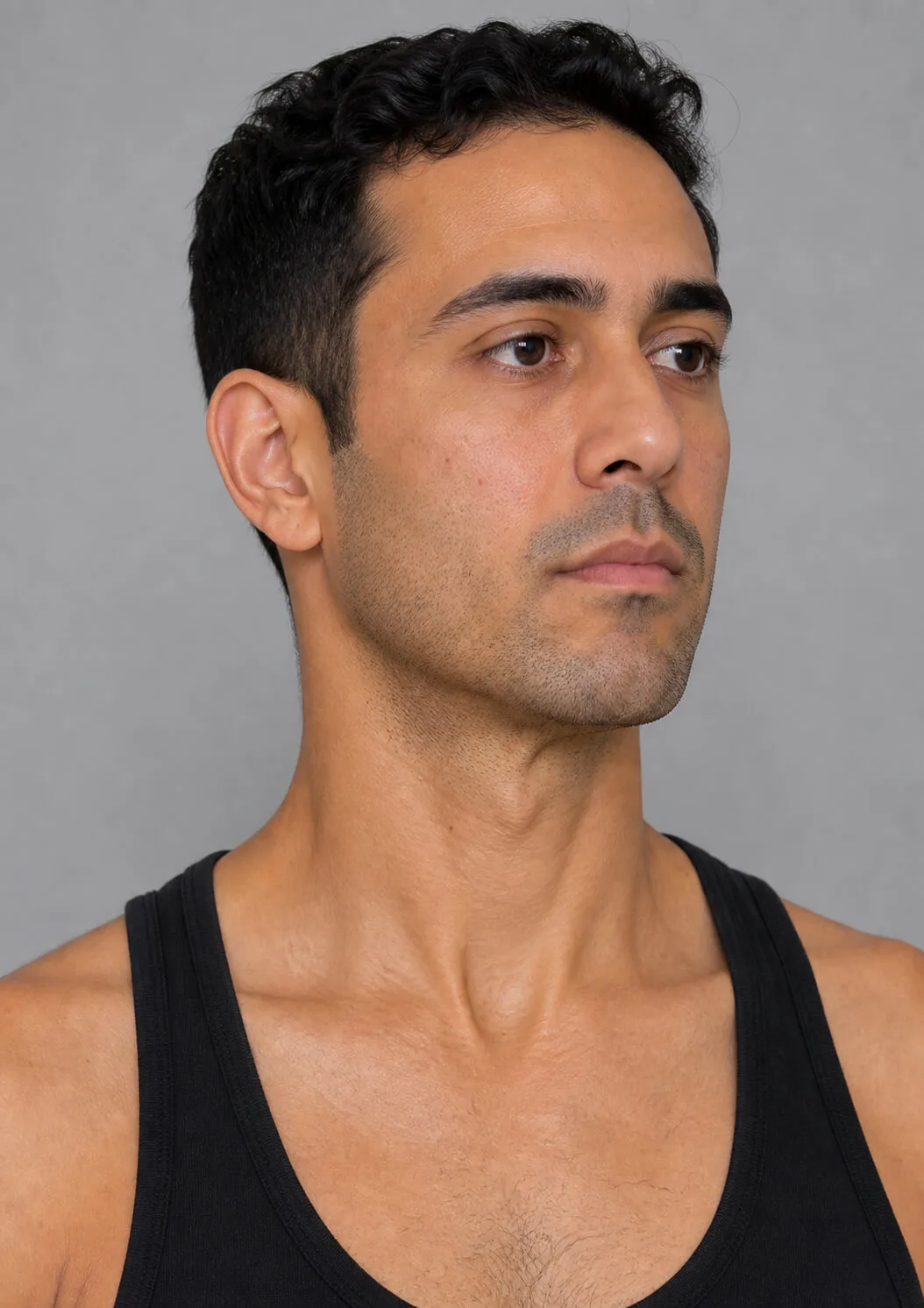
Turning brings one jaw angle closer and sends the other farther from view. Perspective, light and neck rotation can change apparent width and border sharpness.
Compare comfortable turns rather than forcing the chin or neck into an extreme position.
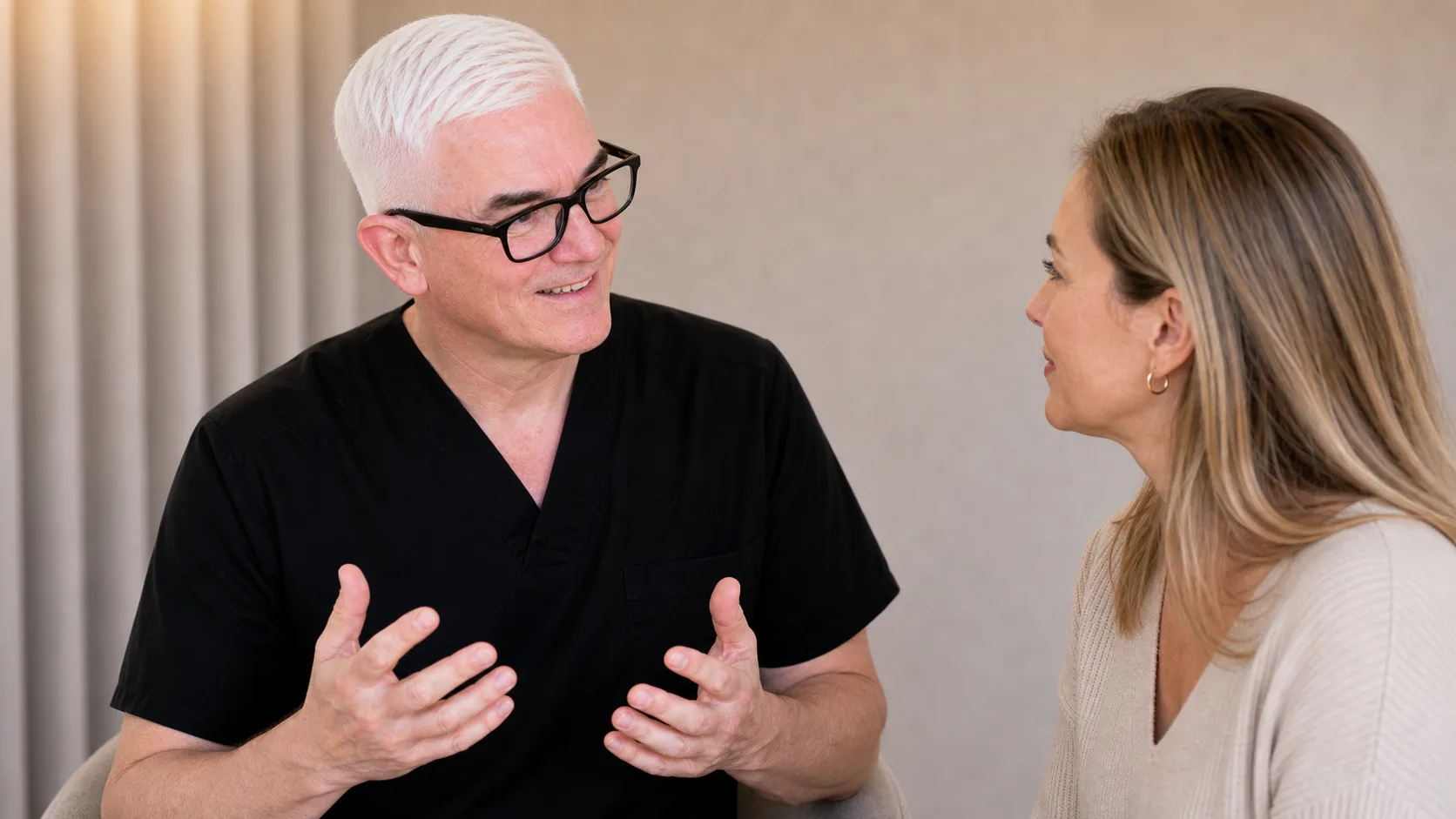
What If The Concern Appears Only In Motion?
A feature that appears during speech, smile, swallow or turn can still be assessed. It may identify mobile tissue, posture, perspective or a particular junction rather than a constant border concern.
Movement-specific does not mean imaginary, and it does not automatically identify a suitable pathway.
Which History Sits Beside Movement?
Bring current medicines and supplements, allergies, relevant health, skin, dental and jaw history and previous cosmetic care with approximate dates. Mention pain, swelling, bite change, altered sensation or a recent unfamiliar movement.
Available records and ordinary videos may provide context, but direct assessment remains essential.
Mount Waverley Dynamic Jawline Questions
Which four movements are used in dynamic jawline assessment?
They are ordinary speech, a natural smile, swallowing and comfortable head turn. Each changes a different part of the lower face border or upper neck relationship while rest provides a baseline.
Why does speech affect the jawline?
Speech repeatedly moves the chin, lower lip and tissue beside the mouth. The internal border may soften or shift even when the outside silhouette remains familiar, which adds useful movement context.
How can smiling change the lower face border?
A natural smile lifts the cheek and changes the area beside the mouth and chin. Corey observes whether the border, jowl transition or side difference changes while preserving recognisable expression.
Why is swallowing observed?
Swallowing briefly moves structures below the jaw and changes the upper neck surface. It demonstrates normal dynamic anatomy but is not used as a self test, diagnosis or treatment target.
What does a head turn change?
A head turn brings one jaw angle closer and moves the other farther away. Perspective, light and neck rotation alter apparent width and sharpness, so comfortable turns are compared rather than extreme poses.
Can a concern that appears only in motion be assessed?
Yes. A movement-specific feature can identify mobile tissue, posture, perspective or a particular junction. It remains a valid concern but does not automatically reveal the cause or suitable pathway.
Is Core Aesthetics located in Mount Waverley?
No. Core Aesthetics is in Oakleigh. Check the journey from your actual starting point and whether returning for planned review is practical. This page does not imply the clinic operates in Mount Waverley.
Which Guide Matches The Moving Concern?
Read the Melbourne jawline guide for the broad question, the consultation guide for process, the Mount Waverley jaw muscle guide for clenching or width, and the jowl guide for the transition beside the chin.
This page provides general education and does not diagnose a lower face concern, confirm suitability or replace personal medical advice. These cosmetic procedure guidelines inform the consultation process. See the Ahpra guidelines for registered health practitioners who perform non-surgical cosmetic procedures and the TGA guidance for advertising health services involving therapeutic goods.
Is this for you?
Consider booking a consultation if
- Adults who want jawline, chin, jowl, jaw muscle and lower face context assessed before treatment discussion
- Patients comparing local access with practitioner verification and review planning
- Patients with previous treatment who may need records review, waiting or original clinic review
- People willing to consider how assessment, timing, follow-up and other clinical input shape the plan
This may not be for you if
- People asking for a predetermined plan without assessment, consent or risk discussion
- People seeking a promised sharper jawline before consultation
- People wanting public prescription product advice or product led recommendations
- People with urgent medical, dental, infection, pain or jaw symptoms who need appropriate medical or dental care
Suitability is confirmed at consultation. This list is general guidance, not a substitute for clinical assessment.