Mens Health Week 2026

Men Want Subtle Aesthetics: The Quiet Male Glow-Up in Australia

Cosmetologist in gloves applies makeup to a young man, with a woman observing in the background.

The image of the stoic, sun-weathered Aussie bloke who wouldn't be caught dead in a skincare aisle is fading faster than a cheap tattoo. Across the country, in clinics from Bondi to Broome, a quiet revolution is underway. Men are walking through the doors of aesthetic practices in numbers the industry has never seen before, and they are not looking for dramatic transformations or the frozen, overfilled look that dominated tabloid headlines a decade ago. The driving force behind this surge is simple: men want subtle aesthetics. They want to look like themselves, only better, as if they have just returned from a long holiday, started sleeping properly, or finally kicked a stressful habit. This is the secret male glow-up, and it is reshaping what self-care means for the modern Australian man.

Table of Contents

The Quiet Rise of the Male Aesthetic Patient in Australia

The numbers tell a compelling story, even if the men themselves rarely do. Male aesthetics is one of the fastest-growing sectors in cosmetic medicine globally, and Australian clinics are reporting a steady month-on-month increase in male clientele. While surgical data from overseas, such as the BAAPS 2025 statistics showing men accounted for 6.1 percent of all cosmetic procedures in the UK, provides a useful benchmark, the real volume in Australia is being driven by non-surgical treatments. Anti-wrinkle injections, dermal fillers, skin rejuvenation, and hair restoration are the workhorses of this quiet boom.

Man following a personal grooming routine in a bathroom setting.

The outdated "Brotox" stereotype, which once conjured images of reality TV contestants with immovable foreheads, no longer reflects reality. Today's male patient is far more sophisticated. He is researching skin quality, asking about collagen stimulation, and booking combination treatments that address multiple concerns in a single session. The post-2020 "Zoom boom" was a genuine catalyst. For the first time, men were confronted with their own reflection for hours each day during video calls, noticing asymmetries, tired eyes, and sun damage that a bathroom mirror never revealed. That digital reckoning triggered a desire for subtle improvement, a refresh rather than a rebuild, and the trend has only accelerated into 2026.

Why Men Want Subtle Aesthetics: The Psychology Behind the Glow-Up

If you ask a male patient what he wants from an aesthetic treatment, the answer is rarely about turning back the clock in a literal sense. The number one goal, repeated in consultation rooms across the country, is to look less tired. Men want to shed the exhausted, stressed expression that has settled into their features over years of long work hours, early mornings with young children, or simply the accumulated weight of a busy life. The ideal compliment is not "You look different" or, worse, "What have you had done?" It is "Have you lost weight?" or "You look well-rested." Those phrases signal success because they imply natural health, not cosmetic intervention.

Modern barbershop or grooming space illustrating the broader male beauty industry.

Improving self-confidence is the primary motivator, a finding supported by Rare Consulting data that places it ahead of counteracting ageing, which sits at 35 percent, and looking good for special occasions at 31 percent. Stigma is fading, but it has not disappeared entirely. Many men still book consultations discreetly, sometimes without telling their partners or friends, fearing judgment in environments where male vanity is still coded as weakness. This is why clinics that offer after-hours appointments, private entrances, and a low-key, professional atmosphere hold such strong appeal. A younger cohort of men under 35 is also driving a "prejuvenation" mindset, seeking preventative treatments that slow the ageing process before it becomes obvious. This shift from reactive correction to proactive maintenance represents a fundamental change in how men view their faces and their futures.

The Top Treatments Australian Men Are Booking (And Why)

The menu of treatments that appeal to men is shaped by a clear set of priorities: minimal downtime, natural-looking results, and outcomes that enhance masculine features rather than softening them. The most popular procedures reflect these demands with remarkable consistency.

Anti-Wrinkle Injections (The New "Brotox")

Anti-wrinkle injections remain the gateway treatment for most male patients, and for good reason. The target areas are predictable: horizontal forehead lines, the vertical frown lines between the brows known as the glabella, and the crow's feet that fan out from the eyes. What sets male treatment apart is the anatomy. Men have stronger, thicker facial muscles that require higher doses and a different injection pattern to achieve a result that looks effortless rather than erased. The subtlety rule is non-negotiable. The goal is softening, not freezing. Men fear looking expressionless or, in a word that comes up frequently in consultations, "feminised." A skilled practitioner preserves enough movement to allow natural frowning, brow-raising, and the micro-expressions that make a face look alive. The appeal is practical: the procedure takes minutes, requires no downtime, and delivers exactly the "look less tired" outcome that men are chasing.

Dermal Fillers for Jawline and Chin Definition

Where women often seek fillers to restore volume to the cheeks and lips, men have a different anatomical priority. The male face is characterised by a wider lower third, a stronger jawline, and a more prominent chin. Ageing and weight fluctuation can soften these defining features, blurring the boundary between the jaw and the neck or weakening the chin's projection. Dermal fillers placed along the jaw angle and into the chin restore that sharp, masculine silhouette without adding softness elsewhere. The result is a profile that looks like good genetics, not injectables. This is structural work, not volumetric filling, and it requires a practitioner who understands male facial architecture intimately. When done well, the patient simply looks more defined, as if he has been training harder or leaning out, which is exactly the kind of subtle change men want.

Skin Rejuvenation and Hair Restoration

Australian men carry the legacy of an outdoor lifestyle on their faces. Sun damage, enlarged pores, rough texture, and pigmentation are common concerns, particularly for those who grew up in the era before sunscreen became a daily habit. Microneedling, laser therapy, and medical-grade chemical peels address these issues by stimulating collagen production and resurfacing the skin, creating a healthier, more even complexion that reads as vitality rather than vanity. Hair restoration is another pillar of the male aesthetic market. The global hair loss treatment market is projected to reach $5.66 billion by 2032, and Australian men are a significant segment. Non-surgical options like PRP, or Platelet-Rich Plasma, and exosome therapy offer a way to slow thinning and stimulate regrowth without the downtime of a transplant. Body contouring treatments such as Emsculpt NEO and CoolSculpting are also gaining traction among men who want abdominal definition that the gym alone has not delivered.

Anatomical Differences: Why Men’s Treatments Are Not One-Size-Fits-All

Treating a male face is not simply a matter of using the same products in the same places as you would for a female patient. The anatomical differences are significant and, if ignored, can lead to results that look unnatural or incongruent. Male skin is approximately 25 percent thicker than female skin, with a denser collagen network and a richer blood supply. The underlying facial muscles are larger and more powerful, which means anti-wrinkle treatments require higher doses to achieve a comparable softening effect. The skeletal structure is different too. Men have heavier brows, more prominent brow ridges, and a wider, squarer jaw. These features are not flaws to be corrected but landmarks to be respected and, in many cases, enhanced.

Ageing patterns also diverge. Men typically experience a heavier descent of the brow, which can create a hooded, tired appearance around the eyes. Hollowing in the temples and under the eyes is common, as is volume loss in the mid-face. The risk of feminisation is real and is the primary fear that keeps men out of clinics. Over-filling the lips or cheeks can soften a face in ways that undermine its masculine character. A practitioner who understands male facial architecture will prioritise structural support and angular definition, working with the underlying bone structure rather than against it.

What Men Look for in a Clinic: The Consultation Experience

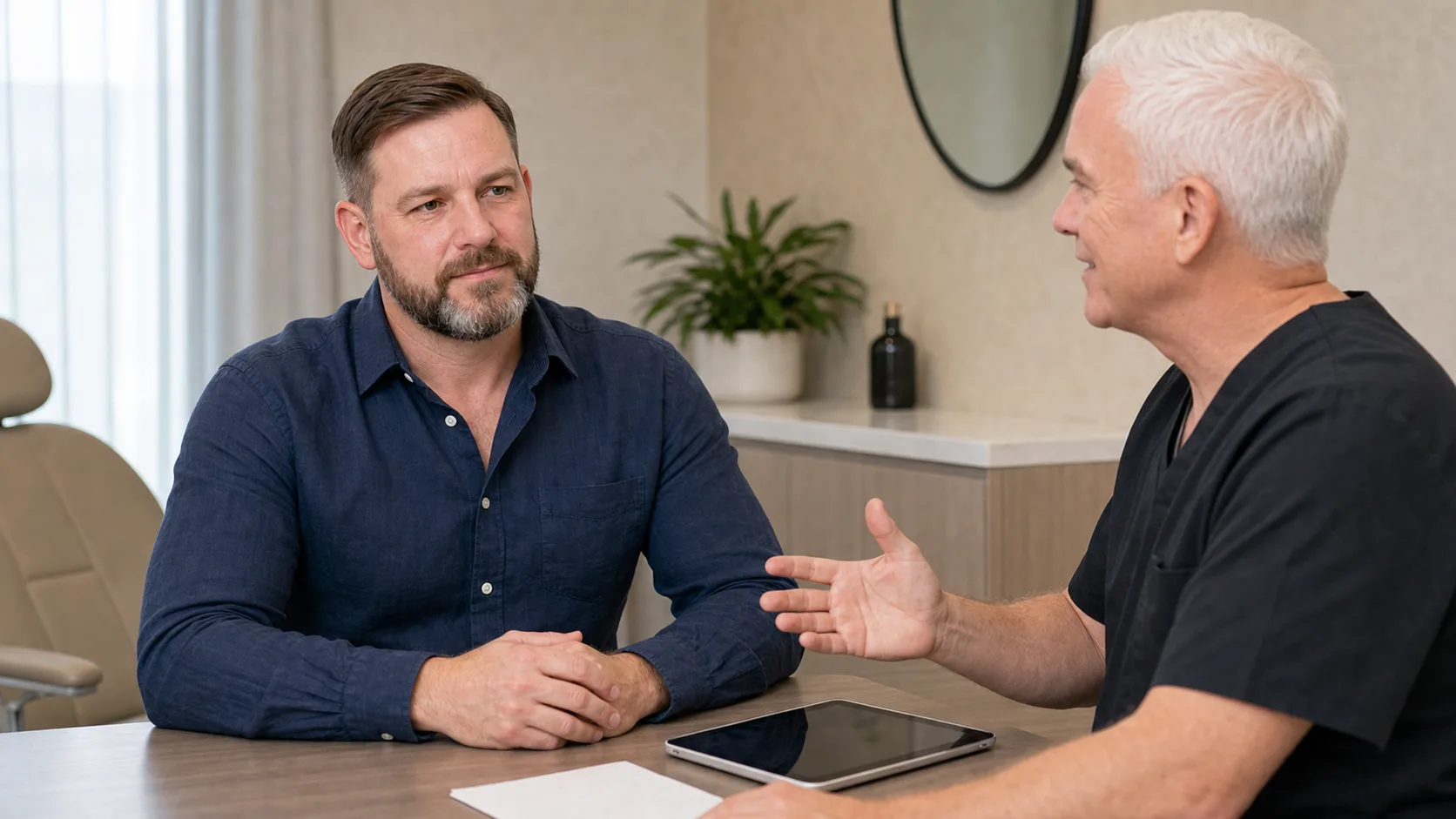
The way a clinic communicates with male patients can be the difference between a booked appointment and a lost opportunity. Men, broadly speaking, prefer a direct, factual, outcome-focused consultation. They want to understand the science behind the treatment, the expected recovery timeline, and the realistic result, delivered without hyperbole or a hard sell. Aggressive upselling is a fast track to losing trust. Men respect practitioners who are willing to say no, who explain why a particular request might be unsafe or unlikely to produce the desired outcome, and who offer honest alternatives instead.

Discretion is not a luxury; it is a requirement. Private booking systems, after-hours appointment slots, and a waiting room that does not feel like a public stage are highly valued. Many men arrive for their first consultation feeling nervous or embarrassed, unsure of the language to use or the questions to ask. A calm, judgment-free environment where the practitioner takes the time to explain exactly what will happen, what it will feel like, and what the recovery involves reduces that friction significantly. Trust is built on transparency, and a man who feels informed and respected is far more likely to become a loyal, long-term patient.

Safety, Regulation, and the Australian Context

All aesthetic treatments discussed here are medical procedures, and they must be framed as such. Anti-wrinkle injections are prescription medicines that provide the temporary reduction of moderate to severe glabellar lines, forehead lines, and crow's feet. Dermal fillers are implantable medical devices designed to restore facial volume and enhance facial structure. These are not cosmetic quick fixes, and the language used to describe them should reflect their serious nature.

The Australian context is, in many ways, an advantage. The Therapeutic Goods Administration imposes strict regulations on injectable products, meaning that patients in this country have access to some of the safest, most rigorously tested treatments in the world. The risk comes from unregulated providers operating outside the medical framework, using counterfeit or unapproved products. Australian men considering treatment must be educated on the importance of choosing a registered medical practitioner, whether a doctor, nurse, or dentist with appropriate endorsements, who operates from a licensed clinic. Post-treatment care also matters. Subtle results require proper aftercare, which typically means avoiding heavy exercise, alcohol, and direct sun exposure for 24 to 48 hours following treatment.

The Future of Male Aesthetics in Australia

What is happening in clinics across Australia is not a passing trend. It is a structural shift in how men approach ageing, appearance, and self-care, and it shows no signs of slowing. Clinics that adapt to this demographic, with tailored treatment plans, male-focused communication, and an environment that respects discretion, will hold a clear competitive advantage in the years ahead.

The next frontier is already taking shape. Regenerative aesthetics, including PRP, polynucleotides, and exosome therapy, promise to stimulate the body's own repair mechanisms for results that look and feel entirely natural. Genetic testing for personalised hair restoration, such as the TrichoTest, offers a data-driven approach to a problem that has long been treated with guesswork. As more men speak openly about their experiences, the stigma will continue to erode. The secret glow-up will simply become the standard glow-up, a routine part of what it means to take care of oneself in 2026 and beyond. For those ready to explore what subtle, natural-looking aesthetic treatments can achieve, a confidential consultation is the first step toward looking as rested, healthy, and confident as you deserve to feel.

Frequently Asked Questions About Male Aesthetic Treatments

Do men get fillers? Yes, but the application is different from what you might expect. Men typically seek fillers for structural enhancement of the jawline and chin, not for lip volume or cheek fullness. The goal is definition and angularity, not softness.

How much do treatments cost? Pricing varies depending on the clinic, the practitioner, and the treatment area. As a general guide, a single anti-wrinkle treatment session for the forehead and frown lines typically ranges from $300 to $600 AUD. A comprehensive consultation will provide a tailored quote.

Will I look frozen? Not with a skilled practitioner who understands male facial anatomy. The objective is softening, not immobilisation. You will retain the ability to frown, raise your eyebrows, and express yourself naturally.

Is there downtime? Downtime is minimal for most non-surgical treatments. Men typically return to work immediately after anti-wrinkle injections. Dermal fillers may involve mild swelling or bruising that resolves within one to three days.

How do I know if a clinic is reputable? Look for a registered medical practitioner with specific experience in treating male patients. Verify that the clinic uses TGA-approved products and take the time to read reviews from other male patients. A reputable clinic will always prioritise a thorough consultation before any treatment begins.

Written and reviewed by Corey Anderson RN, AHPRA NMW0001047575 · Reviewed June 2026 · TGA and AHPRA guidance is regularly reviewed in preparing this website.

Begin With A Conversation

Book your consultation.

No commitment, no pressure. A considered first step toward understanding what is and isn’t right for you.

Book Consultation

Elegance, Perfected.