Mens Health Week 2026

Sculpted Male Face: Australia’s Guide to Jawline & Chin

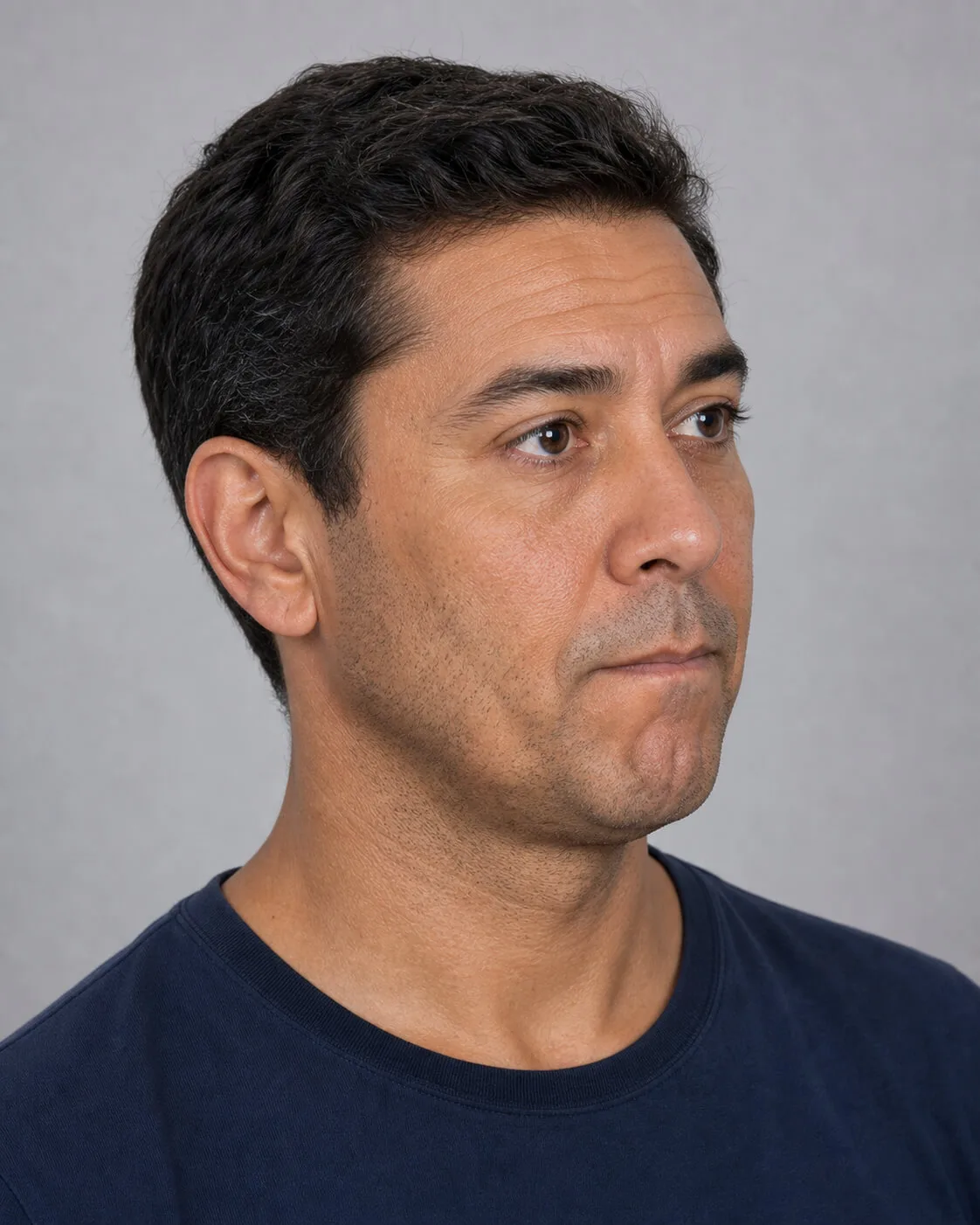
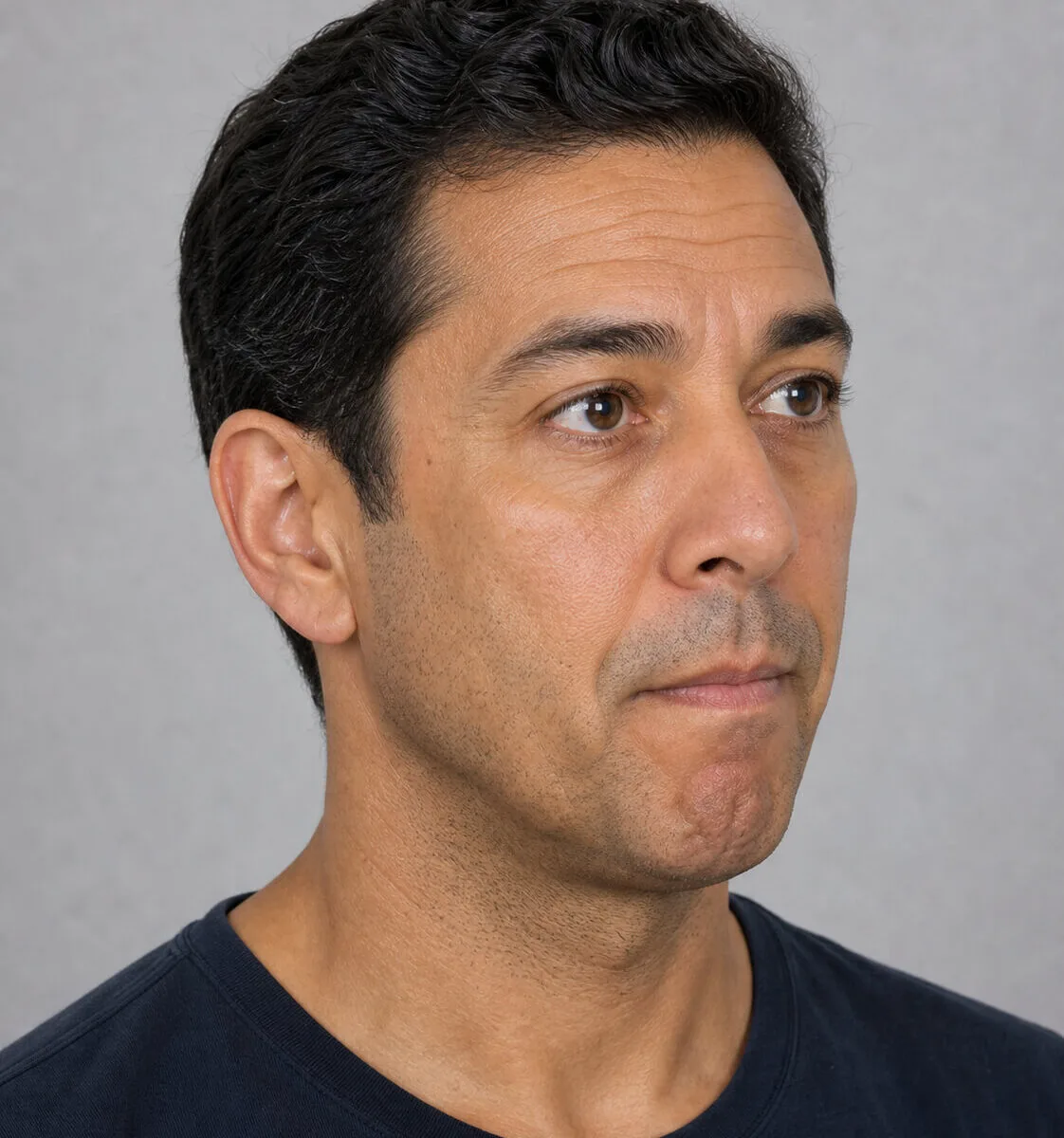
Close-up profile of a man with short facial hair looking downward on a sunny beach background.

More Australian men than ever are asking about the sculpted male face, and it is not about looking like a social media filter. It is about restoring balance to the jawline and chin in a way that looks strong, natural, and unmistakably masculine. If you have caught yourself angling your phone higher in every selfie or growing a beard to fake a sharper jaw, you are not alone. Blokes from Sydney to Perth are quietly walking into clinics, not for vanity, but because they want their face to reflect the confidence they already feel. This article maps out exactly how non-surgical treatments are reshaping the male face in Australia, what defines a masculine profile, how to avoid the overdone look, and what you should expect to pay for quality work.

Table of Contents

Why the Sculpted Male Face Is Dominating 2026

The cultural pendulum has swung. A decade ago, the ultimate male status symbol was a bulky chest and arms that strained shirt sleeves. In 2026, the focus has shifted upward. A defined, structured jawline now signals discipline, health, and genetic fitness in a way that a bench press personal best never quite captured. High-definition cameras, video calls, and the relentless scroll of social media have trained our eyes to notice facial architecture first.

Man following a personal grooming routine in a bathroom setting.

Younger Australian men, particularly those in their mid-20s to early 30s, are driving this trend not as a corrective measure but as a preventative one. They have watched older mates lose jawline definition to early jowling and soft tissue descent, and they are opting to reinforce their natural structure before it fades. The "modelesque" 90-degree jawline, once the exclusive domain of genetic lottery winners, is now achievable through precise, conservative injectable work. Equally important is what men are leaving behind: the dangerous jaw exercisers and unregulated chewing gums that promised results but delivered only TMJ pain and dental damage. Australian men are increasingly educated, sceptical of gimmicks, and willing to invest in treatments that actually work.

What Defines a Masculine Facial Profile?

A masculine face is not simply a larger version of a feminine one. The differences are architectural. Where female aesthetics favour soft curves, smooth transitions, and gentle volume, the male ideal is angular, linear, and structurally pronounced. The key anatomical targets are the jawline angle, chin projection, and mandibular width. Together, these three elements create a lower face that reads as strong and decisive.

Chin projection is often the silent culprit in a weak profile. A chin that recedes or sits too far back relative to the lower lip disrupts the entire facial balance, making the nose appear larger and the neck less defined. Mandibular width, the horizontal spread of the jaw, gives the face its masculine squareness. When this width is lacking, the face can appear narrow, boyish, or prematurely aged.

Modern barbershop or grooming space illustrating the broader male beauty industry.

Skin laxity complicates the picture further. You can have excellent bone structure underneath, but if the skin has lost its grip due to ageing, weight loss, or sun damage, the jawline will still look soft. Australian men face a particular challenge here. Our sun-drenched lifestyle, while enviable, accelerates collagen breakdown. A bloke who has spent his weekends surfing, running, or on the worksite often presents with skin quality that lags behind his chronological age. The result is a square-to-round face shape shift, early jowling, and a jawline that blurs into the neck. A truly sculpted male face requires both structural support underneath and tight, healthy skin on top.

The "90-Degree Angle" Jawline Explained

The term "90-degree angle" gets thrown around a lot, but it is not about measuring your jaw with a set square. In practical terms, it refers to the visual angle created at the gonion, the bony corner where the horizontal jawline meets the vertical ramus ascending toward the ear. In most men, this angle is naturally softer, sloping gently rather than cutting sharply. Strategic filler placement at this corner creates the illusion of a more acute, squared-off turn. The eye reads it as strength. This look has become particularly popular with younger, athletic men who want a chiselled, defined appearance without adding bulk to the rest of the face.

Non-Surgical Treatments for a Sculpted Male Face

The modern approach to male facial sculpting is rarely a single treatment. Experienced Australian practitioners now think in layers: structural filler to build the framework, energy-based devices to tighten the overlying skin, and neuromodulators to refine shape and proportion. This combination strategy produces results that look cohesive rather than piecemeal. No surgical implants, no bone shaving, and no general anaesthetic are required. Everything discussed here is non-invasive, performed in a clinic setting, and designed around minimal interruption to your life.

Dermal Fillers for Jawline and Chin

Dermal fillers remain the cornerstone of the sculpted male face. For men, the product choice matters enormously. Lightweight fillers designed for fine lines and lips will not hold up under the structural demands of a jawline. Australian clinics typically reach for heavier, high-density products such as Juvederm Volux, Revolax Sub-Q, and calcium hydroxylapatite-based fillers like Radiesse. These products are engineered to provide lift, projection, and resistance to the constant movement of the lower face.

The injection technique is as important as the product. Practitioners use depot injections, where a larger bolus of filler is placed deep along the bone, to build projection. Micro-aliquot techniques, involving tiny amounts distributed across multiple points, refine the surface and smooth transitions. Supraperiosteal placement, depositing filler directly onto the bone, creates the most dramatic structural change with the least product migration. A jawline and chin session typically takes 10 to 20 minutes, and you can walk straight back into your day with no social downtime. Depending on the filler density and how your body metabolises it, results last between 12 and 24 months.

Skin Tightening Technologies (Ultherapy, Radiofrequency, Morpheus8)

For the bloke who has good underlying bone structure but is losing the battle with skin laxity, energy-based tightening devices are transformative. Ultherapy uses focused ultrasound to stimulate deep collagen production, while radiofrequency microneedling platforms like Morpheus8 tighten from the inside out by heating the dermis and subdermal layers. These technologies do not replace filler; they complement it. A sharp jawline built with filler will still look soft if the skin draped over it is loose. Most men need only one or two sessions per year to maintain a lifted, defined contour. The treatments are uncomfortable but tolerable, and the gradual collagen remodelling means results improve over several months rather than appearing overnight.

Masseter Botox for Facial Width Reduction

Not every man wants a broader jaw. Some have the opposite problem: a lower face that is overly square and bulky due to hypertrophied masseter muscles. These are the chewing muscles that flare out at the back of the jaw, and they can become overdeveloped from clenching, grinding, or even years of aggressive chewing. High-stress Australian professionals, tradies, and executives who grind their teeth at night are prime candidates.

Botox injected into the masseter muscle causes it to relax and gradually shrink over several weeks. The dosing range is typically 20 to 40 units per side, and the result is a slimmer, more refined lower face that still looks masculine but less blocky. An added benefit is significant relief from jaw tension, headaches, and dental damage caused by bruxism. The treatment takes minutes, and results last three to six months before maintenance is needed.

The Risks of Overdoing It – How to Keep It Natural

The line between sculpted and strange is thinner than most men realise. The biggest risk in male facial sculpting is not the products themselves but the hand that places them. Too much filler in the cheeks and mid-face creates the dreaded "pillow face," where the face looks puffy, feminised, and unnaturally smooth. In men, this is particularly jarring because it erases the angular transitions that define masculinity.

Vascular occlusion, where filler is accidentally injected into or compresses a blood vessel, is the most serious complication. It can cause skin necrosis and, in rare cases, blindness if not recognised and treated immediately. This is why an experienced injector with a deep understanding of facial anatomy is non-negotiable. In Australia, all dermal fillers are regulated by the Therapeutic Goods Administration. You should only ever receive TGA-approved products administered by a qualified medical professional. If a clinic cannot tell you exactly what product they are using and show you the packaging, walk out.

Signs you have gone too far include a loss of natural facial movement when you speak, visible lumps or ridges along the jawline, and asymmetry that worsens over time. A well-done sculpted male face should be invisible to the casual observer. Your mates should notice you look sharper, fresher, and more rested, but they should not be able to put their finger on why.

What Does a Sculpted Male Face Cost in Australia?

Quality work costs money, and in the Australian market, you should expect to pay accordingly. Jawline and chin filler sessions typically range from $800 to $1,500, depending on the volume of product required and the complexity of the correction. Skin tightening add-ons with radiofrequency or ultrasound devices add another $500 to $1,200 per session. Masseter Botox sits between $300 and $600 per treatment, depending on the dose.

These figures reflect the reality of TGA-regulated products, skilled injectors who charge for their expertise rather than just their time, and clinics that carry proper insurance and emergency protocols. Cheaper treatments exist, often advertised on social media with suspiciously polished before-and-after photos. They frequently involve unregulated products, diluted fillers, or injectors without adequate training. The cost of correcting a botched job far exceeds the price of getting it right the first time.

Frequently Asked Questions About Male Facial Sculpting

How long does a sculpted male face last? For dermal fillers, expect 12 to 24 months depending on the product used and your individual metabolism. Heavier fillers in low-movement areas like the chin tend to last longest. Masseter Botox lasts three to six months. Skin tightening results build over several months and can last a year or more with proper maintenance.

Is it painful? Most men report minimal discomfort. Topical numbing cream is applied before filler injections, and many filler products contain lignocaine to manage pain during the procedure. The sensation is more pressure than sharp pain.

Can I go back to work the same day? Yes. Bruising and swelling are possible but usually mild. Many men schedule their appointments during a lunch break and return to the office immediately afterward.

Will I look like I have had work done? Not if the treatment is performed conservatively by an experienced injector. The goal of male facial sculpting is natural enhancement, not transformation. You should still look like yourself, just a more defined, balanced version.

What if I do not like the results? Hyaluronic acid-based fillers can be dissolved with an enzyme called hyaluronidase. This is a safety net, but it is far better to avoid needing it by starting conservatively and building gradually over multiple sessions.

The Bottom Line – Is a Sculpted Male Face Right for You?

The best candidates for male facial sculpting are men who feel their jawline or chin does not match the rest of their face. Maybe your profile has always bothered you, or perhaps you have noticed the first signs of jowling and softness creeping in. This is not about chasing someone else's face. It is about bringing your own facial structure into balance so that your jawline and chin project the strength you already carry.

The most important step is a thorough consultation with an experienced Australian practitioner who understands male facial anatomy and will tell you honestly what is achievable. Not every face needs the same approach, and some men will benefit more from skin tightening than filler, or from a subtle chin adjustment rather than a full jawline reconstruction. At Core Aesthetics, the conversation starts with your goals and builds a treatment plan around them, never the other way around. If you are ready to stop wondering and start doing, book a consultation and let us show you what is possible.

Written and reviewed by Corey Anderson RN, AHPRA NMW0001047575 · Reviewed June 2026 · TGA and AHPRA guidance is regularly reviewed in preparing this website.

Begin With A Conversation

Book your consultation.

No commitment, no pressure. A considered first step toward understanding what is and isn’t right for you.

Book Consultation

Elegance, Perfected.