Jawline sagging and jowls can appear when skin quality, soft tissue position, lower face support, chin relationship, jawline border, neck transition, weight change, ageing, medical context or previous treatment alter how the lower face sits. Corey Anderson RN assesses the pattern before discussing a suitable option, adjusted timing or another useful next step.
Jowls Are Usually A Pattern, Not One Problem
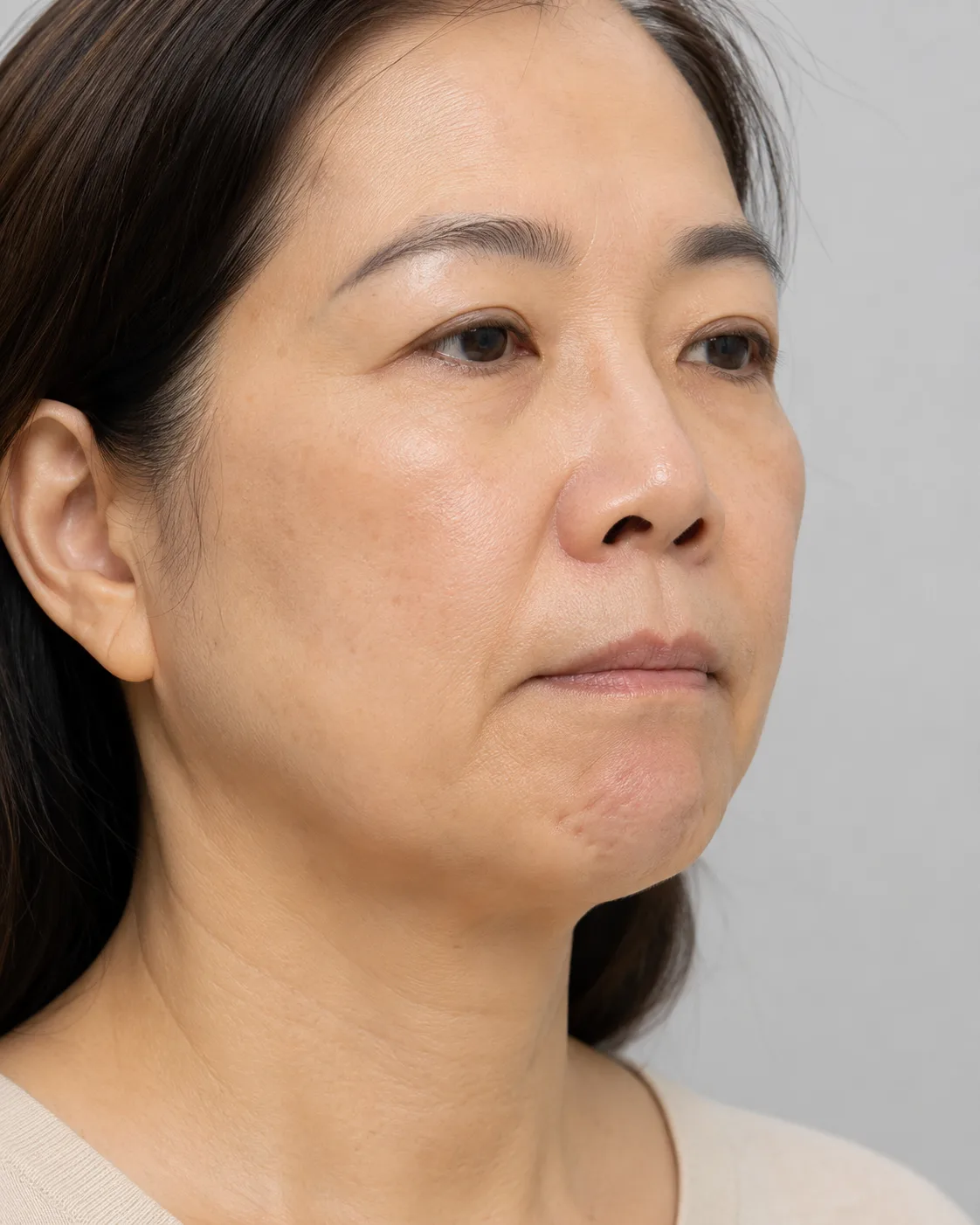
Jowls are often described as if they are a single pocket near the jawline. In reality, the visible change may involve skin quality, soft tissue support, lower cheek position, chin support, neck relationship, weight change, movement and natural anatomy.
Because several structures can contribute, Corey assesses the whole lower face before discussing whether any cosmetic pathway is appropriate. A local concern needs a contextual answer.
What Can Contribute To Jawline Softening?
This table explains why jawline sagging and jowls are assessed as a pattern rather than a single isolated problem.
| Possible contributor | What a patient may notice | What consultation needs to separate |
|---|---|---|
| Skin laxity | Looser skin, soft folding or heaviness near the jawline and neck transition. | Whether the concern sits inside realistic nonsurgical care or needs referral. |
| Soft tissue position | Fullness near the lower cheek, mouth corners or jaw border. | Whether tissue support, cheek change, jawline border or jowls are the main driver. |
| Chin and jawline support | A softer border, weaker profile or lower face that appears less supported. | Whether chin, jawline, neck transition or profile balance should lead the conversation. |
| Jaw muscle and movement | Lower face width, heaviness or change with clenching and movement. | Whether dental or jaw symptoms need another practitioner before cosmetic planning. |
| Weight, health or ageing change | Gradual change in lower face fullness, skin behaviour or facial balance. | Whether waiting, medical review or another clinically appropriate pathway is more suitable. |
| Previous treatment | Heaviness, unevenness, changed proportions or uncertainty about what has changed. | Whether records review, settling, correction advice or a different pathway is needed. |
Mild Softness And Significant Laxity Are Different
Mild lower face softness may sometimes be suitable for conservative discussion after assessment. Significant skin laxity, heavier jowling or a concern driven mainly by neck or surgical anatomy may sit outside what cosmetic treatment can reasonably address.
That distinction matters. Overstating what nonsurgical care can do creates poor expectations and poor decisions. Corey discusses limits clearly, including when referral, timing or another clinically appropriate pathway is more appropriate.
How Chin, Jawline And Neck Shape Affect Jowls
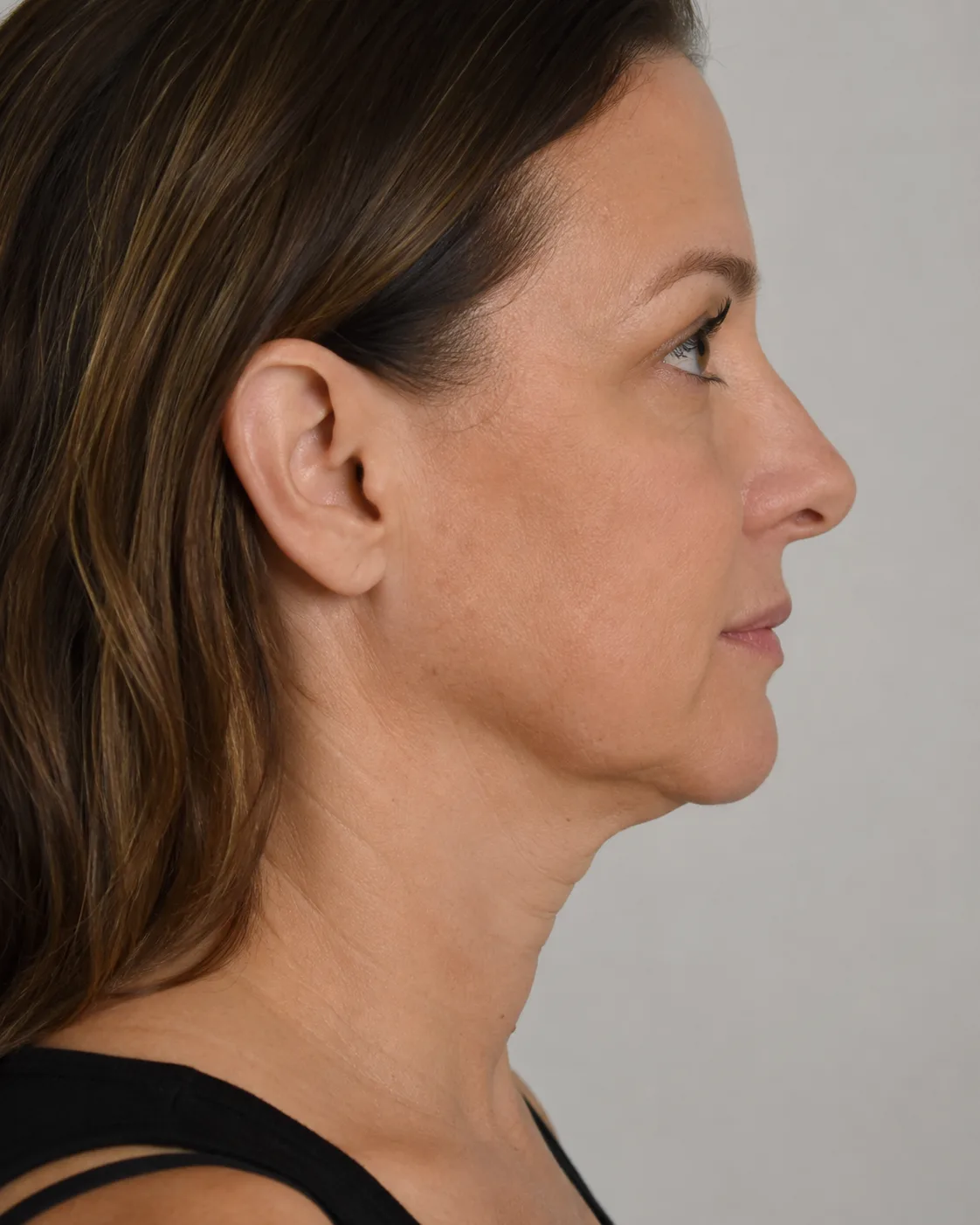
The chin and jawline influence how lower face heaviness is perceived. A smaller chin, softer jawline border or lower face proportion pattern can make mild tissue change more noticeable. The neck transition also changes how clearly the jaw border reads from the side.
The concern may be mostly skin or support related rather than chin related. It may also be a mixed pattern. Consultation sorts the main contributor before any treatment pathway is discussed.
What Corey Assesses
Assessment may include skin laxity, lower cheek support, mouth corner position, jawline border, chin support, neck transition, facial movement, weight change, previous treatment, medical history, medicines, expectations, risk factors and timing. Corey also considers whether the concern needs medical, dental or surgical review.
This is not a claim that treatment will be offered. It is the process used to decide whether treatment should be discussed at all.
How Should You Prepare For This Consultation?
Before attending, note when the jawline or jowl concern is most visible: from the front, side, during movement, in photographs, under certain lighting or after weight or health changes. Bring previous treatment dates, current medicines, allergies, relevant medical history, dental or jaw concerns and event timing.
You do not need to arrive knowing whether the concern is skin, jowls, chin, jawline or neck transition. The consultation is designed to sort those possibilities before any pathway is discussed.
When Is This Not A Routine Cosmetic Question?
Rapid swelling, infection signs, facial weakness, severe pain, dental symptoms, new lumps, sudden asymmetry, skin colour change or symptoms after recent treatment should not be treated as a routine jowl education question. Contact the clinic if it relates to recent treatment, or seek appropriate medical or dental care where symptoms suggest another issue.
A public education page cannot diagnose symptoms or replace individual aftercare instructions. The safer approach is to escalate concerning symptoms instead of waiting for a standard cosmetic consultation.
How This Page Fits With The Jowl Consultation Page
This page explains why jawline softening and jowls may appear. It is the cause and assessment guide. The jowl consultation page explains what happens if you want Corey to assess whether a nonsurgical discussion is realistic for your own lower face concern.
The jawline treatment page is broader again. It covers jaw border, chin support, jaw muscle, jowls, skin quality, timing and suitability as part of the main lower face pathway. Reading the pages in that order can help you arrive with clearer questions without trying to diagnose yourself.
Why No Single Cause Should Be Assumed
Two people can describe the same jowl concern and have different underlying patterns. One may have mostly skin laxity. Another may have chin support, cheek support, jawline structure, neck transition or previous treatment context changing the lower face. A third may have a concern that is not suitable for cosmetic planning at all.
This is why Corey does not need you to choose the cause before the appointment. The safer task is to describe what you see, when it changed and what you want to understand.
When Referral Or Waiting May Be More Appropriate
Referral may be more appropriate when skin laxity, tissue descent, neck involvement or the degree of jowling means nonsurgical planning is unlikely to address the concern responsibly. Waiting may be better when previous treatment is still settling, timing is poor or health changes need review.
a lower face assessment plan can also be the right recommendation. A consultation that says no can protect safety, proportion and expectations.
lower face assessment and the next step
Some adult patients may be suitable for treatment after individual assessment, but only where assessment, informed consent and clinical judgement support proceeding. Booking a consultation does not mean a jowl concern can or should be able to proceed immediately.
If the concern is not suitable, Corey may recommend waiting, review, referral, a different planning pathway. That answer protects both appearance and safety.
Which Jowl Or Lower Face Guide Fits This Pattern?
For the main lower face pathway, read jawline treatment Melbourne and jawline treatment consultation. For jowl specific consultation context, read jowl treatment nonsurgical Melbourne and jawline and jowl ageing.
For related decision support, read jawline versus chin treatment, jawline and chin treatment guide, how facial anatomy changes with age, treatment suitability assessment and patient safety.

Jawline Sagging And Jowls Questions
Why are jowls forming along my jawline?
Jowls can form from skin laxity, soft tissue position, lower cheek support change, facial anatomy, chin and jawline support, neck transition, weight change, ageing patterns, medical context or previous treatment. Consultation separates which factors matter.
Is jawline sagging caused by skin or structure?
It can be either or both. Skin quality, soft tissue support, lower face structure, chin position, jawline border and neck relationship can all influence the visible jawline. That is why assessment should look beyond one area.
Can nonsurgical treatment help jowls?
It may be discussed for selected mild concerns, but significant laxity, heavier tissue descent or neck involvement may sit outside realistic nonsurgical care. Corey may recommend adjusted timing, review with another health professional, surgical opinion, review first or a lower face assessment plan.
Can chin support affect jowls?
Yes. Chin support can change how the lower face and jawline are perceived, but it is only one part of assessment. Corey reviews jawline, chin, skin quality, neck transition, movement and medical context together.
Are jowls only a jawline problem?
No. Jowls can involve skin, tissue position, cheek support, mouth corners, chin relationship, neck transition and natural anatomy. Treating the jaw border alone may miss the main contributor.
When might treatment not be suitable?
Treatment may not be suitable if the concern is mainly significant skin laxity, surgical anatomy, medical or dental context, unrealistic expectations, poor timing or previous treatment that needs review. Another clinically appropriate pathway may be safer.
Can treatment happen at the first consultation?
Some adult patients may be suitable for discussion of suitable options, but only after assessment, informed consent and clinical judgement support proceeding. The next step is agreed after assessment and may not be appropriate.
Can weight change affect jowls?
Weight change can influence lower face fullness and skin behaviour, but it is not the only factor. Ageing, anatomy, skin quality, tissue position, chin support and neck transition can all change the appearance of jowls.
Should I book jawline or jowl consultation?
If you are unsure, book for lower face assessment rather than choosing the area first. Corey can help separate jawline border, jowls, chin support, skin quality, jaw muscle and neck transition before discussing next steps.
Can photos show what is causing my jowls?
Photos can help explain what you notice, but they cannot diagnose the cause or decide suitability. Lighting, posture, expression, weight change and camera angle can alter how the lower face appears.
How can I verify Core Aesthetics before booking?
Core Aesthetics lists Corey Anderson as a Registered Nurse with Ahpra registration NMW0001047575. You can use the Verify Core Aesthetics page, clinic contact details and the Ahpra public register to check practitioner and clinic information.
Is this for you?
Consider booking a consultation if
- You are an adult patient asking why the jawline looks softer or jowls are forming
- You want realistic information about lower face ageing and non surgical limits
- You are open to referral, timing or another clinically appropriate pathway if the concern is not suitable
- You want jawline, chin, skin and neck factors assessed together
This may not be for you if
- You want a promised lifting effect before assessment
- You have significant medical, dental or surgical concerns that need another review pathway
- You want treatment without discussing limitations and risk
- You are seeking urgent medical advice rather than cosmetic consultation education
Suitability is confirmed at consultation. This list is general guidance, not a substitute for clinical assessment.