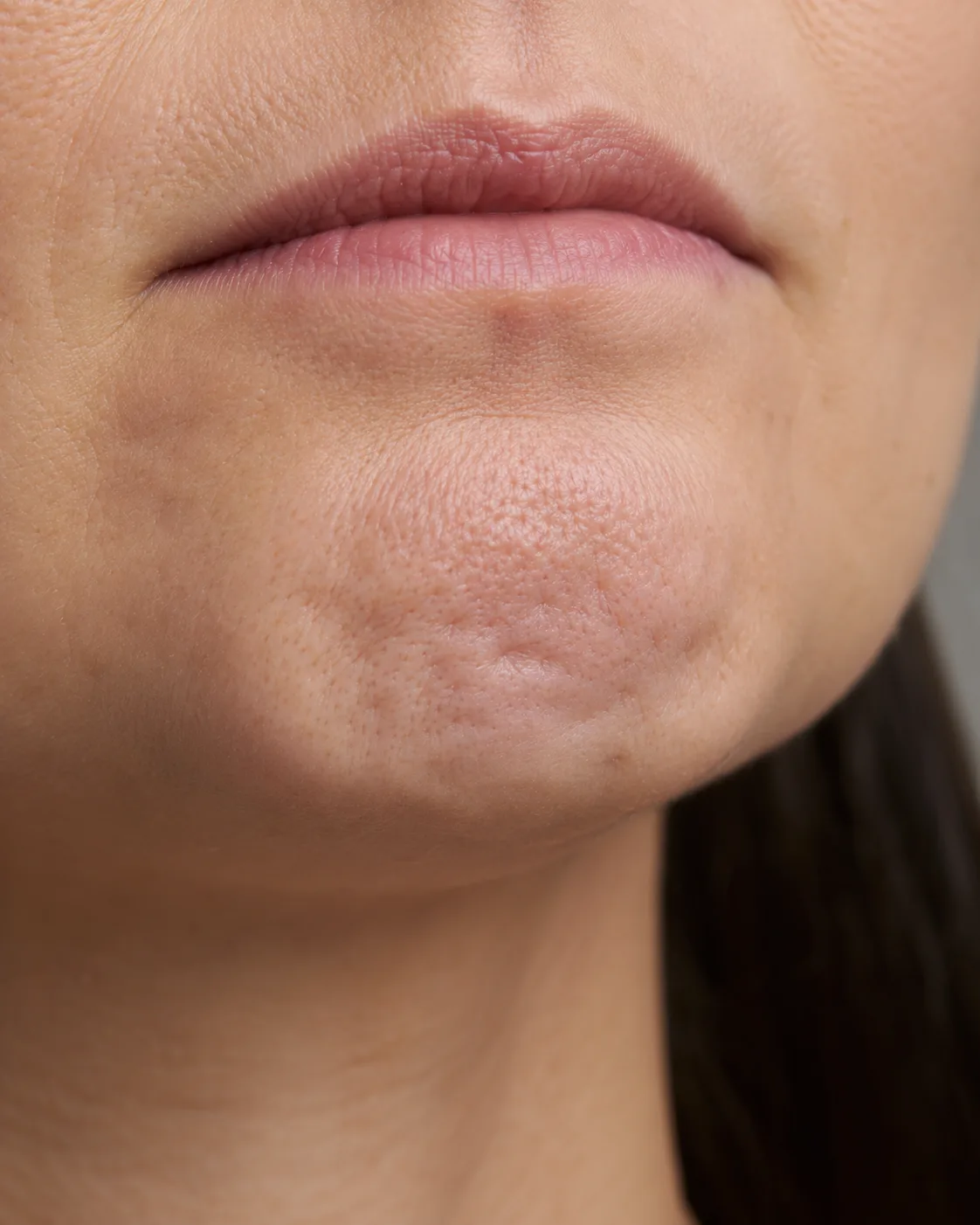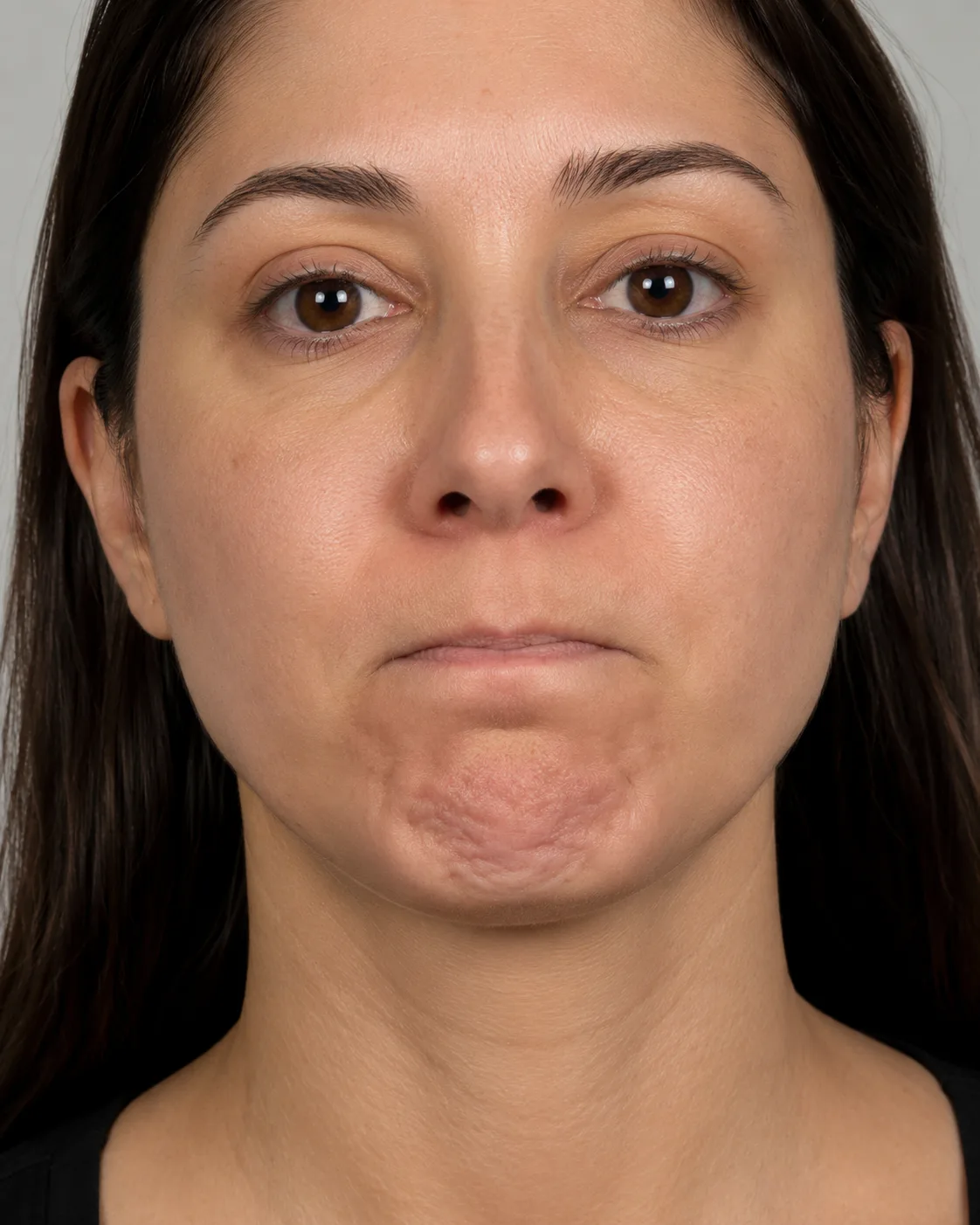
A chin can look dimpled or pebbled because the skin and soft tissue move as the lower lip and chin muscles work. If the texture appears mainly while you talk, smile or bring your lips together, movement is an important clue. Texture that remains at rest, a change after previous care, or a concern about the bite or profile needs a broader assessment rather than a conclusion from one photograph.
Begin with when the texture appears
Chin dimpling is a description, not a diagnosis. It may look like small dents, a pebbled surface or a puckering motion. The most useful first detail is whether you see it while speaking or closing your lips, when your face is relaxed, or in both moments.
You do not need to inspect every expression or arrive with a treatment in mind. A short note about when you first noticed the change, whether it feels different and whether you have had dental, medical or cosmetic care in the area gives a practitioner a more useful starting point.
This page owns the meaning of the visible pattern. If you already want the local service pathway, visit chin dimpling assessment in Melbourne. If you want the appointment sequence, read what happens at a chin dimpling consultation.
Three patterns worth noticing
It appears as you talk or close your lips
The chin and lower lip work together during expression. The texture may soften again when the face rests.
It stays visible without expression
Skin surface, soft tissue, chin shape, previous care and ordinary anatomy may all add context.
The profile, bite or comfort also feels different
This may call for a broader lower-face, dental or medical conversation before cosmetic planning.

Compare rest with ordinary movement
The chin muscle, called the mentalis, contributes to lower-lip and chin movement. That relationship is why Corey may watch your face at rest, while you speak and as your lips meet gently. An anatomy study of the mentalis supports looking at the muscle as part of a connected lower-lip and chin system.
Ordinary movement is more useful than forcing a strong expression. Corey can compare where the texture begins, whether the lower lip strains, whether the chin feels tight and whether the surface settles again. These observations narrow the question without turning a visible dimple into a diagnosis.
A video taken during natural speech may help you point out the moment you notice. It remains conversation context, not a substitute for an in-person history and assessment.
What can the pattern help clarify?
Look at expression first
The conversation centres on speech, lip closure, comfort and how the surface changes between movement and rest.
Look at texture and support
Skin quality, chin shape, profile, previous care and the wider lower face may deserve more attention.
Broaden the review
A sudden change, pain, altered sensation, dental symptoms or a change after previous care should not be reduced to a cosmetic texture question.
A photograph can start the conversation
Still images can make dimpling look stronger or softer because expression, angle and lighting change the shadows. Bring a photograph if it captures what concerns you, but also be ready to show the natural movement. The two views answer different questions.

Look beyond the skin surface
A pebbled surface can attract all the attention, yet the chin also sits beneath the lower lip and in front of the teeth, with the jawline and neck completing the profile. Corey may look at these relationships so one surface detail is not mistaken for the whole concern.
This does not mean every nearby area needs cosmetic care. It means the explanation should fit what you actually see. If profile support is the main question, the weak or undefined chin guide owns that intent. If you are comparing the chin with the jawline, use the jawline and chin decision guide.
Your history matters too. Bring the timing and details of previous cosmetic, dental or surgical care, especially if the texture changed afterwards.
When another review belongs first
Seek appropriate dental or medical advice when dimpling arrives with pain, numbness, weakness, a new bite change, injury, infection signs or another symptom that concerns you. If the change followed recent care, contact the treating practitioner and share the timing and symptoms. For a longstanding cosmetic concern without urgent symptoms, Corey can help clarify whether reassurance, observation, referral or a later treatment discussion is the sensible next step.

Bring the pattern you have noticed
You will meet directly with Corey for a calm, private conversation about when the dimpling appears and what you would like to understand.
Corey compares rest and movement, listens to your history and explains whether reassurance, observation, another clinician or a cosmetic planning conversation fits. Any suitable option, material risks and costs are discussed before you decide.
Come in with the pattern you notice
Meet Corey, compare movement with rest and leave with a clearer next step, without pressure to choose cosmetic care.
Is this for you?
Consider booking a consultation if
- Adults asking about chin dimpling, chin texture or movement related lower face concerns
- Patients who want the cause assessed before treatment is discussed
- People who value conservative planning, realistic limits and informed consent
- Adults open to waiting, referral, review only or no treatment where that is safer
This may not be for you if
- People seeking a fixed visible change before assessment
- People who need urgent medical, dental or surgical advice
- People who want treatment without discussing consent, risk, alternatives and aftercare
- People seeking advice for someone who cannot provide informed consent for elective cosmetic care
Suitability is confirmed at consultation. This list is general guidance, not a substitute for clinical assessment.
Frequently asked questions
What causes chin dimpling?
Chin dimpling may relate to chin muscle activity, lower lip movement, skin texture, chin shape, lower face movement, dental context, previous treatment or normal anatomy. Corey assesses the chin at rest and during expression before discussing whether treatment, waiting, referral or no treatment is appropriate.
Can aesthetic treatment help chin dimpling?
It may be discussed for selected adults after assessment, but treatment is not automatic. Suitability, risk, expectations, alternatives, aftercare and timing need to be considered first. Some concerns are better managed by waiting, referral, review only or no cosmetic treatment.
Is chin dimpling the same as a weak chin?
No. Chin dimpling is usually a texture or movement concern, while a weak or undefined chin may relate more to profile, shape or lower face support. They can overlap, which is why Corey may assess chin shape, jawline relationship and movement together.
Could chin dimpling need referral instead?
Yes. Dental, bite, skeletal, surgical, medical, skin or previous treatment concerns may need another pathway rather than cosmetic treatment. Corey may recommend referral, waiting, records review or no treatment if the concern sits outside what a cosmetic clinic should manage.
Can treatment happen on the same day?
Some adult patients may be suitable for treatment on the same day as consultation, but only after assessment, informed consent and clinical judgement support proceeding. Treatment is not automatic. Corey may recommend education, waiting, referral, review only or no treatment.
What should I ask during consultation?
Ask what is causing the dimpling, whether movement, skin texture, chin support or jawline relationship is involved, what risks apply to your anatomy, what aftercare involves, how review works and when waiting, referral or no treatment would be more appropriate.
Why does the chin look dimpled when I talk?
Movement during speech, smiling or pressing the lips together can change how the chin surface looks. That may involve muscle activity, lower lip function or expression pattern. Assessment should compare rest and movement rather than relying only on a still photograph.
Can photos show the cause of chin dimpling?
Photos can help explain what you notice, but lighting, posture, expression, camera angle and editing can mislead. Corey can use photos as conversation context, but assessment of movement, skin quality, medical history and lower face relationship matters more.
Is more treatment always better for chin dimpling?
No. More treatment is not automatically better, and some concerns should not be treated. A conservative plan may involve doing less, waiting, referral or no treatment. The aim is proportionate decision making, not chasing a completely texture free chin.
Could previous treatment affect chin dimpling?
Yes. Previous cosmetic treatment, timing, swelling, settling, symptoms, records and patient goals can affect what Corey recommends. The safest answer may be review, waiting, referral or no further treatment before adding anything new to the area.
Is this page personal medical advice?
No. This page provides general education for adults asking about chin dimpling and treatment planning. It does not diagnose the cause, confirm suitability, replace dental or medical review, or recommend treatment. Personal advice requires consultation with Corey Anderson RN.
How can I verify Core Aesthetics before booking?
Core Aesthetics lists Corey Anderson as a Registered Nurse with Ahpra registration NMW0001047575. You can use the Verify Core Aesthetics page, clinic contact details and the Ahpra public register to check practitioner and clinic information before booking.