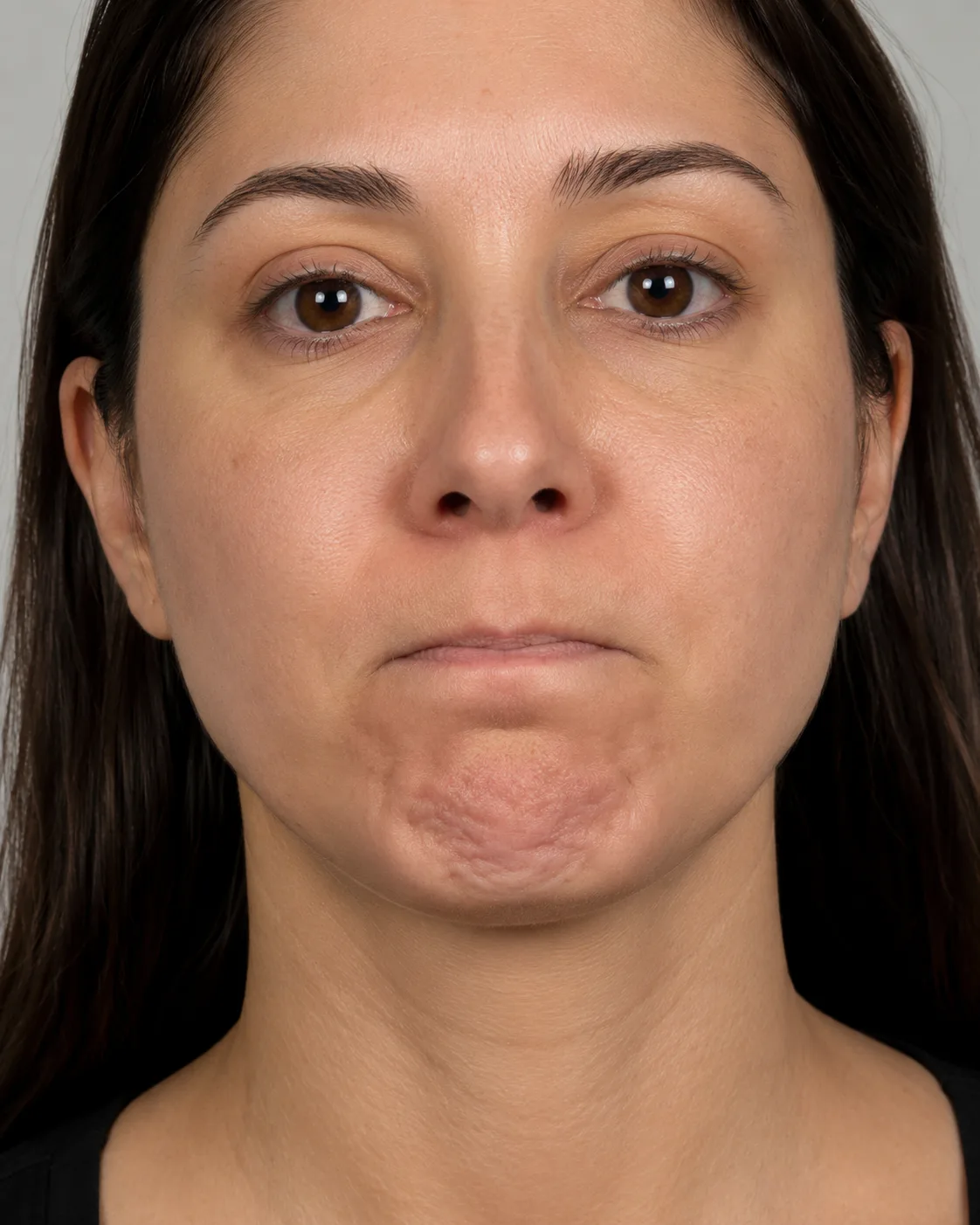
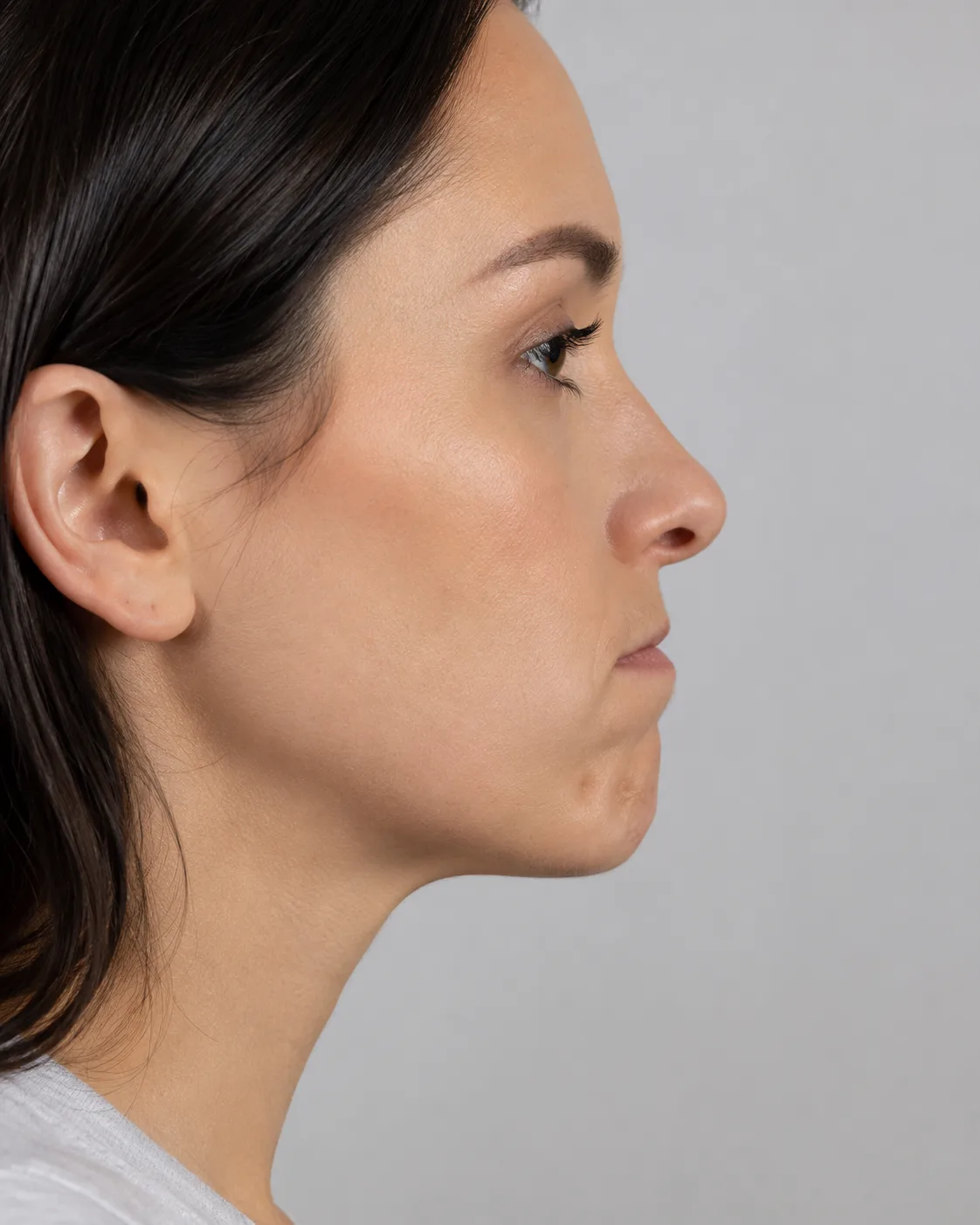
Mentalis softening

Chin Dimpling Treatment Melbourne

Chin dimpling, the small pebbled or orange peel texture that appears across the chin during animated expression, comes from a single small muscle doing its job a little too enthusiastically. The treatment is conservative, anatomically simple and one of the more satisfying small interventions in aesthetic treatment practice.

Quick summary

Chin dimpling responds to a small dose of prescription neuromodulator placed at the apex of the mentalis muscle. The intervention reduces the muscular contraction that produces the dimpling pattern, smoothing the chin during animated expression. Core Aesthetics — consultation-first.

Chin dimpling is one of the most reliably treated small indications in aesthetic treatment practice. Patients usually become aware of it through photographs, particularly photographs taken during expressions that activate the lower face, speaking, kissing, or the small grimace that accompanies thinking. The pebbled texture sometimes registers in the mirror only when the patient is looking for it. By that point it has often been visible to others for years.

The treatment is brief, the dose is small and the response is predictable. The conversation, as ever, is more substantive than the procedure.

The mentalis muscle

The mentalis is a small paired muscle that originates from the alveolar bone of the mandible below the lower incisors and inserts into the skin of the chin. It is one of the muscles that elevates and protrudes the lower lip, contributing to expressions such as pouting and certain forms of speech articulation. When it contracts strongly or chronically, the skin overlying the muscle bunches into the small repeated indentations colloquially called orange peel chin or pebbled chin.

The anatomy is well defined and superficial. The muscle is small. The treatment dose is correspondingly small. Conservative dosing is typically four to six units of prescription neuromodulator placed at the apex of each side of the muscle, or as a single midline injection in some cases.

Why some chins dimple and others do not

Mentalis activity varies substantially between people. Some patients have anatomically prominent or chronically overactive mentalis muscles that produce visible dimpling even at rest. Others only show dimpling during active expression. Genetics, habitual expression patterns, dental occlusion, and the small unconscious tensions of speech and thought all contribute. There is no single explanation that applies to everyone.

For patients with substantial dental contributors (a deep mentolabial sulcus, mandibular protrusion, occlusal patterns that load the lower face), part of the conversation may involve recommending dental review before pursuing further injectable work. The clinical reality is that injectable treatment of the mentalis softens the muscular component without addressing the dental or skeletal components.

What treatment looks like in practice

The treatment is brief. After consultation and consent, the practitioner identifies the apex of the mentalis on each side and places a small volume of prescription neuromodulator superficially. One or two injections per side is typical. Discomfort is minimal because the volumes are tiny. There is no practical downtime. Patients return to normal activity immediately, with the conventional advice to avoid heavy exercise or extended head down positions for the same evening.

Onset is gradual. Most patients begin noticing softer dimpling at five to seven days, with full effect at around two weeks. The visible change is usually subtle in repose and more obvious in animated expression. Patients often comment that the chin feels relaxed in a way it had not for years.

Conservative dosing as the default

The C.O.R.E. Method approach in this region is to start at the lower end of the dose range, with a structured two week review where additional dose can be added if response has been insufficient. Going to the upper range as a default first dose carries higher risk of producing changes the patient may not want, including subtle effects on lower lip elevation during speech or smiling. Conservative dosing errs in favour of preserving function and preserving expression, with the option to add at the review.

Doses substantially above the conservative range are rarely necessary in this region. Patients who require persistently higher doses across multiple cycles often have other contributors (dental, skeletal, broader perioral) that warrant a different conversation.

Side effects and what we monitor

Local side effects (small bruise at an injection point, brief tenderness, occasional small lump that resolves over days) are the most common reported issues. Specific to this region, over dosing or imprecise placement can affect lower lip elevation during speech or smiling, can produce a subtle change in articulation of certain consonants, or can produce mild asymmetry. These effects, when they occur, typically resolve over six to twelve weeks as the neuromodulator wears off. There is no specific reversal agent. Conservative dosing substantially reduces these risks.

Patients receive written aftercare and a direct contact for the practitioner if any concerns arise after the appointment.

Duration and the maintenance rhythm

Duration in this region is typical for small dose facial neuromodulator indications: three to four months at first treatment, sometimes longer with repeated treatment as cumulative effect builds. The maintenance rhythm fits naturally alongside other upper face treatments where the patient is having multiple regions addressed.

How chin dimpling treatment fits with other lower face work

For patients whose lower face concerns extend beyond mentalis activity (a soft jawline contour, marionette lines, depressor anguli oris pulling the corners of the mouth downward, mid chin volume change), mentalis treatment is often one element of a structured plan. The conversation considers each contributor on its own clinical merits and decides whether intervention is appropriate, in what sequence and at what intervals.

The C.O.R.E. Method approach to the lower face usually proceeds in stages with adequate review between sessions. This is slower than single session combined treatment but produces results that are easier to evaluate and easier to adjust. For chin work in particular, where small changes have meaningful visible impact, the staged approach is generally the right one.

Why we do not name the prescription product

Australian regulation prohibits the advertising of Schedule 4 prescription medicines to the public. That includes the brand names, abbreviations and hashtags associated with aesthetic treatment products. The TGA has been increasingly active in enforcing this provision in the aesthetic treatments sector. We can talk in clinical detail about the mechanism, dose ranges, response profile and safety considerations. We do not name brands or otherwise identify products to the public, because the law explicitly prohibits us from doing so.

AHPRA September 2025 considerations

The AHPRA guidelines for nonsurgical cosmetic procedures that came into force in September 2025 require an in person or video consultation with the prescribing practitioner each time a aesthetic treatment is prescribed. Chin dimpling treatment, while small, falls within this requirement. Suitability assessment must explicitly explore patient motivations and expectations.

For chin work specifically, the September 2025 framework reinforces the importance of confirming the muscular contribution before treatment, naming where dental or skeletal contributors are present, and discussing the realistic limits of what conservative neuromodulator treatment can achieve.

What we do not claim

Three claims sometimes made about chin dimpling treatment do not survive clinical scrutiny and we do not make them. The first is that one treatment will permanently eliminate dimpling. The treatment is reversible and lasts three to four months at first treatment, with maintenance required. The second is that mentalis treatment will improve dental contributors to chin contour. It will not. The third is that mentalis treatment carries risk does not exist of functional change. It is low risk in conservative hands but can affect speech or lip elevation if doses or placement are not carefully managed.

Working with Corey

Corey Anderson is the only practitioner at Core Aesthetics. Registered with the Nursing and Midwifery Board of Australia since January 1996 (AHPRA NMW0001047575), Corey runs a one practitioner, low volume clinic in Oakleigh. For small, precise indications like chin dimpling treatment, the consistency of practitioner technique across years of repeated visits supports the kind of calibrated dosing that produces stable, predictable results without functional compromise.

Patients see Corey at every visit. Treatment notes carry the dose, the placement detail and the response duration forward across years.

Cost framing

Chin dimpling treatment is priced on the actual product and time involved, quoted in writing as part of the consultation. There is no surge pricing, no promotional pricing, no time limited offers and no loyalty pricing. Patients receive a written treatment plan that includes the realistic anticipated frequency of maintenance.

Booking a consultation

Chin dimpling consultation is most often part of a broader lower face conversation, sometimes a stand alone appointment. The consultation is a clinical assessment in its own right, with no obligation to proceed in the same session. If treatment is appropriate, it can be performed in the same visit. Where dental contributors are dominant, we recommend dental review before further injectable work.

Core Aesthetics operates from 12A Atherton Road, Oakleigh, in Melbourne south east. Booking is direct online or by contacting the clinic. Results vary between individuals.

A note on patient experience

Patients who choose chin dimpling treatment and find it suits them often describe the result as quietly satisfying. The chin photographs more smoothly. The small unconscious tension is no longer visible. Friends and family sometimes do not consciously notice the change but describe the patient as looking more rested. This is the conservative result the treatment is designed for. The patient who arrived expecting a visible transformation is sometimes surprised by how subtle the change is, and at the two week review the conversation is often about whether the subtle result is the right one or whether a small additional dose would be helpful.

On the broader perioral region

The lower face is anatomically complex. The mentalis sits adjacent to the orbicularis oris (the lip ring), the depressor labii inferioris (which depresses the lower lip), the depressor anguli oris (which pulls the corners of the mouth downward), and the platysma below. These muscles work together to produce the patterns of expression in the lower face, and a thoughtful consultation considers the relative balance of activity across all of them rather than treating any one in isolation.

For patients with a more global lower face plan in mind, the conversation typically begins with the dominant contributor, treats it conservatively, evaluates the result at the structured review, and decides whether further intervention is warranted in light of how the first one settled. This is a slower path than single session combined treatment but produces results that age well and allow the patient to feel in control of the process.

A note on the dental relationship

Dentists sometimes refer patients with prominent chin dimpling to aesthetic treatment practitioners as part of a broader oral and lower face management plan. Patients with bruxism, mandibular advancement appliance use, or chronic clenching often present with a more active mentalis as part of the same constellation. Co management between dentist and injector can be useful in these cases, with the dental contribution addressing occlusion and protective splints and the injectable contribution softening the chronic muscular activity.

For patients arriving without prior dental conversation, where dental contributors appear significant, recommending a dental review is often part of the consultation, particularly where deep mentolabial sulcus, occlusal wear, or muscular tension extending into the masseter region suggest a broader picture than the chin alone.

On the Long-Term experience

Patients who maintain treatment across years typically describe the chin as quietly settled, the dimpling pattern no longer registering in photographs, the lower face looking calmer in animated expression. The dose required to maintain the effect tends to remain stable across cycles. Maintenance can be paused at any time; the treatment is reversible and the muscle activity returns to baseline within months. Patients who decide they no longer want maintenance simply stop, with no rebound effect to wait out.

On the conversation patients usually have at first consultation

Most patients booking a chin dimpling consultation describe noticing the texture in photographs first, then in the mirror once they know what to look for. The conversation begins with what triggered the booking, what the patient has tried or considered, what they would consider an over correction and what they would be satisfied to leave alone. The clinical assessment follows the conversation, not the other way round. Patients who arrive with a clear sense of what they want often leave with a small, well defined plan. Patients who arrive curious but uncertain often leave with a list of considerations and a follow up booking some weeks later if they decide to proceed.

Either is a valid outcome. The consultation is the right place to think it through, and the unhurried structure is part of what allows that conversation to happen properly.

A note on photographic documentation

Standardised pretreatment and post treatment photographs in repose and during animated expression are part of the medical record. The chin is one of the regions where side by side comparison at the same magnification is essential for honest assessment of the result, because the change is small enough that, without the comparison, patients sometimes find it difficult to identify whether treatment has worked. The documentation is part of the standard review process and supports the kind of slow, calibrated dose adjustment that the C.O.R.E. Method is built around.

On the broader Melbourne south east context

Patients travel to Core Aesthetics from across the south east corridor (Hughesdale, Huntingdale, Chadstone, Clayton, Mount Waverley, Glen Waverley, Wheelers Hill), the bayside strip (Bentleigh, McKinnon, Cheltenham, Highett, Moorabbin), and the inner east. The clinic is straightforward to reach by car, train or public transport, with off street parking available. For a small treatment with a maintenance rhythm of three to four months, accessibility matters because the convenience of attending shapes whether the rhythm is sustained.

For patients arriving from further afield, the clinic is a short walk from Oakleigh railway station, and the surrounding neighbourhood offers reasonable cafe and shop access for spending time before or after an appointment.

This combination of accessibility, parking and pedestrian convenience makes the maintenance cycle practical to sustain.

On the limits of small interventions

Chin dimpling treatment is a small, well evidenced intervention with modest, reversible effects on a specific muscle. It is not a transformation of the lower face, not a permanent solution, and not a substitute for dental or maxillofacial intervention where those are the appropriate paths. Patients who arrive with realistic expectations of what conservative neuromodulator treatment can achieve in this region tend to be satisfied with the result. The honest framing at consultation is part of how the practice protects patient interests.

Is this for you?

Consider booking a consultation if

  • You have visible chin dimpling during animated expression, sometimes also visible at rest, and want it softened
  • You are open to a conservative first dose with a structured two week review rather than a single full dose session
  • You can accommodate the three to four monthly maintenance rhythm
  • You are 18 or older and otherwise in general good health

This may not be for you if

  • You are pregnant, trying to conceive, or breastfeeding
  • You have a neuromuscular condition that contraindicates neuromodulator treatment, or a known allergy to the active ingredient
  • Your chin contour concern is primarily dental or skeletal in origin (dental review may be the appropriate next step)
  • You are looking for a permanent solution rather than maintenance treatment

Suitability is confirmed at consultation. This list is general guidance, not a substitute for clinical assessment.

Frequently asked questions

What causes chin dimpling?

Repeated or chronic contraction of the mentalis muscle, which originates from the alveolar bone of the mandible and inserts into the chin skin. When the muscle contracts, the overlying skin bunches into the pebbled or orange peel pattern that becomes more visible during animated expression. Genetic, expression habit, dental occlusion and small unconscious tensions of speech and thought all contribute.

How is treatment performed?

After consultation and consent, the practitioner identifies the apex of the mentalis on each side and places a small volume of prescription neuromodulator superficially. One or two injections per side is typical. Discomfort is minimal. There is no practical downtime. Onset is gradual, with full effect at around two weeks.

What is the typical dose?

Conservative dosing is approximately four to six units of prescription neuromodulator placed at the apex of each side of the mentalis. Some patients may require additional dose at the two week review. Doses substantially above this range are rarely necessary in this region; persistent need for higher doses often indicates other contributors warranting a different conversation.

How long does the result last?

Three to four months at first treatment, sometimes longer with repeated treatment as cumulative effect builds. The duration varies between individuals. The plan is built around clinical assessment at follow up rather than a fixed retreatment calendar.

Could treatment affect my speech or smile?

At conservative dose, rarely. Over dosing or imprecise placement can affect lower lip elevation during speech or smiling, can produce subtle changes in articulation of certain consonants, or can produce mild asymmetry. These effects, when they occur, typically resolve over six to twelve weeks as the neuromodulator wears off. Conservative dosing substantially reduces these risks and is the default approach.

What if my chin appearance is partly dental in origin?

Mentalis treatment addresses the muscular component of chin appearance. It does not address dental contributors (deep mentolabial sulcus, mandibular protrusion, occlusal patterns that load the lower face). For patients with substantial dental contributors, dental review is often a useful next step before further injectable work, and the consultation will recommend this where appropriate.

Does chin dimpling treatment combine well with chin treatment?

Sometimes, where the indication supports both. Mentalis softening addresses muscular activity. Chin treatment addresses volume and projection. The two interventions are clinically distinct. Each is assessed on its own merits and neither should be a default add on. Sequencing usually starts with whichever contributor has the most visible impact, with subsequent decisions made at the structured review of the first result.

How does this fit with broader lower face treatment?

Mentalis treatment is often one element of a structured plan that may include consideration of the depressor anguli oris, the platysma below, jawline support or chin volume. Each is its own clinical decision; none is a default add on. The C.O.R.E. Method approach to the lower face proceeds in stages with adequate review between sessions, which is slower than single session combined treatment but produces results that are easier to evaluate and adjust.

Should I have wrinkle treatment if I want to prevent lines rather than treat existing ones?

Preventative treatment may be considered when muscle activity is consistently creating early dynamic lines, but whether it is appropriate depends on individual anatomy, age, skin quality and treatment goals. A clinical assessment is required to determine whether treatment makes sense at this point, and what dose and timing would be appropriate for your situation.

Is it safe to have wrinkle treatment while taking blood-thinning medications or supplements?

Certain medications and supplements, including aspirin, ibuprofen, fish oil, vitamin E and some herbal supplements, can increase bruising risk after any injectable treatment. You will be asked about these at your consultation. In most cases, treatment can proceed, though timing and approach may be adjusted. Always disclose your full medication and supplement list before any injectable appointment.

Why does wrinkle treatment sometimes require a two-week review?

The full effect of prescription neuromodulator takes seven to fourteen days to settle. Reviewing at two weeks allows the treating practitioner to assess whether the dose was appropriate, whether any asymmetry needs addressing, and whether the result aligns with the plan discussed at consultation. It is a clinical checkpoint, not a sales appointment.

Clinical references

  1. AHPRA: Guidelines for nonsurgical cosmetic procedures
  2. TGA: Advertising health services and cosmetic injections

Written and reviewed by Corey Anderson RN, AHPRA NMW0001047575 · Reviewed April 2026 · Consultation required · TGA & AHPRA compliant

Begin With A Conversation

Book your consultation.

No commitment, no pressure. A considered first step toward understanding what is and isn’t right for you.

Book Consultation

Elegance, Perfected.