For a jaw muscle consultation near Carnegie, map four parts of a typical day: how the jaw feels on waking, what happens during focused work or driving, how chewing and opening feel at meals, and whether tension, fatigue or headaches appear by evening. Note visible lower face width and what changes with a gentle clench and release. This history does not diagnose grinding, jaw joint disease or a cosmetic indication. Corey Anderson RN combines it with direct assessment, dental and medical history, medicines, previous care, risks and expectations. Suitable cosmetic care can be planned when individual assessment and informed consent support it.
Why Map A Typical Jaw Day?
Jaw concerns can change across sleep, concentration, chewing and rest. A single clench in the mirror may show muscle movement but miss comfort, function and timing.
A day map gives Corey a practical history while keeping cosmetic shape questions separate from symptoms that belong with dental or medical assessment.
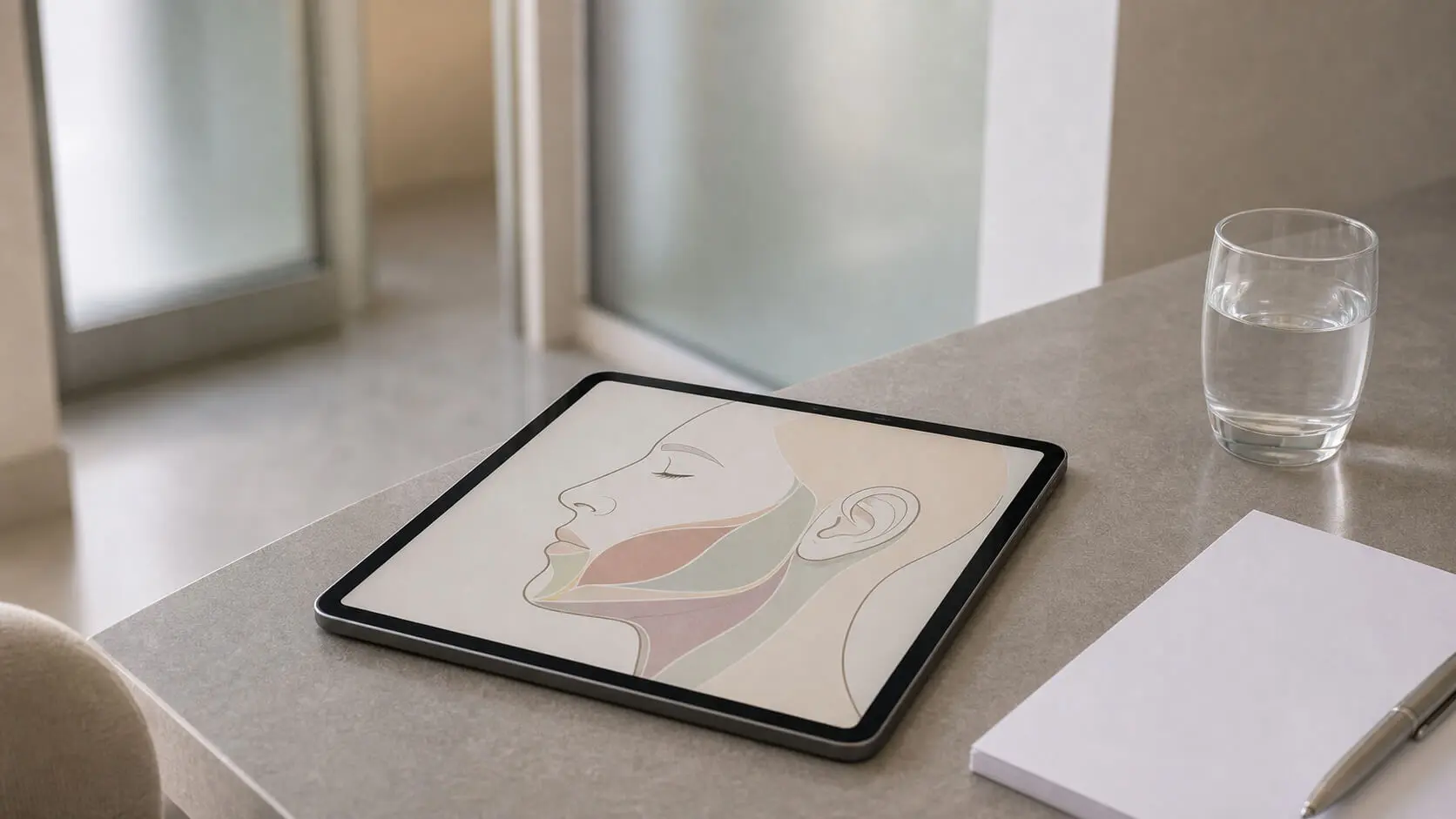
What Does Each Time Window Ask?
| Time window | What to notice | Useful detail |
|---|---|---|
| On waking | Comfort, stiffness, headache or tooth awareness | How long it lasts |
| Focused activity | Teeth contact, bracing or clenching habits | Work, driving, exercise or stress context |
| Meals | Chewing comfort, fatigue, clicking or restricted opening | Foods or movements that bring it out |
| Evening | Tension, tiredness and visible lower-face change | Whether rest settles it |
What Should You Notice On Waking?
Before the day becomes busy, note whether the jaw feels comfortable, stiff, tired or tender and whether you notice a headache or unusual tooth sensitivity. Record duration rather than trying to name the cause.
Known grinding, a mouthguard or recent dental advice belongs in this part of the history.

How Can Focused Activity Affect Jaw Awareness?
Some people notice their teeth touching or jaw bracing during computer work, driving, exercise or stressful concentration. Others notice no daytime habit at all.
Record the setting and whether relaxing the jaw changes comfort. This observation supports assessment but does not prove why the habit occurs.
What Do Meals Reveal About Function?
Chewing and opening may reveal fatigue, discomfort, clicking, locking, restricted movement or bite changes. These symptoms are clinically different from a question about visible lower-face width.
Persistent pain, locking, significant bite change, tooth damage or worsening functional symptoms deserve assessment by an appropriate dentist or medical practitioner.
What Does The Evening Pattern Add?
By evening, note whether the jaw feels unchanged, tired, tight or sore and whether headaches or facial fatigue have accumulated. Mention what settles the feeling and whether it affects sleep or eating.
A visible shape question can be recorded separately from comfort and function so neither is overlooked.
How Is Visible Muscle Activity Assessed?
Corey observes the lower face at rest and during a brief gentle clench, including side differences, jaw angle, chin and overall facial balance. Avoid repeated forceful clenching for photographs.
Muscle prominence is only one possible contributor to lower-face shape. Bone, soft tissue, skin and dental relationships also matter.
What Risks And Limits Need A Clear Conversation?
Depending on the suitable option, discussion may include temporary redness, tenderness, swelling, bruising, asymmetry, altered smile or chewing feel, unwanted contour change, dissatisfaction and uncommon complications requiring review.
Corey explains alternatives, expected limits, total cost, aftercare, follow up and contact instructions. Cosmetic care is not a substitute for treatment of dental disease, jaw joint disorders or unexplained pain.
Where Can You Continue The Jaw Discussion?
What is a four window jaw day map?
It records how the jaw feels on waking, during focused activity, while eating and in the evening. Timing helps separate shape questions from functional symptoms.
Does waking with jaw stiffness prove that I grind my teeth?
No. Record the feeling and how long it lasts, then discuss it with an appropriate health practitioner. A symptom alone does not establish its cause.
Why ask about work, driving or exercise?
Focused activity may reveal unconscious teeth contact or jaw bracing. The setting, frequency and whether relaxation changes it give useful context without creating a diagnosis.
When is dental assessment relevant?
Pain, locking, significant bite change, tooth damage, persistent clicking or worsening chewing and opening symptoms deserve assessment by an appropriate qualified dentist or medical practitioner.
How does Corey assess visible jaw muscle activity?
Corey observes the lower face at rest and during a brief, comfortable, gentle clench, considering side differences, jaw angle, chin, skin and overall facial balance.
What should I bring after previous jaw care?
Bring approximate dates, areas, available records and what changed over time. Include dental advice, mouthguard use, unfamiliar chewing, smile or contour changes and other concerns.
Can suitable cosmetic care be planned during consultation?
Yes. Suitable cosmetic care can be planned when individual assessment and informed consent support it. Dental or medical input, adjusted timing or another pathway can be incorporated when useful.
Is Core Aesthetics located in Carnegie?
No. The clinic is in Oakleigh. Check the journey from your actual starting point and whether returning for planned review would be practical before booking.
Is this for you?
Consider booking a consultation if
- Adults who want jaw muscle, lower face, jawline, chin and dental context assessed before treatment discussion
- Patients with clenching or grinding history who understand dental boundaries may matter
- Patients with previous treatment who may need records review, waiting or original clinic review
- People who want jaw movement, muscle function and lower-face balance assessed before choosing the next step
This may not be for you if
- People asking for a predetermined plan without assessment, consent or risk discussion
- People seeking a fixed lower face change before consultation
- People wanting public prescription product advice or product led recommendations
- People with urgent dental, medical, infection, pain or jaw symptoms who need appropriate medical or dental care
Suitability is confirmed at consultation. This list is general guidance, not a substitute for clinical assessment.