For a jawline consultation near Chadstone, compare the same relaxed lower face under four ordinary conditions: soft front light, overhead light, side light and outdoor open shade. Overhead light can deepen a prejowl or neck shadow, side light can emphasise one border, and soft front light can flatten contour. A concern that persists across conditions is easier to describe, but lighting never diagnoses its cause or confirms a suitable option. Corey Anderson RN combines the comparison with direct assessment of jaw border, chin, skin, muscle, dental context, health, previous care, risks and expectations. Suitable care can be planned when individual assessment and informed consent support it.
Why Check A Jawline Concern In More Than One Light?
Bright retail and changing room lights often come from above, creating sharp shadows below the jaw and beside the chin. The same border may look softer in even light.
Comparing conditions does not dismiss the concern. It separates a stable contour question from an image dominated by illumination.
What Makes Harsh Public Lighting So Noticeable?
Downlights are designed to illuminate a space, not provide a neutral facial view. They can cast shadow beneath soft tissue, along the neck and across the prejowl transition.
Note where you first noticed the change, then compare it away from that setting before deciding how consistent it is.
What Are The Four Lighting Conditions?
| Condition | What it tends to show | How to use it |
|---|---|---|
| Soft front light | Even overall lower face view | Use as a calm baseline |
| Overhead light | Deeper shadows below contours | Record, but do not treat as neutral |
| Side light | One border and side difference | Compare both directions |
| Outdoor shade | Broad natural illumination | Check whether the concern remains visible |
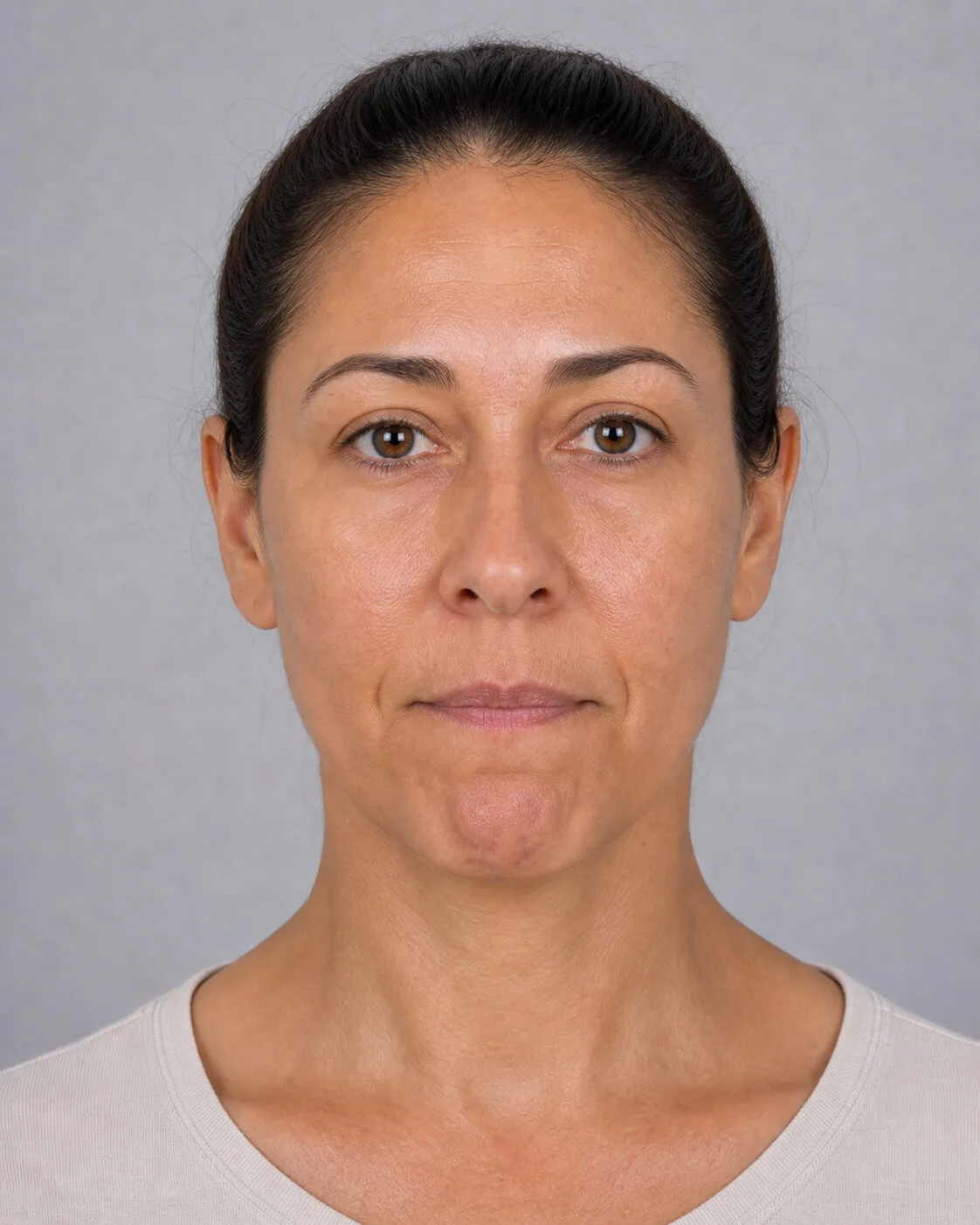
What Does Soft Front Light Contribute?
Soft light from in front reduces hard directional shadow and makes it easier to see overall width, skin and side differences. It does not reveal a truer or more flattering version; it is simply a useful baseline.
Keep the head neutral and jaw relaxed rather than lifting the chin to sharpen the border.
How Should Overhead Light Be Interpreted?
Overhead light can deepen shadows below the jaw body, beside the chin and across the upper neck. The resulting contrast may make a small transition look abrupt.
If the concern appears mainly here, bring that observation to consultation without assuming it identifies skin, fat, muscle or bone.
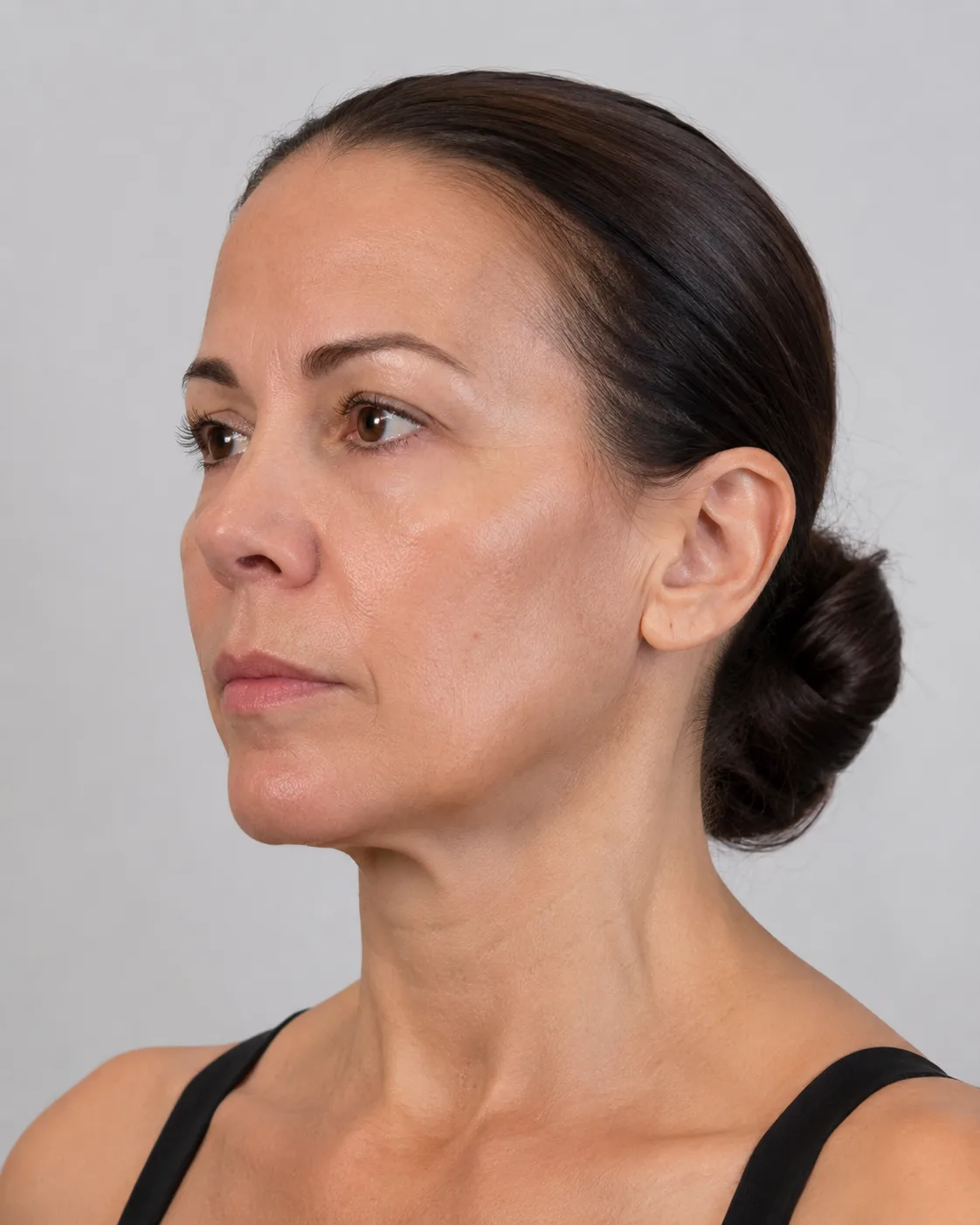
What Can Side Light Reveal And Exaggerate?
Light from one side outlines the nearer border and places the farther side in shadow. It can show contour and natural asymmetry while making the two sides seem more different.
Compare light from both directions and avoid using a single side-lit photograph as the treatment target.
Why Add Outdoor Open Shade?
Open shade provides broad daylight without direct sun or strong overhead contrast. It offers another ordinary reference for whether the contour remains noticeable.
Weather, camera exposure and head angle still matter, so outdoor light is context rather than proof.
How Should Photographs Be Used?
Use unedited images taken at a similar distance, head angle and relaxed expression. Label which light was present and when the image was taken.
Photographs help explain the concern but cannot assess tissue feel, movement, symptoms or personal suitability.

What Anatomy Is Assessed After The Light Check?
Corey reviews jaw angle, jaw body, chin support, prejowl transition, skin, soft tissue, jaw muscle and neck relationship across front, angled and profile views.
He also considers natural asymmetry, dental context and movement. A shadow may cross several structures without showing that all need care.
What History Changes The Interpretation?
Bring current medicines and supplements, allergies, relevant health, dental and skin history, weight change and previous cosmetic care with approximate dates.
Mention jaw symptoms, recent swelling, firmness, tenderness, colour change, altered movement or another unfamiliar response.
Which Lighting Expectations Belong In The Risk Discussion?
Depending on the suitable option, discussion may include redness, tenderness, swelling, bruising, asymmetry, lumps, infection, delayed inflammatory response, altered expression, dissatisfaction and uncommon urgent warning signs.
Corey explains alternatives, likely limits, total cost, aftercare, follow up and contact instructions. Care cannot control how every future light creates shadow.
Where Is The Four Light Review Conducted?
Core Aesthetics is at 12A Atherton Road, Oakleigh VIC 3166. Phone 0491 706 705. Corey Anderson is a Registered Nurse with Ahpra registration NMW0001047575.
Suitable care can be planned when individual assessment and informed consent support it. More information, adjusted timing, another clinical review or a different pathway can be incorporated when useful.
Which Guide Fits After The Lighting Check?
Read the Melbourne jawline guide, jawline consultation guide, chin guide and Chadstone jaw muscle guide. The suitability guide explains the wider decision process. Book a consultation when ready.
What Is The Boundary Of This Lighting Guide?
What are the four jawline lighting conditions?
They are soft front light, overhead light, side light and outdoor open shade. Comparing them shows which shadows change and which contour remains relatively consistent across ordinary settings.
Why can changing room light make the jawline look different?
Strong downlights cast shadow below the jaw and beside the chin. They can increase contrast without proving that the underlying anatomy or tissue actually changed.
Is soft front light the most accurate view?
It is a useful even baseline, not a perfect or definitive view. Corey compares several lighting conditions, direct views, movement and tissue context during assessment.
How should side lighting be compared?
Compare light from both directions with the same head angle and relaxed jaw. One direction may exaggerate natural side differences by placing the farther border in shadow.
Can outdoor shade confirm a jawline problem?
No. Open shade offers another ordinary reference but does not diagnose a concern. Weather, exposure, angle and expression still affect what you see in that moment.
What should I bring after previous lower face care?
Bring approximate dates, relevant treated areas, available records and practitioner or product details when known. Mention swelling, firmness, tenderness, altered movement or another unfamiliar response.
Is Core Aesthetics located in Chadstone?
No. The clinic is in Oakleigh. Check the journey from your actual starting point and whether returning for planned review would be practical before booking.
Is this for you?
Consider booking a consultation if
- Adults who want jawline, chin, jowl, jaw muscle and lower face context assessed before treatment discussion
- Patients comparing local access with practitioner verification and review planning
- Patients with previous treatment who may need records review, waiting or original clinic review
- People who want jawline, chin support, skin quality and lower-face balance assessed before choosing the next step
This may not be for you if
- People asking for a predetermined plan without assessment, consent or risk discussion
- People seeking a promised sharper jawline before consultation
- People wanting public prescription product advice or product led recommendations
- People with urgent medical, dental, infection, pain or jaw symptoms who need appropriate medical or dental care
Suitability is confirmed at consultation. This list is general guidance, not a substitute for clinical assessment.