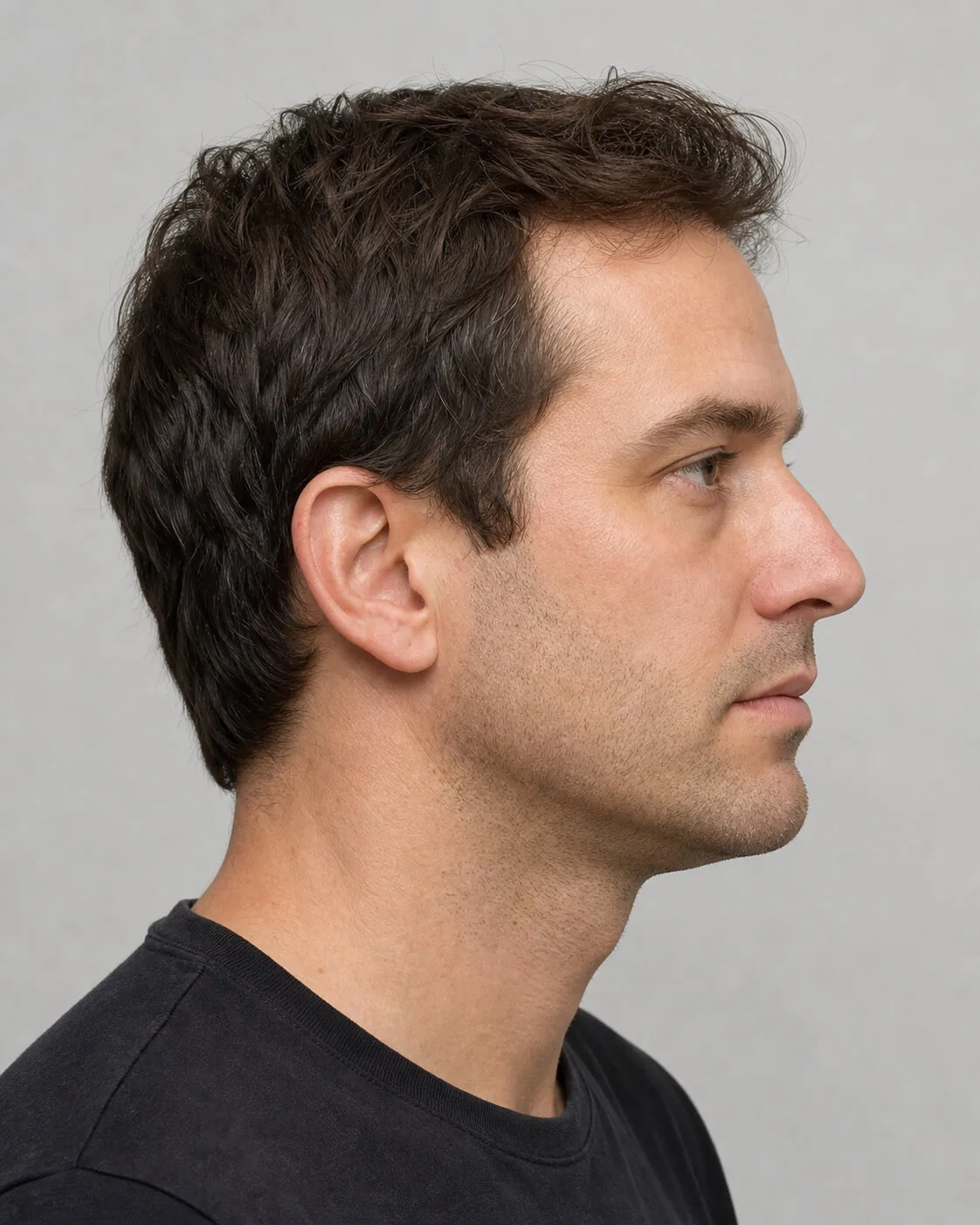
For a jawline concern noticed on video calls near Notting Hill, check four camera variables: lens distance, camera height, head pitch and crop. A close wide lens can enlarge central features, a low camera can emphasise the area below the jaw, chin position changes the neck transition and a tight crop removes whole face proportion. These effects do not make the concern imaginary; they show why screen evidence needs direct comparison. Corey Anderson RN assesses the jaw border, chin relationship, muscle, soft tissue, skin, health, previous care, risks and the features you want to preserve. Suitable care can be planned when individual assessment and informed consent support it.
Why Audit The Camera Geometry?
A video image is produced by a lens position and a crop, not simply by the face in front of it. Small setup changes can alter the apparent jaw border, chin and upper neck.
The audit helps describe screen variation while keeping your real concern available for assessment.
Which Four Camera Variables Matter?
| Variable | Common screen effect | Simple comparison |
|---|---|---|
| Lens distance | Close cameras exaggerate near features | Move the device farther away and reframe |
| Camera height | Low angles show more area below the jaw | Place the lens near eye level |
| Head pitch | Chin lift or tuck changes neck transition | Use a comfortable neutral position |
| Crop | Tight framing removes facial proportion | Include the whole head and shoulders |
How Does Lens Distance Affect The Lower Face?
A nearby laptop or phone lens can make the closest parts of the face appear relatively larger. Moving the camera back and using a wider frame often changes those proportions.
This comparison identifies a lens effect; it does not diagnose the jawline or decide whether the concern matters.
Why Does Camera Height Matter?
A camera below eye level looks upward and can expose more of the underside of the jaw and upper neck. A very high camera creates a different compression of the lower face.
Eye level is a useful neutral comparison, although direct assessment remains more informative than any single setup.

What Does Head Pitch Change?
Lifting the chin can stretch the upper neck and sharpen parts of the jaw border. Tucking it can shorten that transition and create folds that are absent in a neutral posture.
Use the head position you naturally hold during conversation, not a pose designed to improve or worsen the outline.
How Can A Tight Crop Alter Proportion?
A crop that shows only chin and jaw removes the cheeks, temples and shoulders that normally frame lower face proportion. The feature may then dominate attention.
Compare a close crop with a head and shoulders frame and note which part of the concern remains consistent.

What If The Concern Remains Across Setups?
A jawline feature that remains noticeable across sensible camera positions is useful history. Note whether it also appears in mirrors, ordinary photographs and face to face interaction.
Corey then assesses whether jaw structure, chin relationship, muscle, mobile tissue, skin or several contributors explain the consistent observation.
Which Noncamera Details Belong In Assessment?
Bring current medicines and supplements, allergies, relevant health, skin, dental and jaw history and previous cosmetic care with approximate dates. Mention pain, swelling, bite change, altered sensation or another unfamiliar change.
These details matter regardless of how the jawline appears on screen and may support additional clinical input when useful.
Notting Hill Video Jawline Questions
Which camera variables can change jawline appearance?
Lens distance, camera height, head pitch and crop can all alter how the jaw, chin and upper neck appear on screen. Comparing a few sensible setups helps identify variation without dismissing the underlying concern.
Why can a close laptop camera change facial proportion?
A nearby lens makes features closest to it appear relatively larger than features farther away. Moving the device back and reframing can reduce that effect, although direct assessment is still needed to interpret the jawline.
What camera height is useful for comparison?
A lens near eye level provides a useful neutral comparison. Low cameras expose more of the area below the jaw, while very high cameras compress the lower face differently. Natural posture matters alongside height.
Does camera distortion mean the concern is not real?
No. Screen variation is real evidence about how a setup renders the face. Corey compares it with mirrors, ordinary photographs, face to face appearance and direct assessment so neither the camera nor the concern is dismissed.
What if the jawline looks similar in every setup?
A consistent feature is useful history. Corey assesses whether jaw structure, chin relationship, chewing muscle, mobile tissue, skin or several contributors explain it, while also considering health, previous care and your priorities.
What screen examples should I bring?
One ordinary call screenshot with a note about device position may be useful. A second image from farther away at eye level can show the geometry change. These examples provide context rather than a result target.
Can suitable care be planned at consultation?
Yes. Suitable care can be planned when individual assessment and informed consent support it. More information, adjusted timing, another clinical review or a different pathway can be incorporated when useful, with realistic limits discussed.
Is Core Aesthetics located in Notting Hill?
No. Core Aesthetics is in nearby Oakleigh. Check the journey from your actual starting point and whether returning for planned review is practical. This local page does not imply a clinic location in Notting Hill.
Where Can You Continue The Jawline Discussion?
Read the Melbourne jawline guide, jawline consultation guide, Notting Hill jaw muscle guide and jawline and chin comparison.
This page provides general education and does not diagnose a lower face concern, confirm suitability or replace personal medical advice. These cosmetic procedure guidelines inform the consultation process. See the Ahpra guidelines for registered health practitioners who perform non-surgical cosmetic procedures and the TGA guidance for advertising health services involving therapeutic goods.
Is this for you?
Consider booking a consultation if
- Adults who want jawline, chin, jowl, jaw muscle and lower face context assessed before treatment discussion
- Patients comparing local access with practitioner verification and review planning
- Patients with previous treatment who may need records review, waiting or original clinic review
- People who value a clear explanation of options, timing, follow-up and other clinical input
This may not be for you if
- People asking for a predetermined plan without assessment, consent or risk discussion
- People seeking a promised sharper jawline before consultation
- People wanting public prescription product advice or product led recommendations
- People with urgent medical, dental, infection, pain or jaw symptoms who need appropriate medical or dental care
Suitability is confirmed at consultation. This list is general guidance, not a substitute for clinical assessment.