For a lip concern near Glen Huntly, label each statement as a personal observation, memory, photograph, borrowed claim or question for clinical assessment. The labels reveal which parts are established and which need history, records or direct assessment. Corey Anderson RN considers lip shape, movement, proportion, health, dental context and previous care before explaining suitable options, material risks, alternatives, costs, timing and follow up. When clinically appropriate and informed consent is complete, suitable care can be planned. More information, adjusted timing, another clinical review or a different clinically appropriate pathway can be incorporated when useful.
Put A Source Beside Every Part Of The Concern
Write the concern in the words that first come to mind. Then mark each part as something you observe now, remember from earlier, see in a photograph, heard from another source or want Corey to assess.
The exercise takes only a few minutes. It often turns a fixed request into a clearer and more useful consultation question.
What Are The Five Source Labels?
What can you notice now?
Describe location, shape or movement without naming a cause.
What do you remember?
Note when the comparison comes from and how certain the memory feels.
What does one image seem to show?
Record the date, camera, distance, light and expression when known.
Who supplied the label?
Name whether it came from a friend, post, advertisement or search.
What still needs assessment?
Place cause, suitability, risk and suitable pathways here.
A page filled mostly with photographs or borrowed claims is still a valid reason to book. Bring it as a question rather than converting it into a preset answer.
What Is The Mirror Useful For?
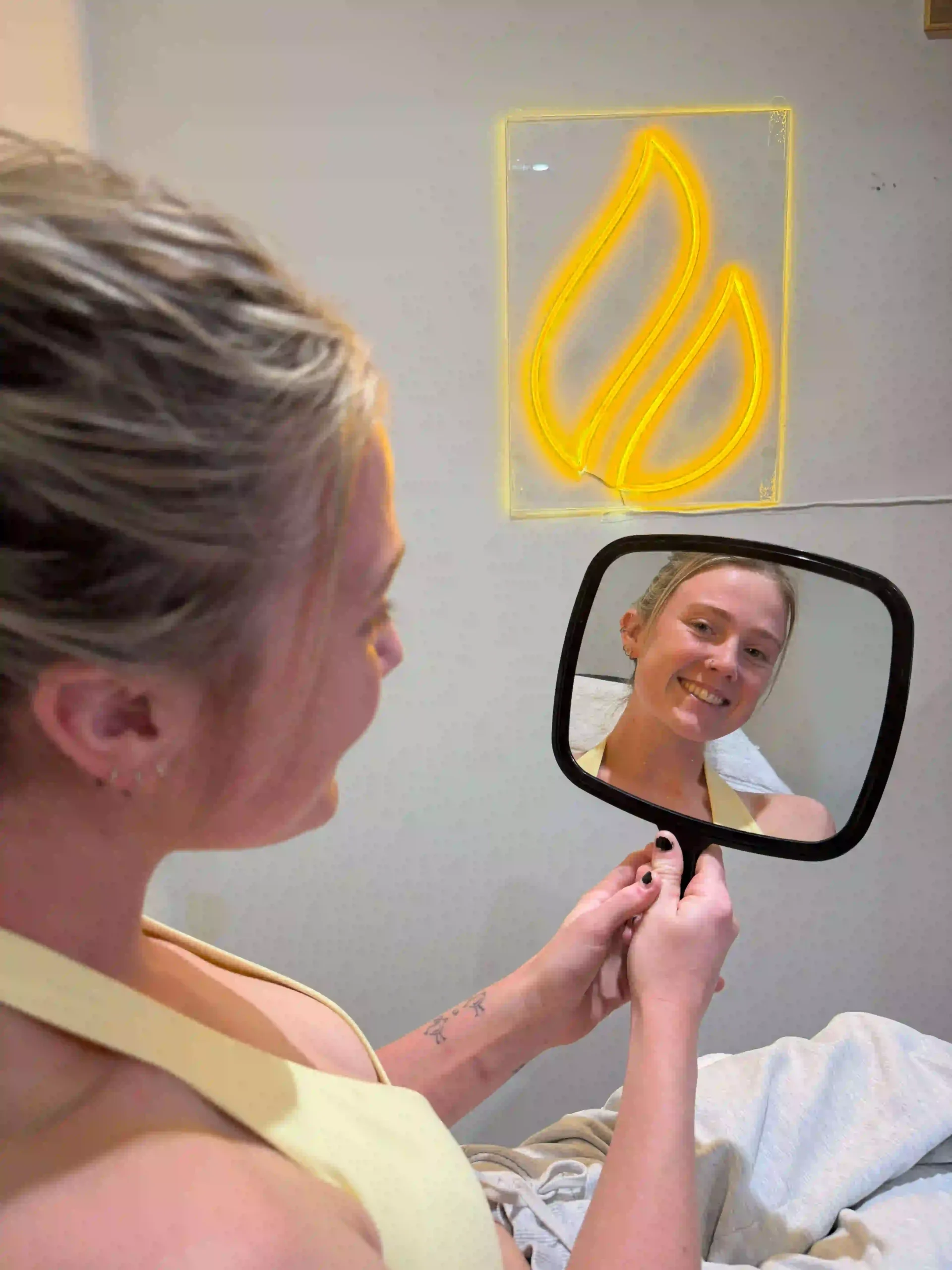
Use the mirror to locate an observation: for example, “At rest, I notice less upper lip than lower lip,” or “During speech, my attention goes to the left corner.” Stop before naming a cause.
The reflection cannot establish why the pattern exists, whether it has changed or which option is suitable. Corey combines the observation with movement, history and direct assessment.
What can one confident sentence contain?
| Label | Plain-language note | What it does not establish |
|---|---|---|
| Observation | I notice less upper lip is visible at rest today. | Why it looks that way or whether it needs treatment. |
| Memory | I remember seeing more in older photographs, but I cannot date the change. | That the change was gradual, recent or clinically significant. |
| Photograph | The front camera and bathroom mirror do not look the same. | Which view is anatomically “correct”. |
| Borrowed | A friend called it volume loss. | That the label is accurate or useful. |
| Clinician question | What does assessment at rest and in movement show? | No answer is assumed before consultation. |
The resulting brief is more honest and more useful than a polished request. It also gives Corey permission to disagree with the label.
Why Is A Photograph Context Rather Than A Verdict?
Front cameras, close distance, lens position, lighting and expression can change apparent proportion. Cropping and filters remove more context. Bring the original image when it matters and explain what you notice.
A photograph can support a timeline or preference discussion. It cannot diagnose a cause, confirm suitability or create a predictable result target.
What Does Local Information Actually Establish?
Local information can help you check the route from your starting point to the Oakleigh clinic and whether a later review would be practical.
It cannot establish anatomy, health history, preferences or suitability. Those details come from the person and the individual assessment.
Can A Clinical Question Remain Open At Booking?
Yes. You do not need to know whether the concern involves stable anatomy, movement, skin, previous care or another factor before attending. Corey can gather the relevant history and assess the pattern.
The consultation can lead to suitable care planning, useful records, another clinical review, adjusted timing or a different pathway. Each is a normal way to tailor the next step.
Which Symptoms Need A Health Or Dental Pathway?
New pain, fever, dental or gum swelling, a bad taste, pus, a persistent mouth sore, rapid swelling, spreading redness, breathing difficulty, numbness or another unexplained change needs appropriate dental, medical or emergency assessment.
Once the health question is understood, the lip consultation can incorporate the relevant information and timing.
Is this for you?
Consider booking a consultation if
- Adults starting from Glen Huntly who want to separate personal observation from photographs, memories and outside opinions
- People willing to bring an unfinished question rather than a fixed product, quantity or outcome request
- Readers able to accept records, observation, another clinician, waiting, later review or a staged lip plan as useful outcomes
This may not be for you if
- Anyone with breathing difficulty, rapid swelling or another emergency symptom who needs urgent care
- Anyone with dental or gum pain, fever, bad taste, a persistent mouth sore or another unexplained health change who needs an appropriate clinician first
- Anyone seeking a diagnosis, product recommendation, fixed outcome or confirmation of suitability from a public page
Suitability is confirmed at consultation. This list is general guidance, not a substitute for clinical assessment.
What Should You Bring Into The Consultation?
Bring the five labelled sources and explain which parts feel like firm observations. Add current medicines, relevant health and dental history, previous care dates, records and practical timing.
Corey assesses lip shape, movement and proportion, then explains suitable options, material risks, alternatives, costs, aftercare and follow up.
What Should You Leave Understanding?
| Question | Useful answer |
|---|---|
| What did assessment establish? | A plain explanation of the observed pattern and its limits. |
| What remains uncertain? | Missing records, observation or other clinical input is named. |
| Which alternatives exist? | Suitable options, adjusted timing and other pathways are explained. |
| What happens next? | Costs, aftercare, warning signs and review access are clear. |
When an option is clinically appropriate and informed consent is complete, suitable care can be planned. You should leave with a clear next step even when more information is useful.
Evidence behind the source check
Sources were checked on 26 July 2026. Glen Eira City Council supports the limited route context. Healthdirect supports the separate mouth and dental pathways. Ahpra supports assessment, motivation, consent and responsible image use.
- Glen Huntly shopping centre
Local evidence for the Glen Huntly Road, Bambra Road, Kooyong Road and tram access context only.
- Mouth sores and ulcers
Public guidance on persistent, recurrent, very painful or otherwise worrying mouth changes and when to seek health advice.
- Tooth abscess
Dental guidance for tooth or gum pain, swelling, fever, bad taste and prompt dental or medical review.
- Thinking about cosmetic injectables
Public questions about practitioner consultation, medical history, expectations, possible risks, informed consent and emergency processes.
- Guidelines for registered health practitioners who perform non-surgical cosmetic procedures
Patient suitability, personal motivation, expectations, informed consent, records, aftercare and follow-up responsibilities.
- Guidelines for advertising higher risk non-surgical cosmetic procedures
Requirements for factual, non-misleading advertising and responsible use of images.
- Advertising health services that involve therapeutic goods
Product-neutral public health service advertising and restrictions on direct or indirect prescription medicine references.
- Ahpra public register of practitioners
Independent verification of practitioner registration.
Ahpra and TGA sources guide practitioner conduct, advertising and verification. They do not endorse Core Aesthetics, this page or an individual plan.
Questions About The Lip Source Check
What is the lip source check?
Write the concern, then label each part as personal observation, memory, photograph, borrowed claim or clinical question. The labels expose assumptions while giving Corey a clear starting point for individual assessment.
Why separate an observation from a borrowed claim?
An observation describes what you notice now. A label such as volume loss may come from a friend, advertisement or search. Corey can assess the observation without treating the borrowed label as established fact.
Can a photograph prove that something changed?
A dated series can support memory, but camera distance, lens, light, expression and editing alter appearance. Bring useful images as context rather than proof of diagnosis, suitability or a predictable result.
What if most of my notes come from social media?
Mark those statements as borrowed. You do not need to defend them. Corey can restart with what you personally notice, when it began, how movement changes it and which information is still missing.
Which questions belong to clinical assessment?
Cause, diagnosis, tissue behaviour, previous care, suitability, risks and possible options require individual assessment. A mirror, photograph, public page or another person’s label cannot settle them.
When should I seek dental or medical advice?
New pain, fever, dental or gum swelling, a bad taste, pus, persistent mouth sore, rapid swelling, spreading redness, breathing difficulty, numbness or another unexplained change needs appropriate health assessment.
Is Core Aesthetics located in Glen Huntly?
No. Core Aesthetics is in Oakleigh. Check directions from your actual starting point, allow comfortable arrival time and consider whether returning to the clinic for review would be practical.
What Can The Source Check Not Decide?
This page provides general education for adults. It cannot diagnose a medical, dental, skin or lip concern, confirm suitability, recommend a treatment or replace personal health advice and informed consent.
Official guidelines for registered health practitioners who perform non-surgical cosmetic procedures support individual assessment, consent and appropriate follow up. These cosmetic procedure guidelines inform the consultation process. TGA advertising guidance explains why prescription products are not promoted here.