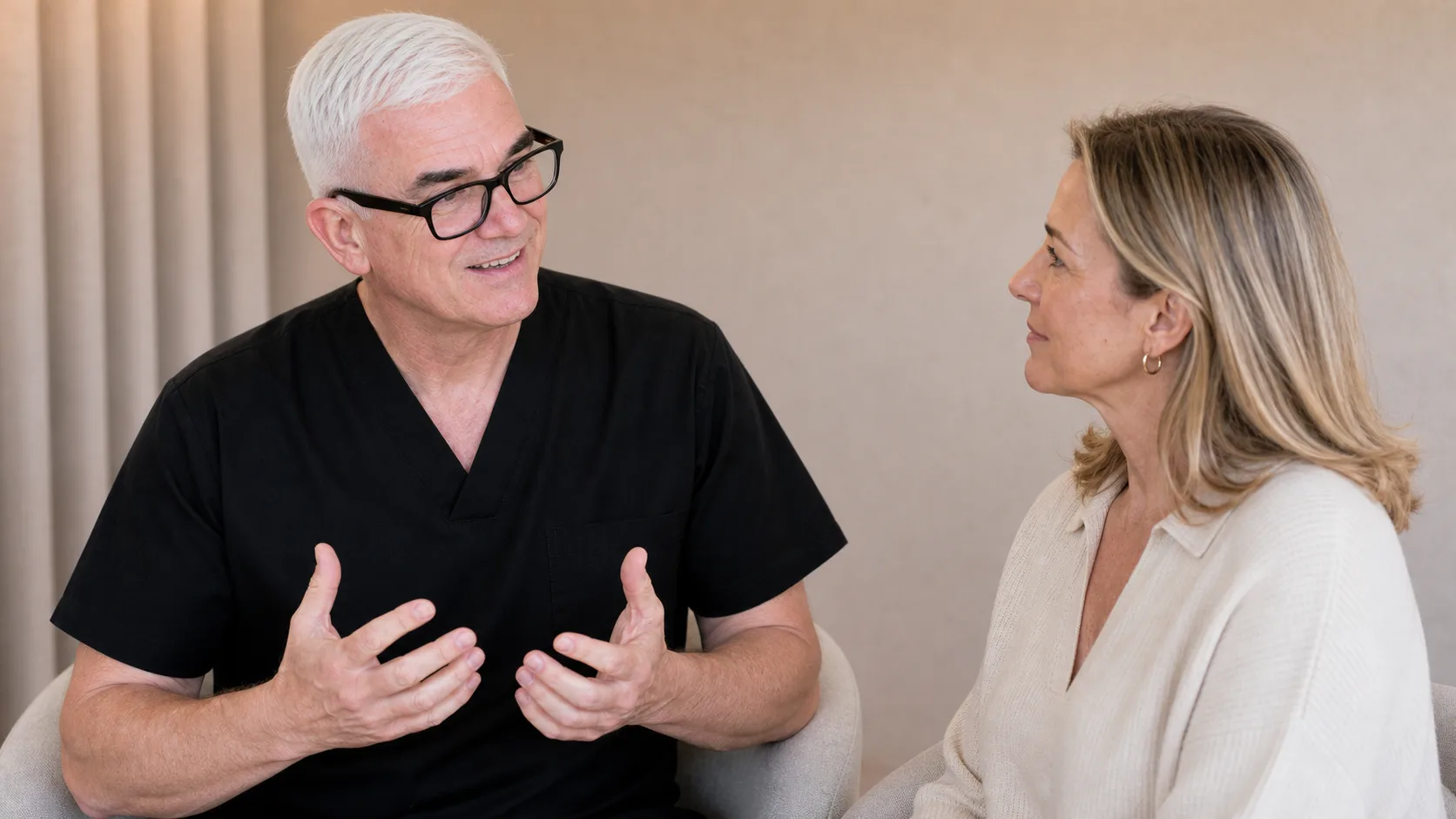
For a facial volume consultation near Hampton, map three contour handoffs: lower eyelid to cheek, cheek to mouth and lower face, and chin to jaw. Record which transition first looked different, whether it changes with light or expression, and which feature should remain familiar. Corey Anderson RN assesses structure, skin, movement, asymmetry, health, dental and previous care context rather than assuming volume loss. When individual assessment and informed consent support it, suitable care can be planned with material risks, alternatives and review needs explained.
What Is A Facial Contour Handoff?
A handoff is the visual transition where one facial area meets another. Instead of isolating a hollow, fold or shadow, describe where the contour changes and what sits on each side.
Choose the one handoff that first drew your attention, then record how light, expression and head position affect it.
Which Three Handoffs Belong In The Map?
| Handoff | What to observe | Context Corey adds |
|---|---|---|
| Lower eyelid to cheek | Whether the transition is smooth, shadowed or different between sides. | Eye area, cheek structure, skin, light and natural asymmetry. |
| Cheek to lower face | How cheek contour meets the mouth corner, fold and lower face. | Movement, skin, dental context and facial structure. |
| Chin to jaw | How the chin relates to the jawline and profile. | Chin shape, jaw structure, neck context and head position. |
| Preservation boundary | The contour, softness or expression that should remain familiar. | A personal limit carried into assessment and consent. |

Why Can A Handoff Look Different Without Volume Loss?
Light direction, skin surface, facial movement, fluid change, head position and camera lens can alter a transition. Dental changes, weight history and previous care may also affect the context.
Corey assesses the underlying relationship rather than accepting “lost volume” as the cause. A descriptive word begins the question; it does not decide the answer.
How Do You Compare A Handoff Fairly?
Use comfortable front and three quarter views in ordinary light, then observe one natural expression. Keep the camera distance and head position similar without trying to recreate a clinical photograph.
Note whether the transition is stable, changes mainly with shadow or moves with expression. One short comparison is enough.
What Does Corey Assess Around The Three Handoffs?
Corey observes facial structure, cheek and midface contour, lower eyelid context, lower face relationships, chin, jaw, profile, skin, movement and natural side differences. He also reviews health, medicines, dental history and previous cosmetic care.
The first noticed handoff and preservation boundary remain central. Examining neighbouring areas does not mean they all become part of a cosmetic plan.
How Does The Map Keep A Broad Concern Focused?
Choose one lead transition and one preservation boundary. Other handoffs provide comparison, but they should not turn a focused concern into a catalogue of changes.
If the issue is clearly limited to cheek support, Corey may use a narrower cheek pathway. If several service questions remain open, a broader aesthetic consultation may fit better.
Which Changes Need Another Clinical Perspective?
A sudden, painful, swollen, weak, numb or rapidly changing facial concern needs assessment by an appropriate health professional. Dental pain, oral symptoms, infection signs, a changing lesion or new neurological symptoms should not be treated as a routine facial volume question.
For a stable cosmetic concern, more information, adjusted timing, another clinical review or a different pathway can be incorporated when useful.
How Are Suitable Options Risks And Limits Discussed?
If an option is suitable, Corey explains material risks relevant to the individual, including temporary marks, swelling, tenderness, asymmetry, firmness, infection, delayed reactions and urgent warning signs where relevant. Alternatives, uncertainty and likely limits are also discussed.
When clinically appropriate and informed consent is complete, suitable care can be planned with total cost, aftercare and follow up made clear.
What Belongs Beside The Handoff Map?
Bring current medicines, relevant health and dental history, previous care dates and available records. Add major weight change, illness or skin inflammation only when it helps explain timing.
One ordinary older photograph may help show when a transition changed. It should not become a target image or promise of restoration.
Which Guide Fits If One Question Clearly Leads?
The lower eyelid to cheek transition leads
Use the cheek assessment guide.
Incomplete earlier records lead
Use the previous care reconstruction guide.
The concern is broader than volume
Use the Hampton aesthetic consultation guide or facial volume consultation guide.
Questions About Facial Contour Handoffs
What is a facial contour handoff?
It is the transition where one facial area meets another, such as lower eyelid to cheek or chin to jaw. Describing the handoff avoids isolating one shadow or fold.
Which handoff should I record first?
Choose the transition that first drew your attention and describe whether it is stable, changes with light or moves with expression. Add the feature you want preserved.
Does a shadow prove facial volume loss?
No. Light, skin surface, movement, fluid change, head position and camera choice can alter a shadow. Corey assesses structure and history before explaining what may contribute.
Why assess the chin and jaw in a volume consultation?
Chin and jaw relationships influence how the lower face and profile read. Assessing context does not mean either area needs cosmetic care or belongs in a suitable plan.
What if my concern is clearly limited to the cheek?
A narrower cheek assessment may be more useful. The broader handoff map fits when lower eyelid, cheek, lower face, chin or jaw relationships need to be understood together.
Is Core Aesthetics located in Hampton?
No. Core Aesthetics is in Oakleigh. Check the trip from your actual starting point and make sure returning to the clinic for review would be practical.
How do I verify Corey Anderson?
Use the clinic verification guide and independent Ahpra public register to confirm Corey Anderson is a Registered Nurse under registration NMW0001047575. Match his current registration details.
Is this for you?
Consider booking a consultation if
- Adults near Hampton wanting facial volume assessment before option discussion
- Patients who want consultation first explanation of facial structure, support, risk and consent
- People open to exploring facial structure, skin quality and proportion, suitable options, timing and review needs
- Patients who want to verify Corey Anderson RN and the Oakleigh clinic before booking
This may not be for you if
- People asking for a predetermined plan without assessment, consent or risk discussion
- People with urgent medical symptoms, acute swelling, active infection or rapidly changing concerns
- People wanting a fixed cosmetic outcome before anatomy, support and previous treatment are assessed
- People seeking advice for someone unable to provide informed consent for elective cosmetic care
Suitability is confirmed at consultation. This list is general guidance, not a substitute for clinical assessment.