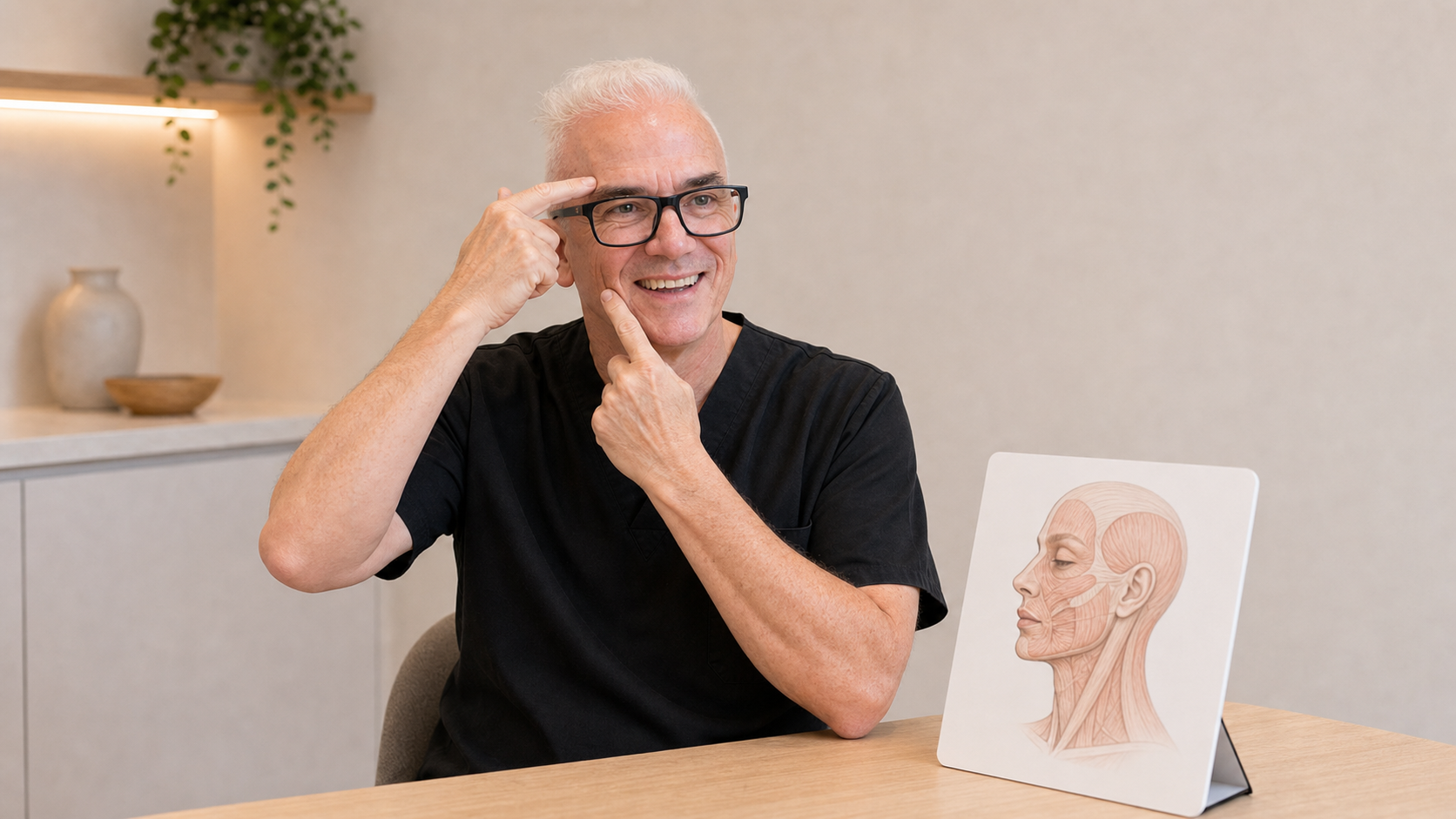
For a facial volume consultation near Brighton, build a related change map: identify the first change you noticed, the neighbouring feature that seemed to shift with it, what remained stable and the relationship you want preserved. Corey Anderson RN assesses cheek, midface, under eye, temple, lower face and profile context together with skin, movement, health, dental and previous care history. When individual assessment and informed consent support it, suitable care can be planned with material risks, alternatives, limits and review arrangements explained.
What Belongs In The Four Part Map?
Where did you notice it first?
Name the cheek, temple, midface, lower face or another specific area without choosing a treatment.
What seemed to change nearby?
Describe a shadow, fold, transition or profile relationship that appeared different at the same time.
What still feels familiar?
Identify a feature, expression or proportion that remains recognisably yours.
Which relationship should stay?
State what you would not want a suitable plan to overpower or disconnect.

Why Assess Connected Relationships Instead Of One Area?
Cheek contour can affect the visual transition to the lower eyelid, while chin, jaw, nose and lip relationships influence how the profile reads. Light, skin surface, expression and camera angle can also change the apparent boundary between areas.
Corey assesses the feature that brought you in without assuming it is the only contributor. The change map keeps the original concern visible while the neighbouring context is examined.
When Is A Narrower Page More Useful?
Several relationships changed together
Use this page when the first concern and a neighbouring facial feature need to be understood as a connected pattern.
The cheek or midface question is specific
Use the Brighton cheek assessment when projection or midface support is clearly the main concern.
You need a general consultation first
Use the Brighton consultation guide when several different service questions remain open.
Why Add A Timeline To The Map?
A first noticed change gives Corey a sequence to test rather than assuming every visible feature changed together. Add major weight change, dental work, illness, skin inflammation, menopause context, previous care or another event only when it is relevant.
You do not need an exact date. An older unfiltered photograph can help establish timing, while current records and a plain description are more useful than repeated close checking.
What Does Corey Examine Around The Map?
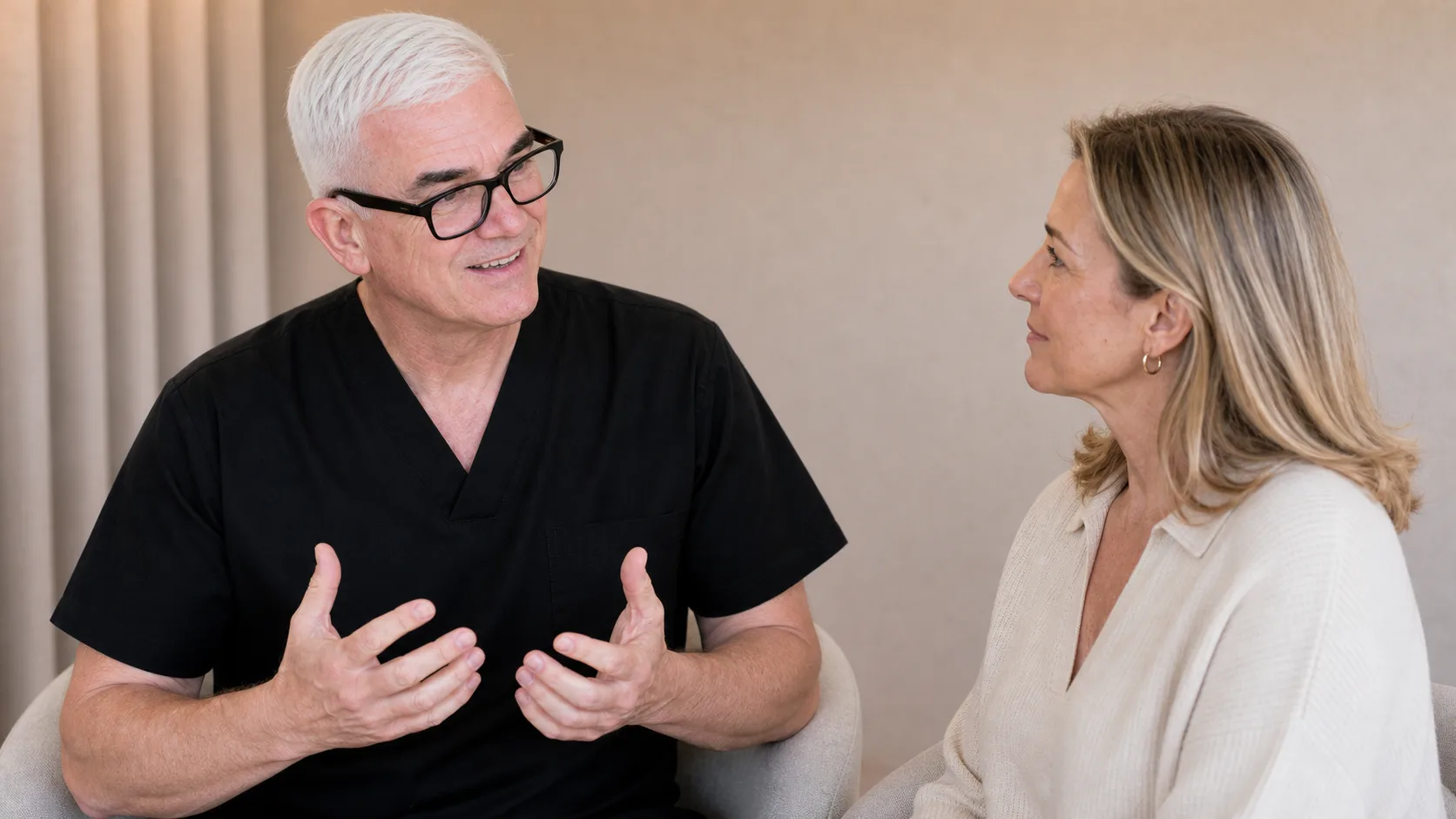
Corey observes facial structure, cheek and midface transitions, temple and under eye context, lower face relationships, profile, natural asymmetry, movement and skin quality. He also asks about health, medicines, dental history and previous cosmetic care.
The stable anchor and preservation boundary remain beside those observations. Any suitable option must be discussed in relation to the whole pattern, not treated as permission to change every connected area.
What Information Makes The Map More Useful?
| Map detail | What to record | Why it helps |
|---|---|---|
| Sequence | The first feature noticed and what seemed to shift afterwards. | Separates a sequence from changes that were merely noticed together. |
| Context | Relevant health, weight, dental, skin and previous care history. | Places appearance within an individual clinical history. |
| Stable anchor | The expression, contour or proportion that still feels familiar. | Defines what assessment and consent should protect. |
| Practical plan | Upcoming events, travel and ability to return for review. | Keeps timing and follow up realistic. |
Which Changes Need Another Clinical Pathway?
A sudden, painful, swollen, weak, numb or rapidly changing facial concern needs assessment by an appropriate health professional. Dental pain, oral symptoms, infection signs, a changing lesion or new neurological symptoms should not be interpreted as a routine facial volume question.
For a stable cosmetic concern, suitable care can be planned when individual assessment and informed consent support it. More information, adjusted timing, another clinical review or a different pathway can be incorporated when useful.

What Happens At The Oakleigh Assessment?
Corey reviews the related change map, relevant history and the features you want preserved. He assesses the facial relationships directly and explains which observations are clear, which remain uncertain and whether another clinical perspective would add value.
When an option is suitable, Corey explains material risks, alternatives, uncertainty, likely limits, total cost, aftercare and follow up before you decide.
Verify Corey and the clinic Read the pricing guide
Official guidelines for registered health practitioners who perform non-surgical cosmetic procedures support individual assessment, consent and follow up. These cosmetic procedure guidelines inform the consultation process. TGA advertising guidance explains why prescription products are not promoted here.
Bring The Sequence, Stable Anchor And Preservation Boundary
Turn several observations into one coherent question
Corey can examine which changes are related, what remains uncertain and how personal boundaries belong in any suitable plan.
Is this for you?
Consider booking a consultation if
- Adults travelling from Brighton who want a broader facial volume assessment before making a decision
- People whose question involves cheeks, midface, skin or overall facial balance rather than one isolated feature
- People who want previous care, timing and practical return access considered in the same conversation
- People comfortable with education, timing, review needs or another clinically appropriate pathway as possible outcomes
This may not be for you if
- Anyone seeking a fixed appearance promise or a treatment decision without individual assessment
- Anyone with a sudden, painful, swollen, one-sided or otherwise unexplained facial change requiring medical assessment
- Anyone with active infection, unhealed skin or unresolved concerns after recent care
- Anyone unable to provide informed consent for elective cosmetic care
Suitability is confirmed at consultation. This list is general guidance, not a substitute for clinical assessment.
Frequently asked questions
What is a related facial change map?
Why does Corey assess more than one facial area?
Cheek, midface, under eye, temple, lower face and profile relationships can influence how one concern appears. Wider assessment provides context without assuming every area needs cosmetic care.
What is a stable anchor?
A stable anchor is a facial feature, expression or proportion that still feels familiar. Naming it helps Corey understand what should remain recognisably yours in any suitable plan.
Should I use the cheek volume Brighton page instead?
Use the cheek page when projection or midface support is clearly the main concern. Stay here when the first change and neighbouring facial relationships need broader assessment together.
What should I bring after previous facial volume care?
Bring approximate dates, treated areas, clinic details, available records and a plain description of what changed. Add any swelling, firmness, pain, asymmetry or delayed settling you experienced.
Is Core Aesthetics located in Brighton?
No. Core Aesthetics is in Oakleigh. Check the journey from your actual Brighton starting point and confirm that returning to the clinic for review would be practical.
How do I verify Corey Anderson?
Use the clinic verification guide and independent Ahpra public register to confirm Corey Anderson is a Registered Nurse under registration NMW0001047575. Match his current registration details before booking.