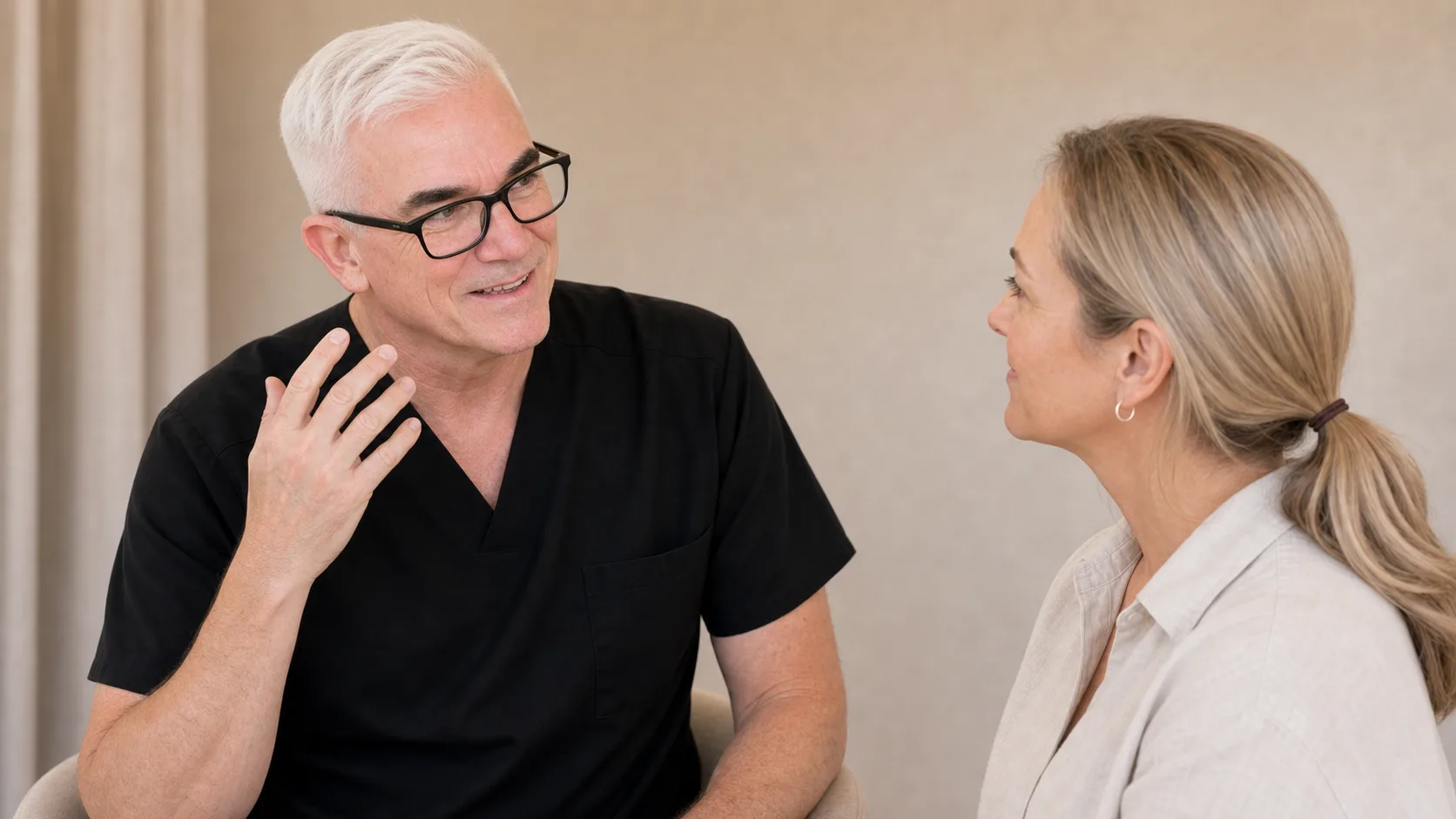
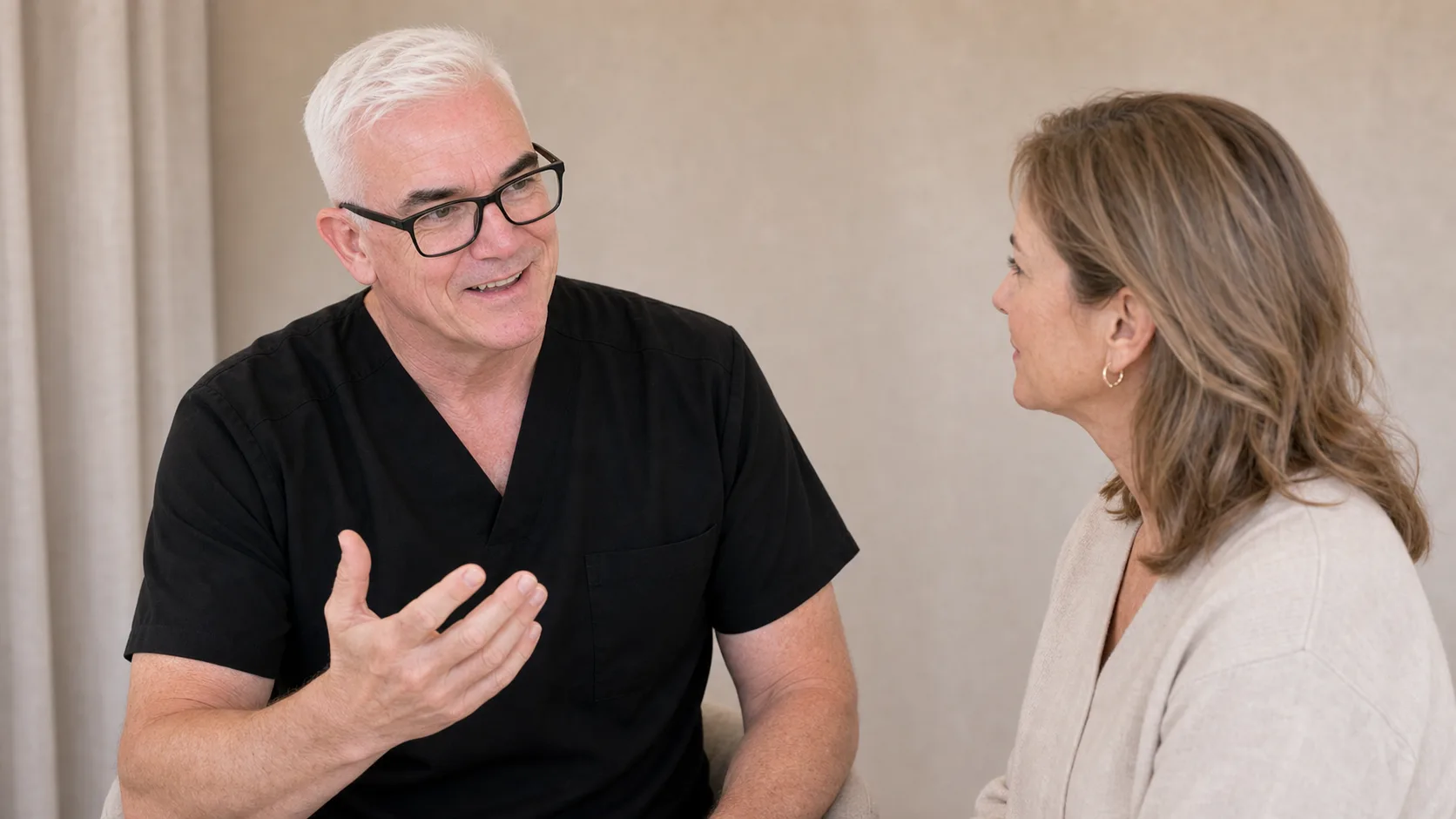
Murrumbeena patients can meet Corey Anderson RN in Oakleigh for an individual facial support assessment. Corey compares cheek and midface structure, under eye transition, lower face proportion, skin quality, movement and recent weight change. He also reviews health history, previous care and goals before explaining suitable options, material risks, alternatives, costs, aftercare and follow-up. When assessment and informed consent support an option, suitable care can be planned.
Where Does The Change First Catch Your Eye?
You might notice a stronger shadow below the cheek, a flatter transition beside the nose, a different under eye contour or less continuity between the cheek and lower face. Begin with the place and moment you notice rather than deciding that “volume loss” is the diagnosis.
Corey can compare both sides in ordinary light, at rest and during expression. That observation helps separate skin quality, structure, movement, weight change and previous care before options are discussed.
Why Is Facial Support Assessed As A Pattern?
The cheek does not sit in isolation. Its relationship with the temple, under eye area, nose, mouth corners, jawline and chin affects how light travels across the face. A change in one transition can make another area look more prominent.
Corey looks at the complete pattern and asks what you want to keep familiar. The aim is proportionate advice based on your face, not a standard amount or a list of areas to change.
What Details Help Explain A Change In Facial Contour?
Bring a short timeline rather than a perfected explanation.
- Note where the change appears and whether lighting or expression alters it.
- Mention recent weight change, illness, dental work, skin changes or hormonal context.
- List medicines, allergies and relevant health history.
- Bring dates and records from previous cosmetic care where available.
- Explain which family features, expressions and proportions you want to preserve.
Which Clues Does Corey Compare?
Several observations help turn a broad concern into a useful assessment.
| Observation | What Corey considers | Why it matters |
|---|---|---|
| Light and shadow | Where contour changes across the cheek and midface | Shows the transition that prompted your concern. |
| Rest and expression | How the pattern changes when smiling or speaking | Separates a static feature from movement. |
| Side-to-side structure | Natural asymmetry and previous changes | Supports realistic, individual goals. |
| Skin surface | Texture, elasticity and hydration | Clarifies what structural planning cannot address alone. |
| Lower-face relationship | Chin, jawline and mouth corner context | Keeps the cheek discussion connected to overall proportion. |
How Do Weight, Skin And Previous Care Affect The Discussion?
Weight change can alter facial contour, while skin quality can change how shadows and folds appear. Previous cosmetic care may also affect symmetry, tissue feel or the timing of future decisions. Tell Corey what changed and when, even if you are unsure whether it is relevant.
For sudden facial weakness, new numbness, severe pain, marked swelling or a rapidly changing concern, contact your GP or another appropriate clinician. For a stable cosmetic concern, Corey can assess the pattern and explain suitable next steps.
How Can You Make A Broad Concern More Specific?
Point to the transition
Show where the change starts and ends, such as cheek to under eye, cheek to nose or lower face to jawline.
Describe the light
Say whether the concern appears in overhead light, side light, photographs or the mirror. This helps distinguish a persistent contour from a lighting effect.
Include movement
Explain whether smiling softens, deepens or moves the area. Corey can then compare the face at rest and in expression.
Name what should remain familiar
Family resemblance, natural asymmetry and characteristic expressions can all be important boundaries for planning.
Ask how the pieces connect
Corey should explain why a feature is relevant, what an option may and may not change, and how follow-up fits the plan.
What Can The Assessment Reveal About Proportion?
A cheek shadow does not automatically mean one specific option is appropriate. It may reflect structure, skin, movement, weight change, previous care or the relationship between neighbouring features.
Corey brings these clues together with your health history and priorities. He can then explain which options are suitable to explore, their limits and material risks, and whether adjusted timing or more information would make the plan better informed.

Which Page Matches Your Next Question?
Use the Melbourne facial support guide for the broader framework, the Oakleigh facial support guide for clinic planning, and the facial support safety guide for risks and warning signs.
If your question is specifically about a hollow-looking cheek, read why cheeks can look hollow. For health and consent preparation, use the suitability assessment guide.
What Risks, Limits And Warning Signs Are Explained?
The risk discussion is individual and depends on the option being considered. It can include swelling, bruising, tenderness, redness, asymmetry, lumps, infection, delayed inflammatory reactions, dissatisfaction and uncommon but serious vascular complications. Corey explains relevant warning signs, clinic contact and when urgent assessment is needed.
He also explains the limits of structural planning. Skin texture, dental context, movement or another health issue may need a different discussion, and timing can be adjusted when more information would make care and follow-up more comfortable.
How Do You Reach The Clinic From Murrumbeena?
Core Aesthetics is at 12A Atherton Road, Oakleigh VIC 3166. Phone 0491 706 705. Plan from Murrumbeena Station, Neerim Road, Poath Road or the address you will actually leave, and check current directions before travelling.
Consultations are led by Corey Anderson RN, Registered Nurse, Ahpra registration NMW0001047575. You can verify Corey and the clinic, view the pricing guide or book a consultation.
What Can Be Planned At The Consultation?
Corey will explain what he observed, suitable options, material risks, alternatives, costs, aftercare and follow-up. When clinical assessment and informed consent support an option, suitable care can be planned without making the appointment feel predetermined.
Adjusted timing, more information or another clinical review can be useful when recent health, dental or weight changes need context. These are practical ways to create a clearer plan, not the expected outcome of every visit.
What Is This Guide Designed To Do?
This page helps adults prepare for an individual facial support consultation. It does not diagnose a cause or confirm suitability. Personal advice comes from an appropriately qualified health practitioner who can assess your history, facial pattern, priorities and consent.
Is this for you?
Consider booking a consultation if
- Adults near Murrumbeena wanting facial volume and structure assessment before option discussion
- Patients who want consultation-first explanation of facial volume, skin quality, risk and consent
- People willing to consider how assessment, timing, follow-up and other clinical input shape the plan
- Patients who want to verify Corey Anderson RN and the Oakleigh clinic before booking
This may not be for you if
- People asking for a predetermined plan without assessment, consent or risk discussion
- People with urgent medical symptoms, active infection, acute swelling or rapidly changing facial symptoms
- People wanting a fixed cosmetic change before facial structure and skin quality are assessed
- People seeking elective cosmetic care for someone who cannot provide informed consent
Suitability is confirmed at consultation. This list is general guidance, not a substitute for clinical assessment.
Frequently asked questions
What does a facial support consultation assess?
Corey compares cheek and midface structure, under-eye transition, lower-face proportion, skin quality, movement, natural asymmetry and relevant weight change. He combines those observations with your health history, previous care and priorities.
How should I describe the change I notice?
Point to where the change starts and ends, note the lighting or expression that makes it clearer, and explain when you first noticed it. You do not need to diagnose volume loss or choose an option before consultation.
Should I bring older photographs?
You may bring a few ordinary photographs if they help show timing or a familiar facial feature. They provide context rather than a promise to recreate an earlier appearance, and current anatomy remains central to assessment.
Can weight change affect facial contour?
Yes. Weight change can alter cheek and midface contour, while skin quality and movement can change the way shadows appear. Tell Corey about the timing so he can assess the pattern in context.
Which risks may be discussed?
Depending on the option, Corey may discuss swelling, bruising, tenderness, redness, asymmetry, lumps, infection, delayed inflammatory reactions, dissatisfaction and uncommon serious vascular complications. He also explains warning signs and review access.
When might timing be adjusted?
Timing may be adjusted around recent illness, dental work, major weight change, travel or recovery commitments when more context would make the plan clearer. Corey explains how this fits a comfortable next step rather than making delay the expected outcome.
Where does Corey consult near Murrumbeena?
Corey Anderson RN consults at Core Aesthetics in central Oakleigh, a short trip from Murrumbeena. His Ahpra registration number is NMW0001047575, and the clinic details can be verified before booking.