Cheek and midface changes can involve facial framework, separate fat compartments, retaining structures, muscle movement, skin quality and weight stability. Lighting and camera position also change how these features appear. A useful assessment identifies the visible pattern and its likely contributors before any discussion about clinical options.
Begin With An Observation, Not A Diagnosis
“My cheeks have lost volume” can feel precise, but it often combines several observations. You may be seeing less projection from the side, a stronger shadow below the eye, a fold that catches light differently, or a change in skin texture. Each deserves to be described separately.
This does not mean the concern is imagined. It means the most useful question is what has visibly changed? rather than which treatment fixes volume loss? That distinction protects normal variation from being treated as a defect and gives a consultation a clearer starting point.
Where Is The Midface?
The midface sits between the lower eyelids and the mouth. It includes the cheekbones, the softer cheek tissues, the transition below the eyes and the area beside the nose. It is not one flat zone, and it does not age or move as one unit.
Bone provides framework. Deep and superficial fat compartments contribute shape. Retaining structures help organise the soft tissues, muscles create expression, and skin forms the visible surface. Research describes these layers and compartments as distinct, which is why a single explanation rarely accounts for every midface concern.
Four Observations That People Often Combine
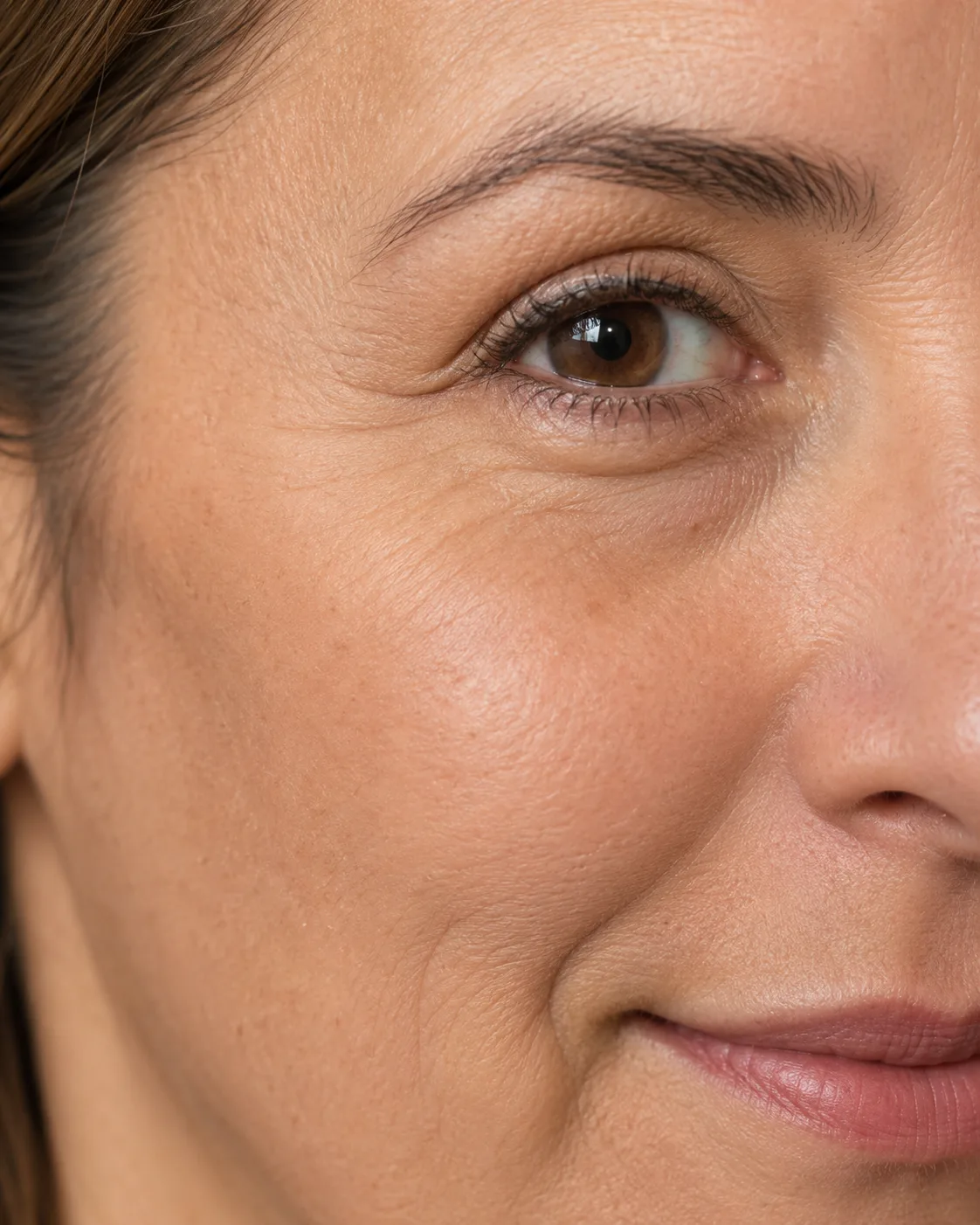
These descriptions separate features that are often grouped under one label.
| What you notice | What it describes | What it does not prove |
|---|---|---|
| Less cheek projection | The cheek appears flatter from the front, three quarter view or side. | It does not identify which layer changed or whether treatment is needed. |
| A clearer under eye boundary | The transition from lower eyelid to cheek looks more visible or shadowed. | It does not mean the under eye area should be considered alone. |
| A stronger fold beside the nose or mouth | A normal crease catches more light or shadow than before. | It does not prove that the fold itself is the source of the concern. |
| More visible surface texture | Fine lines, dryness, pigment or skin laxity affect the surface. | It does not automatically indicate a structural volume change. |
Use More Than One View
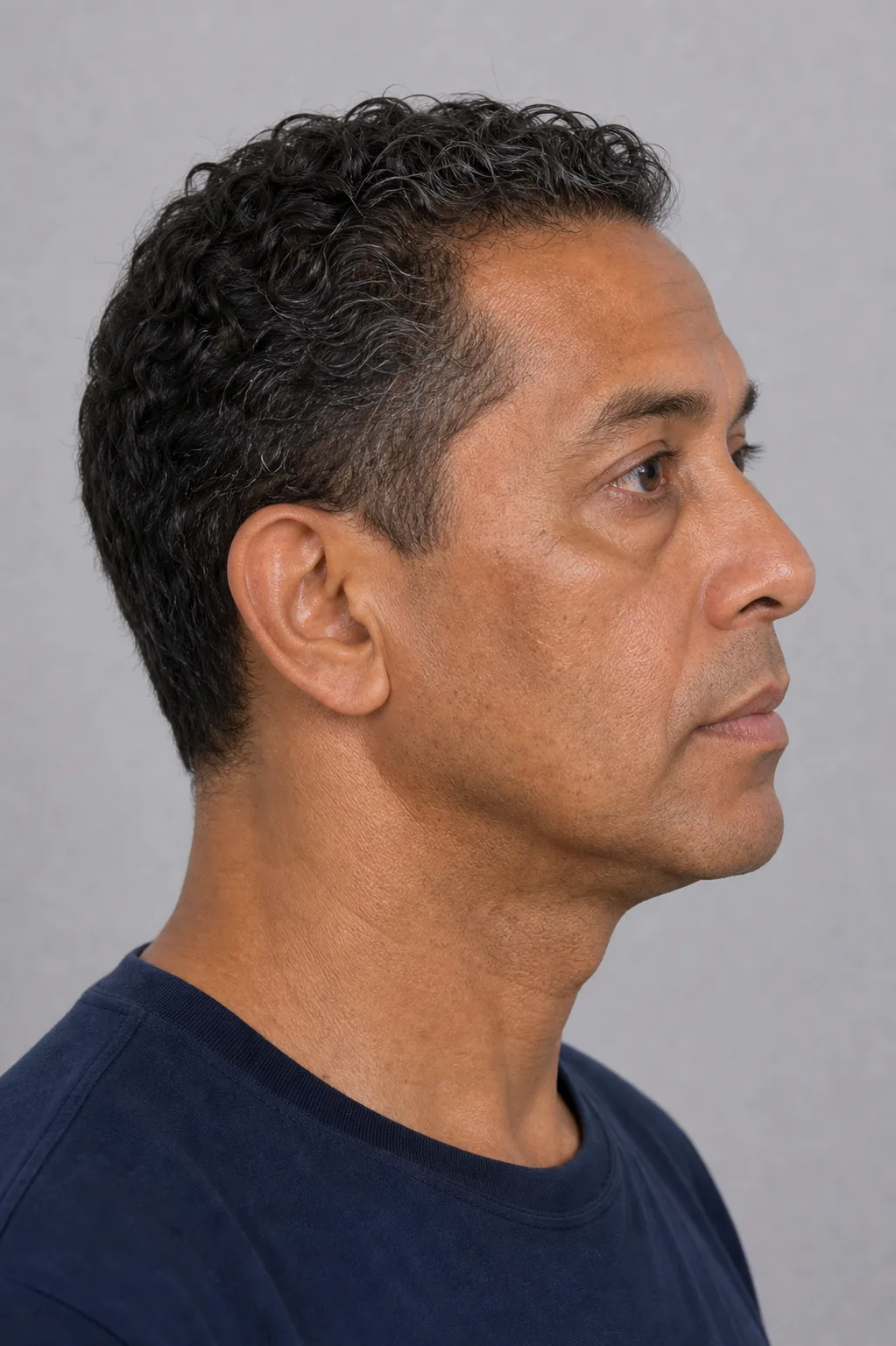
A front view shows symmetry and the relationship between both cheeks. A three quarter view often makes contour transitions easier to see. A side view shows projection. A natural smile shows how the cheek and lower eyelid move together.
Compare these views in soft, even light and at a normal conversational distance. Avoid wide angle phone selfies, extreme head positions and repeated checking under harsh overhead light. The aim is not to diagnose yourself. It is to notice which feature remains consistent across ordinary conditions.
Why Light And Cameras Can Change The Story
Facial contours are read through light and shadow. Overhead lighting can deepen the boundary below the eye and exaggerate folds. A close phone camera can distort central and side proportions, while portrait processing may sharpen or soften texture without making that edit obvious.
If a concern appears in only one bathroom mirror or camera setting, record that fact. If it remains visible across ordinary light, older unfiltered photographs and several viewing angles, that is also useful context. Neither observation confirms a diagnosis by itself.
Ageing Is Layered, Not A Simple Deflation
Published anatomy reviews describe age related change in the midface as a combination of skeletal remodelling, changes within different fat compartments, retaining structure changes and skin ageing. These processes do not occur at the same pace in every person or every part of the cheek.
That matters because “deflation” is too simple a model. One compartment may appear less prominent while another feature becomes more visible by contrast. Family anatomy, ethnicity, sex, sun exposure, health and previous care can influence the pattern. Normal ageing should be explained without presenting it as damage or disease.
Weight Change Can Alter The Baseline
Weight loss or gain can change facial fullness and the way cheek contours meet surrounding areas. The timing, amount and stability of the change matter. A face that is still changing after illness, major weight change or a new health issue may not provide a stable baseline for cosmetic planning.
Bring the timeline to consultation and discuss unexplained or concerning change with an appropriate medical practitioner. A cosmetic page cannot determine whether a change is expected, nutritional, dental, inflammatory or related to another health issue.
Natural Asymmetry Is Part Of The Assessment
Faces are not mirror images. Bone position, chewing preference, dental history, expression and soft-tissue distribution can make one cheek look different from the other. A camera, hairstyle or directional window light may increase that difference.
The relevant question is whether the asymmetry is longstanding and stable or new and changing. Sudden weakness, facial droop, altered sensation, visual symptoms, severe pain or rapidly increasing swelling is not a routine aesthetic concern and needs prompt medical assessment.
Previous Cosmetic Care Can Blur The Pattern
Previous care can alter contour, tissue behaviour and what is visible on examination. Bring dates, treated areas, the clinic name and any records you can obtain. Explain whether there was prolonged swelling, tenderness, lumps, colour change or an unexpected change in balance.
Do not guess what was used. Corey may recommend records, time, review by the original clinic, imaging or another practitioner before offering an opinion. Adding more to an uncertain situation can make the original question harder to understand.
What A Midface Assessment Tries To Clarify
Corey Anderson RN reviews the concern in neutral expression and movement, across more than one angle, and in the context of the whole face. He considers the history, stability of change, skin surface, cheek projection, lower eyelid transition, folds, previous care, expectations and whether the concern falls within clinic scope.
The outcome might be education, monitoring, a request for records, medical or dental referral, discussion of an appropriate clinical option, staged planning or a staged assessment plan. The assessment is useful when it improves the decision, not only when something is done.

Questions Worth Bringing To Consultation
- Which feature am I noticing: projection, shadow, a fold, skin surface or several together?
- Does the pattern look stable across ordinary light and different views?
- Could weight, dental, medical or previous cosmetic history be relevant?
- What findings would make waiting, records or referral more appropriate?
- What are the limitations and risks of any option discussed?
- What would a realistic review plan involve?
You do not need to arrive with a treatment name. A clearly described observation and an open decision are enough.
What useful next step should the appointment provide?
Some adults may be suitable to discuss and proceed with an option on the day, but this cannot be assumed from a photograph, page or booking. Corey first needs a clear history, individual assessment, informed consent, appropriate timing and a safe plan for aftercare and review.
Waiting is always available. If the concern is uncertain, the baseline is changing, records are missing or the decision feels rushed, a later review may be more appropriate.
Choose The Next Page By The Question You Have
If you want an appointment explained, read the facial volume consultation guide or the more focused cheek consultation guide. For a broader starting point, use the consultation library.
Before deciding whether to book, review patient safety, practitioner verification, pricing information, clinic contact details and consultation booking.
Review And Clinic Details
This page was reviewed on 5 September 2026. Core Aesthetics is in Oakleigh, and consultations are led by Corey Anderson RN, Ahpra registration NMW0001047575.
The page uses current TGA and Ahpra advertising guidance, along with peer reviewed and NCBI anatomy sources. It provides education about visible patterns without promoting a prescription medicine, promising an outcome or suggesting that normal facial variation requires treatment.
Questions About Cheek And Midface Change
Is every cheek shadow a sign of volume loss?
No. A shadow can be influenced by bone and soft-tissue anatomy, the lower eyelid to cheek transition, skin surface, expression, lighting and camera position. If it changes dramatically between ordinary light and a close phone image, note that variation. An assessment can describe the pattern but should not assume every shadow needs treatment.
What is the difference between cheek flattening and an under eye hollow?
Cheek flattening describes reduced visible projection or contour across part of the cheek. An under eye hollow describes the boundary or shadow between the lower eyelid and cheek. The two regions are connected, but they are not interchangeable. Corey reviews both, plus skin, movement and the wider facial pattern, before discussing what may be contributing.
Why should I compare front, three quarter and side views?
Each view answers a different visual question. The front view helps compare sides, the three quarter view shows contour transitions, and the side view shows projection. A natural smile adds movement. Consistent, even lighting is important because one close or harshly lit photograph can exaggerate a feature and produce an unreliable impression.
Can weight loss change the cheeks and midface?
It can alter facial fullness and how the cheeks meet neighbouring areas. Timing and stability matter, especially after major weight change, illness or a new health concern. Tell Corey what changed and when. If the face or general health is still changing, waiting or medical review may be more responsible than immediate cosmetic planning.
Does a deeper fold mean the fold itself should be treated?
Not necessarily. A fold is a normal facial structure and may appear stronger because of movement, skin, lighting or changes in nearby support. Looking only at the line can miss the wider pattern. A whole-face assessment should clarify what is visible, what is normal variation and whether any clinical discussion is justified.
How does previous cosmetic care affect assessment?
Previous care can change contour and make the original anatomy harder to interpret. Bring dates, areas, clinic details and available records, and report any prolonged swelling, pain, lumps or colour change. Corey may recommend more time, records, imaging, the original clinic or another practitioner before advising on next steps.
When is a cheek or midface change a medical concern?
Seek prompt medical care for sudden facial weakness or drooping, altered sensation, visual symptoms, severe or increasing pain, rapidly increasing swelling, fever or significant skin colour change. Contact the treating clinic urgently if symptoms follow recent care. Gradual cosmetic concerns do not replace assessment by a GP, dentist or specialist when a health issue may be involved.
Can a cheek and midface consultation include suitable option discussion after assessment?
Sometimes, but it cannot be promised before assessment. The next step depends on clinical suitability, a stable and well understood concern, health history, informed consent, timing and reliable follow up access. You can use the appointment for education only, obtain records, think about the discussion and decide later without losing the value of the consultation.
How can I prepare without overanalysing my face?
Write down what changed, when you first noticed it and whether it varies with light, expression or weight. Bring relevant medical and previous care history. One or two unfiltered older photographs can help, but avoid repeated selfies, filters and extreme angles. The goal is a useful history, not proof that something is wrong.
Is this for you?
Consider booking a consultation if
- Adults who want to understand a gradual cheek or midface change without assuming a diagnosis
- People comparing projection, under-eye transition, folds, skin and lighting as separate observations
- Adults willing to discuss weight, health, dental and previous cosmetic history
- People open to education, monitoring, referral, timing or another clinically appropriate pathway
This may not be for you if
- Anyone with sudden weakness, altered sensation, visual symptoms, severe pain or rapidly increasing swelling who needs prompt medical care
- People seeking a treatment decision from photographs or general web content
- Anyone expecting normal facial variation to be labelled as a defect
- People unwilling to disclose relevant history or obtain records where needed
Suitability is confirmed at consultation. This list is general guidance, not a substitute for clinical assessment.
Clinical references
- TGA: Advertising health services that involve therapeutic goods
- TGA: Advertising health services and cosmetic injections FAQs
- Ahpra: Guidelines for advertising higher risk non-surgical cosmetic procedures
- Ahpra: Public register of practitioners
- NCBI Bookshelf: Anatomy, Head and Neck, Cheeks
- PubMed: Assessing the Midface, Nose and Cheeks
- PMC: The Clinical Importance of the Fat Compartments in Midfacial Aging