Nasolabial folds are normal facial creases between the nose and mouth. Corey Anderson RN assesses cheek support, skin quality and smile dynamics together before discussing whether treatment, skin care priorities, timing or another clinical pathway fits better. If treatment is discussed, the consultation should also cover swelling, bruising, asymmetry, over- or under-correction and whether an appropriate alternative is the safer result.
What Nasolabial Folds Actually Are
Nasolabial folds are the natural creases that run from the sides of the nose towards the corners of the mouth. They separate facial zones and are part of normal facial structure, not a defect that should never be visible.
The useful question is why they are reading more strongly on your face now. That answer usually sits in the cheeks, midface support, skin quality and expression rather than in the fold alone.
Why The Fold Is Not The Whole Story
Several structures influence what people casually call "smile lines".
| Factor | What it can change | Why it matters clinically |
|---|---|---|
| Midface support | Less support above the fold can make it appear deeper. | The cheek often matters more than the crease itself. |
| Skin quality | Reduced firmness can sharpen surface creasing. | Skin-care foundations remain relevant. |
| Expression and smile dynamics | Movement naturally creates and deepens the fold. | Some fold is normal and desirable. |
| Bone and structural change | Framework support can shift over time. | Explains why the same face can look different later on. |
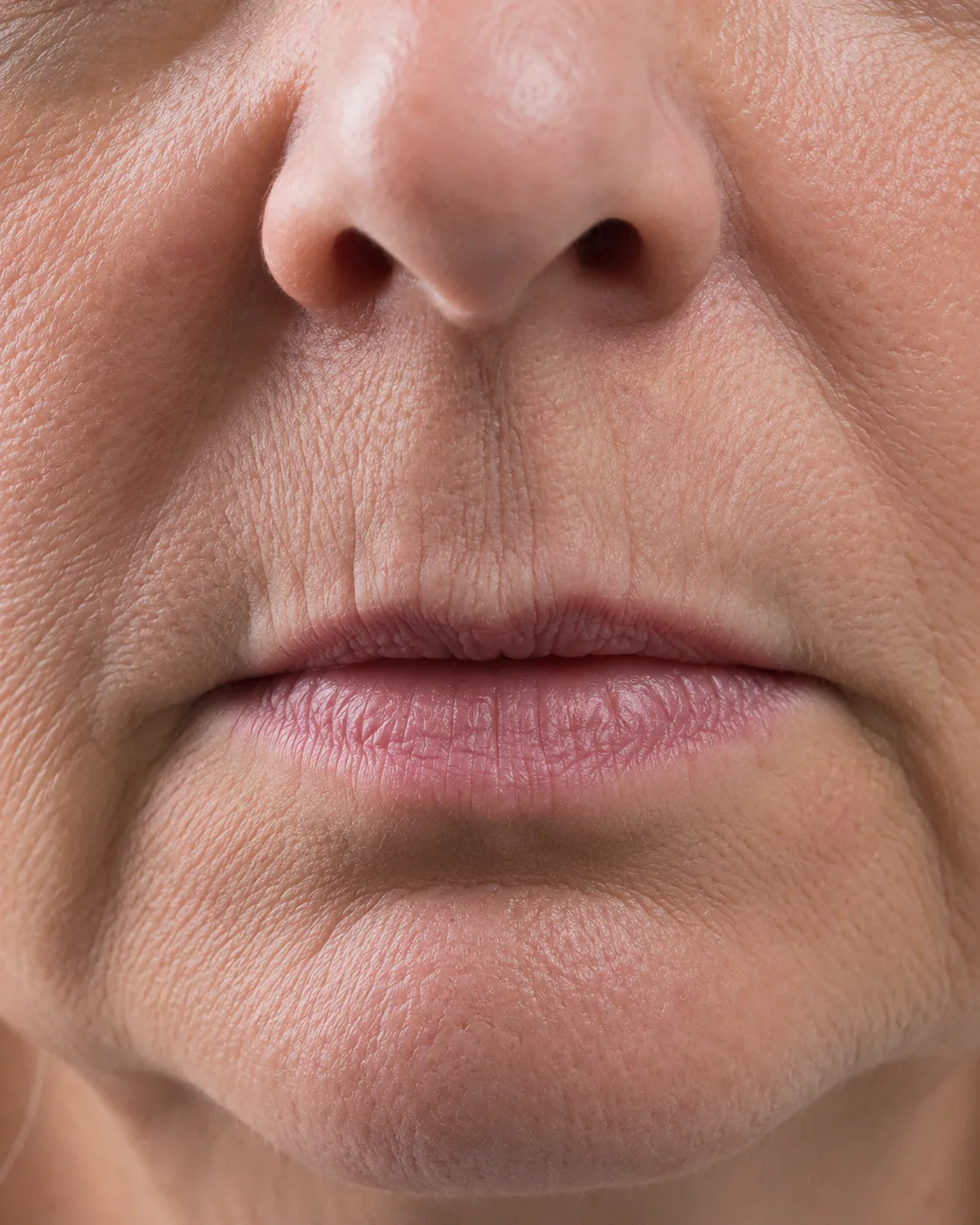
Midface Support, Smile Dynamics And Skin Quality
The fold sits below the midface, so loss of support above it often influences what you notice below it. At the same time, smiling and talking naturally pull this area into motion. Skin quality changes can then make that movement read more clearly at rest as well.
That layered explanation matters because it protects against over-simplified decisions. A visible fold does not automatically mean the fold itself is the right target of discussion.
What Can Make The Fold Look Stronger
- Gradual change in cheek and midface support
- Reduced skin firmness or cumulative sun exposure
- Natural expression patterns and strong smile movement
- Weight change that alters facial volume distribution
- Genetically deeper folds that have always been part of facial character

Why Directly Chasing The Fold Can Look Heavy
When the whole conversation collapses into "how do I treat only this line?", it becomes easy to ignore the broader facial balance. Over-focusing on the crease without understanding the midface can create a heavier or less natural look than the fold itself.
Corey Anderson RN uses consultation to explain whether the fold reflects structure, movement, skin quality, timing or simply normal anatomy. Sometimes the best decision is to leave the area alone.
What Corey Anderson RN Assesses First
Consultation looks at the cheeks, smile dynamics, skin quality, lower-face transitions and what you actually hope will change. Corey explains what is normal, what is structural and what belongs to broader facial ageing rather than to one isolated line. If a treatment conversation follows, it should also cover risks such as swelling, bruising, asymmetry, over- or under-correction and whether timing or another clinically appropriate pathway is the safer outcome.
The outcome can be education, skin care priorities, monitoring, review, waiting, treatment discussion or a clearer care pathway, depending on the person and the goal.
What Should You Confirm Before Booking?
Before booking, confirm the practitioner behind the advice, the consultation model and whether the page is asking you to think in whole-face terms rather than line-chasing terms. Core Aesthetics consults in Oakleigh and Corey Anderson RN is the practitioner behind this guidance. If you want the formal clinic check, use the Verify Core Aesthetics page before you decide whether the fold question belongs in a consultation at all.
This page was reviewed on 2026-09-01.
Treatment Pages This Guide Supports
Use this page alongside how women’s faces age, cheek and midface volume changes explained, facial volume consultation and volume treatment Melbourne when the fold question is really a midface support question.
For next steps, continue with Consultations, aesthetic consultation Melbourne, natural-looking goals consultation, Verify Core Aesthetics and pricing.
Nasolabial Fold Questions
Are nasolabial folds normal?
Yes. Nasolabial folds are a normal crease between the nose and mouth. They become more or less visible depending on expression, support and skin quality, so the question is usually not whether they exist, but whether something about them has changed enough to matter.
Why can they look deeper over time?
They can look deeper when cheek support reduces, skin firmness changes, weight shifts or expression patterns make the crease read more strongly. That does not automatically mean the fold itself is the problem. Corey looks at the surrounding face so the reason can be framed properly.
Why does Corey Anderson RN assess the cheeks as well as the fold?
Because the fold often reflects what is happening above it. Cheek support, midface shape and skin quality can drive the appearance more than the crease alone, so treating only the line can miss the actual cause and produce a less balanced result.
Can smiling make the fold show more?
Yes. Smiling and talking naturally deepen the fold. Some movement is normal and even desirable, so Corey checks both rest and expression before deciding whether the fold is simply part of normal anatomy or something that needs a broader conversation.
Does skin care still matter here?
Yes. Skin firmness, texture and sun damage can all affect how clearly the fold shows. Good skin care can support the area, but it does not replace structure or movement assessment, so it is usually one part of the picture rather than the whole answer.
Is completely removing the fold a realistic goal?
Usually no. A perfectly flat fold can look unnatural because some crease is part of normal expression. The more useful goal is to work out whether the fold is balanced for the face in front of you and whether any change would still look natural.
Can a nasolabial-fold consultation cover options, timing and when monitoring makes sense?
Yes. If the fold is normal anatomy, if the face is already balanced or if treating it would make the midface look heavier, education, skin care, monitoring, timing or another clinically appropriate pathway may be the safest and most sensible answer.
Is this for you?
Consider booking a consultation if
- You want the fold explained in whole-face context
- You value realistic goals and anatomy education
- You are open to skin care, review or a staged plan if that fits best
This may not be for you if
- You want the fold treated in isolation without assessment
- You want treatment discussed without consultation
- You want certainty about a specific cosmetic outcome
- You are not an adult patient
Suitability is confirmed at consultation. This list is general guidance, not a substitute for clinical assessment.
Clinical references
- Ahpra guidelines for registered health practitioners who perform non-surgical cosmetic procedures
- Ahpra guidelines for advertising higher risk non-surgical cosmetic procedures
- Ahpra public register of practitioners
- TGA advertising health services and cosmetic injections FAQ
- TGA advertising health services that involve therapeutic goods