Women’s faces age through combined changes in bone support, fat pads, ligaments, skin quality and movement. Corey Anderson RN assesses those layers together before discussing whether treatment, review, timing or another clinical pathway fits better. That discussion includes risks, limits and the option of a focused review plan when that is the safer answer.
How Women’s Faces Age In Layers
This page explains why women often notice facial ageing as a combination of changes rather than one isolated issue. Bone support, fat pads, ligaments, skin and movement all contribute, so a line, fold or hollow is usually the visible result of deeper changes happening together.
That layered picture matters because any treatment choice has trade-offs. A good consultation should discuss what can and cannot be changed, the risks and limitations, and whether waiting, review or an agreed plan may be better for the face in front of Corey Anderson RN.
The Face Ages As A Connected Structure
Ageing is easier to understand when you separate the face into layers instead of focusing on one visible mark.
| Layer | What can change over time | How that may show |
|---|---|---|
| Bone support | Gradual remodelling can reduce projection and framework support. | Changes in the eye area, midface support and lower-face definition. |
| Deep and superficial fat pads | Volume can reduce and compartments can shift. | Cheek flattening, under-eye change and more visible folds. |
| Ligaments and retaining structures | Tissue support can loosen over time. | Softer transitions and descent of soft tissue. |
| Skin and repeated movement | Collagen, hydration and elasticity change while expression continues. | Texture change, dynamic lines and a different surface quality. |
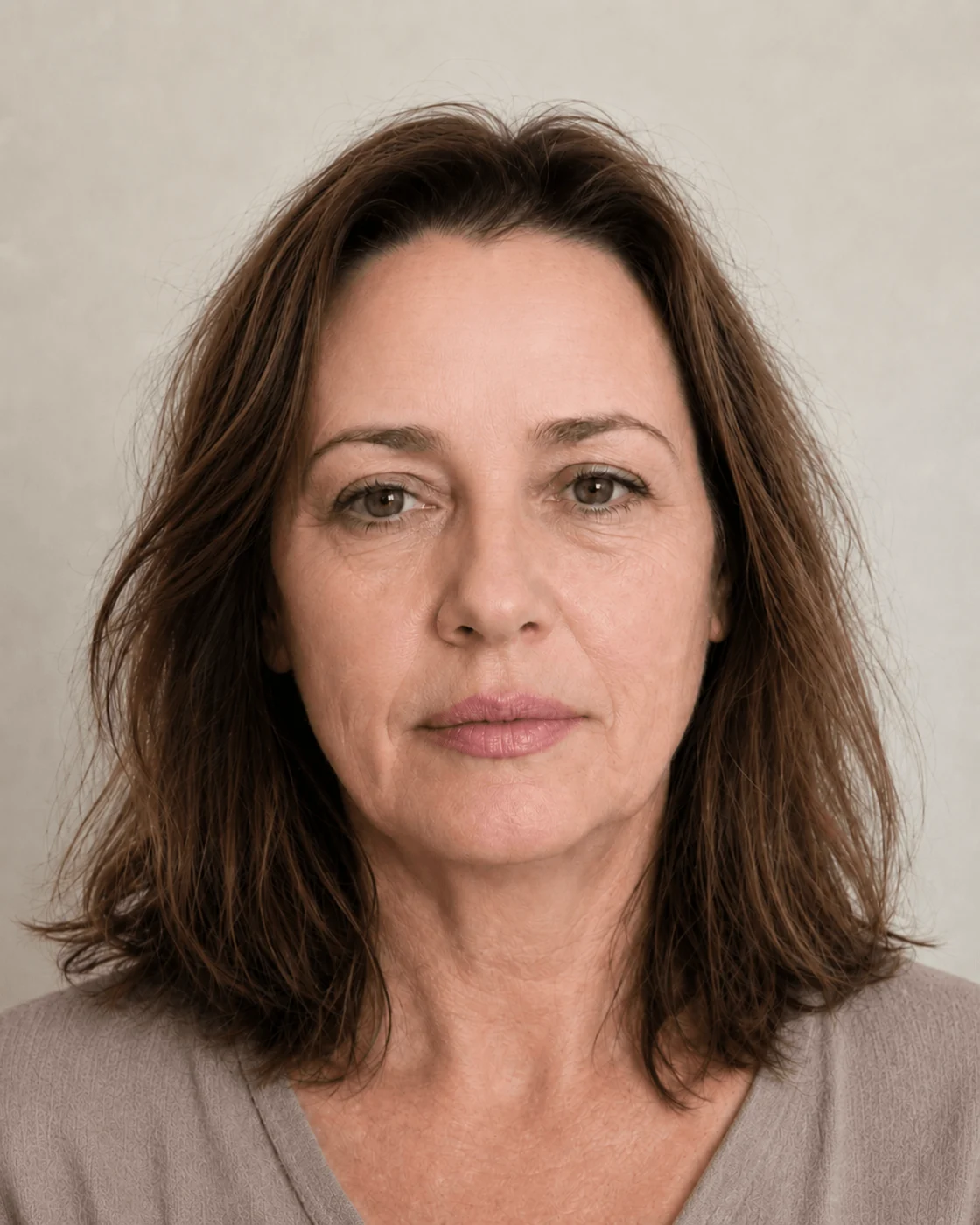
Bone Support, Projection And Framework
Bone is the platform the face sits on. Subtle remodelling over time can change how the midface, under-eye area and jawline are supported. That does not mean the face suddenly loses structure all at once, but it does mean the same amount of soft tissue can read differently as the framework changes.
This is one reason a concern cannot always be understood by looking only at the skin surface or at one photograph.
Fat Pads, Ligaments And Midface Descent
The face contains multiple fat compartments rather than one uniform layer. Some provide projection, while others soften transitions between facial zones. Over time, volume may reduce in one area while tissue descends in another, particularly through the midface. That can influence the lower eyelid, cheek, nasolabial fold and mouth area together.
Ligaments also matter because they help hold tissues in position. As these supporting relationships change, the face can look flatter, heavier or less defined even before someone describes it in those terms.
Skin Quality, Movement And Surface Change
Skin still matters. Sun exposure, smoking, general health, hydration and hormonal change all influence how firm, reflective and even the surface appears. At the same time, repeated expression continues to create movement patterns in the forehead, brow and eye area.
That is why two people with similar structure can still look quite different. The surface and the framework do not age at the same speed.
Why The Pattern Differs Between Women
There is no universal timeline for women’s facial ageing. Genetics, natural facial proportions, cumulative sun exposure, weight stability, sleep, stress, smoking history and life-stage hormone changes all contribute. Comparison with friends, relatives or influencers is a poor guide for your own face.
Consultation is most useful when it replaces comparison with explanation.
Life Stage, Hormones And Timing
Life stage can change how facial change is experienced. Perimenopause and menopause can affect skin hydration, sleep quality and collagen support for many women. Pregnancy and post-partum periods can change timing, comfort and what belongs within elective cosmetic discussion. Large work, family or health pressures can also influence whether a cosmetic conversation is well timed.
Corey Anderson RN considers that context because a technically possible plan is not automatically the right plan at that time.
Why Whole Face Assessment Matters More Than Chasing One Area
A single visible concern often reflects support or movement elsewhere. Treating a fold without understanding the midface, or chasing one line without considering skin, expression and proportion, can narrow the decision too much. Whole-face assessment keeps the conversation anchored to cause, balance and suitability.
That does not force treatment. It often supports decisions such as skin-care priorities, monitoring, timing or another clinically appropriate pathway when those options better fit the concern.

What To Confirm Before A Facial Ageing Consultation
Core Aesthetics is a single-practitioner clinic in Oakleigh. Consultations are led by Corey Anderson RN, a registered nurse, Ahpra registration NMW0001047575. Use Verify Core Aesthetics and the Ahpra public register before booking.
Facial ageing discussions should include risks, limits and the option of timing or another clinically appropriate pathway when that is the safer answer.
Treatment Pages This Guide Supports
Use this page alongside women’s aesthetic care Melbourne, facial volume consultation, volume treatment Melbourne, nasolabial folds explained and cheek and midface volume changes explained when you want the structure behind the concern explained before any decision is made.
For next steps, continue with Consultations, aesthetic consultation Melbourne, natural-looking goals consultation, Verify Core Aesthetics and pricing.

Women’s Facial Ageing Questions
Is facial ageing only about skin?
No. Skin is only one layer. Bone support, fat pads, ligaments, muscle movement and skin all change over time, so a fold or hollow usually reflects more than surface ageing alone. That is why Corey looks at structure and movement together so any option discussion is grounded in the assessment.
Do all women age in the same pattern?
No. Genetics, facial proportions, sun exposure, smoking history, weight stability, sleep, stress and hormone changes all influence pace and pattern. Two women of the same age can look quite different, so comparison is a poor guide. A consultation is about the face in front of Corey, not an average.
Why can the same age look different on different faces?
Because facial ageing is layered and individual. One person may lose support in the midface earlier while another shows more skin change or movement lines first. The same age can therefore look different across faces, which is why whole-face assessment is more useful than focusing on one visible change.
Can menopause affect how the face feels and looks?
Yes. Hormonal shifts can affect sleep, hydration, skin quality and how facial change is experienced. Some women notice that ageing feels more obvious during perimenopause or menopause, but the effect is individual. Timing and overall health context matter when deciding whether cosmetic discussion is even appropriate.
Does noticing change mean I need treatment?
No. Noticing change can simply mean the face is changing in the normal way or that you need a better explanation of what you are seeing. Many people benefit first from education, skin-care foundations, review planning or waiting. Treatment is only one possible outcome of assessment.
Why does Corey Anderson RN assess the whole face instead of one line?
Because one line rarely tells the whole story. A fold, hollow or movement pattern may be influenced by support elsewhere in the midface or lower face. Assessing the whole face helps Corey decide which options may be suitable, whether timing needs adjusting and what next step fits best.
Will booking a consultation pressure me into a treatment plan?
No. Booking creates time for assessment, questions and informed discussion, not pressure. Corey can still recommend timing, review needs or another clinically appropriate pathway if that better fits the face, the timing or the risks. A good consultation should leave room for a calm no.
Is this for you?
Consider booking a consultation if
- You want to understand the structural pattern behind facial ageing
- You value education and assessment so any option discussion is grounded in the assessment
- You are open to review, timing or another clinically appropriate pathway if that fits better
This may not be for you if
- You want a cosmetic plan without assessment
- You want certainty about a specific cosmetic outcome
- You are seeking urgent diagnosis of sudden facial change
- You are not an adult patient
Suitability is confirmed at consultation. This list is general guidance, not a substitute for clinical assessment.
Clinical references
- Ahpra guidelines for registered health practitioners who perform non-surgical cosmetic procedures
- Ahpra guidelines for advertising higher risk non-surgical cosmetic procedures
- Ahpra public register of practitioners
- TGA advertising health services and cosmetic injections FAQ
- TGA advertising health services that involve therapeutic goods