Learn

How to Choose Facial Volume Treatment Areas

Learn how to choose facial volume treatment areas with a balanced, consultation based approach focused on facial harmony, suitability and natural looking results.

Quick summary

Learn how to choose facial volume treatment areas with a balanced, consultation based approach focused on facial harmony, suitability and natural looking results. All treatments are consultation based and individually assessed by a qualified, AHPRA-registered practitioner.

A common mistake is choosing one facial area in isolation because it is the feature you notice most in the mirror. In practice, how to choose facial volume treatment areas is usually less about picking a single spot and more about understanding facial balance, movement and proportion. A refined result often starts with the right assessment, not the longest treatment list.

How to Choose Facial volume treatment Areas

For many adults in Melbourne, especially those balancing work, social commitments and a polished professional appearance, the goal is not to look different. It is to look fresher, more rested and in better harmony. That is why area selection matters. The most suitable plan depends on your facial structure, skin quality, age related change, and what feels appropriate for your features and lifestyle.

How to choose Facial volume treatment areas starts with facial balance

The face works as a whole. Volume loss or contour change in one region can affect how another area appears. For example, concerns around the mouth may be influenced by changes through the cheeks, while lip shape may sit more naturally when the surrounding lower face is also considered. Treating only the feature that bothers you most can sometimes make the result feel disconnected from the rest of the face.

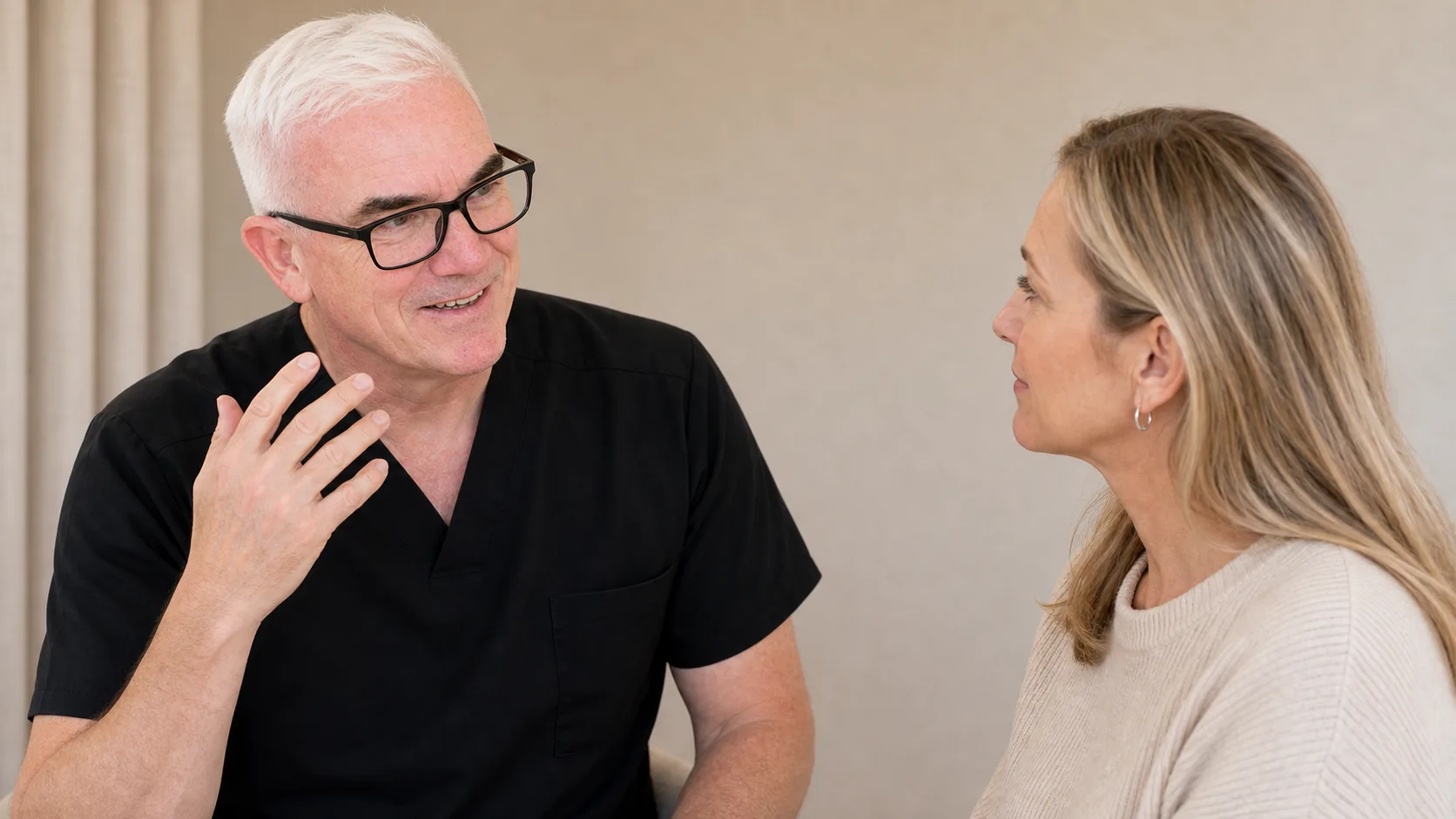
A consultation led approach looks at proportion first. That includes the relationship between the upper, mid and lower face, your natural asymmetries, and whether the concern is volume, definition or support. In a clinical setting, this assessment helps determine whether a volume treatment based approach is appropriate and, if so, which areas may contribute most to an elegant outcome.

This is also where expectations are clarified. Some clients want subtle maintenance. Others are noticing more visible change and want a staged plan. Neither is right or wrong, but the treatment approach should match the face in front of you rather than a trend, a friend’s result or a social media reference.

The facial areas most often considered

Different areas serve different aesthetic purposes. Understanding that distinction can make decision making clearer.

Cheeks and mid face

The cheeks are often considered when the face appears flatter, more tired or less supported than it once did. mid face volume can influence how light reflects across the face and how the under eye and lower face present. In some people, restoring structure here may be more relevant than focusing first on smaller features.

That said, not everyone needs cheek treatment. In naturally fuller faces, adding volume where it is not needed may reduce definition rather than improve it. This is one reason an individual assessment matters.

Lips

Lip treatment is not only about creating fullness. For some people, the priority is border definition, hydration support, shape refinement or restoring proportion after age related thinning. Choosing lips as a treatment area makes most sense when it aligns with your natural facial scale and surrounding features.

A balanced lip result depends on more than size. The relationship between the upper and lower lip, the length of the upper lip, dental support and movement all influence what will appear harmonious.

Chin and jawline

The chin and jawline are often considered for structure and profile balance. A chin may be assessed when the lower face feels less defined or the side profile appears under projected. The jawline may be considered where contour has softened and sharper structure is desired.

These areas can be suitable for clients who want a more polished frame to the face, but they are not universally appropriate. Bone structure, tissue thickness and skin laxity all affect whether enhancement here will read as subtle and refined.

Nasolabial folds and marionette region

Lines around the mouth are a frequent concern, though they are not always best addressed directly. In some faces, treating the fold itself without considering the mid face may lead to a heavier look. In others, the area may be one part of a broader lower face plan.

This is where nuanced planning matters. The visible line is not always the primary issue. Support, movement and volume distribution need to be considered together.

Under eye area

The tear trough is often requested, but it is one of the more selective areas. Hollowing under the eyes can create shadowing and a tired appearance, yet this region is not suitable for everyone. Skin quality, existing puffiness, anatomy and fluid retention patterns all influence whether this area should be treated.

For some clients, improving adjacent facial support or focusing on skin quality may be a more appropriate pathway.

How to choose Facial volume treatment areas based on your main concern

If your main concern is looking tired, the answer may sit in the mid face, under eye region, or overall skin quality rather than the area you first identified. If your concern is profile balance, the chin may be more relevant than the lips. If your aim is a softer, fresher appearance, subtle support across one or two structural areas may be more effective than adding volume to a feature in isolation.

Age is only one part of the picture. A client in their late twenties may be focused on proportion and definition, while someone in their forties or fifties may be more concerned with support and visible volume change. The appropriate area is not decided by age bracket alone. It depends on anatomy, priorities and what kind of change feels consistent with your appearance.

It also helps to be clear about what you do not want. If you prefer a low key result that is not obvious to colleagues or friends, that should shape the area selection and treatment plan. Subtlety is not about doing less for the sake of it. It is about choosing the areas that create the most natural improvement for your face.

What to discuss during a consultation

A useful consultation is specific. Bring your concerns, but also describe what you see at different times of day, in different lighting and in photographs. Some features are structural. Others are more noticeable because of expression, posture or skin condition.

You may be asked about your medical history, previous cosmetic treatments and whether you are seeking correction, prevention or refinement. Clinical assessment should also cover suitability, limitations, expected maintenance and potential risks. Under Australian regulations, educational information should remain general, and any medical or prescription treatment discussion must occur only where clinically appropriate.

For clients in Oakleigh and the broader Melbourne area, a consultation based model is often the most sensible way to approach treatment planning. It allows the face to be assessed properly and helps avoid choosing areas based on guesswork. If you are considering an appointment, you can book here: https://book.squareup.com/appointments/nu2mqyuc7wzqbh/location/LGKEWSFZS6R8E/services

When fewer areas may be better

There is a tendency to assume more treatment areas mean a better outcome. Often, the opposite is true. A carefully chosen single area, or a staged approach across two complementary areas, can look more polished than trying to address every perceived concern at once.

This matters particularly for first time clients. Starting conservatively allows you and your practitioner to see how changes integrate with your features over time. It can also make future planning more precise. In aesthetics, restraint is often what preserves elegance.

For some people, facial volume treatment may not be the main answer. If the concern is skin texture, pigmentation, laxity or dynamic expression linesa broader treatment plan may be discussed instead. Choosing the right area also includes recognising when a different modality may be more suitable.

FAQs

Which facial area should I treat first?

There is no universal first area. It depends on what is driving the overall concern. In many cases, structural areas such as the cheeks or chin are assessed before smaller features because they influence facial balance more broadly.

Is lip treatment the best option if my face looks tired?

Not necessarily. Lips may refine shape or proportion, but a tired appearance is often related to the mid face, under eye area or skin quality. A full face assessment is more useful than choosing lips by default.

Can I choose multiple areas at once?

Possibly, although suitability depends on your anatomy, goals and clinical assessment. A staged plan is often recommended when subtlety and balance are the priority.

How do I know if an area is not suitable for me?

Suitability depends on factors such as facial structure, skin quality, previous treatments and medical history. This is why an in person consultation with a qualified practitioner is essential.

Are facial volume treatment areas chosen differently as you age?

They can be. Earlier treatment may focus more on proportion and definition, while later treatment may focus on support and age related volume change. Even so, age alone does not determine the plan.

General Information Only This article is general in nature and does not replace a consultation with a qualified health practitioner. Treatment outcomes, suitability and risks vary by individual. Any medical or prescription treatment options can only be discussed and provided where clinically appropriate following an individual assessment.

The most refined treatment plans rarely begin with chasing a single line or feature. They begin with a clear view of the whole face, a measured discussion of what is suitable, and choices that support natural balance over obvious change.

How Facial volume treatment Is Used as a Structural Tool

Facial volume treatment is often described in terms of volume, adding more to make something look bigger. This framing misrepresents how volume treatment functions in skilled clinical practice. Volume treatment is a structural tool. It can restore lost support in areas where facial volume has diminished with age. It can define a contour that was never clearly pronounced. And in some cases it can shift the proportional relationships between facial regions in a way that changes how the face reads overall.

Volume, in the sense of visible fullness, is sometimes a goal. But the mechanism is anatomical. Volume treatment placed in the right tissue plane, at the right depth, with an understanding of the surrounding anatomy, produces a different result than volume treatment placed superficially to fill a surface irregularity. This is why technique, placement, and clinical knowledge matter far more than product selection.

At Core Aesthetics, treatment decisions are based on a full facial assessment. Corey evaluates the face as a whole before deciding whether volume treatment is appropriate, where it would be most effective, and what volume would be consistent with a proportionate outcome. This assessment may lead to a recommendation not to treat, and that outcome is equally valid.

Understanding Facial Volume Loss and Why It Matters

The face changes with age through a combination of processes: bone resorption, fat pad redistribution, muscle changes, ligament laxity, and skin quality decline. These processes do not happen uniformly or at the same rate in different people. Two people of the same age may present very differently because of genetics, lifestyle, sun exposure, and individual anatomical variation.

Volume loss is one of the most clinically significant contributors to an aged appearance. When the structural support provided by subcutaneous fat and bone diminishes, the overlying skin is no longer held in place by the same framework. Features that once appeared well defined become less distinct. The relationship between facial thirds can shift. Hollowing in specific areas, the cheeks, the temples, the under eye region, creates shadows and contours that are often interpreted as tiredness or loss of vitality.

Understanding the underlying anatomy is essential to treating it appropriately. Volume treatment placed to address a surface concern without accounting for the structural deficit beneath it will produce a less effective and less enduring result. The consultation process at Core Aesthetics focuses on identifying the anatomical contributors to the concerns you have raised, not just addressing the surface appearance.

The Assessment Process Before Any Volume treatment

At Core Aesthetics, the consultation for facial volume treatment is a structured clinical appointment, not a sales conversation. Corey assesses the face in three dimensions, at rest, during movement, and from multiple angles. The goal is to understand the structural landscape of your face before deciding where, how much, and whether volume treatment is the right approach.

Key aspects of the volume treatment assessment include evaluating facial symmetry and identifying natural asymmetries that should be preserved or addressed; assessing the depth and distribution of any volume deficit; reviewing skin quality to determine how volume treatment would integrate; and discussing your goals in the context of what is anatomically achievable. For some concerns, volume treatment alone is sufficient. For others, a combination of treatments, or a different approach entirely, may be more appropriate.

You will leave the consultation with a written treatment plan that documents the assessment findings, the proposed approach, and the expected outcomes. Treatment is scheduled at a separate appointment, allowing time to consider the plan, ask further questions, and make an informed decision without any time pressure.

Dissolution, Complications, and Revision

Hyaluronic acid volume treatments are reversible. If a complication arises, if the result is unsatisfactory, or if a patient wishes to return to their baseline, hyaluronidase enzyme can be injected to dissolve the volume treatment. This is an important safety feature that distinguishes hyaluronic acid products from permanent or semi permanent volume treatments, which cannot be dissolved.

Dissolution does not always produce an immediate return to the pretreatment state. The process requires time, and in some cases more than one dissolution treatment. Swelling from the dissolution procedure can temporarily alter appearance. Corey will explain this clearly at consultation so that patients understand what reversal involves before they commit to treatment.

At Core Aesthetics, only hyaluronic acid formulations are used for facial volume treatment, the reversibility of these products is a deliberate clinical choice. Emergency protocols for vascular occlusion, the most serious potential complication of volume treatment, are maintained at the clinic. Patients are briefed on the signs of this complication and given emergency contact instructions as part of every treatment appointment.

Clinical accountability and how volume treatment decisions are made

The volume treatment related guidance in “How to Choose Facial volume treatment Areas” reflects how Corey Anderson, AHPRA registered nurse (NMW0001047575), approaches facial volume treatment decisions at Core Aesthetics: anatomy led, conservative on volume, and willing to defer or refuse treatment when the assessment doesn’t support it. Volume treatment is a structural intervention. The decisions about where, how much, what depth, and what cannula or needle approach are clinical judgements that depend on the individual face in front of the practitioner. Results vary between individuals, and the same volume can read very differently on two faces with different bone structure, fat pad distribution, or skin quality.

Specific to how to choose facial volume treatment areas: the assessment Core Aesthetics performs before any volume treatment includes facial proportions, skin quality, prior treatment history, and the patient’s stated goals, and considers whether facial volume treatment is the right intervention at all. For some patients, the right answer is no volume treatment this visit. For others, the right answer is a smaller amount than the patient anticipated. For others, the right answer is to address skin quality or to dissolve existing volume treatment before considering anything new. Results vary between individuals, and a conservative starting dose is almost always the better long term decision. The how long facial volume treatment lasts page covers an adjacent volume treatment decision in more depth.

Patients reading this page who want to verify Corey Anderson’s AHPRA registration can do so directly on the AHPRA public register at ahpra.gov.au using registration number NMW0001047575. The Core Aesthetics clinic operates from 12A Atherton Road, Oakleigh VIC 3166, Tuesday to Saturday, by consultation appointment. All new patient treatment at Core Aesthetics follows a structured clinical consultation, consistent with the September 2025 AHPRA cosmetic procedures guidelines. Treatment may be scheduled for the same day as consultation or at a subsequent appointment, depending on clinical assessment and individual circumstances. Patients with questions about the content on this page can raise them at consultation; the practitioner is happy to walk through any clinical reasoning that the written content does not fully capture. Results vary between individuals, and the consultation is the appropriate place to discuss what those individual variations mean for a specific person’s treatment plan.

Is this for you?

Consider booking a consultation if

  • You are 18 or older and in good general health
  • You want to understand how facial volume treatment may address a specific anatomical concern, volume, structure, or proportion
  • You are prepared to attend a standalone consultation before any treatment decision is made
  • You understand that injectable treatment is a medical procedure with individual risks and outcomes

This may not be for you if

  • You are pregnant, trying to conceive, or breastfeeding
  • You have an active infection, cold sore outbreak, or unhealed skin in a potential treatment area
  • You have a documented allergy to hyaluronic acid or to local anaesthetic (lidocaine)
  • You are taking anticoagulant medication or have a bleeding disorder, without clearance from your treating doctor
  • You have had recent facial surgery, trauma, or dental procedures in the treatment area
  • You are under 18 years of age

Suitability is confirmed at consultation. This list is general guidance, not a substitute for clinical assessment.

Frequently asked questions

What is this article about?

Learn how to choose facial volume treatment areas with a balanced, consultation based approach focused on facial harmony, suitability and natural looking results. This is an important consideration when choosing a aesthetic treatment practitioner. Your comfort level with the answer indicates the depth of the practitioner’s clinical assessment and their commitment to informed consent.

How do I know which facial areas actually need volume treatment?

Volume loss appears as hollows, flatness, or loss of definition in specific areas. Common signs include sunken cheeks, flattened temples, or loss of jawline definition. Your practitioner can assess which areas have clinically significant volume loss versus ageing that would be better addressed with other treatments.

What is the difference between treating one area versus multiple areas?

Treating a single area creates localized improvement, such as fuller cheeks or stronger jawline, but may look disproportionate if other areas also have significant volume loss. A comprehensive approach treating multiple areas creates balanced facial rejuvenation. However, less is always more with volume treatments.

Will adding volume treatment to my cheeks change how my face looks overall?

Cheek volume treatment restores volume and lift, which can subtly improve overall facial proportion and balance. It creates a more youthful appearance by restoring fullness that is lost with age. However, changes are usually subtle and natural, creating a refreshed rather than dramatically different face.

Is it better to fill multiple areas at once or space treatments over time?

Many practitioners recommend spacing treatments to allow assessment of initial results and natural integration. However, treating multiple related areas at once, such as cheeks and temples together, can create better overall balance. Discuss your preferences with your practitioner.

Can volume treatment in one area make other areas appear worse or more aged?

Overfilling or treating only one area can sometimes create imbalance, such as full cheeks paired with hollowed temples. Thoughtful, comprehensive assessment helps prevent this. Your practitioner evaluates facial balance and recommends treatment approaches that enhance overall proportion rather than creating obvious isolated areas.

How do I choose between cheek volume treatment, temple treatment, and jawline treatment?

Cheek volume treatment addresses volume loss in the mid face and creates lift. Temple treatment restores width and addresses hollowness above the cheekbones. Jawline treatment creates definition and strengthens lower face contours.

What happens if I add volume treatment to an area and then change my mind?

Most modern volume treatments are reversible with hyaluronidase enzyme, which dissolves facial volume treatment on demand. If you are unhappy with results or find a particular area feels overfilled, your practitioner can inject enzyme to dissolve treatment in that area within days.

Who reviews the volume treatment related clinical content on this page?

Should I get facial volume treatment if I am not certain I need it?

Uncertainty about whether treatment is appropriate is a valid reason to book a consultation rather than treatment. A clinical assessment can clarify whether volume loss, structural descent or skin quality change is the primary driver of what you are noticing, and whether injectable volume treatment is the right approach. Treatment is never assumed at assessment.

Written and reviewed by Corey Anderson RN, AHPRA NMW0001047575 · Reviewed April 2026 · TGA & AHPRA compliant

Begin With A Conversation

Book your consultation.

No commitment, no pressure. A considered first step toward understanding what is and isn’t right for you.

Book Consultation

Elegance, Perfected.