For a broad wrinkle treatment consultation near Wheelers Hill, observe four familiar moments: attentive listening, ordinary speaking, a natural smile, and the return to a relaxed face. Notice whether the forehead lifts, the brows draw inward, the outer eyes narrow, or several areas join the expression. Do not repeatedly force movement. Corey Anderson RN combines this map with direct assessment of resting lines, skin, brow and eyelid context, natural asymmetry, health, medicines, previous care, risks and the expression you want to preserve. Suitable care can be planned when individual assessment and informed consent support it.
Why Use Conversation Instead Of A Forced Expression Test?
Listening, speaking and smiling recruit different combinations of forehead, brow and eye area movement. These moments are more recognisable than a single exaggerated pose.
The map describes the sequence without deciding which movement should change or treating normal expression as a defect.
What Belongs In The Four Moment Map?
| Moment | Possible movement | Useful question |
|---|---|---|
| Attentive listening | Brow lift, slight frown or steady gaze | Which area joins concentration? |
| Ordinary speaking | Forehead and brow changes with emphasis | Which movement feels recognisable? |
| Natural smile | Outer eye narrowing and cheek lift | How do nearby areas move together? |
| Relaxed pause | Expression settles and resting lines remain | What returns to baseline? |
What Can Attentive Listening Reveal?
During listening, some people lift the brows, draw them inward or narrow the eyes as they focus. Others keep a relatively settled upper face.
Observe the familiar pattern without trying to perform interest or concentration. Context matters more than making the line prominent.
How Does Ordinary Speech Change The Upper Face?
Speaking can recruit forehead lift, frown movement and eye area expression as emphasis changes. Corey watches spontaneous conversation as well as any requested movement.
The aim is to identify expression you recognise and want considered, not to create a perfectly still face.
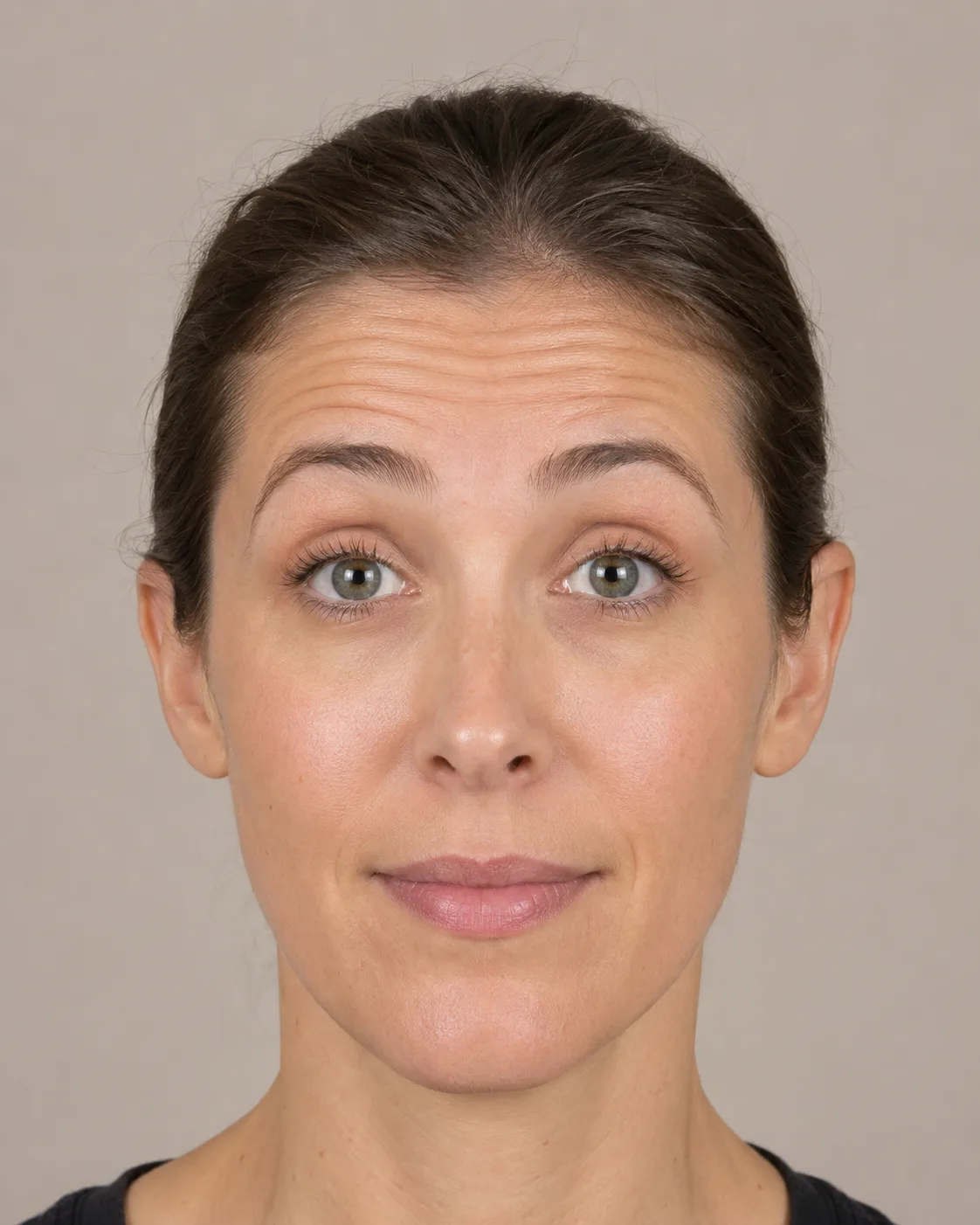
What Does A Natural Smile Add?
A smile changes cheek height, outer eye movement, lower eyelid position and sometimes the brows. These connected changes help explain why one line should not be assessed in isolation.
Natural side differences are common. Assessment does not promise exact symmetry or ask both sides to move identically.
Why Observe The Return To A Relaxed Face?
After expression, notice how the forehead, frown area and outer eyes settle and which creases remain visible at comfortable rest.
Resting visibility may involve skin, structure, previous movement and environmental factors. It does not identify one suitable option by itself.
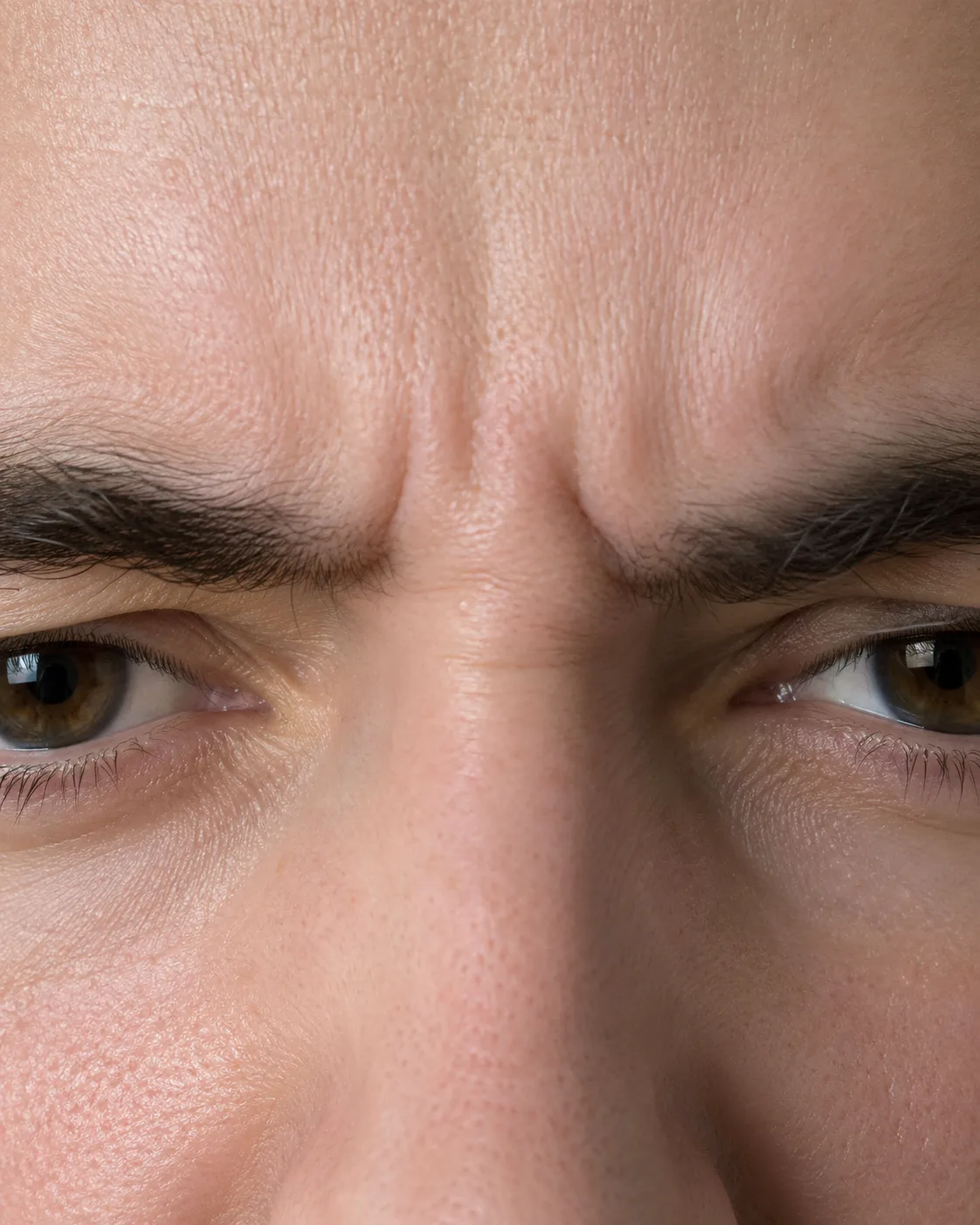
What History Changes The Conversation Map?
Bring current medicines, allergies, relevant health and eye history, previous cosmetic care and approximate dates. Mention headaches, visual symptoms, skin changes, eyelid or brow concerns and what changed after earlier care.
Older unedited photographs can explain gradual change, but they do not set a result target or predict an individual response.
Which Guide Fits When One Movement Area Leads?
Use the Wheelers Hill forehead guide when brow lift and eye opening support lead. Read frown line assessment or outer eye line assessment when one movement is clearly central.
The wrinkle consultation guide, facial expression guide and suitability guide explain the wider process.
Questions About Conversation And Facial Movement
Why use natural conversation for wrinkle assessment?
Conversation shows familiar combinations of listening, speaking, smiling and settling. It provides more representative movement context than repeatedly making a strong expression in a mirror.
Which facial areas belong in the map?
Notice the forehead, inward frown area and outer eyes, along with cheek and eyelid movement. Corey considers how the areas interact rather than assuming one line acts alone.
Should I practise expressions before the appointment?
No. Ordinary interaction is enough. Rehearsing or repeatedly forcing movement may create an artificial pattern that is less representative of your everyday expression. Corey can guide any specific movement needed during direct assessment.
Why is return to rest important?
The relaxed pause shows how movement settles and which creases remain visible. Corey compares that pattern with skin, structure, previous care and natural asymmetry. It also helps distinguish a fleeting expression fold from a feature noticed without active movement.
What if one facial area clearly concerns me most?
Tell Corey which area leads and use the relevant focused guide if helpful. Direct assessment can still compare connected movement so the chosen question is not treated in isolation.
What should I bring after previous wrinkle care?
Bring approximate dates, areas, available records and what you noticed over time, including heaviness, asymmetry, altered expression, eyelid effects or any response that concerned you.
Is Core Aesthetics located in Wheelers Hill?
No. The clinic is in Oakleigh. Check the trip from your actual starting point and make sure returning for review would be practical before choosing an appointment time.
What Can You Note Before The Consultation?
- Which movement appears while listening.
- How the forehead and brows change during ordinary speech.
- What the outer eyes do in a natural smile.
- Which lines remain after expression settles.
- Which familiar features you want considered and preserved.
Is this for you?
Consider booking a consultation if
- Adults near Wheelers Hill wanting wrinkle and facial movement assessment before treatment discussion
- Patients who want a consultation-first explanation of movement lines, resting creases, risk and consent
- People open to timing, review needs or another clinically appropriate pathway where that is more appropriate
- Patients who want to verify Corey Anderson RN and the Oakleigh clinic before booking
This may not be for you if
- People asking for a predetermined plan without assessment, consent or risk discussion
- People with urgent medical symptoms, active infection, acute swelling or rapidly changing skin concerns
- People wanting a fixed cosmetic change before movement, brow support and skin quality are assessed
- People seeking elective cosmetic care for someone who cannot provide informed consent
Suitability is confirmed at consultation. This list is general guidance, not a substitute for clinical assessment.