Being gay does not create a standard facial goal, but appearance pressure can have gay-community, dating, work, media or relationship contexts worth naming. Before a cosmetic decision, write down the exact trigger, whose response feels important, where the concern becomes louder, whether it remains stable away from that setting and what would make you decline. Corey Anderson RN must assess motivation, expectations and relevant psychological, social and cultural factors. The appointment may lead to discussion, more time, independent health support or no cosmetic procedure.
Start With The Exact Sentence That Brought You Here
Write the sentence as it actually appeared: a comment from someone else, a thought after opening an app, a concern under office lighting, a photograph you kept enlarging, or a change you had noticed quietly for years. Do not translate it into clinic language yet.
Then write a second sentence beginning, “What I notice for myself is…” If the two sentences are different, that difference belongs in the consultation. It may be more important than the feature named in either one.
What Is The Five Part Pressure Source Audit?
The audit asks five questions: What was the trigger? Whose response am I anticipating? In which setting does the concern become strongest? Does it persist when I am away from that setting? What fact or risk would make me choose no procedure?
This is not a test of whether a concern is real and it is not a psychological diagnosis. It is a way to prevent a social pressure from arriving at the clinic disguised as a settled personal instruction.
Why Name Gay Men In This Guide At All?
Because the evidence describes pressures that can be relevant, not because every gay man experiences them. A 2022 systematic review of 136 studies found that sexual minority men were generally reported to have more negative body image than heterosexual men, although findings varied by the construct measured. The review linked body image with stigma, internalised appearance ideals, objectification, relationships and gay community identification.
A separate meta-analysis of 48 studies found greater disturbance among gay men than heterosexual men in three of five body image analyses. These are group-level findings. They cannot tell Corey what one person values, whether he is distressed or whether cosmetic care is appropriate.
Which Audience Has The Loudest Vote?
List the audience attached to the concern. It might be app matches, a partner, friends, a particular social scene, colleagues, family, strangers online or nobody else. More than one may apply, and none should be assumed merely because you are gay.
Now ask: If this audience never saw me again, would I still want to investigate the same feature to the same degree? A yes does not establish suitability. A no creates useful distance from a decision organised around somebody else’s reaction.
Does The Concern Change Between Settings?
Compare ordinary face to face life with the setting that amplifies the concern. Record what changes on a dating profile, under a front camera, in a nightlife setting, beside younger colleagues or after a particular person’s comment. Include frequency and intensity rather than a dramatic adjective.
A concern that appears only in one camera or social environment still deserves respectful discussion. It may call for better documentation or relief from the trigger rather than an attempt to change the person.
What Can Gay Community Pressure Look Like Without Becoming A Stereotype?
A 2024 study in two United States samples found associations between body dissatisfaction and perceived gay community stress, including pressure connected with sex, social status and competition. It did not show that the community causes the same experience for every gay or bisexual man, and it was not a study of cosmetic procedures.
The practical lesson is modest: ask about the social meaning attached to the request. Do not turn a research association into a personality profile, a treatment menu or a reason to pathologise identity.
Is This Ageing Concern Yours Or A Deadline Someone Else Set?
Ageing is not a failure to maintain a previous version of your face. A line, texture change or shift in proportion can be described clinically without accepting the idea that visible age is socially unacceptable.
Ask what you want to preserve as clearly as what you might want assessed. Expression, recognisability, family resemblance, facial character, low maintenance and privacy can all be firm boundaries. “I do not want to look older than my profile photos” is a different request from “this change remains important to me in ordinary life.”
How Do Dating Apps Change The Decision Environment?
An app can compress a person into a small set of selected images and immediate judgements. That environment may make one photograph feel like a verdict. It can also reward frequent checking and comparison without revealing how a face looks in movement, conversation or varied light.
Bring a screenshot if it documents the trigger, but identify the camera, crop, age of the image, edits and what happened immediately before the concern intensified. The screenshot explains context; it does not prescribe a clinical endpoint.
What If The Pressure Comes From Work?
Workplace ageism and appearance expectations deserve to be named directly. Cosmetic care does not resolve an unfair workplace, establish professional security or transfer responsibility from an employer to the employee’s face.
Write the exact incident, who was present and whether the concern existed before it. If there is discrimination, bullying or a safety issue, workplace or legal support may be the relevant pathway. A clinic should not present a procedure as the answer to structural pressure.
What If A Partner Or Friend Keeps Commenting?
Consent is not free when another person is monitoring, mocking, rewarding or threatening you over appearance. Ask to speak with Corey privately. You can decline to share the appointment, plan or photographs with anyone outside the clinical team.
If the decision does not feel safe or voluntary, no procedure should be planned. The immediate task is restoring decision space, which may include support from a GP, counsellor or trusted person independent of the pressure.
Which Signs Point Beyond A Cosmetic Conversation?
Pay attention to function: long periods of appearance preoccupation, repeated mirror or camera checking, avoiding photographs or social situations, repeated reassurance seeking, or distress that interrupts work, relationships, eating, exercise or sleep. These signs do not prove body dysmorphic disorder.
They do justify independent assessment by a GP or mental health professional. Corey can recognise a reason to pause and refer, but he does not diagnose body dysmorphic disorder or provide psychological treatment in a cosmetic consultation.
What Must A Registered Practitioner Assess?
Ahpra’s guidelines for registered health practitioners who perform non-surgical cosmetic procedures took effect on 2 September 2025. They require an evidence based, holistic assessment that considers history and relevant psychological, social and cultural factors. Motivation must include both internal reasons and external reasons such as a perceived need to please others.
The practitioner must consider conditions that may make the person unsuitable, refer for independent assessment when indicated and decline when the procedure is not appropriate. A booked appointment, a clear feature or previous cosmetic care does not remove those duties.
What Should The Consultation Record?
| Record | Useful detail | Why it changes the decision |
|---|---|---|
| Trigger | The exact comment, image, event or observation | Separates origin from urgency |
| Audience | Whose reaction is being anticipated | Tests autonomy and coercion |
| Setting | Where the concern becomes louder or quieter | Shows context and camera effects |
| Persistence | What remains in ordinary life away from the trigger | Tests stability without inventing a deadline |
| Boundary | What must be preserved and what would make you decline | Keeps a genuine no available |
What Does Privacy Look Like At Core Aesthetics?
You can state the name and pronouns you want used, decide whether sexual orientation is relevant to the discussion and ask why any personal question is being recorded. You can request a private conversation and discuss whether a chosen support person should be present.
Privacy does not mean clinically relevant health information can be omitted. It means questions should have a clear care purpose, records should be handled appropriately and identity should never be turned into a sales category.
How Does This Page Differ From The Other Guides?
| If your main question is… | Read… |
|---|---|
| Where did this appearance concern begin? | Body image and social media decisions |
| Am I being pushed by a particular person or deadline? | What to do if you feel pressured |
| Which privacy and identity topics can I raise? | LGBTQIA+ consultation topics |
| How do I prepare a concise personal brief? | Men’s aesthetic consultation brief |
| How do gay-specific social contexts affect an ageing concern? | Stay on this page and complete the five part audit |
What Happens At The Oakleigh Desk?
Corey begins with the concern in your words, then asks what happened around it. Relevant history, previous care, medicines, health conditions, expectations, privacy needs, risks and alternatives follow only after the decision context is clear.
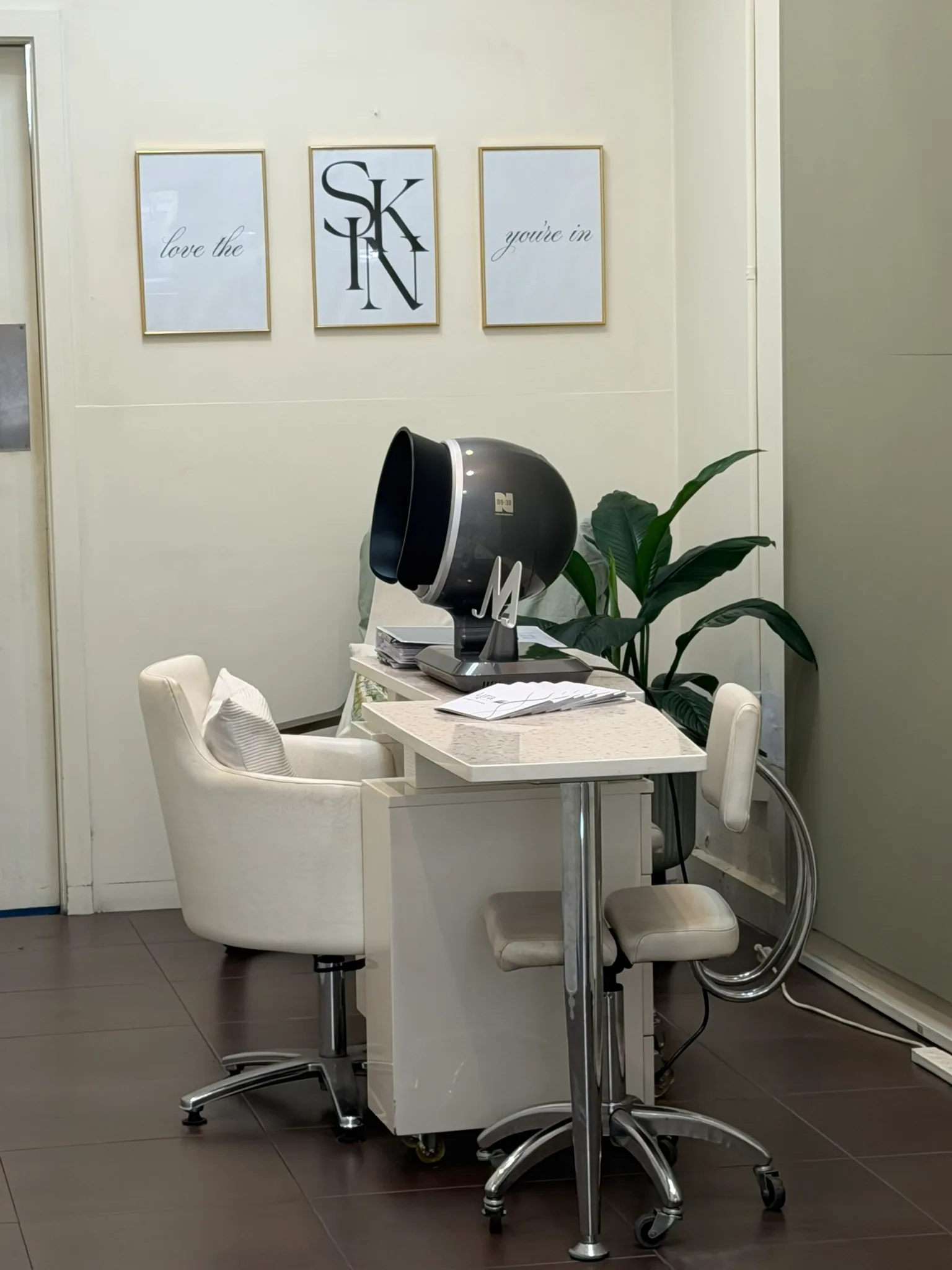
The genuine desk below is not a commitment point. A useful appointment may finish with a written question to consider, time away from a trigger, independent health input or a documented decision not to proceed.
What Risks Must Remain Visible?
Any cosmetic procedure can involve unwanted appearance change, pain, swelling, bruising, infection, asymmetry, tissue injury, vascular complications or the need for further care, depending on what is being considered. Individual risk, recovery, costs, alternatives and review access belong in consent.
Social pressure can distort the tradeoff by making any action feel better than waiting. The relevant comparison is not procedure versus embarrassment. It is the full set of clinical options, including no procedure, with the external pressure separated from the health decision.
What Would An Autonomous Decision Sound Like?
It might sound like: “I still notice this in ordinary life, I understand the limits and risks, I know what I want preserved, and I can choose no without fearing somebody’s reaction.” It could equally sound like: “This concern belongs mostly to the app, workplace or relationship, so I am not making a cosmetic decision from it.”
Autonomy is not proved by certainty or enthusiasm. It is shown by enough information, realistic expectations, freedom from coercion and a credible option to stop.
When Should You Step Away From The Clinic Pathway?
Step away when appearance thoughts are consuming daily life, the request keeps changing with the audience, someone else’s approval is the main goal, you feel unsafe declining, or you expect a procedure to repair belonging, employment, dating or self worth. Speak with a GP or mental health professional when distress or repetitive behaviours are present.
If you or someone you know is in immediate danger or having suicidal thoughts, call 000. QLife provides anonymous, free LGBTIQ+ peer support in Australia on 1800 184 527 from 3 pm to midnight daily. Cosmetic consultation is not crisis care.
How Can You Verify The Person Responsible?
Core Aesthetics is led by Corey Anderson RN at 12A Atherton Road, Oakleigh VIC 3166. His Ahpra registration is NMW0001047575. Check the clinic verification page and the Ahpra public register before sharing personal information or booking.
Registration and accountability are verifiable facts; they do not imply that cosmetic care will be suitable. The scene below is clearly illustrative and represents arrival for a private conversation, not a patient experience or clinic claim.
What Can The Appointment Conclude?
The possibilities include a more precise question, documentation without action, more time, independent GP or mental health input, discussion within scope, or no cosmetic procedure. Your consultation should provide clarity about suitable options, relevant risks and what happens next.
If the five part audit leaves the concern stable and personally meaningful, bring it to consultation. If it exposes coercion, distress or a goal organised around somebody else’s approval, act on that information before considering appearance change.
Questions About Ageing, Identity And Pressure
Do all gay men experience more appearance pressure?
No. Research reports group-level patterns and varied findings, not a rule for individuals. A responsible consultation asks about your actual experience rather than assigning motives from sexual orientation.
Why ask whose response I am anticipating?
The answer helps distinguish a personal observation from a decision organised around app matches, a partner, friends, work or another audience. It supports autonomy but does not decide suitability by itself.
Can I discuss dating app pressure without showing my profile?
Yes. Describe the trigger and what it changed. You control whether a screenshot is useful. If you share one, it should be treated as decision context rather than a measurement or appearance instruction.
What if I still care about the concern away from social media?
Record what remains stable, what you want preserved and what would make you decline. A stable concern can be assessed, but stability alone does not establish safety, suitability or likely benefit.
Can workplace ageism be solved through cosmetic care?
No procedure can make an unfair workplace fair or assure professional security. Document the workplace issue and consider employment or legal support where appropriate rather than transferring responsibility to your appearance.
What if a partner wants me to change?
Ask to speak with Corey privately. If monitoring, ridicule, threats or fear are shaping the decision, no procedure should be planned. Restoring a safe and voluntary decision space comes first.
Can Corey diagnose body dysmorphic disorder?
No. Corey can ask relevant questions, identify reasons to pause and refer for independent assessment. Diagnosis and psychological care belong with appropriately qualified health professionals.
What does Ahpra require before a cosmetic procedure?
Current guidance requires holistic assessment of history and relevant psychological, social and cultural factors, including internal and external motivation, expectations and conditions that may make the person unsuitable.
Does booking a consultation about appearance pressure decide suitability?
No. Booking creates an appointment for questions and individual assessment. It may end with information, more time, referral, independent support or no cosmetic procedure. Consent, suitability and a plan cannot be inferred from making the booking.
Where can LGBTQIA+ people get immediate support?
In immediate danger call 000. QLife offers anonymous, free LGBTIQ+ peer support in Australia on 1800 184 527 from 3 pm to midnight daily. A cosmetic clinic is not an emergency or crisis service.
Is this for you?
Consider booking a consultation if
- Adult gay men who want to examine the source and stability of an ageing concern
- People willing to separate their own preference from dating, social, work or relationship pressure
- Adults who want privacy, realistic limits and a genuine option to decline
- People open to more time, independent support or no cosmetic procedure
This may not be for you if
- Anyone needing emergency or immediate mental health support
- People seeking psychological diagnosis or treatment from a cosmetic clinic
- Anyone being coerced, threatened or monitored over an appearance decision
- People expecting a procedure to assure acceptance, employment, dating success or self worth
Suitability is confirmed at consultation. This list is general guidance, not a substitute for clinical assessment.
Clinical references
- Ahpra: Guidelines for registered health practitioners who perform non-surgical cosmetic procedures
- Ahpra: Advertising higher risk non-surgical cosmetic procedures
- Body image and associated factors among sexual minority men: a systematic review
- Body image disturbance and sexual orientation: an updated systematic review and meta-analysis
- Pressure From Within: Gay-Community Stress and Body Dissatisfaction Among Sexual-Minority Men
- Healthdirect: Body dysmorphic disorder
- QLife: Anonymous and free LGBTIQ+ peer support
- TGA: Advertising a health service