For a jawline consultation near Clayton, consider four connected tissue layers: the structural frame formed by jaw and chin, working chewing muscles near the angle, mobile soft tissue above the border and the skin surface covering the lower face. Similar shadows or changes in outline can arise from different layers, and more than one may contribute. Corey Anderson RN combines direct assessment of these layers with movement, health, medicines, dental and jaw history, previous care, risks and the features you want to preserve. Suitable care can be planned when individual assessment and informed consent support it.
Why Read A Jawline In Layers?
The visible jawline is an outer contour, not a single tissue. A change at the border can reflect the frame beneath it, muscle at the back, mobile tissue above it or the skin surface.
Layered assessment prevents one visible feature from being assigned an automatic cause.
What Are The Four Jawline Layers?
| Layer | Where it contributes | Assessment question |
|---|---|---|
| Structural frame | Jaw angle, lower border and chin endpoint | How do the fixed proportions relate? |
| Working muscle | Back of the lower face near the jaw angle | Does comfortable activation change the outline? |
| Mobile soft tissue | Area above the border and beside the chin | How does rest and expression alter the transition? |
| Skin surface | Visible texture and firmness over all layers | Is the concern mainly at the surface? |
How Does The Structural Frame Set The Boundary?
The jaw and chin form the firmer base of the lower face. Their angle, length, width and relationship influence where the visible border begins and ends.
Corey considers front, three quarter and side views without assuming that a structural observation requires a structural option.
Where Does Working Muscle Enter The Picture?
The masseter sits near the back of the jaw and becomes firmer with chewing muscle activation. It can contribute to width near the angle while still serving an important functional role.
Mention clenching, grinding, tightness, tenderness or chewing fatigue because symptoms add dental and medical context to an appearance question.
What Is Mobile Soft Tissue?
Mobile soft tissue sits above the jaw border and around the lower cheek, mouth and chin. It can create a softer transition or a changing shadow as the face speaks and smiles.
Assessment observes natural movement so a still, tightened or posed photograph does not become the only evidence.
How Can Skin Change The Outer Edge?
Skin texture, elasticity, swelling, sun exposure and surface change can affect how sharply the jawline catches light. A skin concern may sit over an otherwise clear structural border.
Corey separates surface observations from deeper contour questions because they may have different limits and suitable pathways.
Can More Than One Layer Shape The Same Shadow?
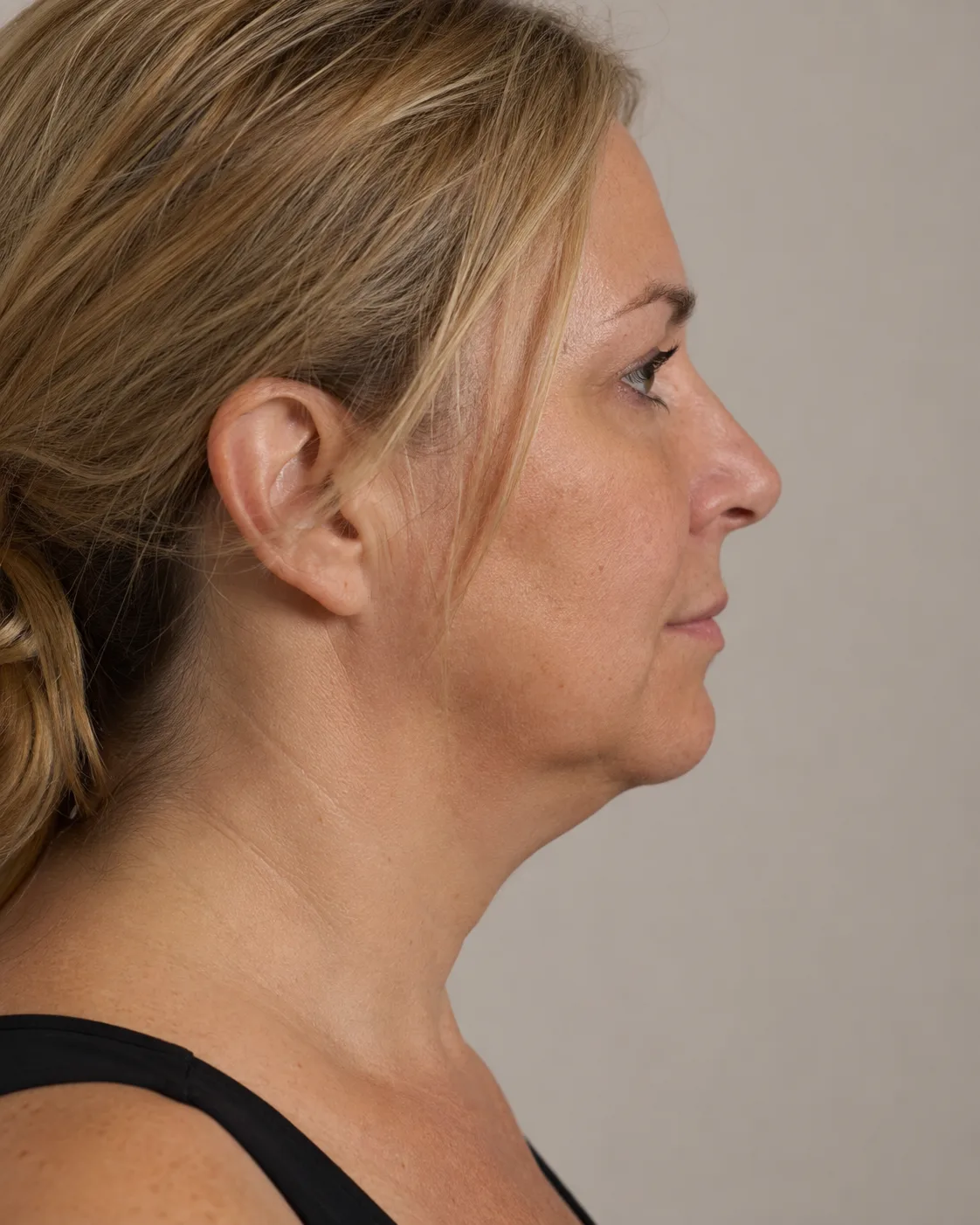
Yes. A shadow beside the chin may reflect frame, overlying tissue, skin and light together. Width near the angle may include both structure and working muscle.
The aim is not to force the concern into one layer. It is to identify the strongest contributors and explain uncertainty honestly.
Which History Helps Distinguish The Layers?
Bring current medicines and supplements, allergies, relevant health, skin, dental and jaw history and previous cosmetic care with approximate dates. Mention recent swelling, pain, bite change, altered sensation or an unfamiliar change.
Consistent older photographs and available records can help establish sequence, but direct assessment is needed to interpret the current concern.
Clayton Jawline Layer Questions
What are the four layers in a Clayton jawline assessment?
They are the structural frame formed by jaw and chin, working chewing muscle near the angle, mobile soft tissue above the border and the skin surface. Similar visible concerns can arise from different layers or several together.
Can muscle change the appearance of the jaw angle?
Yes. The masseter muscle sits near the back of the jaw and can contribute to lower face width. Corey compares the relaxed outline with comfortable activation while keeping chewing function and any symptoms in view.
How can skin affect jawline definition?
Skin texture, elasticity, swelling, sun exposure and surface change can alter how the lower face catches light. A surface concern may sit over a clear structural border and may require a different discussion from deeper contour.
Can one shadow come from several tissue layers?
Yes. Frame, muscle, mobile tissue, skin and lighting can combine in one visible shadow. Individual assessment identifies the strongest contributors and explains uncertainty without assuming one tissue or one option accounts for everything.
What symptoms should I mention?
Mention pain, tenderness, swelling, locking, clicking, limited opening, bite change, tooth wear, altered sensation or another unfamiliar change. These details can make dental, medical or other clinical input relevant alongside cosmetic assessment.
What should I bring after previous lower face care?
Bring approximate dates, treated areas, available records and practitioner or product details when known. Describe the response and any persistent swelling, firmness, tenderness, colour change, altered function or unfamiliar symptom.
Is Core Aesthetics located in Clayton?
No. Core Aesthetics is in nearby Oakleigh. Check the journey from your actual starting point and whether returning for planned review is practical. The Clayton page provides local context without claiming a clinic location in Clayton.
Where Can You Continue The Lower Face Discussion?
Read the Melbourne jawline guide, jawline consultation guide, Clayton jaw muscle guide and skin and structure guide.
This page provides general education and does not diagnose a lower face concern, confirm suitability or replace personal medical advice. These cosmetic procedure guidelines inform the consultation process. See the Ahpra guidelines for registered health practitioners who perform non-surgical cosmetic procedures and the TGA guidance for advertising health services involving therapeutic goods.
Is this for you?
Consider booking a consultation if
- Adults who want jawline, chin, jowl, jaw muscle and lower face context assessed before treatment discussion
- Patients comparing local access with practitioner verification and review planning
- Patients with previous treatment who may need records review, waiting or original clinic review
- People who want jawline, chin support, skin quality and lower-face balance assessed before choosing the next step
This may not be for you if
- People asking for a predetermined plan without assessment, consent or risk discussion
- People seeking a promised sharper jawline before consultation
- People wanting public prescription product advice or product led recommendations
- People with urgent medical, dental, infection, pain or jaw symptoms who need appropriate medical or dental care
Suitability is confirmed at consultation. This list is general guidance, not a substitute for clinical assessment.