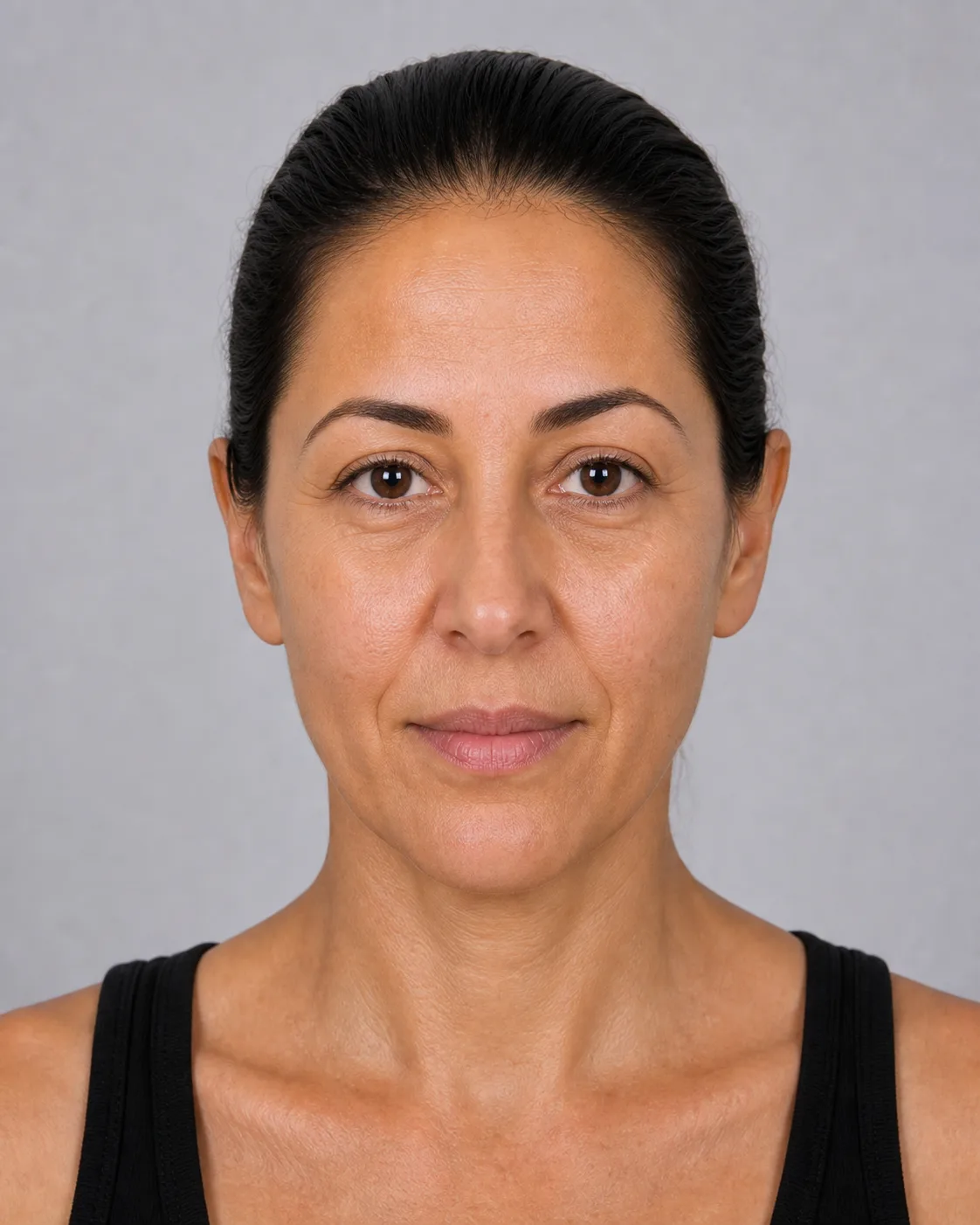
Lip ageing is not one change. The visible vermilion can become less prominent, the skin portion of the upper lip can lengthen, the border and philtral landmarks may look softer, and lines or folds can develop in the surrounding skin. Movement, sun exposure, skin condition, dental context, previous care and natural anatomy can alter the picture. An individual review should first establish what changed, where it changed, when it changed and whether it is stable.
Start By Naming The Part That Changed
Point to the feature before naming a solution. Is it the coloured part of the lip, the line where that colour meets skin, the two philtral columns beneath the nose, the skin above the upper lip, one mouth corner, or the way the mouth moves? A person can notice more than one of these, but they should not be bundled into a single claim of “lost volume”.
This distinction is practical. Lip morphology studies describe changes with age in visible vermilion dimensions and upper lip proportions, while histology research describes changes within the vermilion tissue itself. Neither body of research tells us what one person needs. It does show why a one word description is too blunt.
What Can Change In The Lip Itself?
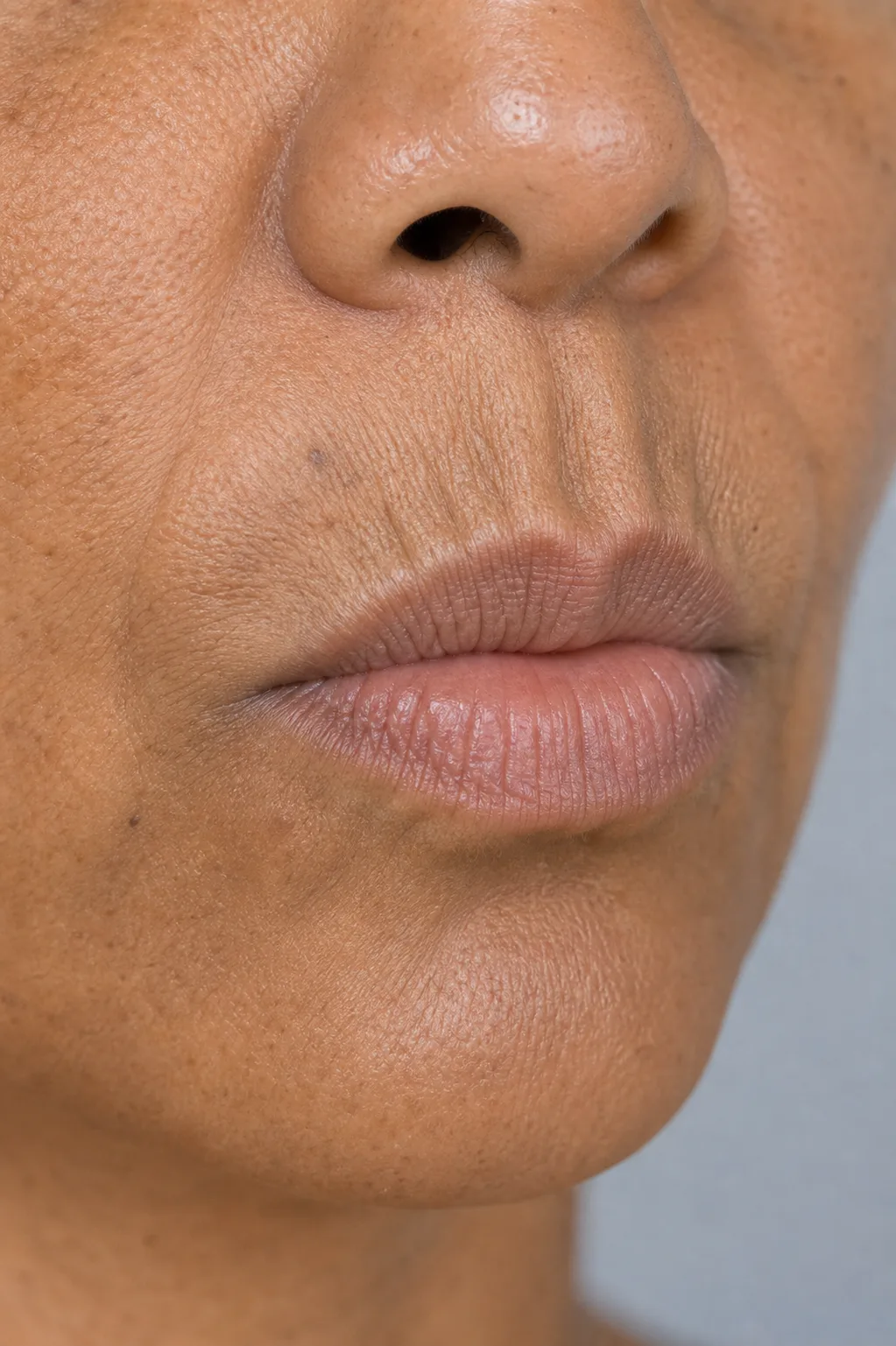
The vermilion is the coloured, exposed part most people mean when they say “lip”. Population studies have found that visible vermilion height and its relationship to mouth width can change with age. A separate upper lip study found less visible upper vermilion alongside a longer skin portion of the upper lip.
That does not mean every older lip becomes thin, or that age can be read accurately from a mouth. Studies report group averages across particular samples. Sex, ancestry, inherited shape and measurement method matter, and one person may sit nowhere near an average. Ageing is normal variation, not evidence of a defect.
What Can Change At The Border And Cupid’s Bow?
The vermilion border is the transition between lip and facial skin. The central peaks of the upper border form the Cupid’s bow, while the philtral columns run from those peaks towards the base of the nose. These landmarks may look less crisp over time, but lighting, makeup, dryness, swelling and previous care can also change how clearly they appear.
A softer border is not automatically a request for a larger lip. Someone may be concerned about lipstick migration while remaining comfortable with their lip size. Another person may notice asymmetry only in a smile. The useful question is what they have noticed in ordinary life, not which idealised outline is popular online.
Is The Upper Lip Longer, Or Is Less Vermilion Showing?
These descriptions can occur together but they are not identical. The skin between the base of the nose and the upper vermilion can occupy more of the vertical distance, while less coloured lip is visible from the front. Standard photographs may make that relationship easier to see, although camera height, head position and expression can distort it.
Corey does not use a universal millimetre target or compare a face with a celebrity reference. The relevant baseline is the person’s own stable anatomy, viewed at rest and in natural movement. A number without that context can sound precise while answering the wrong question.
A Line Above The Lip Is Not The Same As A Change In The Lip
Vertical lines above the upper lip sit in perioral skin, not in the vermilion itself. They can relate to skin ageing, sun exposure and repeated movement. A line may be visible at rest, appear mainly while pursing, or become noticeable because lipstick follows the crease.
This is why “my lips look older” may actually be a skin observation. Adding the lip, border and nearby skin into one problem can lead to an unnecessarily broad plan. The perioral lines guide owns the deeper discussion of skin and repeated movement; this page keeps the boundary visible.
Why Do Rest, Speech And A Smile Tell Different Stories?
A still mouth shows shape and symmetry at rest. Ordinary speech shows how the lips meet, part and roll through familiar sounds. A natural smile shows upper lip elevation, dental display and whether an asymmetry is dynamic. Pursing shows something else again, but repeated exaggerated pursing can make almost anyone’s lines look stronger.
No single expression is the “true” lip. Corey compares a small set of ordinary movements because a concern that exists only during speech should not be assessed as if it were fixed at rest. Movement also helps separate a border concern from a mouth corner or lower face concern.
What About Dryness, Flaking Or A Sudden Change?
Dryness can temporarily make fine texture and border irregularity more visible. Weather, lip licking, irritation, allergy, medicines and skin conditions may be relevant. Persistent cracking, ulceration, bleeding, colour change or a focal rough area should not simply be labelled ageing from a webpage.
Likewise, a sudden change is a different story from gradual change across years. New swelling on one side, weakness, numbness, severe pain, a persistent sore, a lump, infection signs or difficulty speaking or swallowing needs appropriate medical or dental assessment. A routine cosmetic consultation is not urgent care.
How Do Teeth, Dental Work And Lower Face Support Enter The History?
The lips rest against teeth and move as part of the oral region, so recent dental work, tooth loss, dentures, a changing bite or jaw symptoms can change the context of what someone sees or feels. A cosmetic consultation cannot diagnose dental causes. It can recognise when the explanation is incomplete.
Bring the timing of relevant dental changes and any symptoms. If lip closure feels different, the bite has changed, there is dental pain or the concern followed a procedure, Corey may recommend dental or medical review before any cosmetic discussion.
What Does Corey Compare During An Individual Review?
The review is a map, not a product selection exercise.
| Area or clue | What is compared | What it cannot establish alone |
|---|---|---|
| Visible vermilion | Upper and lower show, symmetry and change from the person’s usual baseline. | That volume is missing or care is needed. |
| Border and philtral landmarks | Definition, continuity, makeup migration and whether the concern is focal or general. | The cause of a softer edge. |
| Upper lip skin | Length, surface lines, sun history and change at rest versus movement. | That a line belongs to the lip itself. |
| Mouth corners | Resting position, symmetry and relationship to the cheek, chin and lower face. | That one structure explains a fold or shadow. |
| Speech, smile and closure | Natural movement, dental display and whether the observation is dynamic. | Suitability for any particular option. |
| History | Timing, health, medicines, smoking and sun exposure, dental context and previous care. | A diagnosis without appropriate examination or referral. |
Can An Older Photograph Help Establish The Timeline?
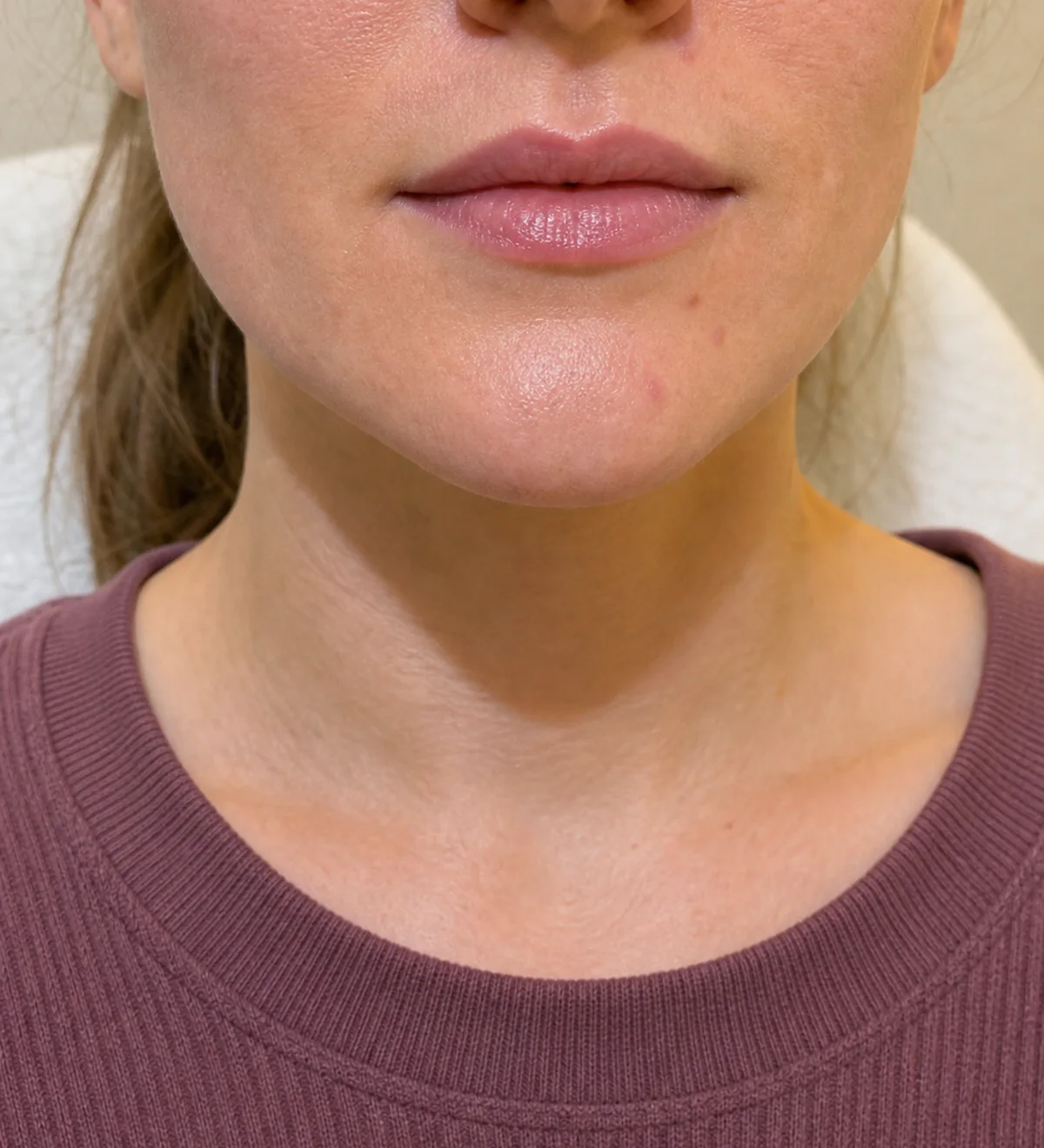
One or two ordinary photographs can help answer when the change became noticeable. Choose images with a relaxed expression, familiar camera distance and no beauty filter. A passport style photograph, family snapshot or work photograph may be more useful than a posed close view.
The photograph is a timeline clue, not an instruction to recreate a younger face. It should not be paired with an imagined future image, scored for attractiveness or turned into a promise. If lighting, dental work, weight change or camera angle differs substantially, Corey records that uncertainty rather than treating the image as a measurement.
Previous Lip Care Can Change The Baseline
If the area has had previous cosmetic, dental, surgical or dermatological care, the current appearance may not represent untreated anatomy. Bring dates, the area involved, the provider and records if available. Do not guess a product name from memory or social media.
Unknown previous care may make waiting, records review or referral more responsible than another intervention. A new clinic should not pretend certainty when the baseline is unclear, and treatment availability should never be inferred from this education page.
What Can A Responsible Consultation Conclude?
It may conclude that the feature is normal and needs no cosmetic care. It may identify a skin concern, a dental or medical question, a need for records, a period of stability, or a broader lower face assessment. If an option is appropriate to discuss, that discussion still requires individual suitability, realistic expectations, risks, alternatives, cost, consent and follow up planning.
The outcome should remain proportionate to the concern. Noticing lipstick bleed does not authorise a plan for the whole lower face. Noticing a longer upper lip does not establish that increasing lip size would address it. Sometimes the most useful conclusion is a clearer description and no procedure.
How Are Risk And Consent Kept Visible?
This public page does not advertise or select a prescription medicine. If care is discussed after assessment, the relevant common effects, less common complications, limitations, alternatives, aftercare, warning signs and review arrangements must be explained for that person and that option. Website language cannot replace informed consent.
You can pause, ask for written information, seek another opinion or decline. Corey must also consider whether the request is appropriate, whether expectations are realistic and whether not proceeding is the safer route. A booking reserves consultation time; it does not confirm that treatment will occur.
Choose The Next Page By The Question You Actually Have
Use the lip consultation walkthrough if you want to know what happens in the appointment. Read the lip assessment guide for movement, closure and oral history detail. The lip proportion consultation page explains how proportion and volume are considered without a preset plan.
If the concern is mainly the skin above the lip, continue to perioral lines. For broader decision boundaries, read how suitability is assessed, patient safety before aesthetic decisions and why a consultation may end with no.
Confirm The Practitioner And Oakleigh Clinic
Core Aesthetics consults from Atherton Road in Oakleigh. Consultations are led by Corey Anderson RN, Ahpra registration NMW0001047575. The clinic phone number is 0491 706 705.
Use the Core Aesthetics verification page and the Ahpra public register to confirm practitioner and full clinic details. If you want an individual assessment after reading the relevant guide, use the consultation booking page.
Review And Evidence Boundaries
This page was reviewed on 5 September 2026 by Corey Anderson RN. Current TGA and Ahpra guidance informed its consultation led, risk visible wording. Lip morphology statements are limited to findings from PubMed indexed anthropometric, imaging and histology studies.
Those studies describe groups, not a universal ageing sequence or an ideal lip. The page does not diagnose a change, advertise a prescription medicine, promise an outcome, present an image as an expected change or imply that a feature associated with age needs correction.
Questions About Lip Ageing And Assessment
Does lip ageing always mean losing volume?
No. Someone may be noticing less visible vermilion, a longer skin portion of the upper lip, a softer border, perioral lines, mouth corner change, dryness or a movement difference. These observations can overlap, but they are not interchangeable. Corey first locates the concern and compares rest, speech and smile before discussing whether it is normal variation, a skin or dental question, a previous care issue, or something suitable for further cosmetic discussion.
Why does less coloured upper lip sometimes show with age?
Imaging and anthropometric studies have reported a longer skin portion of the upper lip and less visible upper vermilion in older groups. That is a population finding, not a rule for every person. Inherited anatomy, sex, ancestry, expression, lighting, dental context and previous care can all affect what is visible. A photograph cannot establish the cause or decide whether any care is appropriate.
Are vertical lines above the mouth part of the lip?
They are in the perioral skin above the vermilion rather than in the coloured lip itself. They may relate to skin ageing, sun exposure and repeated movement, and can be more obvious at rest or while pursing. Lipstick migration can make them easier to notice. Their presence does not prove that the lip has lost volume or that a particular option is suitable.
Can I bring an old photograph to show what changed?
Yes. One or two ordinary, unfiltered photographs can help establish timing, especially when they show a relaxed expression from a familiar distance. They are timeline evidence, not an appearance target or a before-and-after promise. Differences in lighting, camera angle, dental work, weight or expression should be acknowledged rather than treated as exact measurements.
Why would dental history matter in a lip assessment?
The lips rest against the teeth and move as part of the oral region. Recent dental work, tooth loss, dentures, bite change, dental pain or jaw symptoms can alter the context of what you see or feel. Corey cannot diagnose a dental cause in a cosmetic consultation. He can recognise when dental or medical review should come before any cosmetic discussion.
What lip changes should be assessed promptly elsewhere?
Seek appropriate medical or dental advice for new swelling on one side, weakness or numbness, severe pain, infection signs, a persistent sore, bleeding or colour change, a new lump, trauma, difficulty speaking or swallowing, or a rapidly changing pattern. A routine cosmetic appointment is not urgent care and should not delay assessment of a new symptom.
Does Corey use an ideal lip ratio?
No universal ratio can account for a person’s anatomy, movement, ancestry, age, sex, dental support and preferences. Research measurements also vary by sample and method. Corey may compare parts of your own lip and lower face, but he should not impose a celebrity outline or use a population average to label your anatomy as wrong.
Can an assessment of lip ageing change the recommended next step?
Yes. It may end with education, reassurance, skin-care or sun-protection discussion within scope, records from a previous provider, observation, dental or medical referral, a broader assessment, time to think or no cosmetic care. If an option is appropriate to discuss, individual risks, alternatives, uncertainty, cost, consent and follow-up still need to be covered.
What should I bring if I want a lip change reviewed?
Bring your current medicines and supplements, allergies, relevant health and dental history, the timing of the change, previous procedure dates and records, and details of any dryness, pain, altered sensation or functional change. One or two ordinary older photographs can help. You do not need to arrive with a treatment choice.
Is this for you?
Consider booking a consultation if
- Adults who want to identify whether a change is in the lip, its border, movement or surrounding skin
- People willing to discuss timing, health, medicines, sun exposure, dental context and previous care
- Adults open to education, observation or another clinically appropriate pathway
- People seeking a consultation-led explanation rather than an ideal lip template
This may not be for you if
- Anyone seeking a diagnosis or treatment selection from a photograph
- People with sudden swelling, weakness, numbness, severe pain, a persistent sore, infection signs or swallowing difficulty
- Anyone treating normal ageing as a reason cosmetic care must occur
- People seeking an exact recreation of an earlier photograph or a celebrity lip shape
Suitability is confirmed at consultation. This list is general guidance, not a substitute for clinical assessment.
Clinical references
- TGA: Advertising health services that involve therapeutic goods
- TGA: Advertising health services and cosmetic injections FAQs
- Ahpra: Advertising higher risk non-surgical cosmetic procedures
- Ahpra: Performing non-surgical cosmetic procedures
- PubMed: Age- and sex-related changes in three-dimensional lip morphology
- PubMed: Changes in the aging upper lip: a photomorphometric and MRI based study
- PubMed: Age-related changes of the orolabial region in Caucasian women
- PubMed: Histological investigation of age-related changes in upper lip vermilion