
A stable upper shoulder contour without pain, weakness, altered sensation or restricted movement may be discussed as an appearance concern. If it changes with work, training or arm position, that movement pattern matters. New, persistent or worsening symptoms need an appropriate medical or allied health assessment first. Corey Anderson RN can help separate those paths during a consultation in Oakleigh.
Start with what you notice, not a treatment name
Your upper shoulder line can look different when your arms move, after a busy workday or simply because of your natural anatomy. The useful starting point is whether the change is a stable appearance concern, follows a repeatable movement or workload pattern, or comes with symptoms.
That distinction keeps the appointment centred on your real question. Corey can assess cosmetic scope and explain whether consultation, further health review, waiting or no cosmetic care is the most sensible next step.
Notice three things before you visit
What catches your eye?
Notice the neck-to-shoulder slope while standing naturally, with your arms relaxed and without posing for the mirror.
When does it change?
Think about desk work, carrying, overhead activity, training and ordinary arm movement across a normal week.
Are symptoms present?
Pain, weakness, tingling, numbness, injury or restricted movement changes the pathway and should not be treated as an appearance label.
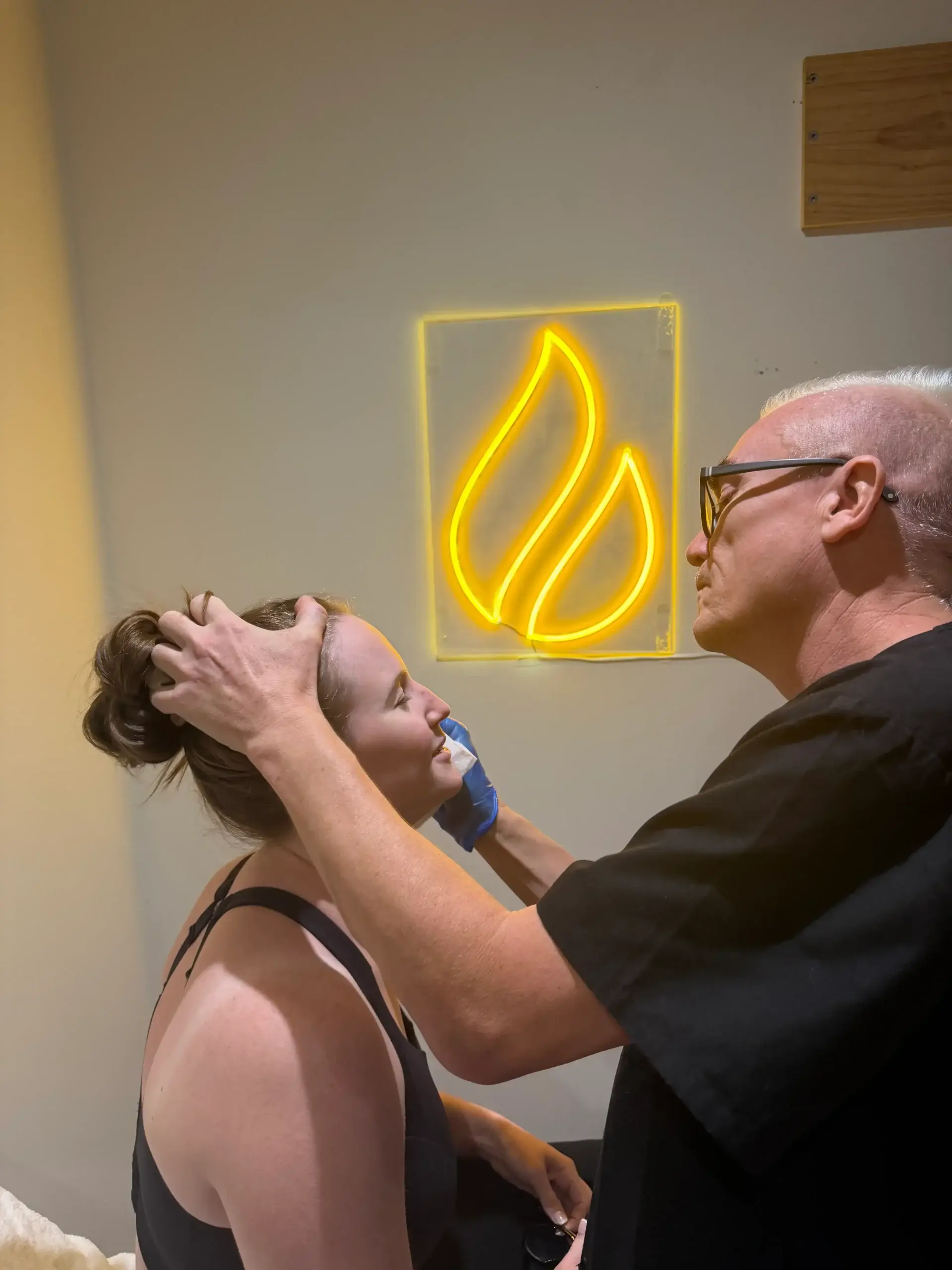
Your everyday shoulder tells the useful story
A single posed photograph can make one shoulder look broader or higher. Arm position, camera height and how you hold your head can all change the view, so Corey compares the concern at rest with the way you move naturally.
Bring one or two ordinary observations rather than trying to prove a diagnosis. If the line is stable and symptom-free, an appearance consultation may be reasonable. If it changes after work, carrying or training, that context belongs in the assessment.
Choose the path that fits your shoulder
Stable and symptom-free
A consistent upper shoulder contour at ordinary rest can be discussed with Corey as a cosmetic appearance question.
Changes with your week
If the pattern shifts with desk work, lifting, sport, carrying or arm position, record when it happens and consider whether functional review should come first.
Health assessment first
Pain, weakness, altered sensation, swelling, injury or restricted movement belongs with an appropriate medical or allied health practitioner.
Bring the pattern, not a diagnosis
A brief note about when the shoulder looks or feels different is more useful than repeatedly provoking it or taking tightly posed photographs. If front-of-neck bands or movement are the concern instead, the platysma assessment page owns that separate question.

What Corey assesses with you
Corey listens to what first caught your attention, then reviews the shoulder line in a comfortable resting position, relevant movement, health and medicine history, previous care, work or training demands and your expectations.
He can explain whether the concern sits within cosmetic nursing scope and what the individual risks and trade-offs may be. He does not diagnose shoulder pain, nerve symptoms, injury or movement disorders, and will recommend another pathway when those questions need to be answered first.
Bring three details that make the visit useful
| Bring this | What to note | Why it helps |
|---|---|---|
| Your observation | What you notice at rest and whether it changes with ordinary movement. | Keeps the conversation focused on your lived experience. |
| Your weekly context | Desk work, carrying, overhead work, sport, training or caring demands. | Shows whether workload and function change the question. |
| Your health history | Medicines, allergies, relevant diagnoses, symptoms, injuries and records of previous care. | Helps Corey assess scope, risk and whether another review belongs first. |
When another health review should come first
Arrange an appropriate medical or allied health assessment for new, persistent or worsening pain, weakness, numbness, tingling, swelling, injury, restricted movement, unusual headache or neurological change. Sudden weakness, chest pain, breathing difficulty or a severe injury may require urgent care.
When the concern is stable, symptom-free and mainly about appearance, Corey can discuss it calmly without assuming that a procedure is needed. The outcome may be a plan, more information, waiting, referral or no cosmetic care.

Plan your visit in Oakleigh
You will meet directly with Corey for a calm, private assessment of the appearance you have noticed and the movement or workload context around it.
Corey reviews cosmetic scope, suitability and the next useful step. Same-day care is not assumed; if an option is appropriate, its material risks, alternatives and costs are discussed before you decide.
Come in with a question, leave with a clearer path
Your visit can clarify whether the concern belongs to cosmetic assessment, another health pathway, more time or no further action.
Is this for you?
Consider booking a consultation if
- Adults who want to discuss a stable upper shoulder appearance concern without choosing a treatment first
- People who can describe what they notice at rest and whether ordinary movement or workload changes it
- People comfortable with consultation leading to a plan, waiting, referral or no cosmetic care
This may not be for you if
- Anyone seeking diagnosis or management of pain, injury, weakness, numbness, tingling or restricted movement
- People with a new, worsening or urgent health concern that needs an appropriate medical pathway
- Anyone expecting a photograph, body shape or booking to guarantee suitability or care
Suitability is confirmed at consultation. This list is general guidance, not a substitute for clinical assessment.
Frequently asked questions
Is a high shoulder line always caused by the trapezius?
No. Baseline anatomy, skeletal relationships, posture, arm position, movement, load, camera angle and several health factors can affect the view. A photograph cannot diagnose the cause or establish that cosmetic care is appropriate.
Can Core Aesthetics assess shoulder pain or persistent tension?
Corey can identify that symptoms change the cosmetic pathway, but Core Aesthetics does not diagnose or manage shoulder injury, chronic pain, nerve symptoms, headache disorders or impaired movement. A GP, physiotherapist or another appropriate practitioner may be the better starting point.
Why should I record a normal week before consultation?
A seven day record can show whether the appearance or symptoms change after desk work, carrying, overhead activity, sport or rest. That pattern helps separate a stable visual concern from a workload or functional question.
Is trapezius assessment the same as neck band assessment?
No. This page concerns the upper shoulder and neck slope, where load and shoulder function matter. Neck band assessment concerns visible bands on the front of the neck and platysma movement.
What symptoms should be assessed outside a cosmetic clinic?
Pain, weakness, numbness, tingling, swelling, recent injury, restricted movement, unusual headache or neurological change requires an appropriate health pathway. Sudden or severe symptoms may need urgent medical care.
Can photos confirm whether I am suitable?
No. Consistent photos can describe what you notice and show whether arm position, camera height or lighting changes the shoulder line. They cannot assess health history, function, symptoms, previous care, individual risk, informed consent or suitability. Those questions require an individual clinical assessment.
Why do work and training demands matter?
The upper shoulder contributes to ordinary movement. Overhead work, lifting, sport, carrying and recovery demands can change both the functional question and the consequences of unwanted weakness or altered movement.
Can care occur on the consultation day?
Care on the consultation day is not automatic. The decision depends on assessment, records, informed consent, functional demands, individual risk, patient readiness, clinical time and access to review.
What risks are relevant to an upper shoulder discussion?
The individual discussion may include pain, bruising, swelling, tenderness, asymmetry, unwanted contour change, weakness, altered shoulder or neck movement, effects on work or training, delayed concerns and the need for review or further care.
Can the recommendation be no cosmetic procedure?
Yes. Symptoms, incomplete records, normal variation, pose dependent appearance, functional demands, unrealistic expectations or an unfavourable tradeoff may support referral, waiting or no cosmetic procedure.
What previous care information should I bring?
Bring dates, clinic and practitioner details, the exact area, product or medicine if known, documented quantity, photographs, reviews and any adverse event. Unclear or unsettled previous care may need record retrieval or review with the original clinic.
How can I verify Corey Anderson before booking?
Corey Anderson is listed as a Registered Nurse with Ahpra registration NMW0001047575. Compare the Core Aesthetics verification page with the independent Ahpra public register before booking or sharing health information.
Clinical references
- Ahpra: Guidelines for registered health practitioners who perform non-surgical cosmetic procedures
- Ahpra: Advertising higher risk non-surgical cosmetic procedures
- Ahpra: Public register of practitioners
- TGA: Advertising health services that involve therapeutic goods
- NMBA: Registered nurse standards for practice