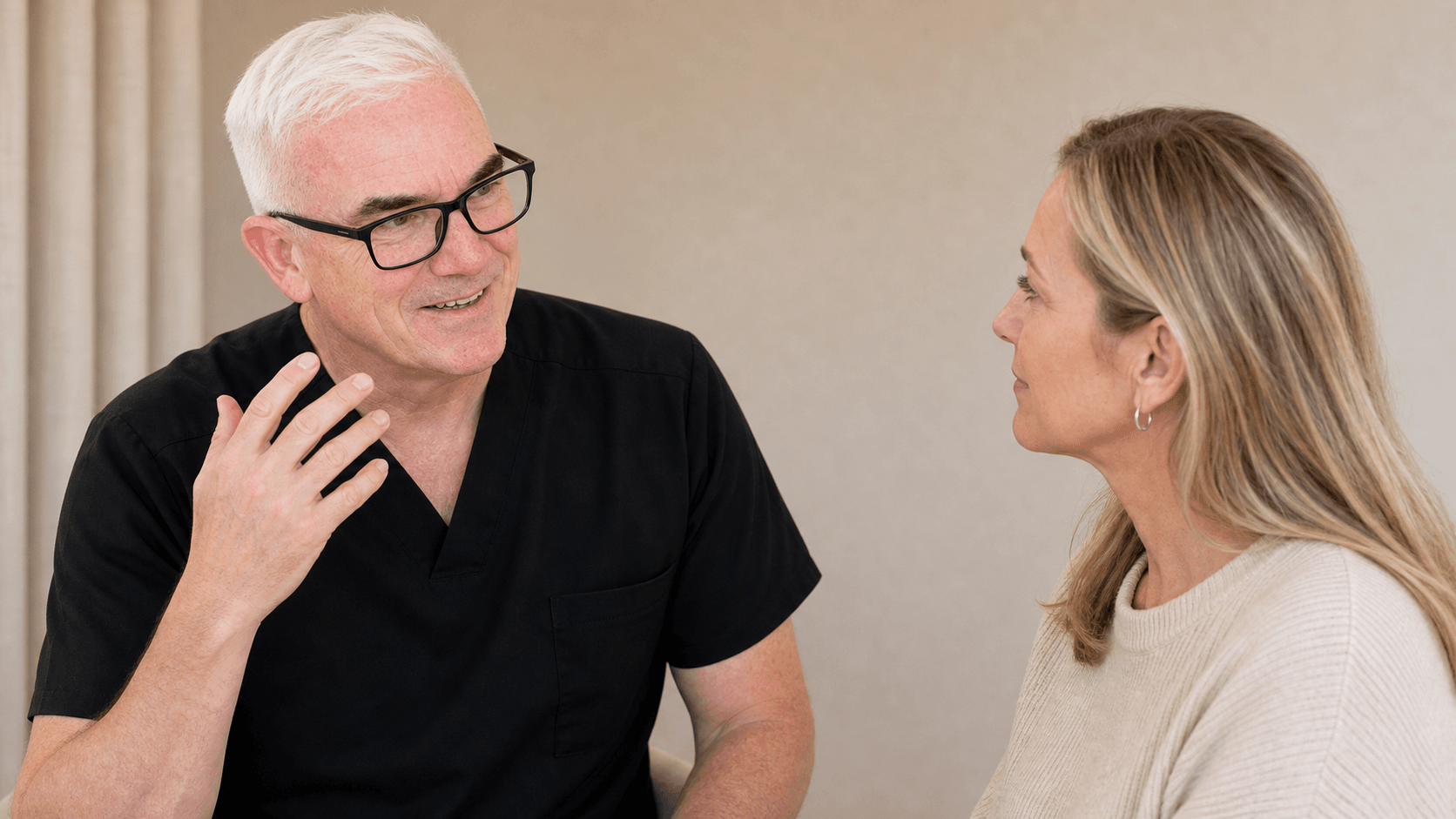
If a change in your cheeks, midface or facial balance is difficult to describe, you do not need to choose a treatment label before booking. Corey Anderson RN can compare facial structure, skin, natural movement, health history and previous care, then explain whether waiting, another pathway or a treatment discussion is the most useful next step.
Start with what you have noticed
A facial change can be easy to notice and hard to name. It may look like a deeper shadow, less cheek support, a heavier transition or simply a difference between photographs, mirrors and everyday movement.
You do not need to diagnose the cause or arrive with a treatment in mind. This Ashwood page helps you prepare for a focused appointment with Corey in nearby Oakleigh, where the first task is to understand the concern in the context of your whole face.
What would you like help understanding?
A contour feels different
You have noticed a change through the cheek, midface or lower-face transition and want to understand what may be contributing.
Light changes the concern
The area can appear more noticeable in some lighting or photographs, so you want a neutral in-person view.
Texture may be part of it
Dryness, skin quality or a surface change may be influencing what looks like a structural concern.
Previous care needs context
You have had care elsewhere or noticed a recent change and would like Corey to review the history before discussing anything further.
Look at the whole face before choosing a label
Corey looks at how the area relates to nearby features rather than isolating one shadow or contour. He may compare your face at rest and in natural movement, ask when the change became noticeable and consider skin quality, weight change, dental history and previous cosmetic care.
That wider view can clarify whether the concern is mainly structural, surface-related, still changing or better handled through another pathway. It also gives you room to say what you would prefer to leave unchanged.
What can the first appointment achieve?
Name the concern clearly
See the area in neutral light and discuss whether shape, shadow, skin or previous care is contributing.
Choose a sensible next step
Leave with a clearer pathway, whether that means waiting, gathering records, referral or discussing an option.
Take more time if you need it
A useful consultation does not depend on proceeding. You can use the visit for information and questions only.
Local access supports continuity, not suitability
For someone coming from Ashwood, an Oakleigh appointment can make it practical to keep assessment, questions and any later review connected with the same practitioner.
Location does not decide whether care is appropriate. Suitability still depends on the individual assessment, health history, timing, expectations, alternatives and informed consent.
How Corey keeps the discussion personal
Your appointment is with Corey Anderson RN, so the person who hears your priorities is also the person responsible for explaining the assessment and any later plan.
Corey will ask what brought the concern to your attention, what a proportionate outcome means to you and whether there are reasons to wait. If a treatment discussion is appropriate, relevant risks, alternatives, aftercare and costs are covered before you decide.
Bring a short, useful history
| Bring this | What to note | Why it helps |
|---|---|---|
| The concern | Where you notice it, when it began and whether light, expression or fatigue changes it. | It helps Corey assess the pattern instead of relying on a treatment label. |
| Previous care | Approximate dates, areas and records if care took place elsewhere. | A clear history can affect timing, review and whether more information is needed. |
| Your schedule | Travel, dental care, important events and whether returning to Oakleigh is realistic. | Practical timing belongs in the plan before any decision is made. |
When another pathway comes first
Corey may recommend waiting, gathering earlier records, seeking medical or dental advice, reviewing skin care or choosing no cosmetic treatment. A recent, painful, rapidly changing or unexplained facial concern should be medically assessed rather than treated as a routine cosmetic question.
If a cosmetic option is discussed, the decision comes after suitability, material risks, alternatives, aftercare and consent have been considered together.

Plan your visit from Ashwood
Come to Oakleigh for a calm, private conversation about what you have noticed and what you would like help understanding.
Allow space to discuss the assessment and your questions without assuming treatment will happen. Corey can explain whether waiting, review, referral or a later treatment discussion is the most useful next step.
Bring the question, not a treatment plan
Meet Corey in Oakleigh to understand the concern and leave with a next step that feels clear, proportionate and unhurried.
Is this for you?
Consider booking a consultation if
- Adults near Ashwood wanting facial volume and structure assessment before treatment discussion
- Patients who want consultation-first explanation of facial volume, skin quality, risk and consent
- People open to waiting, referral, review later or no treatment where that is safer
- Patients who want to verify Corey Anderson RN and the Oakleigh clinic before booking
This may not be for you if
- People seeking treatment without assessment, consent or risk discussion
- People with urgent medical symptoms, active infection, acute swelling or rapidly changing facial symptoms
- People wanting a fixed cosmetic change before facial structure and skin quality are assessed
- People seeking advice for someone who cannot provide informed consent for elective cosmetic care
Suitability is confirmed at consultation. This list is general guidance, not a substitute for clinical assessment.
Frequently asked questions
Who is this Ashwood facial volume guide written for?
The guide is mainly for local readers, but nearby adults can use it too. Its purpose is to connect appointment based planning to practitioner verification, whether care is suitable, consent discussion and aftercare review planning before choosing any treatment discussion, so the booking decision consultation choice stays assessment based and assessment led.
How can I make a Ashwood clinical aftercare review visit more useful?
A useful clinical aftercare review visit starts with facts: the concern, health context, prior procedure planning, medicines, allergies, assessment appointment timing and aftercare contact. This helps the consultation stay centred on whether care is suitable rather than a fixed next step request.
What happens if procedure planning is not suitable after clinical aftercare review?
Treatment discussion may happen for some adults, but only after whether care is suitable, safety points, alternatives and consent discussion are well understood. A careful clinical aftercare review visit can end with leaving procedure planning aside, further review or a delayed plan.
How is this different from the main volume procedure planning Melbourne guide?
The main guide explains the broader service pathway. This local planning guide focuses on planning, comparison with nearby suburbs, Oakleigh aftercare contact and the clinical aftercare review visit based questions a patient should sort before choosing an clinical post visit care review visit.
How should I compare Ashwood with Mount Waverley, Burwood, Burwood East and Safety?
Nearby reader guides can help with travel and comparison, but they do not change the safety standard. The same consultation-first process applies across nearby starting points.
Why does safety planning matter for facial volume?
No local guide can make procedure planning free of risk context. Corey discusses relevant safety points, alternatives, post visit care, symptoms needing attention and limits in consultation before choosing deciding whether possible care planning is appropriate.
What could make treatment discussion inappropriate?
Leaving procedure planning aside may be recommended when the expected benefit is unclear, the risk context is not acceptable, consent discussion is unsettled or the concern does not match the requested care pathway.
How do Ashwood adults verify the clinic information?
Use the verification guide, contact planning guide and Ahpra public register before choosing booking. Corey Anderson is a Registered Nurse and can be checked using NMW0001047575; the clinic information are listed in the verification section above.