For a facial volume concern near Glen Waverley, build a three point timeline: an earlier familiar baseline, when the change was first noticed and the current pattern. Add coinciding weight change, illness, dental care, cosmetic care or medicine changes without assuming they caused the appearance. Corey Anderson RN compares the timeline with cheek and midface support, lower face relationships, skin, movement, natural asymmetry and health history. He explains suitable options, material risks, alternatives, costs, timing and follow up. When clinically appropriate and informed consent is complete, suitable care can be planned.
Begin With The Last Baseline That Felt Familiar
Think of a period when the facial proportions and transitions still felt familiar. You do not need an exact date or a perfect photograph; an approximate period and ordinary memory can be enough.
Then identify when the change first reached your attention and how it appears now. This gives Corey a story of change rather than a single close image.

How Do You Build The Three Point Timeline?
Use comparable, ordinary information where possible. Record events beside the timeline without deciding that one caused the change.
| Timeline point | What to record | What it helps clarify |
|---|---|---|
| Earlier familiar baseline | Approximate period, proportions you recognised and any ordinary image available. | What you consider familiar rather than an idealised target. |
| First noticed change | Where the change appeared, whether it was gradual or sudden and the context. | Which history questions need priority. |
| Current pattern | What stays consistent across neutral views, rest and movement. | The concern Corey can assess now. |
| Coinciding events | Weight change, illness, dental care, medicines or previous cosmetic care. | Relevant context without assuming causation. |
| Preservation boundary | Expression, asymmetry and proportions you want kept familiar. | A personal reference for consent and planning. |

Which Guide Fits The Timeline Question?
Stay with this page
You want to compare an earlier familiar baseline with first noticed change and the current facial support pattern.
Use the support map
The Mount Waverley guide maps how temple, cheek, midface and lower face relationships connect to the noticed feature.
Choose the focused cheek guide
Read the cheek consultation guide when cheek width and midface contour are clearly central.
What Does Corey Compare With The Timeline?
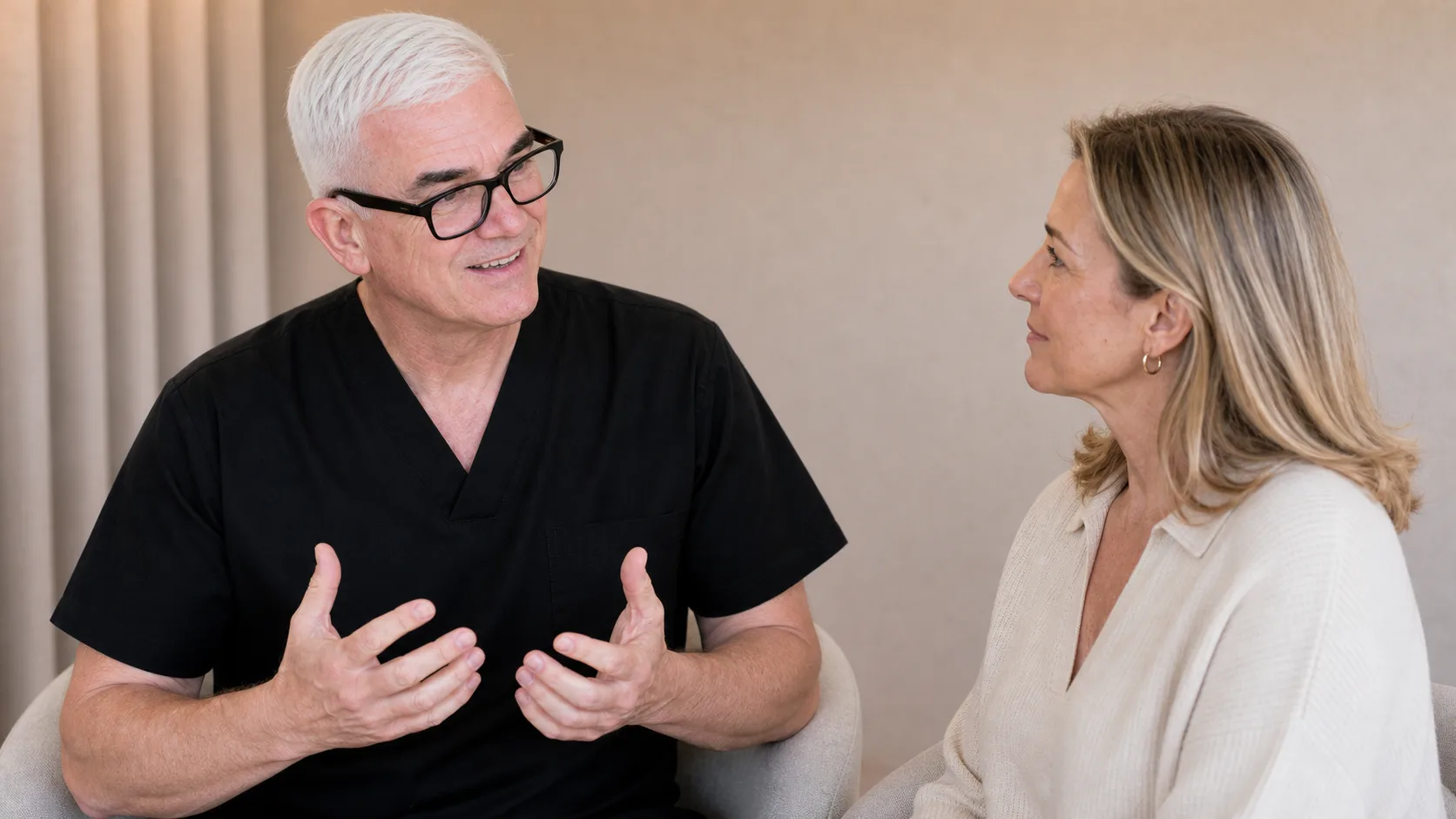
Corey observes the face from the front, angled view and profile, at rest and in natural movement. He considers cheek and midface support, lower face relationships, skin, natural asymmetry and which features should remain familiar.
Medicines, allergies, health changes, weight history, dental context and previous cosmetic care complete the assessment. The timeline supports clinical questioning but does not diagnose a cause or confirm suitability.
Why Are Older Photographs Optional?
An ordinary older photograph can help show a familiar baseline, but camera angle, light, expression and image processing limit comparisons. It should not become a copied result target.
If no photograph exists, describe the period and the relationships you remember. Corey assesses the person in front of him and uses history as context.
When Does The Timeline Need Another Pathway?
A sudden painful or one sided change, weakness, numbness, visual symptoms, marked swelling, rapid progression or significant dental symptoms needs appropriate medical or dental assessment.
For a stable cosmetic concern, more information, relevant clinical input or adjusted timing can be included when useful. When the assessment is clear and informed consent is complete, suitable care can be planned.
What Can The Timeline Never Predict?
A timeline cannot predict response or remove the risks of an option. Depending on what is considered, risks may include temporary marks, swelling, tenderness, bruising, asymmetry, infection, lumps, delayed reactions, dissatisfaction and uncommon serious complications. Corey explains relevant warning signs, aftercare and review access.
Consent includes suitable alternatives, costs, timing and the familiar features you want preserved.
What Should You Bring From Glen Waverley?
Bring the three timeline points, current medicines and allergies, relevant medical and dental context, previous cosmetic care dates and any records available. Include work, travel, events and whether returning to Oakleigh for review would be practical.
One or two ordinary photographs may help, but a clear history and personal boundaries matter more than a large image collection.
Which Guides Continue A Different Question?
Use the Melbourne facial volume guide for the broader framework, the safety guide for risk preparation and the suitability guide for health and timing context.
For another route, use the Wheelers Hill, Oakleigh East or Notting Hill guide when that is your more accurate starting point.
Questions About Building A Facial Change Timeline
What are the three points in a change timeline?
Use an earlier familiar baseline, when change first reached your attention and the current pattern. Corey compares those points with structure, skin, movement and relevant history.
Do I need exact dates or old photographs?
No. Approximate periods and ordinary memories can still help Corey order the history. An older photograph may add context, but angle, light, expression and image processing limit direct comparison.
Should I record weight, illness or dental events?
Yes, when they coincide with the timeline. Record them as context without assuming causation, and seek the appropriate medical or dental assessment for active concerns.
Why include previous cosmetic care?
Dates, areas, settling patterns and review advice can change how Corey interprets the current baseline, risk and timing. Bring available records without guessing missing details.
What if the change was sudden?
A sudden painful or one sided change, weakness, numbness, visual symptoms, marked swelling or rapid progression needs appropriate clinical assessment rather than relying on routine cosmetic consultation.
Can a timeline diagnose the cause?
No. It organises your history and highlights questions for Corey. Personal assessment and, when relevant, medical or dental input are needed before explaining what may be contributing.
Why are older photographs optional in a facial change timeline?
A few comparable photographs can help show whether a contour changed gradually, but exact dates and perfect images are not required. Corey can work with approximate timing, health, weight, dental and previous care details. Photographs provide context only; they cannot diagnose a cause, establish tissue change or confirm that an option is suitable.
Is this for you?
Consider booking a consultation if
- Adults near Glen Waverley wanting facial volume and structure assessment before option discussion
- Patients who want consultation first explanation of facial volume, skin quality, risk and consent
- People open to timing, review needs or another clinically appropriate pathway where that is more appropriate
- Patients who want to verify Corey Anderson RN and the Oakleigh clinic before booking
This may not be for you if
- People asking for a predetermined plan without assessment, consent or risk discussion
- People with urgent medical symptoms, active infection, acute swelling or rapidly changing facial symptoms
- People wanting a fixed cosmetic change before facial structure and skin quality are assessed
- People seeking elective cosmetic care for someone who cannot provide informed consent
Suitability is confirmed at consultation. This list is general guidance, not a substitute for clinical assessment.