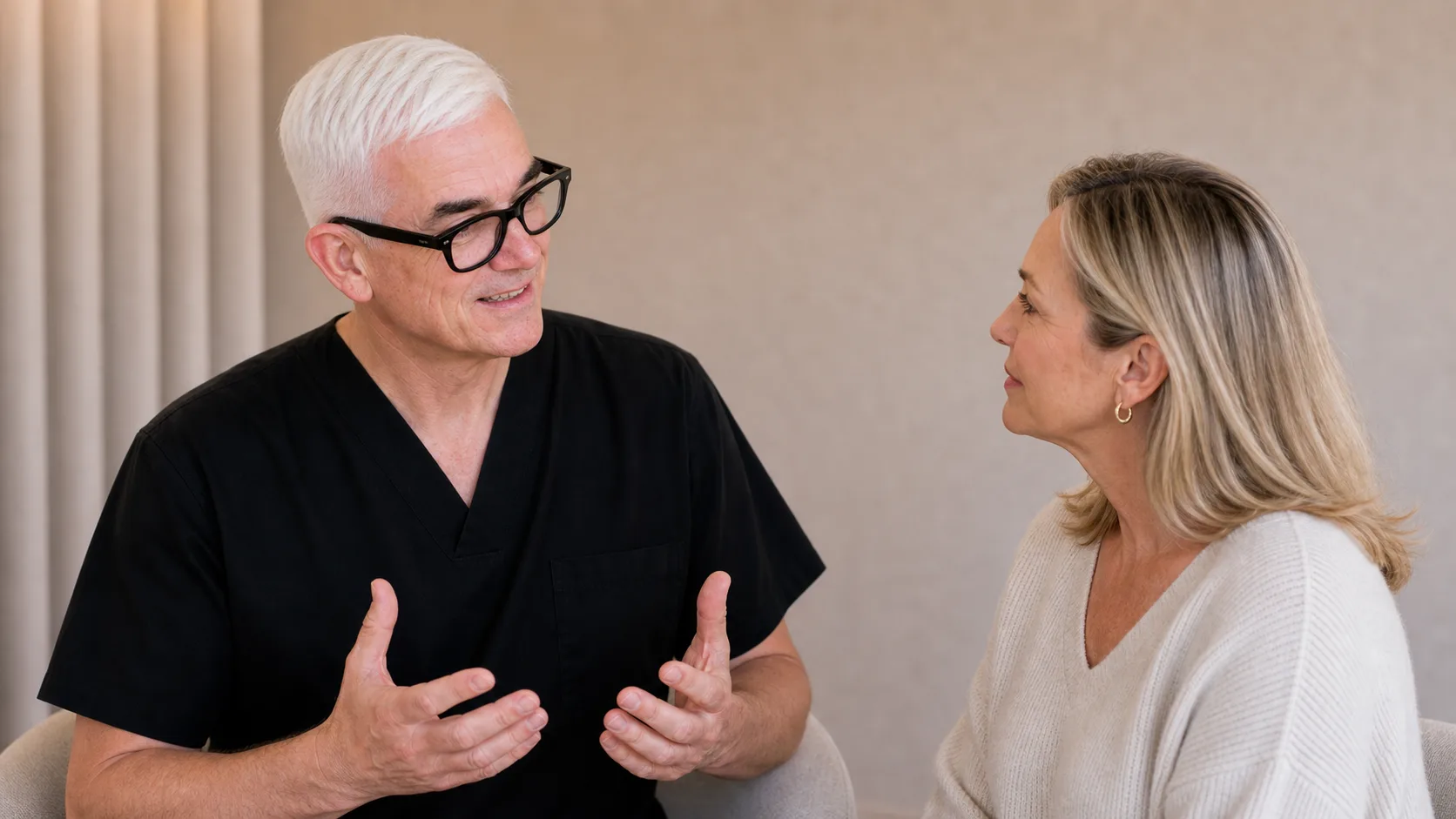
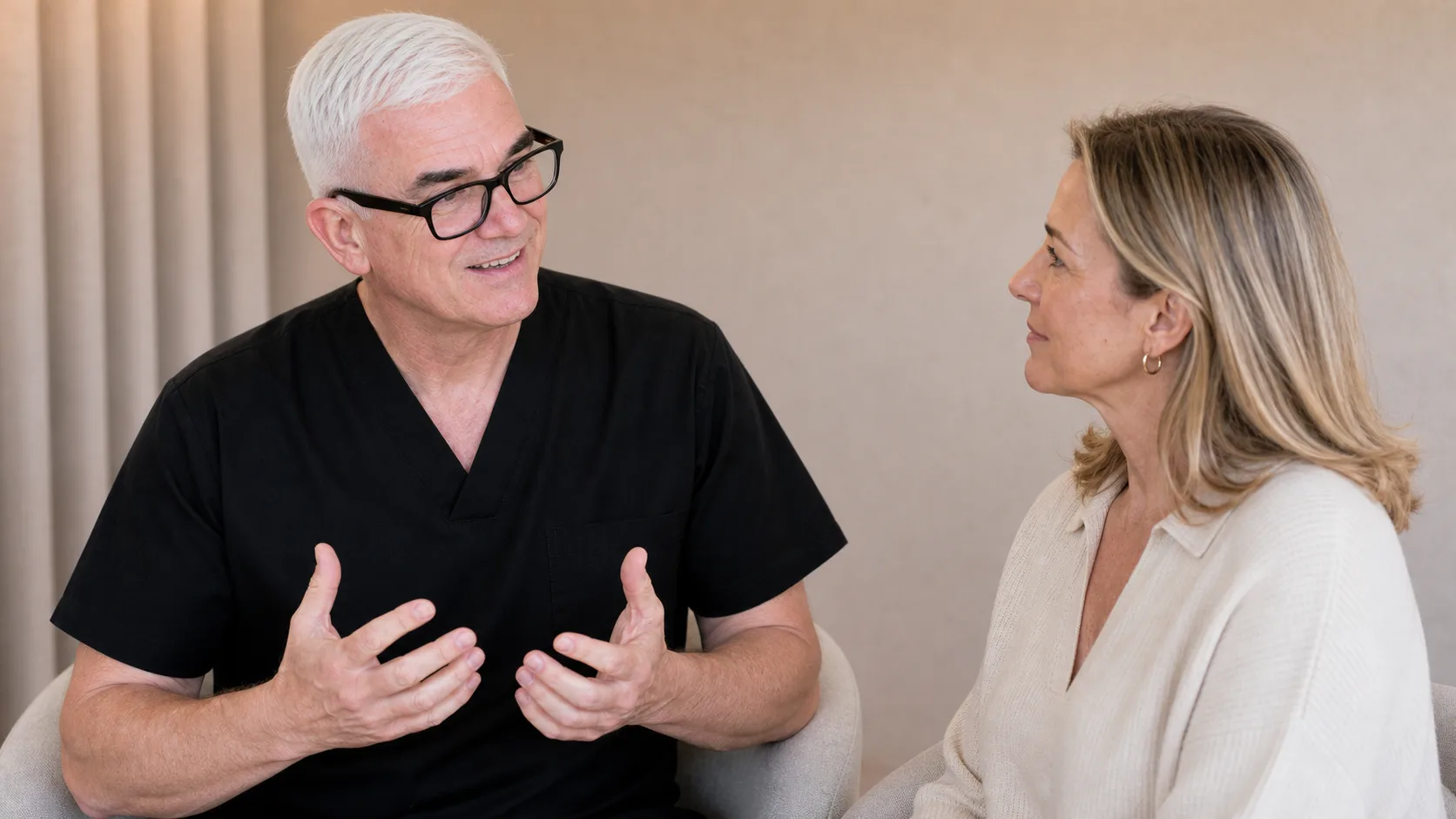
A facial volume consultation near Notting Hill can identify whether the leading concern lies at the temple to cheek, under eye to cheek, cheek to mouth corner or lower face transition. Corey Anderson RN assesses structure, skin quality, shadows, movement, natural asymmetry, weight history and previous care across the whole face. He explains which transition should lead, suitable options, material risks, alternatives, costs, timing and follow up. When assessment and informed consent support an option, suitable care can be planned.
What Does A Facial Transition Mean?
A facial transition is where one area meets another: the temple into the cheek, the under eye into the midface, the cheek toward the mouth corner, or the lower face toward the chin and jaw.
Changes in structure, skin, movement and light can make one boundary look sharper or more shadowed. Corey identifies the leading transition before discussing whether volume is actually the main issue.
Which Transition Best Matches The Concern?
Use the visible relationship rather than a broad request for more volume.
| Leading transition | What Corey compares | What it may clarify |
|---|---|---|
| Temple to cheek | Upper-face width, temporal contour and cheek support | Whether the concern begins above the midface. |
| Under eye to cheek | Light, skin, orbital anatomy and midface support | Why tired looking shadows may have several contributors. |
| Cheek to mouth corner | Midface support, smile movement and lower face transition | Whether movement or structure leads. |
| Lower face to chin and jaw | Proportion, chin support, skin and natural asymmetry | Whether the concern is broader than cheek volume. |

Why Can A Shadow Misidentify The Area?
Overhead office light, side light and phone cameras can deepen a transition that looks softer in even light. Fatigue and expression can also change the under eye, cheek and mouth corner relationship.
Corey compares consistent front and three quarter views, rest and natural movement. This helps separate a lighting effect from a stable structural or skin concern.
How Should You Prepare A Monash Precinct Visit?
Bring a short description of the transition you notice and when it looks strongest. Include ordinary photographs only if they help show the pattern across time or lighting.
List medicines, allergies, weight changes, dental history, skin changes and previous cosmetic care. Check current travel from your actual starting point and leave enough time for a whole face assessment and questions.
What Does Corey Compare Before Narrowing Options?
The assessment connects several observations.
| Observation | Why it matters |
|---|---|
| Consistent light | Reduces the chance that a temporary shadow defines the plan. |
| Rest and expression | Shows which transitions change with smiling, speech or eye movement. |
| Skin and structure | Separates surface quality from underlying support. |
| Timeline and previous care | Shows whether the pattern is longstanding, recent or still settling. |
| Whole-face proportion | Keeps one transition connected to surrounding anatomy. |
How Does The Assessment Stay Proportionate?
Corey identifies the smallest useful question first: which transition leads, what contributes to it and what you want preserved. He then explains whether suitable options should focus on one area, several related factors or a different pathway.
When assessment and informed consent support an option, suitable care can be planned. The aim is a coherent relationship between areas, not a fixed amount or uniform change.
When Does A New Change Need Medical Or Dental Input?
New weakness, numbness, severe pain, marked swelling or a rapidly changing facial difference needs appropriate medical assessment. Dental pain, infection or a new oral symptom needs suitable dental care.
Stable cosmetic changes can be assessed once relevant health context is clear. Adjusted timing, records or another clinician’s input can be incorporated without making the consultation feel like a dead end.
Which Risks And Limits Are Explained?
Depending on the option and individual context, discussion can include swelling, bruising, tenderness, redness, asymmetry, lumps, infection, delayed inflammatory reactions, dissatisfaction and uncommon serious vascular complications. Corey explains warning signs and review access.
He also explains limits. Light, movement, skin quality and natural anatomy can shape a transition in ways that a structural option cannot fully change.
Which Details Make The Transition Map More Reliable?
Bring a current medicine and allergy list, relevant health and dental history, weight changes, previous cosmetic care dates and the photographs or records you already have. Note the transition that matters most and the features you want preserved.
Share travel, work and event timing, including whether returning to Oakleigh for review would be practical.
Which Guide Fits The Next Facial Support Question?
Read the Melbourne facial support guide for the wider framework, the facial volume consultation guide for assessment detail and the local cheek guide when the midface clearly leads.
The safety guide, aftercare guide and suitability guide support risk, timing and review preparation.
Questions About Facial Support Transitions
What is a facial transition?
It is the relationship where one area meets another, such as temple to cheek, under eye to midface, cheek to mouth corner or lower face to chin and jaw.
Why can overhead light deepen a facial shadow?
Light from above can create stronger contrast beneath natural contours. Corey compares consistent front and three quarter views so temporary lighting does not define the structural assessment.
How does movement affect facial transitions?
Smiling, speaking and eye movement change cheek elevation, mouth corners and under eye shadows. Comparing movement with rest helps separate dynamic changes from skin and structural support.
What if the under eye to cheek transition leads?
Corey considers skin, light, orbital anatomy, midface support, health history and realistic limits together. The concern may require a narrower under eye or cheek discussion rather than a broad volume plan.
Should I mention weight or dental changes?
Yes. Weight change, dental treatment, tooth loss, bite changes and illness can affect facial contour or timing. Bring relevant dates and seek suitable care for pain or new symptoms.
Which risks may be discussed?
Depending on the option, Corey may discuss swelling, bruising, tenderness, redness, asymmetry, lumps, infection, delayed inflammatory reactions, dissatisfaction and uncommon serious vascular complications, plus warning signs and review access.
How can I verify the clinic and plan the route?
Use the clinic verification page and Ahpra public register for registration NMW0001047575, then check current travel from your actual starting point and allow time for an unhurried assessment.
Is this for you?
Consider booking a consultation if
- Adults near Notting Hill wanting facial volume and structure assessment before option discussion
- Patients who want consultation first explanation of facial volume, skin quality, risk and consent
- People open to timing, review needs or another clinically appropriate pathway where that is more appropriate
- Patients who want to verify Corey Anderson RN and the Oakleigh clinic before booking
This may not be for you if
- People asking for a predetermined plan without assessment, consent or risk discussion
- People with urgent medical symptoms, active infection, acute swelling or rapidly changing facial symptoms
- People wanting a fixed cosmetic change before facial structure and skin quality are assessed
- People seeking elective cosmetic care for someone who cannot provide informed consent
Suitability is confirmed at consultation. This list is general guidance, not a substitute for clinical assessment.