
If your face seems more shadowed, less supported or simply different, you do not need to decide what caused it before booking. Corey Anderson RN can compare facial structure, skin, movement, health history and previous cosmetic care at the Oakleigh clinic, then explain whether a facial-volume-focused discussion, another pathway, waiting or no treatment makes sense.
Begin with the difference you can see
You may notice the change in a side view, under different light or when your face is relaxed. It might be a stronger cheek shadow, a flatter transition through the midface or a sense that several features no longer sit together in quite the same way.
You do not need to translate that into a treatment name. Tell Corey what catches your eye, when you first noticed it and what still feels balanced and recognisably yours.
Where does the change show up?
A shadow or transition looks different
Note whether it appears in ordinary light, only from one angle or across several views.
Talking or smiling changes the picture
Movement can alter shadows and balance, so Corey compares relaxed and natural expression rather than relying on one still image.
The change has been gradual
A simple timeline and unedited older photographs may help explain what is new without turning a photograph into a result target.
Something no longer feels familiar
Bring dates, areas and records if available. Earlier cosmetic care can change which questions should come first.

Look across ordinary views
A photograph can make a shadow look stronger or flatten depth. The mirror can change with lighting and distance. Corey uses what you have noticed as a starting point, then looks at the relevant areas in person and during natural expression.
This helps separate a support or contour question from skin surface, movement, lighting or earlier care. For the wider source-by-source framework, read the facial change assessment map.
Choose the page that matches your question
Stay with this guide
Use this page when shadow, support or balance is the main concern and you want a whole-face starting point from Glen Huntly.
Plan the full journey
Use the Glen Huntly consultation-planning page when stations, access and the return trip are your main questions.
Choose the movement guide
Use the Glen Huntly wrinkle assessment page when expression and resting lines are the clearer concern.
Your notes can be simple
Write down where the change appears, when it became noticeable and whether it is stable or still evolving. Add relevant medicines, allergies, health changes and earlier cosmetic care dates or records if available.
You are preparing a useful conversation, not building a case for treatment. The facial volume consultation guide can help if you want the broader appointment framework first.
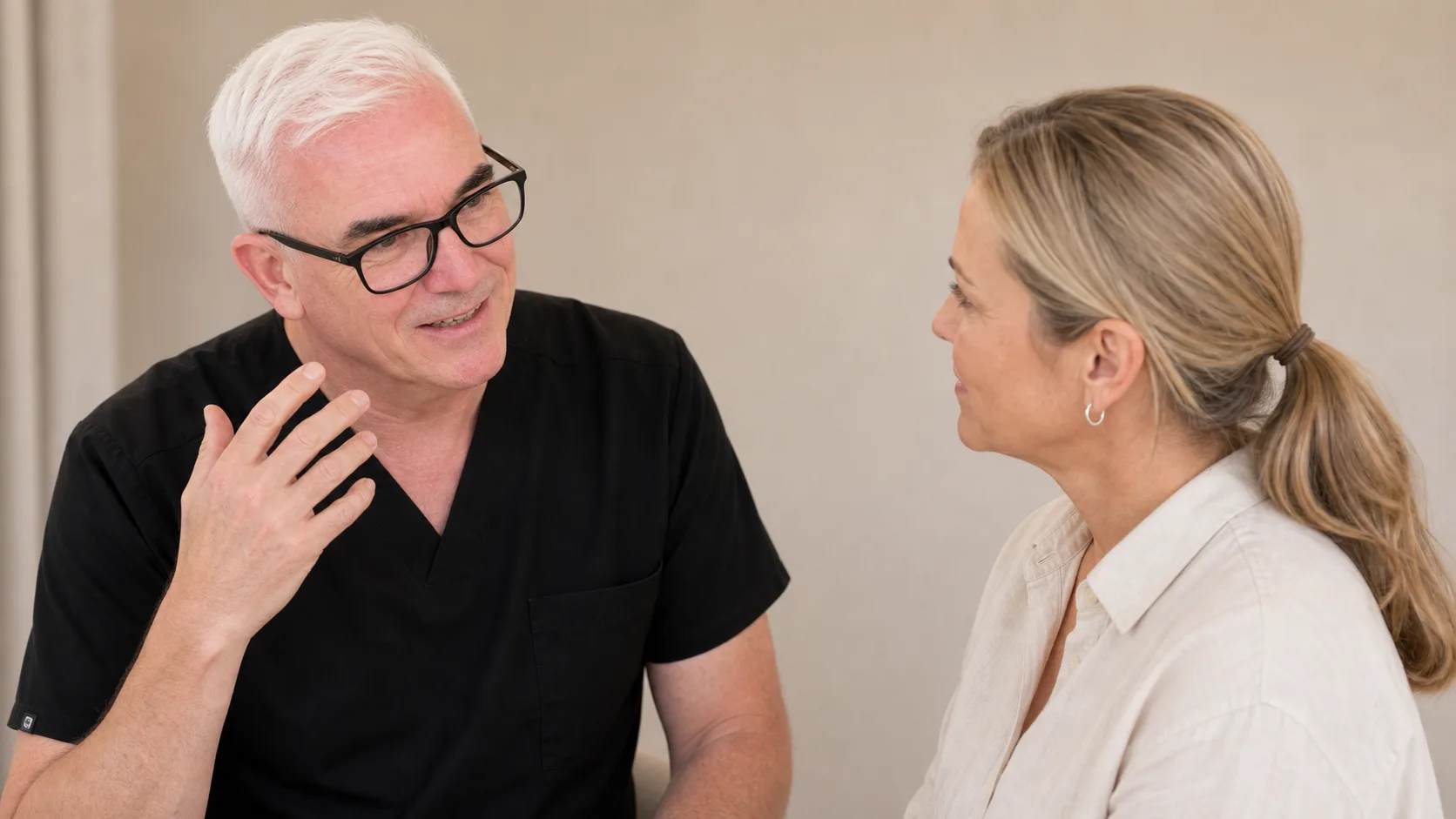
What Corey compares
Corey listens to your concern, then considers facial structure, cheek and midface support, skin quality, natural movement and the relationship between the areas that are relevant to you.
He also reviews medical history, medicines, allergies, timing and previous cosmetic care. The useful next step may be a more focused assessment, a broader discussion, more time, referral or leaving the concern untreated.
Bring context, not a treatment brief
| Bring | What is useful | How it helps |
|---|---|---|
| Your observation | The view, expression or light in which the change is easiest to see. | Keeps the conversation centred on your actual concern. |
| Your timeline | When you noticed it and whether it is stable, gradual or still changing. | Helps Corey decide whether the assessment is clear or more time is useful. |
| Relevant history | Medicines, allergies, health changes and previous cosmetic care records if available. | Supports a safer and more individual discussion. |
When another pathway should come first
A sudden, painful, rapidly changing or otherwise unusual facial symptom needs appropriate medical or dental advice rather than a routine cosmetic consultation. Waiting can also be the better choice when earlier care has not settled, important health information is missing or you do not feel ready to decide.
If a cosmetic option is relevant after assessment, Corey explains the material risks, limitations, alternatives, aftercare and likely costs before you choose. The facial volume safety guide provides deeper general context.
Your visit from Glen Huntly
Meet Corey for a private assessment at the Oakleigh clinic, with time to explain the change before any pathway is considered.
Check your current route before leaving Glen Huntly and plan enough time to arrive without rushing. Consider whether returning to Oakleigh would be practical if review is recommended.
Bring the change you have noticed
You do not need to arrive knowing the cause or the answer. Corey can help you understand the concern and choose a proportionate next step.
Is this for you?
Consider booking a consultation if
- Adults near Glen Huntly who have noticed a broad facial support, shadow or balance change and want help understanding the right consultation pathway
- People who want a whole-face assessment before choosing a cheek, midface, skin, movement or other focused service
- Patients who value practitioner continuity, balanced risk information and the option to wait or not proceed
This may not be for you if
- Sudden, painful, rapidly changing or otherwise unusual facial symptoms that need medical or dental assessment
- Anyone seeking a promised appearance, a fixed treatment plan or treatment without individual consultation and consent
- People whose earlier cosmetic care has not settled or whose health information is not clear enough for responsible planning
Suitability is confirmed at consultation. This list is general guidance, not a substitute for clinical assessment.
Frequently asked questions
Can people outside Glen Huntly use this guide?
Yes. The local framing is practical, not exclusive. It helps anyone comparing travel, timing, review access and practitioner verification before booking at Core Aesthetics Oakleigh. Clinical suitability is still decided during individual assessment with Corey Anderson RN.
What should I bring to a facial volume consultation?
Bring a list of current medicines and supplements, relevant medical history, previous cosmetic treatment dates, and any upcoming events or travel that could affect timing. If you have records that clarify previous treatment, bring those too.
Can treatment be discussed at the first appointment?
Sometimes, but it is never assumed. Corey first assesses facial structure, skin quality, previous treatment, timing, risks and whether informed consent can be properly given. The consultation may lead to treatment discussion, waiting, review later, referral or no treatment.
Why read this page as well as Volume Treatment Oakleigh?
Use Volume Treatment Oakleigh for the broader service overview. Use this Glen Huntly page when you also want help planning travel, follow up practicality and the local decision about whether getting to Oakleigh makes sense for assessment.
Does local access make treatment more likely?
No. Convenience can make consultation, review and aftercare communication easier, but it does not decide suitability. Corey still bases any recommendation on anatomy, health history, previous treatment, timing, consent and whether proceeding is appropriate.
What if I have had treatment elsewhere?
Tell Corey when it happened, what area was treated if known, and whether you noticed firmness, heaviness, swelling, asymmetry or a change you disliked. Previous treatment can change what is safe to discuss next, whether more information is needed, or whether waiting or referral is the better pathway.
When might Corey recommend waiting?
Waiting may be safer if the concern is mixed, there has been a recent health change, important information is missing, travel or event timing is poor, a recent treatment has not settled, or the concern needs another medical pathway. A consultation can end with advice to pause, review later, refer or not treat.
How can I verify the clinic before booking?
Core Aesthetics consults from 12A Atherton Road, Oakleigh VIC 3166. Corey Anderson is a Registered Nurse with Ahpra registration NMW0001047575. You can confirm the clinic, practitioner and contact details through the Verify, Contact and Book pages, and through the Ahpra public register.