Wrinkle consultation for Carnegie patients is the assessment process before any treatment discussion. Corey Anderson RN reviews movement lines, resting creases, skin quality, brow and eye area context, medical history, previous treatment, timing, expectations, risks, alternatives and informed consent before explaining whether treatment discussion, waiting, referral, review later or no treatment is appropriate.
What Happens During The Appointment?
This support page answers the process question. It should help you prepare for assessment, not decide a treatment pathway before Corey has examined the concern.
| Step | What Corey reviews | Why it matters |
|---|---|---|
| Describe the concern | What you notice, when it appears, whether it changes with expression, and whether photos show the same thing. | This keeps the appointment grounded in your actual concern, not a treatment label. |
| Check movement and rest | Expression lines, resting creases, skin quality, brow and eye area context, asymmetry and previous treatment. | Movement and resting concerns can need different explanations. |
| Review suitability | Health history, medicines, allergies, timing, pregnancy or breastfeeding status where relevant, symptoms and prior advice. | Safety details can change whether treatment discussion is appropriate. |
| Discuss consent | Risks, alternatives, likely limits, costs where relevant, timing and the option to wait or decline. | Consent should be voluntary and informed, not assumed because an appointment was booked. |
| Choose the next step | Treatment discussion, waiting, referral, review later, another page or no treatment may be recommended. | The appointment can be useful even when treatment does not proceed. |
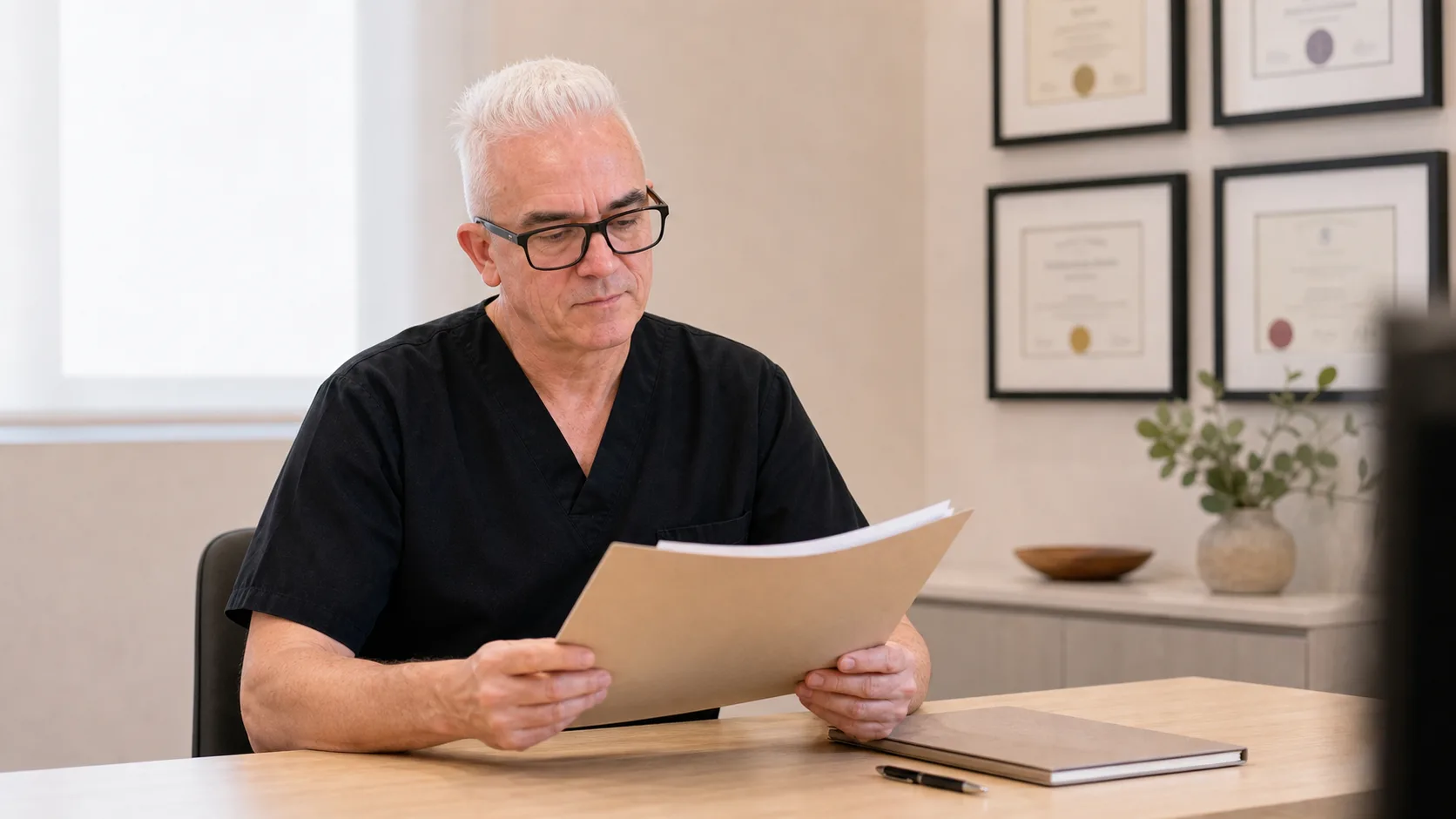
Why This Page Should Stay Narrow
A consultation page should not try to answer every broad treatment search. Its job is to reduce uncertainty about the appointment itself: the order of assessment, what Corey asks, what details matter and how a next step is chosen.
If the question is broad treatment intent, start with the Carnegie wrinkle treatment page. If the concern is specifically forehead movement or brow context, use forehead wrinkle treatment Carnegie.
Local Context For The Appointment
Patients may travel from Carnegie Station, Koornang Road, Neerim Road, Carnegie Central, Packer Park, Rosstown Road or nearby Murrumbeena and Glen Huntly streets. The route is practical context, not a suitability signal.
The appointment still depends on assessment. A nearby visit can be useful because it gives time to ask questions and leave with a clearer answer, even if the answer is to wait or choose another pathway.
What To Bring If You Are Unsure
Bring a plain description of the concern rather than a treatment request. Say whether the line appears with movement, remains at rest, is visible in photos, has changed recently or is tied to an event or deadline.
Bring previous treatment dates, records if available, response, side effects, medicines, allergies and medical history. If another clinician has given advice, bring that context without assuming it decides the plan.
For a broader preparation checklist, read what to ask before aesthetic consultation and questions to ask an aesthetic practitioner.
How Consent Is Handled
Consent should include the concern being assessed, the expected limits, risks, alternatives, cost where relevant, timing and the option not to proceed. The informed consent guide explains this in more detail.
Same day treatment discussion is not assumed. Corey may recommend waiting if the concern is unclear, the skin or health context is not suitable, prior treatment has not settled, or the decision would benefit from more time.
What Makes A Consultation Useful Even Without Treatment
A useful consultation can give language to a concern that has felt vague. You might leave knowing that the line is mainly movement based, that it remains at rest, that skin quality is a larger factor, or that a different focused page is more accurate.
That clarity matters because many people arrive with a broad phrase and a private worry, not a precise clinical question. The appointment should translate that worry into a safer next step, even if the next step is simply to wait.
The value is not measured by whether treatment happens on the day. It is measured by whether the recommendation is proportionate, explained plainly and made without pressure.
When A Second Step Is Better Than A Same Day Decision
A second step may be better when the concern is new, the decision feels emotionally loaded, previous treatment details are missing, the timing is inconvenient, or the expected benefit is too uncertain to justify risk.
Taking time can also help when you need to compare the broad treatment page, a forehead page, a frown page, patient safety information or the informed consent guide. Reading the right support page after assessment can make the decision calmer.
If the recommendation is to wait, that should not feel like a failed appointment. Waiting can protect consent, allow recent changes to settle and prevent a cosmetic decision from being made around pressure rather than suitability.
How To Use Photos Without Letting Them Decide
Photos can help show the exact expression or lighting that makes the concern visible. They are less useful when they become the only evidence, especially if every image has a different angle, distance, expression or filter.
Bring one or two clear examples if they help, then expect the appointment to compare them with direct assessment. Corey may ask what you see in the mirror, what others notice, whether the line changes during movement and whether the concern is stable.
The safest answer comes from combining your description, the visible pattern, health context, consent readiness and clinical judgement. A photo can start that discussion, but it should not finish it.
When Another Page Is More Useful
Use frown line assessment near Carnegie if the main concern is between the brows. Use the local forehead page if forehead movement or brow support is central.
Use wrinkle treatment Melbourne for the broader service owner and wrinkle consultation in Melbourne for a city-wide consultation overview.
When The Answer Is To Wait
Waiting can be appropriate when the concern is new, the decision feels pressured, previous treatment has not settled, health details need review, or the expected benefit is too uncertain. Read when to wait if timing is part of the concern.
Read treatment suitability assessment if you want to understand why assessment can lead to treatment discussion, waiting, referral, review later or no treatment.
Verification Before Booking
Before booking, check Core Aesthetics verification, contact details and patient safety information. Core Aesthetics is located at 12A Atherton Road, Oakleigh VIC 3166.
Verification helps confirm the practitioner, clinic location, safety information and consultation process before an appointment becomes a treatment assumption.
Book A Consultation
If you want Corey Anderson RN to assess your wrinkle concern and explain suitable next steps, you can book a consultation or contact Core Aesthetics.
You can attend for assessment and questions without assuming treatment will happen on the day. A clear no or wait recommendation can be a useful clinical outcome.
General Information Only
This page gives general information for adults considering cosmetic consultation. It is not personal medical advice, diagnosis, a treatment recommendation or confirmation that treatment is suitable.
An individual consultation is needed before personal advice. Corey needs to assess movement, rest, skin quality, history, expectations, risks, alternatives and consent before any treatment pathway is discussed.
Is this for you?
Consider booking a consultation if
- Adults near Carnegie wanting wrinkle assessment before treatment discussion
- Patients who want consultation-first explanation of movement lines, resting lines, risk and consent
- People open to waiting, referral, review later or no treatment where that is safer
- Patients who want to verify Corey Anderson RN and the Oakleigh clinic before booking
This may not be for you if
- People seeking treatment without assessment, consent or risk discussion
- People with urgent medical symptoms, active infection, acute swelling or rapidly changing skin concerns
- People wanting a fixed cosmetic change before movement and resting expression are assessed
- People seeking advice for someone who cannot provide informed consent for elective cosmetic care
Suitability is confirmed at consultation. This list is general guidance, not a substitute for clinical assessment.
Frequently asked questions
What is this Carnegie wrinkle consultation page for?
This page explains the appointment process for adults from Carnegie and nearby suburbs. It covers what Corey checks, what to bring, suitability, consent, timing, waiting and when another page is more accurate. The answer depends on individual assessment with Corey, including facial movement, skin quality, health history, expectations, risk discussion, alternatives, consent and review planning.
When should I use the Carnegie treatment page instead?
Use the Carnegie wrinkle treatment page when your search is broad and service led. Use this consultation page when your main question is what happens during assessment, what details matter and whether treatment discussion might wait.
Will treatment happen at the consultation?
Not automatically. Treatment discussion may occur only if assessment, health history, timing, risks, alternatives and informed consent support that step. The outcome may be waiting, referral, review later or no treatment. A consultation can remain assessment only. Corey may recommend treatment planning, waiting, review, referral or no cosmetic treatment depending on risks, expectations and consent readiness.
What will Corey look at first?
Corey reviews what changes with expression, what remains at rest, skin quality, brow and eye area context, previous treatment, health history, medicines, expectations, risks and consent readiness. A consultation can remain assessment only. Corey may recommend treatment planning, waiting, review, referral or no cosmetic treatment depending on risks, expectations and consent readiness.
What should I bring?
Bring previous treatment dates, records if available, medicines, allergies, relevant medical history, photos if they help explain the concern and questions about movement, resting lines, timing or consent. Bring timing, previous care details, current medicines, skin history, event timing and the questions you want answered. Better preparation helps the appointment stay focused and cautious.
What if my main concern is forehead lines?
Use the local forehead page if forehead movement, brow support or eyelid comfort is the central issue. Corey may still assess the broader upper face before directing you to the most accurate pathway. That broader concern should be named during consultation so Corey can separate wrinkle movement, skin quality, volume, dental or medical boundaries and whether another page or clinician is a better fit.
Can Corey recommend no treatment?
Yes. No treatment, waiting, referral, review later or a different consultation pathway may be recommended if the concern, timing, expected benefit or risk profile does not support treatment discussion. A consultation can remain assessment only. Corey may recommend treatment planning, waiting, review, referral or no cosmetic treatment depending on risks, expectations and consent readiness.
Can this page decide suitability?
No. It helps you prepare for consultation by explaining the process and the details Corey may need. Personal advice requires individual assessment, risk discussion, alternatives, timing review and informed consent with Corey before any treatment pathway is discussed.