This guide explains movement and expression assessment for adults deciding whether to book a consultation. What we help with here includes wrinkle treatment, volume treatment, lip treatment, jawline or sweating questions, but only if the consultation and scope both make sense. It separates the immediate question from wider treatment decisions, outlines what information to bring, and explains why Corey Anderson RN may recommend a suitable option, adjusted timing or another useful next step after individual assessment and consent.
What Does A Return To Rest Sequence Show?
It separates three observations: the starting face, the line at natural expression and the face after the movement finishes. This helps describe whether the feature is movement led, visible at rest or influenced by several factors.
The sequence is a preparation tool, not a diagnosis. Suitable care can be planned when individual assessment and informed consent support it.
How Do You Record The Three Stages?
| Stage | What to do | What to record |
|---|---|---|
| Before | Relax the forehead, brows and eyes | Lines, shadows and side differences already present |
| Movement | Use one familiar expression | Where the line begins, deepens or changes direction |
| Return | Let the face settle naturally | What softens, what remains and how the skin looks |
Which Expression Should You Choose?
Choose the movement that normally reveals the concern: raising the brows, concentrating, frowning, smiling or squinting. Use an ordinary expression rather than forcing the face for the mirror.
Repeat only if needed to understand the pattern. The aim is a familiar sequence that you can describe to Corey.

What Should You Notice Before Movement?
Use familiar light and a normal viewing distance. Note where lines or shadows are already visible, the position of both brows, skin texture and any longstanding difference between sides.
The starting view gives the movement stage a reliable reference point.

What Changes At Peak Expression?
Trace where the line appears and how it relates to the brow, eyes and neighbouring movement. Note whether both sides participate together and which feature you want to keep expressive.
Peak expression is only one moment. Corey considers it alongside the relaxed face and ordinary movement quality.
What Does The Return Stage Add?
After the expression ends, observe which marks soften quickly and which remain visible. Lighting, skin surface, hydration, anatomy, movement history and previous care may all influence what you see.
Do not time the face as a performance test. A simple observation about what fades or remains is enough.
How Does Corey Assess The Full Sequence?
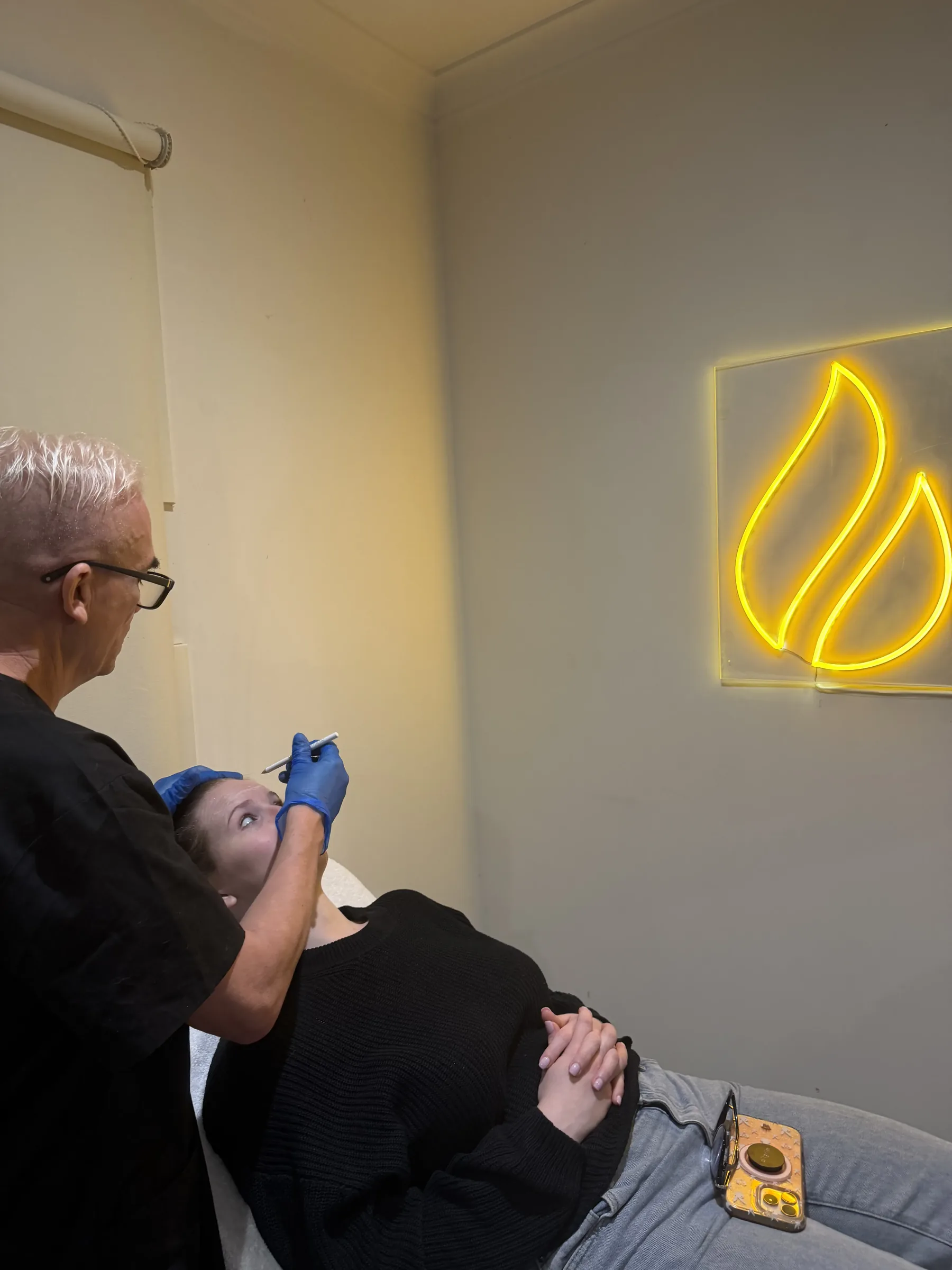
Corey examines the upper face at rest and in movement, including brow and eye relationships, skin, side differences and the sequence you described. Health history, medicines, allergies, previous cosmetic care, timing, expectations and material risks are considered with those findings.
This turns the sequence into an individual explanation rather than a self-selected treatment pathway.
How Do You Plan The Trip From Mount Waverley?
Check the route from your actual starting point, whether it uses Waverley Road, Huntingdale Road, Warrigal Road, Ferntree Gully Road or public transport. Allow time for traffic, parking, work and caregiving.
The nearby Oakleigh location is useful when both consultation and planned review fit your real schedule.
Which Information Completes The Sequence?
Bring current medicines and supplements, allergies, relevant health history, previous care dates and records, exact event or travel dates and one or two unfiltered examples if the concern varies.
Add what you want to preserve, such as brow position, smile character or familiar side difference. More information, adjusted timing, another clinical review or a different pathway can be incorporated when useful.
Mount Waverley Return To Rest Questions
What is a return to rest sequence?
Observe the upper face while relaxed, during one familiar expression and after relaxing again. Record what appears, what softens and what remains, without using the sequence to diagnose yourself.
Which expression should I use?
Choose the ordinary movement that normally reveals the concern, such as raising the brows, concentrating, frowning, smiling or squinting. Avoid exaggerating the face for the mirror.
What should I notice before expression?
Note lines or shadows already present, both brow positions, skin texture and longstanding side differences in familiar light and at a normal viewing distance. Keep the forehead, brows and eyes relaxed so this starting view gives the later movement stage a reliable reference.
What should I record during movement?
Record where the line begins, deepens or changes direction, how it relates to the brows and eyes, whether both sides move together and what expression you want to preserve.
What does the return stage tell me?
It shows which visible marks soften after movement and which remain. Skin surface, lighting, anatomy, movement history and previous care can all influence the observation.
What should I bring to the consultation?
Bring medicines, supplements, allergies, relevant health history, previous care dates and records, event or travel dates, a short sequence note and the features you want to preserve.
How do I plan the visit from Mount Waverley?
Check the route from your actual starting point and allow for Waverley Road, Huntingdale Road, Warrigal Road, Ferntree Gully Road, public transport, parking, work and caregiving.
Is this for you?
Consider booking a consultation if
- You are an adult in or near Mount Waverley wanting assessment for wrinkle concerns
- You want movement lines, resting lines, skin quality and suitability assessed before treatment is discussed
- You value a consultation-first approach with risks and expectations explained clearly
- You are open to treatment, timing or another clinically appropriate pathway depending on clinical assessment
This may not be for you if
- You are seeking certainty, complete correction or a promised appearance change
- You are seeking elective cosmetic care for someone who is not an adult
- You are pregnant or trying to conceive and are seeking elective aesthetic treatment
- You have an active infection, unhealed skin or an unresolved medical concern in the area to be assessed
Suitability is confirmed at consultation. This list is general guidance, not a substitute for clinical assessment.