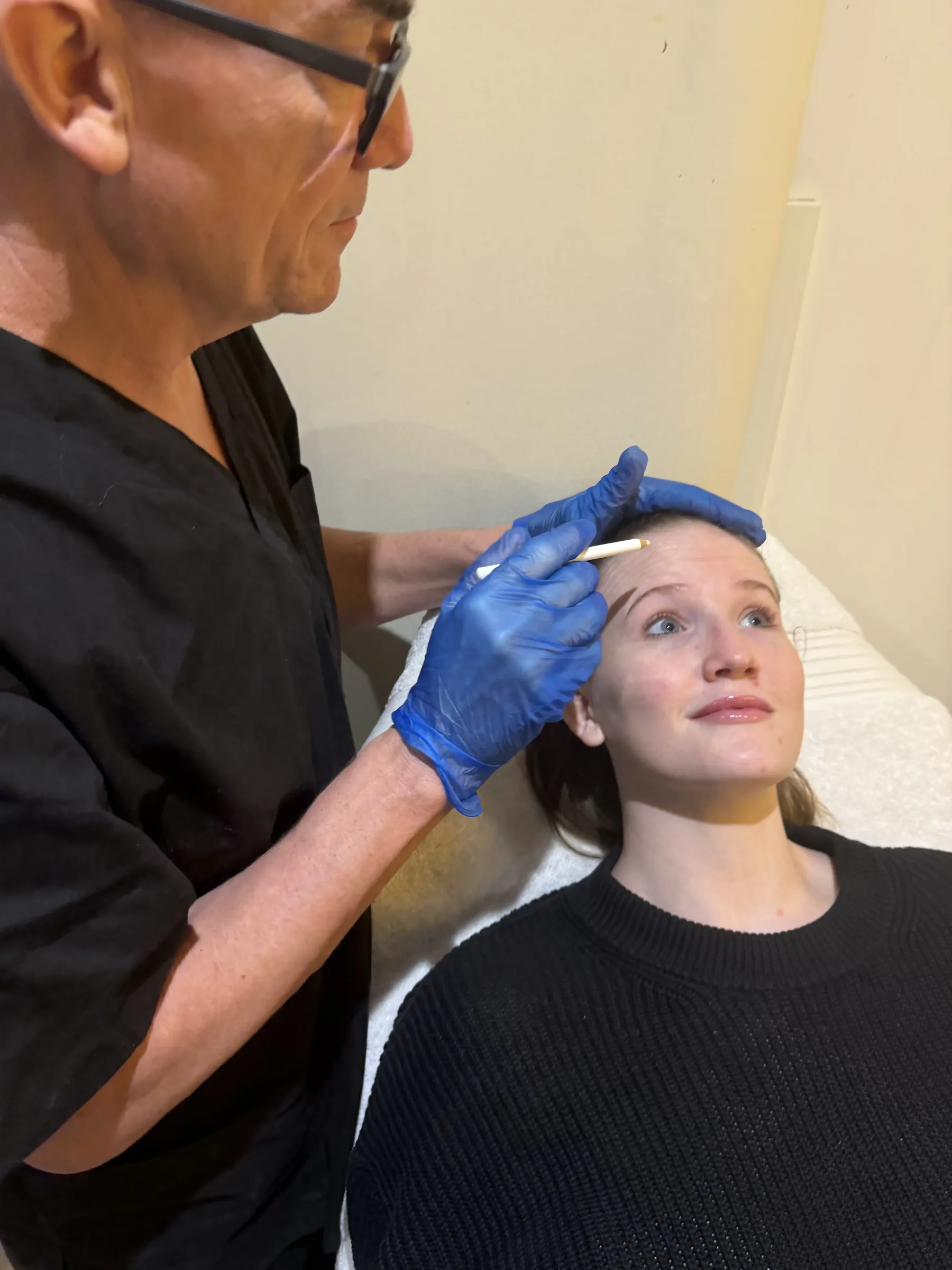
If you are coming from Toorak with a wrinkle concern, you do not need to decide which facial area or appointment plan fits before you arrive. Corey Anderson RN can listen to what you notice, observe movement and rest, review any previous care and help you understand whether a focused consultation, more time, another kind of care or no cosmetic treatment is the sensible next step.
Start with what you notice
You may have one line in mind, several changes that seem connected or questions after care elsewhere. All are useful starting points. You can describe when the concern catches your attention, whether it appears in ordinary expression or at rest and what you would like Corey to understand.
This page is the broad Toorak starting point for wrinkle concerns. It helps you prepare for a thoughtful conversation at the Oakleigh clinic without asking you to choose a treatment category, diagnose the cause or arrive ready to proceed.
What belongs in the first conversation?
One area or several?
Point out the first place your attention goes, even if you are unsure whether forehead, frown, outer-eye movement or skin texture is leading.
Movement, rest or photographs?
Notice whether the concern appears in conversation, remains when your face settles or is mostly prompted by a particular image.
What felt comfortable?
If you have had cosmetic care before, explain what felt right, what felt unfamiliar and what you would prefer not to repeat.
What would make the visit useful?
You might want a clearer explanation, a records review, advice about waiting or simply help choosing the right next conversation.

Meet Corey and sort the concern together
Corey listens before asking you to make movements or choose an area. He looks at the face in ordinary conversation and at rest, then considers how the forehead, frown area, outer eye area, skin and natural proportions relate to what you notice.
Your health history, medicines, skin condition, previous cosmetic care and expectations add context. The aim is to leave with a clearer recommendation and a reason for it, whether that means a more focused discussion, waiting, another kind of care or deciding that no cosmetic treatment is needed.
Choose the page that fits your question
Nearby pages have deliberately different roles. Begin with the one that best matches the question you are trying to answer.
The concern is broad or connected
Use this page when several line or expression questions need sorting, or when previous care changes the conversation.
The forehead clearly leads
Use the focused Toorak forehead page when horizontal movement, brow position or eyelid comfort is the main issue.
Your main question is the visit itself
Use the Toorak consultation-planning page for route, arrival, privacy and general appointment preparation.
Previous care is context, not a test
Bring dates, areas, records or photographs if you have them, but do not postpone a useful conversation because the details are incomplete. Say what you remember, what you are uncertain about and how the experience felt to you.
If your main question is when to return after earlier care, the rebooking guide owns that timing decision. This page stays with the broader Toorak consultation and how previous experience shapes a fresh assessment.
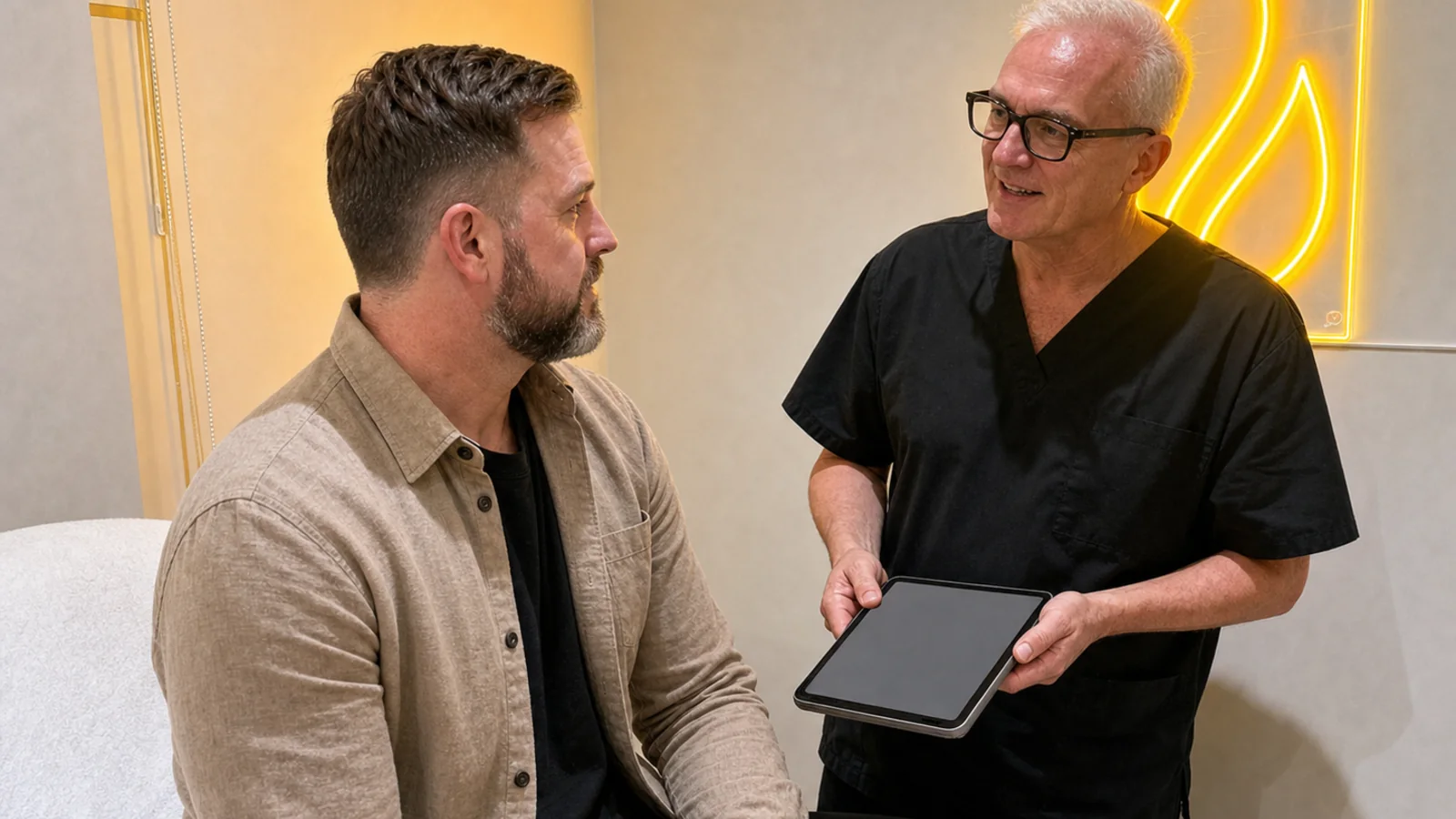
Keep your expression part of the plan
It is helpful to say what you want to preserve, not only what you want assessed. You may value a familiar smile, comfortable brow movement or simply looking like yourself in ordinary conversation. That gives Corey a more useful brief than words such as subtle or natural on their own.
If a photograph prompted the concern, bring it as context rather than proof. Lighting, angle and expression can change what stands out. Corey can compare that image with your face in neutral posture and natural movement before discussing whether any next step is proportionate.
Bring three useful details
| Bring this | What to note | Why it helps |
|---|---|---|
| Your observation | Where and when does the concern become noticeable? | It helps Corey compare ordinary movement, rest and skin context without asking you to diagnose it. |
| Your history | Share previous-care dates, areas and records where available. | It supports a safer review while leaving room to say what you do not know. |
| Your schedule | Mention travel, events or limited review access before planning. | Timing can shape whether a calm decision, more time or another appointment is preferable. |
When waiting gives you a better decision
Waiting may be sensible when previous care has not settled, your skin is irritated, you are unwell, an important event is too close or you do not feel ready to decide. A consultation can still be useful when its outcome is more time, a records request, referral or no cosmetic treatment.
Depending on the area and option considered, Corey discusses relevant risks such as bruising, swelling, tenderness, headache, asymmetry, altered expression, brow or eyelid heaviness and dissatisfaction before consent. A sudden, painful or unexplained facial change needs appropriate medical assessment rather than a routine cosmetic appointment.

What to expect at your visit
You will meet directly with Corey for a calm, private conversation about the concern, any previous care and what you would like to understand.
Corey reviews movement, rest, health history, medicines, previous care and suitability, then explains the available next steps. If an option is suitable, relevant risks, alternatives and costs are discussed before you decide.
Come in with questions, not a commitment
Bring the concern in your own words. Corey can help you sort what matters and explain a calm next step.
Is this for you?
Consider booking a consultation if
- Adults near Toorak wanting wrinkle and facial movement assessment before treatment discussion
- Patients who want a consultation-first explanation of movement lines, resting creases, risk and consent
- People open to waiting, referral, review later or no treatment where that is safer
- Patients who want to verify Corey Anderson RN and the Oakleigh clinic before booking
This may not be for you if
- People seeking treatment without assessment, consent or risk discussion
- People with urgent medical symptoms, active infection, acute swelling or rapidly changing skin concerns
- People wanting a fixed cosmetic change before movement, brow support and skin quality are assessed
- People seeking advice for someone who cannot provide informed consent for elective cosmetic care
Suitability is confirmed at consultation. This list is general guidance, not a substitute for clinical assessment.
Frequently asked questions
Who should use this Toorak wrinkle treatment page?
Use this page when the concern is broad and you want a discreet consultation for visible lines, subtle expression change, previous treatment questions or whether waiting would be safer. Corey Anderson RN still needs to assess the person before any treatment discussion.
How is this different from the South Yarra page?
This page is written for Toorak patients and the local context of discretion, previous history and restrained decision-making. The South Yarra page should carry its own nearby social and trend-comparison context. The answer depends on individual assessment with Corey, including facial movement, skin quality, health history, expectations, risk discussion, alternatives, consent and review planning.
When should I use the forehead page?
Use the forehead page when the main concern is horizontal forehead movement, brow support, eyelid comfort or forehead resting lines. This page is broader and should not replace that focused page. The answer depends on individual assessment with Corey, including facial movement, skin quality, health history, expectations, risk discussion, alternatives, consent and review planning.
When should I use the frown page?
Use the frown page when the concern is mainly between the brows or linked to concentration, tension or a stern expression. This broad page can still help if you are unsure which area is driving the concern.
What if I have had treatment elsewhere?
Bring dates, areas discussed, response, side effects and what you are hoping to clarify. If records are missing, bring the best timeline you can and say where you are unsure. The practical value is easier review planning and clearer follow up, not faster treatment. Suitability still depends on assessment, history, risks, consent and whether waiting or referral is safer.
Can treatment happen on the day?
Treatment discussion may be possible only after assessment, risk discussion, alternatives and informed consent. Corey may recommend waiting, referral, review later, a focused page or no treatment. A consultation can remain assessment only. Corey may recommend treatment planning, waiting, review, referral or no cosmetic treatment depending on risks, expectations and consent readiness.
Does privacy affect the consultation?
Privacy can affect timing, travel and review planning, but it does not make treatment suitable. Suitability depends on assessment, history, expectations, risks, alternatives and consent. The answer depends on individual assessment with Corey, including facial movement, skin quality, health history, expectations, risk discussion, alternatives, consent and review planning.
Is this page personal advice?
No. This page gives general information only. Personal advice requires consultation with Corey Anderson RN and an individual assessment of the visible concern, history, risks, alternatives, timing and consent. The answer depends on individual assessment with Corey, including facial movement, skin quality, health history, expectations, risk discussion, alternatives, consent and review planning.