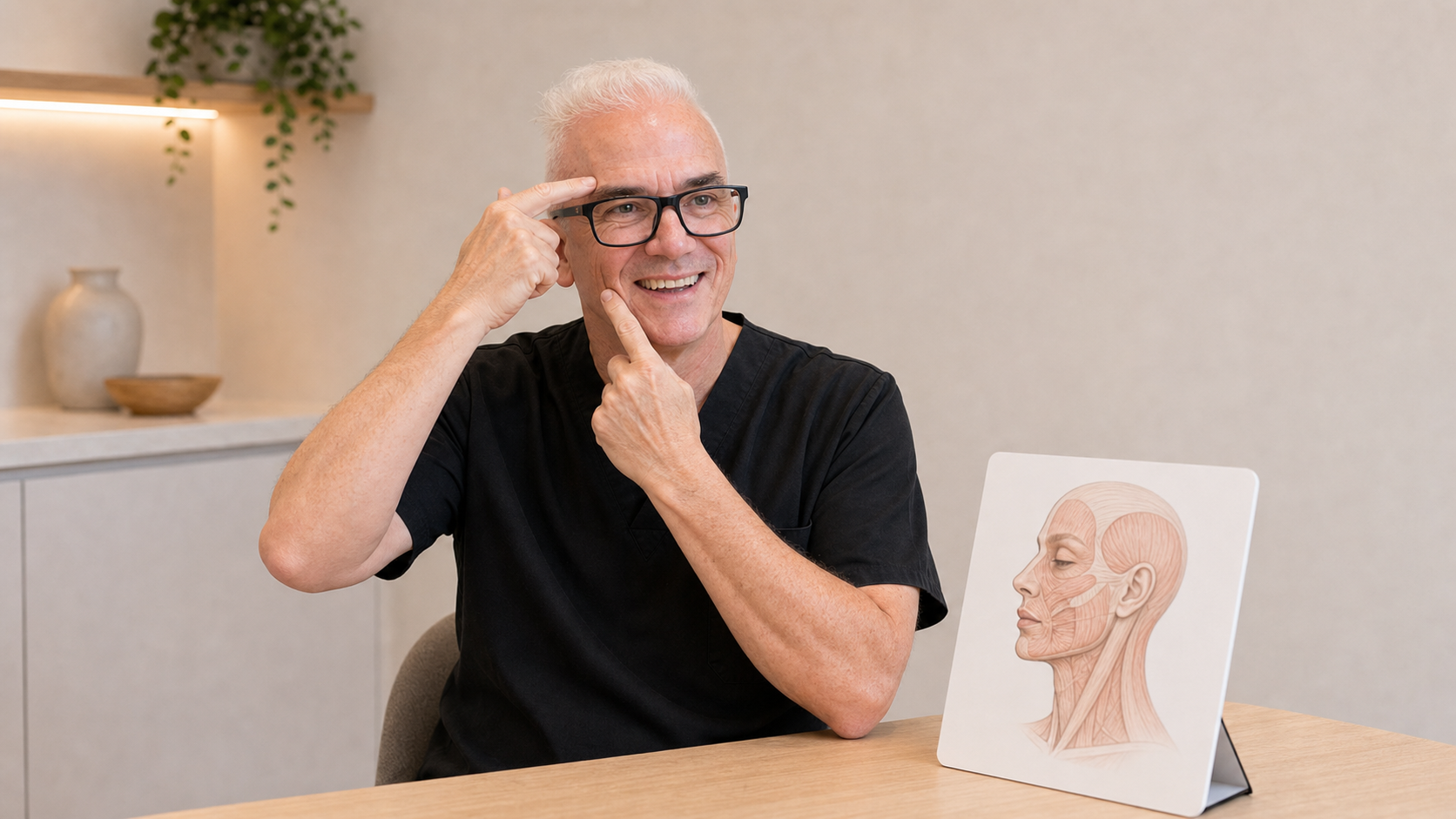
Yes. Camera height, head position, lighting and deliberate brow movement can make a forehead line look stronger or softer in a photograph without establishing what causes it. Corey Anderson RN uses your images as helpful context, then compares a neutral view, natural expression, brow support and eyelid comfort in person before explaining whether observation, another care pathway or a cosmetic discussion is appropriate.
Bring the photo, then return to a natural view
A photograph can be useful because it shows the moment that made you look twice. It can also make one line feel unusually prominent when the phone is low, the chin is lifted, the light is overhead or the brows are held in a pose.
This page is for adults travelling from Glen Iris whose main question is whether a forehead line seen in a mirror or photo reflects their usual expression. You can bring the image without having to interpret it or choose a treatment first.
Notice three versions of the same concern
Keep the original context
Notice the camera height, light and expression rather than judging the line alone.
Let your face settle
See what remains when your head is level and you are not deliberately lifting your brows.
Use your usual expression
Notice what appears during conversation or a gentle brow lift, without forcing a pose.
Why one angle cannot settle the question
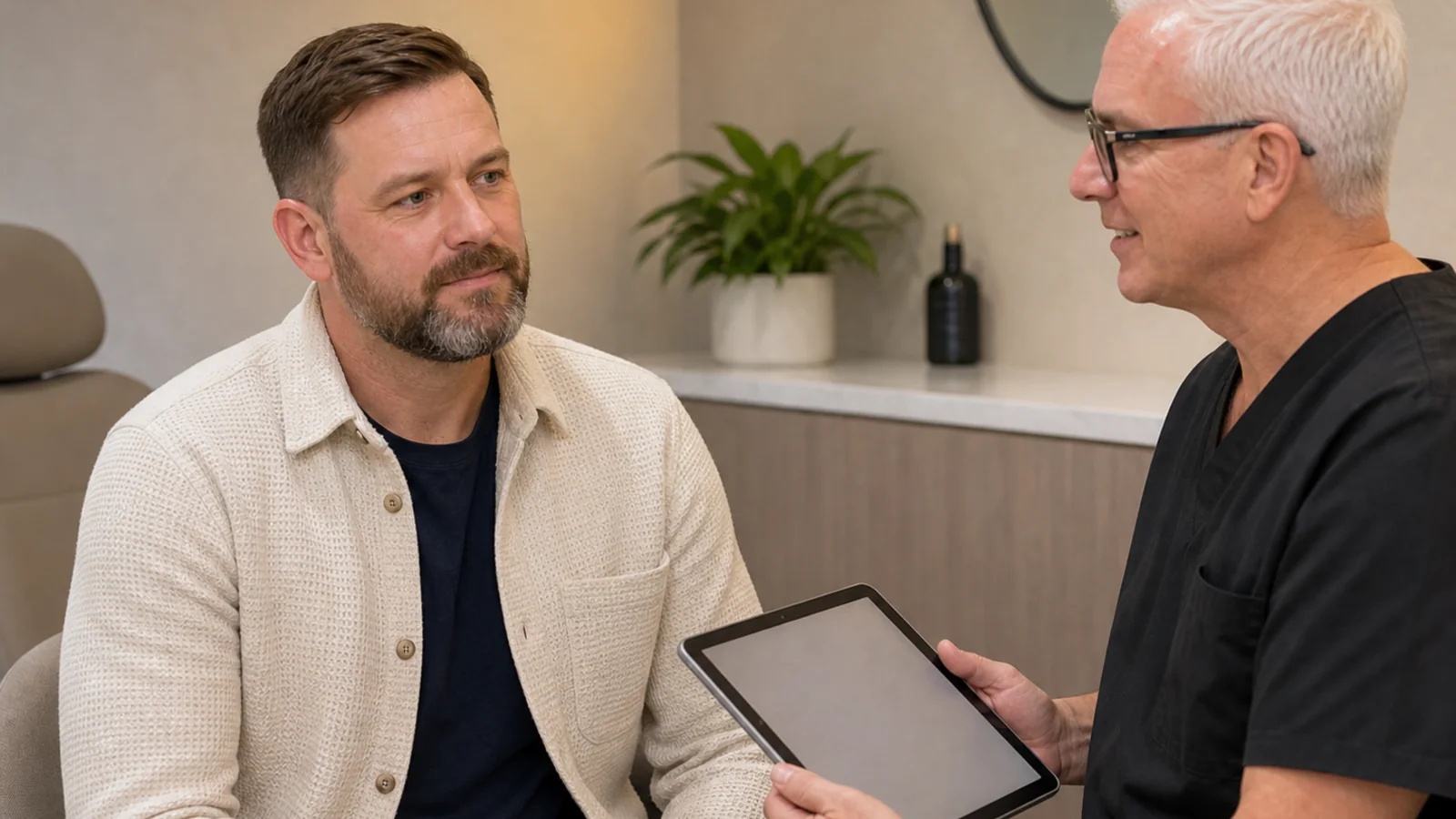
A close phone image changes distance and perspective. A raised or lowered chin changes the relationship between the forehead, brows and eyes. Lighting can deepen a shadow that is less obvious in ordinary conversation.
Corey asks what you noticed, then observes the forehead with your head comfortably level, first at rest and then through natural expression. The aim is not to find the most flattering angle; it is to understand the pattern without letting one view decide for you.
Choose the page that matches your real question
The Glen Iris pages have different jobs. Start with the question that brought you here.
A photo or mirror view is driving the concern
The forehead is the main area and you want to compare angle, posture, rest and movement.
Several expression areas matter
Use the broad Glen Iris consultation page when the forehead, frown area and outer eyes need sorting together.
You want a detailed forehead brief
Read the forehead line consultation guide for the concern, preserve and avoid framework.
You do not need a perfect set of images
Bring one or two images only if they help you describe what you notice. Unfiltered photographs with ordinary expression are useful context, but no image is required. The conversation can begin with your own words: where the line appears, when you notice it and what you would want a plan to preserve.
What Corey checks beyond the line
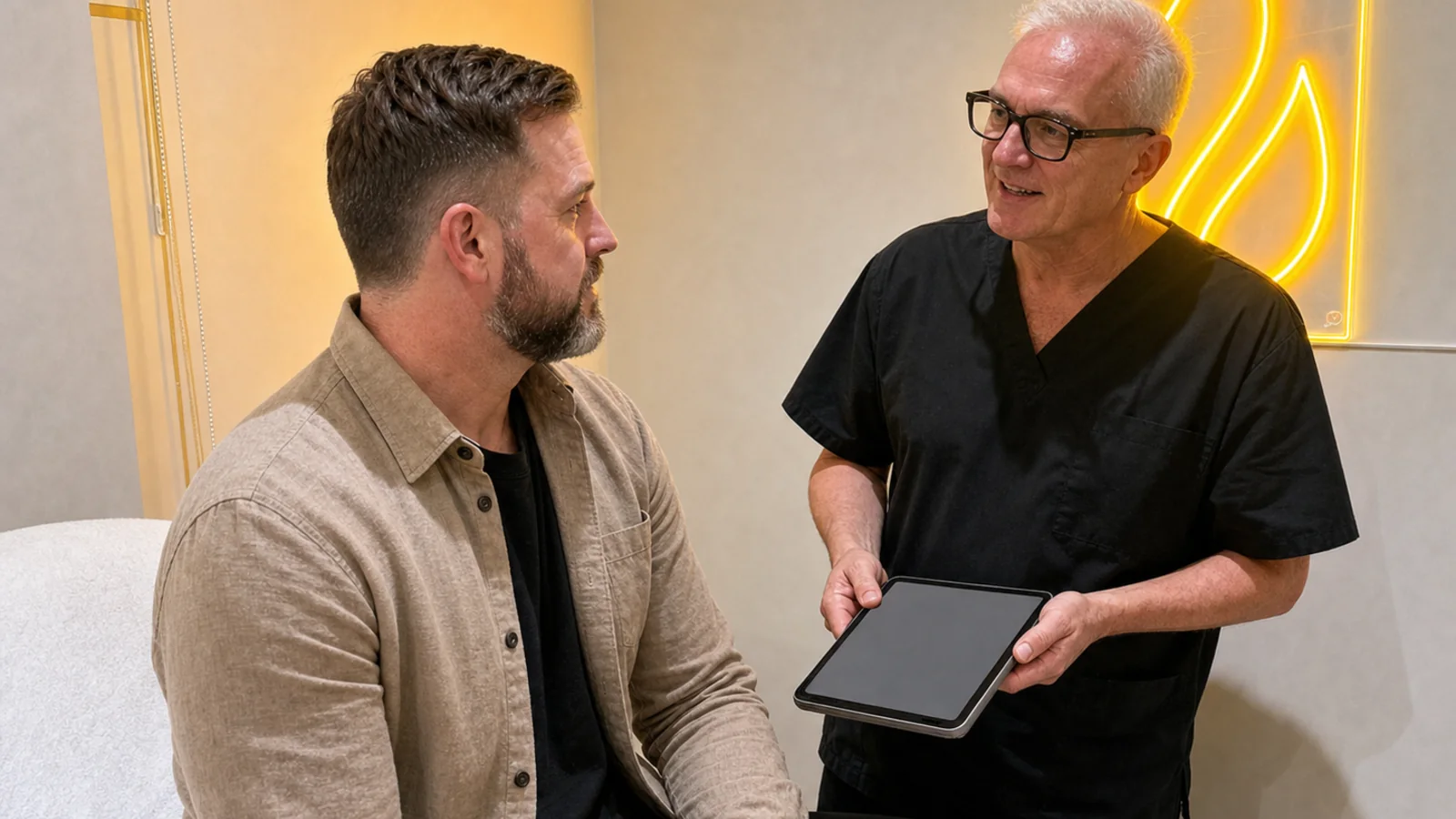
The forehead helps lift the brows, so the line is considered alongside brow height, eyelid comfort, frown pull, natural asymmetry and the way you use expression. Corey also reviews skin condition, health history, medicines, previous cosmetic care and what you want to understand.
The useful outcome may be reassurance, observation, more time, referral or an individual cosmetic discussion. If an option is suitable, its material risks, alternatives, expected limits and costs are discussed before you decide. Same-day care is not assumed.
Bring a short, useful observation
| Bring this | What to note | Why it helps |
|---|---|---|
| The image context | Camera height, lighting and whether you were lifting or lowering your brows. | It helps Corey understand why that view stood out without treating it as proof. |
| Your everyday pattern | What you see at rest and what appears during ordinary expression. | It keeps the consultation anchored in how your forehead usually moves. |
| Relevant history | Medicines, health changes and dates or records from previous cosmetic care. | Clear context supports a safer and more useful personal assessment. |
When a cosmetic consultation is not the first step
A familiar appearance concern can wait when the skin is irritated, previous care has not settled, your health information is unclear or you simply want more time. Sudden facial drooping, arm weakness or speech difficulty are not cosmetic questions: call triple zero (000) immediately, as outlined in Healthdirect’s stroke guidance.
Plan a calm visit from Glen Iris
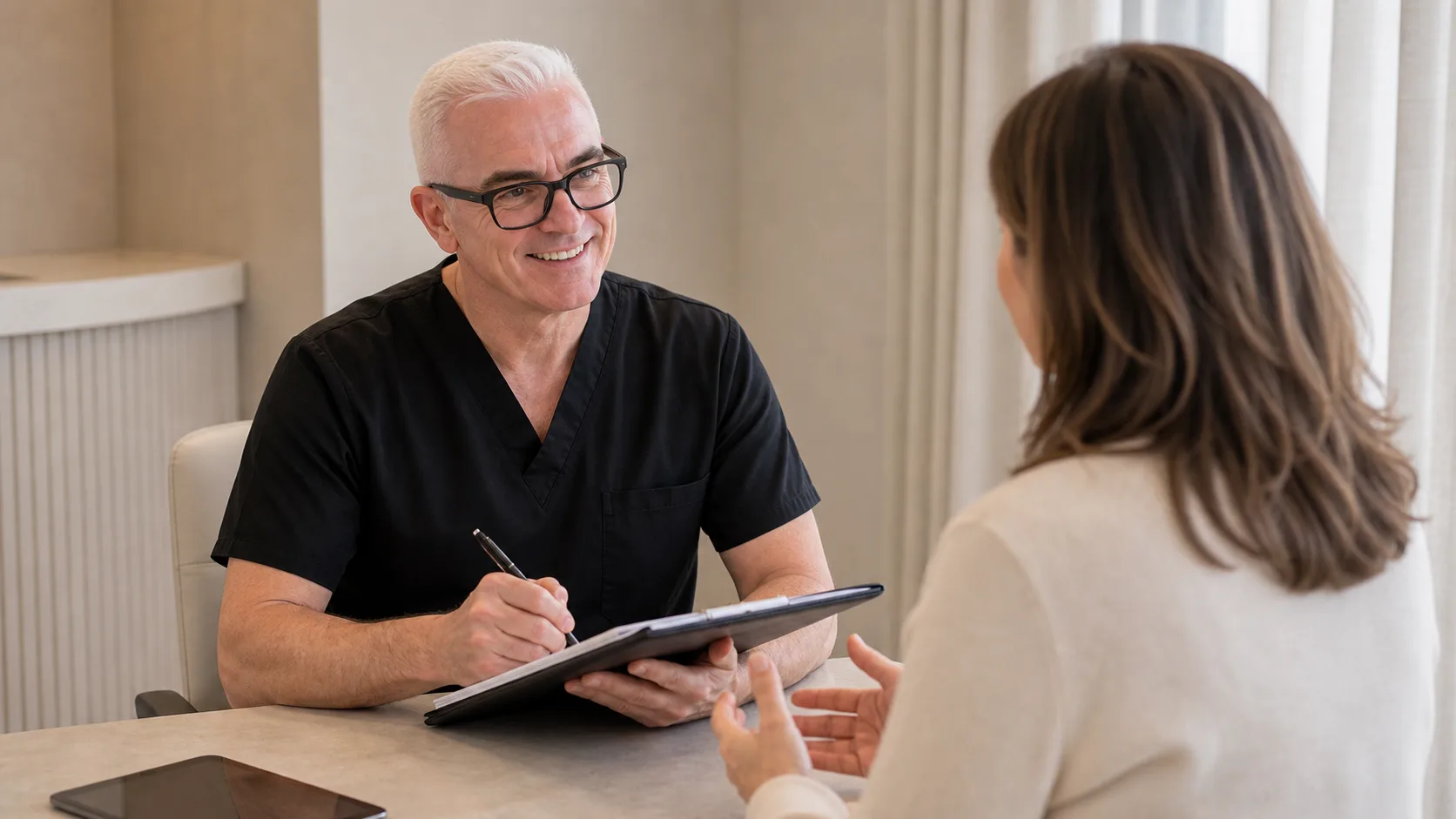
Meet Corey at the private Oakleigh clinic and use the appointment to compare the image that prompted your question with your natural forehead movement.
Bring the image only if it helps, plus any useful previous records. Corey reviews movement, history and suitability, then explains the appropriate next step. A consultation does not commit you to treatment.
The public guidance behind this page
The TGA’s health-service advertising guidance and its cosmetic-services FAQ support focusing public content on practitioner consultations rather than directly or indirectly promoting prescription medicines. The Ahpra advertising guidelines set expectations for responsible higher-risk cosmetic-procedure advertising.
These sources shape the public communication boundary; they do not decide what an individual photograph means or whether any option is suitable for you.
Bring the image and the question it raised
Corey can compare the photograph with your natural movement and help you understand whether assessment, more time or another pathway fits.
Is this for you?
Consider booking a consultation if
- Adults travelling from Glen Iris whose main concern is a forehead line seen in a mirror or photograph
- People who want to compare camera angle and head posture with their natural rest and movement
- People who prefer a focused assessment and questions before deciding on any next step
- People open to observation, waiting, referral, another care pathway or no treatment where appropriate
This may not be for you if
- Anyone seeking diagnosis or urgent care for sudden facial drooping, arm weakness or speech difficulty
- Anyone with broken, infected or acutely irritated skin in the area to be assessed
- Anyone seeking treatment without an individual assessment, risk discussion and informed consent
- Anyone expecting a photograph, mirror view or webpage to confirm suitability
Suitability is confirmed at consultation. This list is general guidance, not a substitute for clinical assessment.
Frequently asked questions
Is this page for the station and High Street side?
Yes, when Glen Iris station, High Street or the Gardiners Creek corridor describes the trip and the concern is a horizontal forehead line or brow movement. Use the broad local page when several expression areas need to be compared first.
Can head position change how forehead lines look?
Yes. Raising or lowering the chin changes the camera relationship to the brows and forehead. It can make a crease or brow height difference appear more or less prominent without changing the underlying anatomy.
Why does Corey use a neutral view?
A neutral head position gives a repeatable starting point. Corey can then compare rest, ordinary conversation, upward brow lift and inward frown movement without asking one posed image to carry the whole decision.
Should I bring photographs?
You may bring photographs that show when you noticed the concern or how it varies. They are supporting context only because lighting, lens distance, expression and head angle can all change what the image shows.
When should I use the local frown page?
Use <a href="https://coreaesthetics.com.au/frown-line-treatment/">local frown guidance</a> when the line or pull is mainly between the brows. This page should lead when horizontal forehead movement, resting creases or brow lift are the main concern.
When does the broad local page fit better?
Use <a href="https://coreaesthetics.com.au/wrinkle-treatment-glen-iris/">the broad local wrinkle page</a> when forehead, frown and outer eye areas need ordering, or when the concern varies across photographs and expressions and the main area is not yet clear.
Does posture determine suitability?
No. Neutral posture improves observation but is only one part of assessment. Suitability also depends on brow support, eyelid context, asymmetry, health history, previous care, expectations, risks and informed consent.
Does booking mean treatment will happen?
No. Booking is for consultation. The discussion may support a cautious option, waiting for more information, referral to another practitioner, review later or no treatment.