Learn

Frown Lines Aesthetic Treatment Plan

Frown Lines Aesthetic Treatment Plan explains how concerns are assessed at Core Aesthetics in Oakleigh, including suitability, medical history, risk, timing and when treatment may not be appropriate.

Quick summary

A frown line assessment assesses whether lines are mainly movement-related, skin-related, structural or a combination of factors. The assessment considers expression patterns, skin quality, facial balance, medical history and timing. Treatment may be discussed only if suitable, and waiting may be safer.

What causes frown lines

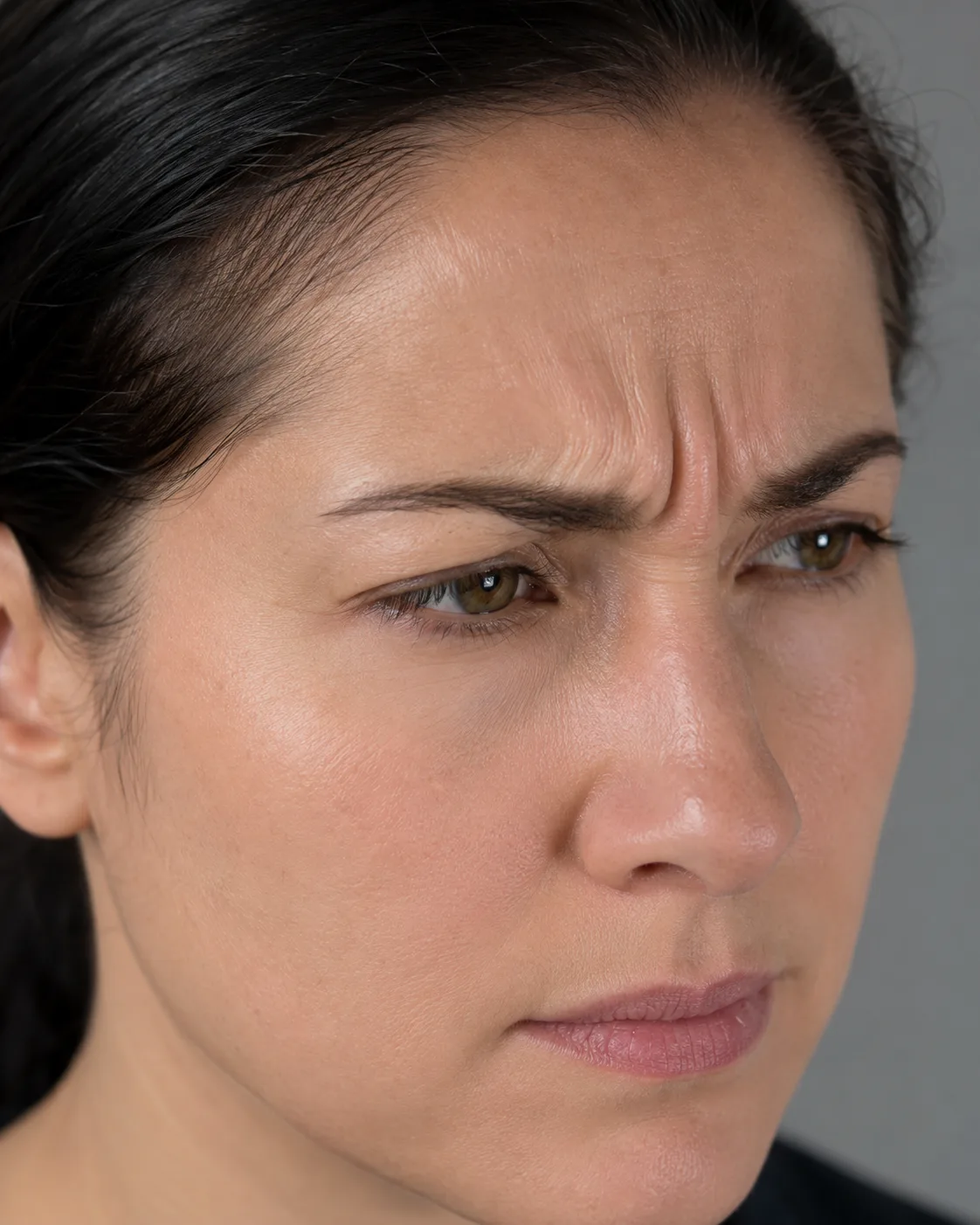
Frown lines are primarily caused by repeated contraction of the glabellar muscle complex, the group of muscles responsible for the brow drawing together and downward in expressions of concentration, concern, or displeasure.

With repetition over time, the skin above these muscles begins to crease and fold in the same locations. Initially, these creases are present only during expression (dynamic lines). Over time, they begin to persist even when the face is at rest (static lines), reflecting the cumulative effect of years of repeated movement.

Additional factors that influence frown line development include sun damage and the associated reduction in skin elasticity, general skin quality changes associated with ageing, and individual genetic predisposition to both muscle activity patterns and skin quality.

Understanding whether a patient’s frown lines are primarily dynamic (movement driven) or static (present at rest) is important for treatment planning, as this affects both the approach and the expected outcome.

How Wrinkle injections address frown lines

Wrinkle injections work by temporarily reducing the activity of specific muscles at the injection site. In the glabellar region, this means reducing the contraction of the muscles that produce the characteristic between brow creasing.

When muscle activity is reduced, the skin above it is no longer repeatedly folded at the same location. Dynamic frown lines, those present during expression, are typically significantly reduced or eliminated. Over time, with consistent treatment, static lines (those present at rest) often also improve as the skin is no longer being reinforced by repeated folding.

The effect develops gradually over the first one to two weeks after treatment and reaches full effect at approximately two weeks. This is why the review appointment is scheduled at two to three weeks, allowing assessment of the result once it is fully established.

The reduction in muscle activity is temporary. Most patients notice the effect beginning to reduce at three to four months, with full return of movement at four to six months depending on the individual.

What a frown line treatment plan involves

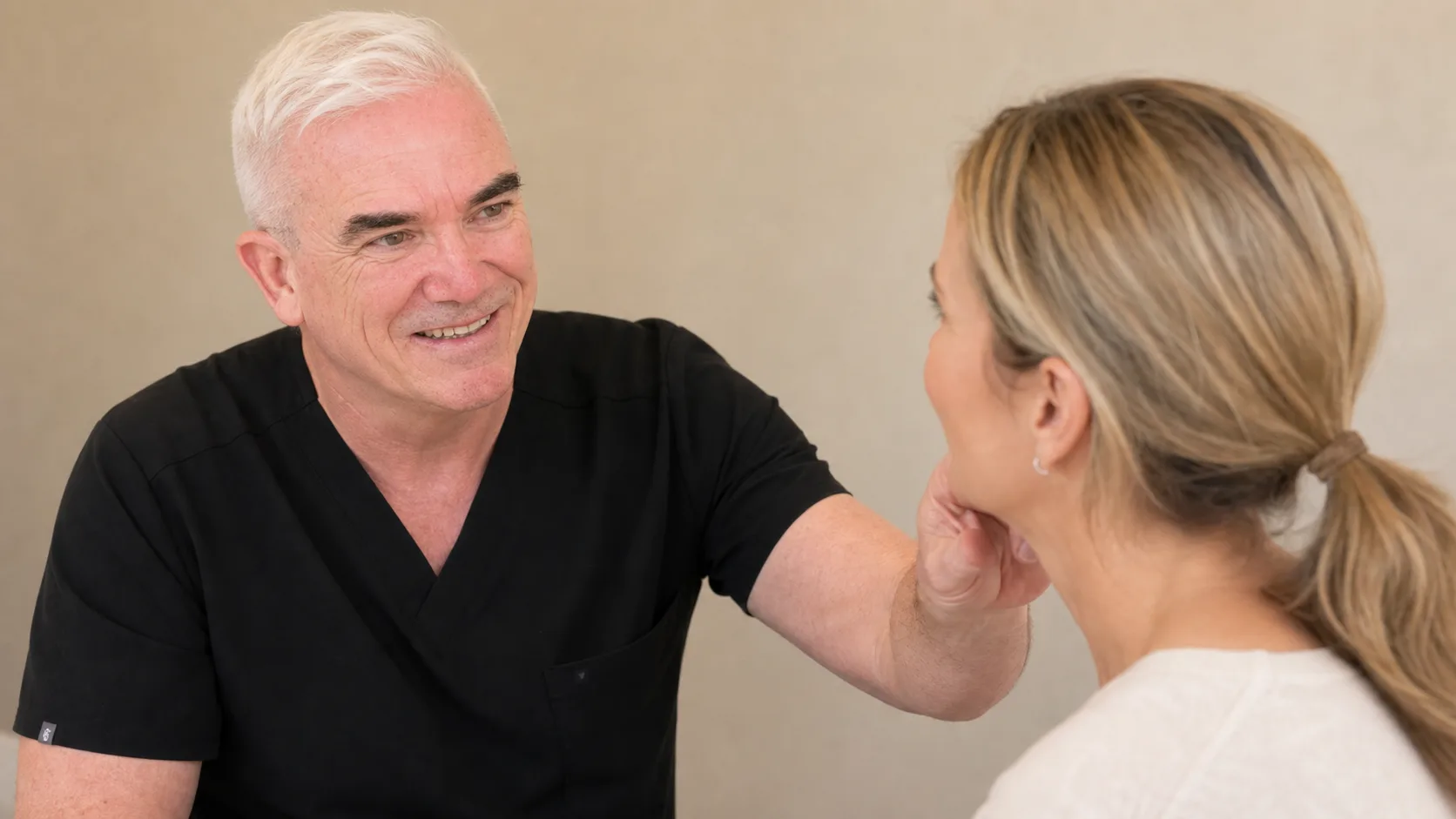
A treatment plan for frown lines at Core Aesthetics begins with a full upper face assessment at the initial consultation. This includes reviewing the resting and animated face, assessing line depth and distribution, and discussing the patient’s goals and any previous treatment history.

The consultation identifies which muscles are contributing most significantly to the frown line pattern, what dose would be appropriate for the individual’s muscle mass and desired outcome, and whether any additional upper face concerns should be considered alongside the primary frown line treatment.

Treatment is scheduled as a separate appointment from the consultation. At the treatment appointment, the planned approach is reviewed before the injections are placed. The procedure takes approximately ten to fifteen minutes.

A review appointment is scheduled at two to three weeks. This is an important part of the treatment plan, it allows the practitioner to assess the result, identify any areas where the outcome could be refined, and discuss maintenance planning.

Treating dynamic versus static frown lines

The distinction between dynamic and static frown lines has significant implications for treatment planning and realistic expectations.

Dynamic frown lines, those present primarily during expression, typically respond very well to wrinkle injections. When the driving muscular activity is reduced, the lines soften or disappear during expression and the skin at rest is not repeatedly reinforced.

Static frown lines, those present at rest even when the face is relaxed, are more complex. wrinkle treatment prevents further reinforcement of the crease but does not directly address the existing line in the skin. In patients with deep, established static lines, improvement is often gradual over several treatment cycles as the skin is given opportunity to recover without repeated mechanical stress.

In some cases, patients with deep static frown lines benefit from a combination approach where wrinkle treatment addresses the muscular driver and a small amount of facial volume treatment is considered for the residual crease. This is discussed at consultation where appropriate.

How dosing and technique affect the result

Wrinkle treatment is not a standardised procedure. The dose used, the number and placement of injection points, and the approach to distribution all affect the outcome.

Under dosing produces a partial or short lived result, movement returns quickly and the full benefit of treatment is not realised. Over dosing can produce excessive heaviness in the brow, affect the natural expression range of the upper face, or produce an appearance that looks obviously treated.

An experienced practitioner calibrates the dose to the individual’s muscle mass, the degree of movement reduction that is appropriate for the patient’s goals, and the relationship between the glabellar muscles and the surrounding upper face muscles that contribute to brow position.

This calibration is informed by the consultation assessment and refined based on the outcome at the review appointment. Over time, the treatment history informs an increasingly precise approach for each individual.

What to expect from the procedure

Wrinkle injections for frown lines are a brief, low discomfort procedure. A fine needle is used to place small amounts of product at the planned injection points in the glabellar region. The procedure typically takes ten to fifteen minutes.

Most patients experience minimal discomfort, a brief sharp sensation at each injection point that resolves immediately. No anaesthetic is typically required, though a cold compress may be used before treatment if preferred.

Immediately after treatment, small raised areas may be visible at injection points. These typically resolve within fifteen to thirty minutes. Some patients experience mild bruising at one or more injection sites, which usually resolves within a few days.

Normal activities can be resumed immediately. Patients are typically advised to remain upright for four hours following treatment, avoid strenuous exercise for twenty four hours, and not to massage or apply significant pressure to the treated area.

How long results last and what affects duration

Wrinkle treatment for frown lines typically lasts three to five months. The duration varies between individuals and is influenced by factors including individual metabolic rate, the degree of muscle activity in the treated area, lifestyle factors such as exercise intensity, and the dose used.

Patients who are new to treatment or who have not had wrinkle injections for an extended period may find that the first treatment has a slightly shorter duration as the muscle recovers its activity relatively quickly. With consistent treatment over time, many patients find that duration gradually extends.

Some patients choose to allow the effect to fully return between treatments before rebooking. Others prefer to rebook when they notice the effect beginning to reduce, before full movement returns. Both approaches are valid, the appropriate schedule depends on the individual’s preferences and goals.

The review appointment and ongoing treatment planning

The review appointment at two to three weeks is an important step in the treatment plan, particularly for new patients. It allows the practitioner to assess the settled result, identify whether dosing was appropriate, and discuss any adjustments for future treatments.

For patients where the result is slightly under the intended level, minor additional treatment may be appropriate at the review. For patients where the result is established and the patient is satisfied, the review is an opportunity to discuss the expected duration and plan the next treatment accordingly.

Over several treatment cycles, the review appointment informs an increasingly refined approach for each individual patient. The treatment plan is updated based on the accumulated history of each patient’s response.

Ongoing frown line management at Core Aesthetics aims to maintain a natural expression range while preventing the reinforcement of static lines. This means finding a dose and schedule that achieves meaningful improvement without producing an appearance that looks treated.

Is frown line treatment right for you

Wrinkle treatment for frown lines is well suited to adults who are bothered by the appearance of glabellar lines, whether primarily dynamic or beginning to become static, and who are seeking a natural looking improvement with a brief, low downtime procedure.

It is not suitable for patients who are pregnant or breastfeeding, those under 18 years of age, those with a history of neuromuscular conditions that affect muscle function, or those with certain drug interactions. Full suitability is assessed at consultation.

Patients with very deep static frown lines who have not had previous treatment should come to the consultation with realistic expectations, significant improvement is possible over several treatment cycles, but full resolution of deep established lines may require additional approaches.

The consultation at Core Aesthetics is the appropriate starting point for anyone considering wrinkle treatment for frown lines. It is also available as a standalone appointment for patients who want to explore options before committing to treatment.

Choosing the right approach for your frown lines

Not all frown lines respond identically to injectable treatment, and not all treatment approaches produce the same result. Selecting a practitioner with the experience to calibrate dose and distribution appropriately for the individual, rather than applying a standardised protocol, produces better and more natural outcomes.

Important factors when choosing a provider for frown line treatment include their specific training and experience in upper face injectable anatomy, their approach to the consultation and review process, and whether the dosing approach is individualised or standardised.

Under dosing produces a short lived partial result. Over dosing can affect brow position and natural expression range. Appropriate dosing for frown line treatment requires an understanding of the relationship between the glabellar muscles and the surrounding upper face, including the muscles that elevate the brow and those that shape the periorbital region.

At Core Aesthetics, wrinkle treatment planning is tailored to the individual at consultation and refined based on the review assessment. A consistent, considered approach over time produces the most natural and satisfying outcomes for patients seeking frown line improvement.

About This Information

The information on this page is provided for general educational purposes. It is not a substitute for clinical advice and does not constitute a recommendation that you proceed with any particular treatment. Aesthetic treatments are prescription medical procedures. They carry risks that vary between individuals and that must be assessed and discussed in a clinical context before any treatment decision is made.

At Core Aesthetics, Corey Anderson assesses every patient individually. The consultation is the point at which your specific anatomy, medical history, and goals are evaluated together. No treatment is offered at a first appointment, and no treatment is appropriate for everyone. This page is a starting point, a way to understand what is involved before you decide whether a consultation is the right next step for you.

If you have questions about anything on this page or about whether treatment might be appropriate for your situation, you are welcome to call the clinic or book a consultation at no obligation.

This page provides clinical information about Injectable Treatment Planning for Frown Lines. It is intended for adults aged 18 and over who are considering aesthetic treatment and want to understand the clinical process, suitability factors, and what to expect from a consultation based practice. All treatment decisions at Core Aesthetics follow individual assessment, no treatment is offered at a first appointment without a separate consultation. Results vary between individuals and are reviewed at follow up.

Clinical accountability and how Wrinkle dosing is decided

The wrinkle treatment guidance in “Injectable Treatment Planning for Frown Lines” is informed by how Corey Anderson, AHPRA registered nurse (NMW0001047575), approaches neuromodulator dosing at Core Aesthetics: low to moderate units, conservative on first time treatments, and reviewed at two weeks before any top up. wrinkle treatment is a neuromuscular intervention, and the same units can read very differently on two patients depending on muscle mass, baseline expression patterns, metabolism, and prior treatment history. Results vary between individuals, which is why the two week review appointment exists and why dosing decisions evolve across the first three or four treatments rather than being set once.

Specific to frown: wrinkle dosing decisions at Core Aesthetics start conservatively, low to moderate units for first time patients, with a two week review built into the protocol so any top up is informed by how the patient actually responded rather than by a generic dosing chart. Some patients are highly sensitive responders and need less than the typical starting dose; some are slower responders and benefit from a top up at the two week mark. The body of literature on neuromodulator dosing supports the two week review as a clinical reference point, not a marketing concept. The wrinkle treatment Melbourne page covers a related wrinkle decision in more depth.

Patients reading this page who want to verify Corey Anderson’s AHPRA registration can do so directly on the AHPRA public register at ahpra.gov.au using registration number NMW0001047575. The Core Aesthetics clinic operates from 12A Atherton Road, Oakleigh VIC 3166, Tuesday to Saturday, by consultation appointment. All new patient treatment at Core Aesthetics follows a structured clinical consultation, consistent with the September 2025 AHPRA cosmetic procedures guidelines. Treatment may be scheduled for the same day as consultation or at a subsequent appointment, depending on clinical assessment and individual circumstances. Patients with questions about the content on this page can raise them at consultation; the practitioner is happy to walk through any clinical reasoning that the written content does not fully capture. Results vary between individuals, and the consultation is the appropriate place to discuss what those individual variations mean for a specific person’s treatment plan.

One additional consideration for wrinkle treatment: dosing decisions evolve across treatments rather than being fixed by a chart. The two week review appointment after the first treatment captures how the patient actually responded, not how the average patient responds, and informs dosing choices for the next treatment. Patients who have been on a stable dose for years sometimes find that the dose can be reduced over time as muscle activity reduces with consistent treatment; this is a normal evolution, not an indication that the treatment has stopped working. Patients researching the topic in more depth may find the patient safety aesthetic treatments page and the consultation guide Melbourne page useful as further reading; both are written and reviewed under the same clinical accountability framework as this page.

Is this for you?

Consider booking a consultation if

  • You want to understand frown line assessment before deciding whether treatment is appropriate
  • You are 18 or older and want an individual clinical assessment
  • You value a consultation-first approach with risk and suitability discussed before planning
  • You are open to waiting or not proceeding if that is the safer recommendation

This may not be for you if

  • You are seeking a promised outcome or a same-day decision without assessment
  • You are under 18 years of age
  • You are pregnant, trying to conceive or breastfeeding and are seeking elective aesthetic treatment
  • You have an active infection, unhealed skin or an unresolved medical concern in the area to be assessed

Suitability is confirmed at consultation. This list is general guidance, not a substitute for clinical assessment.

Frequently asked questions

What does Frown Lines Aesthetic Treatment Plan explain about the anatomy behind frown line formation?

Frown lines form from repeated contraction of the corrugator and procerus muscles between the brows. The pattern and depth of lines depends on muscle bulk, habitual expression, skin quality and the number of years the movement has been repeated. Assessment at Core Aesthetics addresses all of these factors. Specific considerations for Frown lines aesthetic treatment plan patients are discussed at the individual consultation.

How does Frown Lines Aesthetic Treatment Plan describe the clinical assessment for frown line concerns?

Assessment covers the strength and pattern of frown muscle activity, the depth of resting lines, brow position and shape, skin quality and whether other concerns in the upper face are related. This context determines whether treatment is appropriate, what approach makes sense and what the realistic outcome range is. Specific considerations for Frown lines aesthetic treatment plan patients are discussed at the individual consultation.

What does Frown Lines Aesthetic Treatment Plan explain about frown line treatment and brow shape?

Frown muscle treatment can affect brow shape and position depending on how the muscles interact with the brow elevators and depressors. Assessment considers brow anatomy and whether treatment may alter brow position in a way that benefits or affects the patient. This is an individual assessment, not a standard calculation. Specific considerations for Frown lines aesthetic treatment plan patients are discussed at the individual consultation.

When would treatment not be recommended based on what Frown Lines Aesthetic Treatment Plan describes?

What does Frown Lines Aesthetic Treatment Plan say about the typical recovery period after frown treatment?

The full effect of treatment is typically visible at approximately two weeks. During the first week, onset is gradual and the result may be uneven as muscles settle at different rates. The two-week review at Core Aesthetics is when the settled result is assessed and whether any adjustment is appropriate is discussed. Specific considerations for Frown lines aesthetic treatment plan patients are discussed at the individual consultation.

How does Frown Lines Aesthetic Treatment Plan address the difference between dynamic and resting frown lines?

Dynamic lines are visible during expression and are the primary target of muscle-relaxing treatment. Resting lines are visible at rest and are influenced by skin change over time. Treatment addresses the dynamic component but may have limited effect on established resting lines. This distinction is explained at the consultation. Specific considerations for Frown lines aesthetic treatment plan patients are discussed at the individual consultation.

What does Frown Lines Aesthetic Treatment Plan explain about the long-term approach to frown line concerns?

Long-term planning considers how lines have developed over time, what a sustainable maintenance schedule looks like and whether early intervention would benefit the patient. Core Aesthetics does not apply a fixed protocol. Planning is reviewed at each appointment based on how the individual responds and how concerns evolve. Specific considerations for Frown lines aesthetic treatment plan patients are discussed at the individual consultation.

What preparation does Frown Lines Aesthetic Treatment Plan recommend before a frown line consultation?

Arriving with a list of current medications, prior treatment history in the area and any concerns about specific outcomes helps make the consultation efficient. Photographs showing how the concern has changed over time are useful additional context for the assessment at Core Aesthetics. Specific considerations for Frown lines aesthetic treatment plan patients are discussed at the individual consultation.

Written and reviewed by Corey Anderson RN, AHPRA NMW0001047575 · Reviewed April 2026 · TGA & AHPRA compliant

Begin With A Conversation

Book your consultation.

No commitment, no pressure. A considered first step toward understanding what is and isn’t right for you.

Book Consultation

Elegance, Perfected.