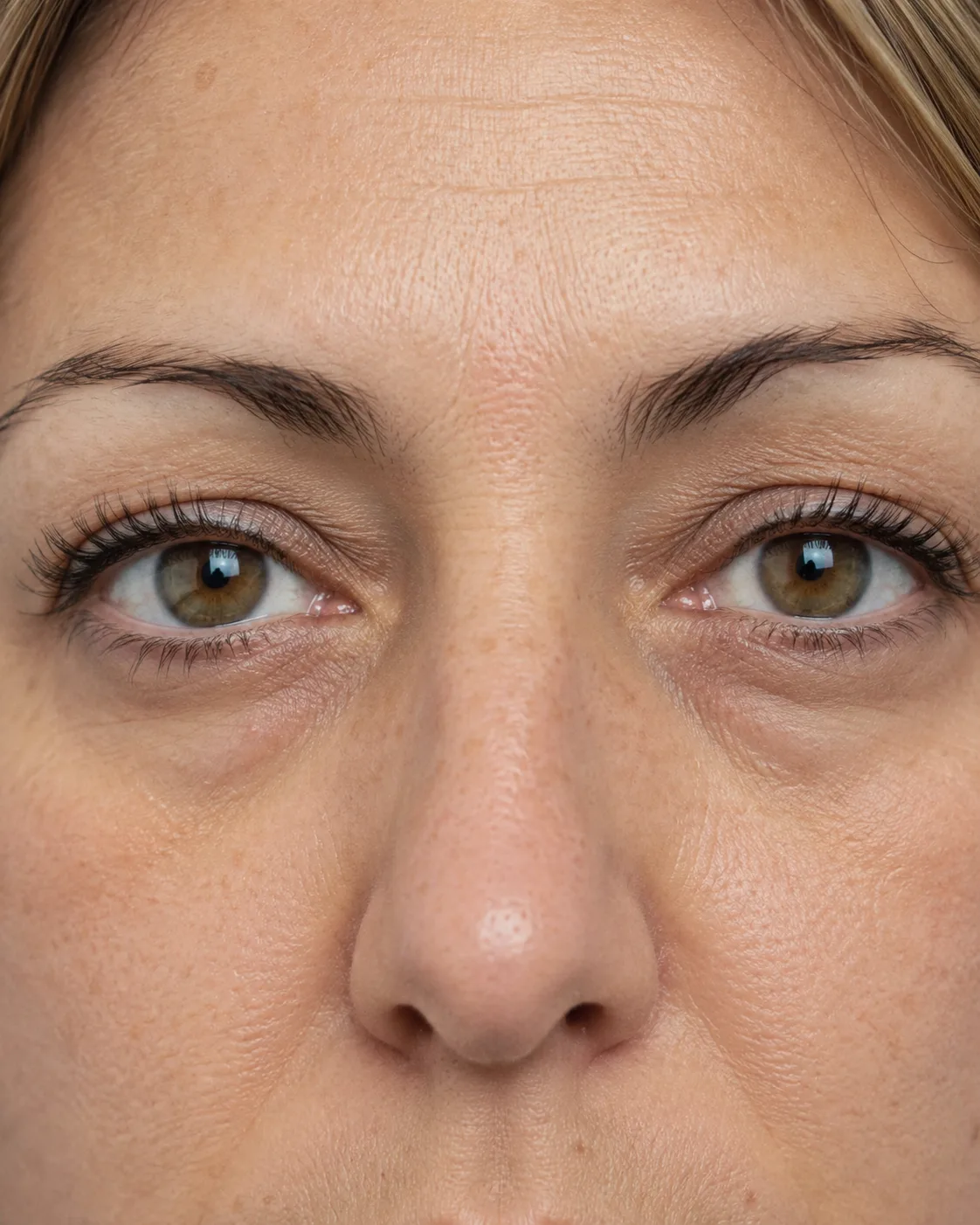
A tired-looking face can reflect under-eye change, skin quality, cheek support, expression, lifestyle or health factors rather than one simple treatment problem. Corey Anderson RN uses consultation to separate those possibilities before deciding which options may be suitable, whether timing needs adjusting and what next step fits best.
What Does A Tired Looking Face Usually Mean?
People use this phrase when the face seems less bright, less rested or less supported than usual. It can describe under-eye change, dull skin, flattened cheeks, shadows, expression patterns or a combination of several factors.
That matters because a tired-looking face is not one diagnosis and it should not lead straight to a treatment menu. The useful first step is assessment.
Why One Phrase Can Point To Several Different Factors
The same appearance concern can be driven by different layers of the face. A person may notice shadows under the eyes, but the bigger issue may be skin quality or cheek support. Another person may feel their face looks tired because stress, poor sleep or recent illness has changed the way the skin and expression read in photos.
Corey Anderson RN uses consultation to sort out which layer is most relevant before discussing whether any cosmetic pathway is appropriate.

What Can Contribute To A Tired Looking Face?
This concern is best understood by separating likely contributors.
| Possible contributor | What it can change | Why the distinction matters |
|---|---|---|
| Under-eye transition or hollowing | It can make the lower eyelid look shadowed or less supported. | The under-eye may be only part of the picture. |
| Cheek and midface support | Reduced support can affect the under-eye area and nearby folds. | Whole-face balance matters more than one isolated shadow. |
| Skin quality | Dullness, redness, dehydration or creasing can make the face read as more tired. | Structure is not always the main issue. |
| Expression, health or lifestyle factors | Stress, sleep loss, illness or habitual facial movement can change how the face is perceived. | Some concerns need time, medical review or a non-cosmetic answer first. |
How Is This Different From Skin Quality Or Under-Eye Pages?
This page sits above the individual zones. It is for adults who notice a tired-looking appearance but are not yet sure whether the main issue is under-eye change, skin quality, cheek support or a broader consultation question.
If the concern is clearly surface-led, read aesthetic consultation for skin quality. If it feels strongly under-eye or hollowing led, use tear trough consultation. If it feels like overall support loss, cheek and midface volume changes explained may be the better next page.
When Should Medical Review Come Before Cosmetic Discussion?
Cosmetic consultation is not the right first step for every tired-looking-face concern. Sudden swelling, facial pain, weakness, visual change, persistent redness, unexplained asymmetry or feeling generally unwell can point toward a medical issue that needs a GP or another medical pathway first.
Corey may also recommend waiting if recent illness, major stress, very close events or incomplete health information make cosmetic discussion less reliable.

How Corey Anderson RN Assesses A Tired Looking Face
Consultation reviews what you are noticing, how long it has been present, whether it changes with rest or expression, which areas draw your eye first, relevant health history, prior cosmetic treatment, timing, risk tolerance and what you are actually hoping will change.
The outcome may be education, treatment discussion, skin-first planning, timing or another clinically appropriate pathway. The consultation focuses on assessment, suitable options, relevant risks, timing and an agreed next step.
Why The Safest Answer Can Still Be an agreed consultation plan
Sometimes the concern is within normal variation. Sometimes a cosmetic change would not solve the issue you are actually noticing. Sometimes the face needs time, skin support, another clinician or simply less pressure. A no-treatment answer can be careful and clinically responsible, not dismissive.
Who Will Assess A Tired Looking Face In Oakleigh?
Core Aesthetics is based in Oakleigh. The clinic phone number is 0491 706 705. Consultations are led by Corey Anderson RN, Ahpra registration NMW0001047575.
If you are researching a tired-looking-face concern, the practitioner and clinic details should be easy to check before any booking decision. This page was reviewed on 2026-09-01.
Treatment Pages This Guide Supports
If the tired-looking-face concern turns out to be mainly under-eye, skin or support related, the most relevant treatment pages are tear trough consultation, skin quality consultation, volume treatment and wrinkle treatment.
These pages can help you prepare questions before Corey assesses whether under-eye change, skin quality or facial support best explains what you notice, then talks through suitable options and timing.
Tired Looking Face Questions
What can make a face look tired?
A tired-looking appearance can relate to under-eye hollowing, skin quality, cheek support, lighting, facial movement, recent weight change, stress, sleep loss or previous cosmetic treatment. It is a description, not a diagnosis, so assessment is needed before any cosmetic discussion.
Does a tired-looking face always mean the under-eye area is the problem?
No. The under-eye area is only one possibility. Sometimes the main factor is skin texture, midface support, brow position, facial expression or a broader health issue that needs a different conversation first.
Can skin quality matter more than volume?
Yes. Dullness, dehydration, redness, sun damage or creasing can make the face look more tired even when facial support is otherwise stable. That is why Corey Anderson RN reviews skin and structure together rather than assuming one answer.
When should I think about a medical review instead of a cosmetic discussion?
If the change is sudden, painful, one-sided, linked to swelling, vision change, illness, facial weakness or another new symptom, a medical review should come first. Cosmetic consultation is not a substitute for urgent or general medical care.
Will I leave knowing what happens next?
Yes. Corey may recommend skin care support, review later, timing or another clinically appropriate pathway when that is the safer or more proportionate answer. Consultation is for clarification, not a promise that treatment will happen.
What happens after Corey assesses the concern?
Some adult patients may be suitable for discussion of suitable options after assessment, consent, timing review and a decision that proceeding is appropriate. It is never automatic just because the concern feels emotionally important.
Which related page should I read if the concern seems mostly under-eye or midface?
Is this for you?
Consider booking a consultation if
- Adults who are not sure whether the concern is under-eye, skin, support or a broader assessment issue
- People who want a calm consultation-first explanation to guide an informed decision
- People who are open to timing or another clinically appropriate pathway if that is safer
This may not be for you if
- People seeking urgent care for sudden swelling, pain, weakness or visual change
- People expecting one fixed cosmetic answer
- People who are not adult patients
- People seeking treatment without assessment and consent review
Suitability is confirmed at consultation. This list is general guidance, not a substitute for clinical assessment.
Clinical references
- Ahpra guidelines for registered health practitioners who perform non-surgical cosmetic procedures
- Ahpra guidelines for advertising higher risk non-surgical cosmetic procedures
- Ahpra public register of practitioners
- TGA advertising health services and cosmetic injections FAQ
- TGA advertising health services that involve therapeutic goods