
A forehead line assessment can be useful when horizontal lines keep drawing your attention, look different at rest or in movement, or leave you wondering how your brows and expression fit together. Corey considers the concern with brow position, ordinary movement, skin, relevant history and what you want to preserve, then explains whether a personal discussion, more time or another pathway makes sense.
Start with the question that keeps returning
A forehead line assessment can be useful when horizontal lines keep drawing your attention, look different at rest or in movement, or leave you wondering how your brows and expression fit together. Corey considers the concern with brow position, ordinary movement, skin, relevant history and what you want to preserve, then explains whether a personal discussion, more time or another pathway makes sense.
You do not need to count lines, recreate your strongest expression or decide that treatment is necessary. It is enough to say when the concern appears, what feels different and what you would like to understand.
This page helps you decide whether an assessment would be useful. For the separate science of lines in motion and at rest, read why forehead lines change. For the appointment sequence itself, use the forehead consultation guide.
When might an assessment conversation help?
You want perspective
The concern keeps returning in ordinary conversation, photographs or the mirror, and a calm explanation would be useful.
Movement and rest do not look the same
Lines may appear as the brows rise, remain as the face settles or attract your attention more on one side.
You know what should stay familiar
You want to discuss ordinary expression, brow position or avoiding a heavy feeling before any option is considered.
What can you notice before booking?
| Moment | A useful observation | Why it helps |
|---|---|---|
| Face relaxed | Which horizontal lines remain after your expression settles? | It separates what stays visible from the folds created only by movement. |
| Brows raised comfortably | Where do the lines appear, and does one side travel differently? | It gives Corey a familiar movement pattern to compare with rest. |
| Ordinary life | When does the concern catch your attention, and what would you like to preserve? | It keeps the visit centred on your experience instead of the strongest possible pose. |
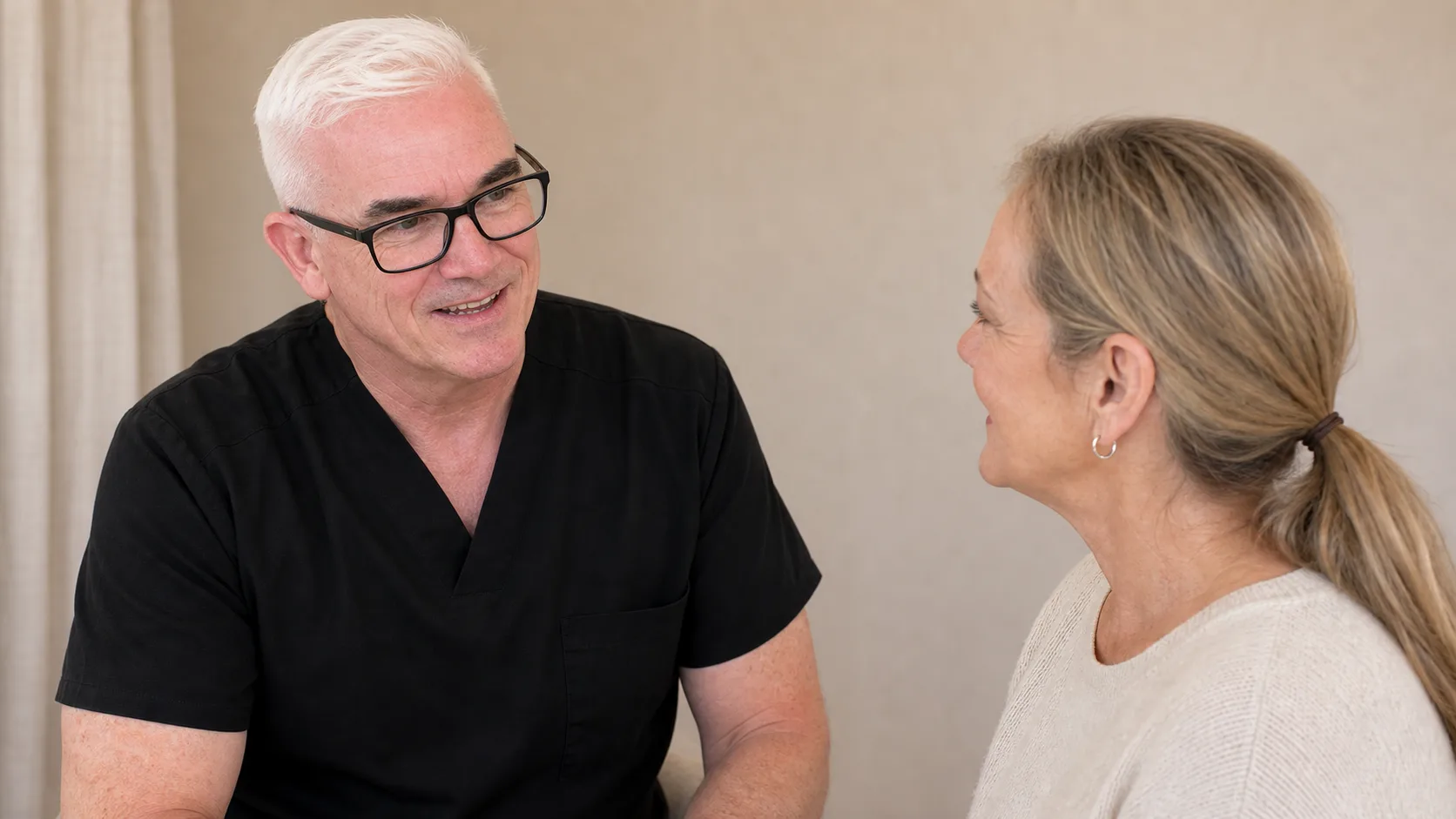
Why is the line only part of the picture?
The forehead helps raise the eyebrows, so the line you see and the brow movement around it are connected. Corey observes your face at comfortable rest and during ordinary movement, including where the brows begin, how they lift and whether one side behaves differently.
He also considers what remains after expression settles. Skin surface, sun exposure, time and previous care may all contribute to a line that stays visible at rest. The published frontalis anatomy study supports the relationship between the forehead muscle and brow movement, but it cannot explain an individual concern from a webpage or photograph.
The purpose of context is not to make the concern more complicated. It helps Corey explain what he sees and avoid reducing your whole expression to one horizontal mark.
What would make an assessment useful for you?
You want a clearer explanation
Use the visit to compare movement and rest, ask why the brows matter and put one photograph or mirror view into context.
You are open to a careful discussion
If an option is suitable to consider, Corey explains the likely limits, relevant risks, alternatives, costs and review plan before you decide.
Waiting or another pathway fits better
The visit may support observation, more information, medical review or no cosmetic care. Clarity can still be a useful outcome.
You will speak with Corey throughout
Corey Anderson is the Registered Nurse who listens to the concern, observes your forehead and brow movement, reviews suitability and explains the next step. You can meet Corey before your visit and verify his Ahpra registration.

What should you bring?
Begin with one plain sentence: perhaps the lines appear when you lift your brows, one crease remains after your face relaxes, or the pattern has started to feel less familiar. Add what you want to preserve, such as natural expression or your usual brow position.
Bring current medicines and supplements, allergies, relevant health changes and details of previous cosmetic care. Dates and records are more useful than trying to remember a product name. Mention any previous brow or eyelid heaviness and any travel or event that could make review difficult.
If the concern is mainly between the brows, the frown-line assessment page is the better starting point. If you already know you want the broader Melbourne service overview, continue to forehead lines and brow movement.

What will your Oakleigh visit feel like?
Come in with the forehead concern you have noticed and the questions you want answered. You will meet directly with Corey for a calm, private assessment of your forehead, brows and relevant upper-face context.
Corey listens first, compares comfortable rest with ordinary movement and explains the reasonable pathways. If a cosmetic option is suitable to discuss, you will hear the personal limits, risks, alternatives, costs and review plan before deciding.
Safety belongs in the personal conversation
If a cosmetic option is suitable to discuss, Corey explains the risks relevant to you and that option. These may include bruising, tenderness, headache, asymmetry, brow or eyelid heaviness, an unfamiliar change in expression, an uneven response, dissatisfaction and the need for review. Alternatives, likely limits and the choice to wait or do nothing are part of consent.
A sudden brow or eyelid droop, facial weakness, trouble speaking, sudden severe headache or sudden vision loss is not a routine cosmetic concern. Call triple zero (000) for suspected stroke symptoms. An isolated new droop or unexplained visual change still needs prompt assessment through an appropriate medical or eye-care service.
Is this for you?
Consider booking a consultation if
- You are an adult who keeps noticing horizontal forehead lines and would value a calm explanation
- You want forehead lines considered with brow position, ordinary movement and what you want to preserve
- You have relevant health or previous-care context to discuss before any personal option
- You are comfortable with an assessment that may support discussion, waiting or another pathway
This may not be for you if
- You want a recommendation from a photograph or a one-size-fits-all plan
- You are seeking elective cosmetic care for someone who is not an adult
- You are pregnant, trying to conceive or breastfeeding and are seeking elective aesthetic treatment
- You have a new brow or eyelid droop, sudden weakness, visual change or another concern needing medical assessment
Suitability is confirmed at consultation. This list is general guidance, not a substitute for clinical assessment.
Clinical and regulatory references
These sources support the limited anatomy context and the consultation-led public information on this page. They do not diagnose a forehead concern or predict an individual outcome.
- The Anatomy of the Frontalis Muscle Revisited: A Detailed Anatomic, Clinical, and Physiologic Study
- Advertising health services that involve therapeutic goods
- Advertising health services and cosmetic injections: frequently asked questions and answers
- Guidelines for advertising higher risk non-surgical cosmetic procedures
- Ahpra register of practitioners
Forehead line assessment questions
What causes forehead wrinkles?
Forehead wrinkles can come from repeated expression, natural ageing, skin quality, sun exposure, brow position and the way the upper face moves. Some lines appear only with movement, while others remain visible at rest. Consultation helps identify which factors are most relevant before any treatment discussion.
Why does brow position matter?
The forehead helps lift the brows. If someone relies on forehead movement for brow support, reducing that movement without careful assessment can create heaviness or imbalance. Corey assesses brow position, expression pattern and upper face structure before deciding whether treatment is suitable.
Are forehead wrinkles always suitable for treatment?
No. Treatment may not be suitable when brow heaviness, skin quality, medical factors, recent procedures or unrealistic expectations create concern. Sometimes waiting, seeking medical review or choosing no treatment is the more responsible recommendation.
Can treatment happen on the same day?
Some adult patients may be suitable for treatment on the same day, but only after assessment, discussion of risks and informed consent. Booking a consultation does not mean treatment. It creates time for Corey to decide whether proceeding is clinically appropriate.
What if my lines are visible when my face is relaxed?
Resting lines may involve skin quality, sun exposure and long term movement patterns. They may not respond in the same way as lines that appear only during expression. Corey will explain what appears to be contributing to the line and what expectations are realistic.
Could forehead treatment make my brows feel heavy?
Brow heaviness is a known planning concern for some forehead presentations. The risk depends on anatomy, brow position, movement pattern and prior treatment history. This is one reason forehead concerns should be assessed carefully rather than treated from a standard plan.
Is this different from the main forehead service page?
Yes. This page is an educational decision guide for people comparing causes and pathways. The forehead line assessment page is the main Melbourne service page, while the Oakleigh forehead page is focused on the local clinic pathway.
What should I ask during consultation?
Useful questions include what is causing the line, whether brow position changes the recommendation, what risks matter for your anatomy, whether waiting is sensible, what review process applies and what alternatives should be considered before deciding.
Bring the question that keeps returning
Meet Corey for a calm look at your forehead and brow movement, with room to understand the context and decide what feels right for you.