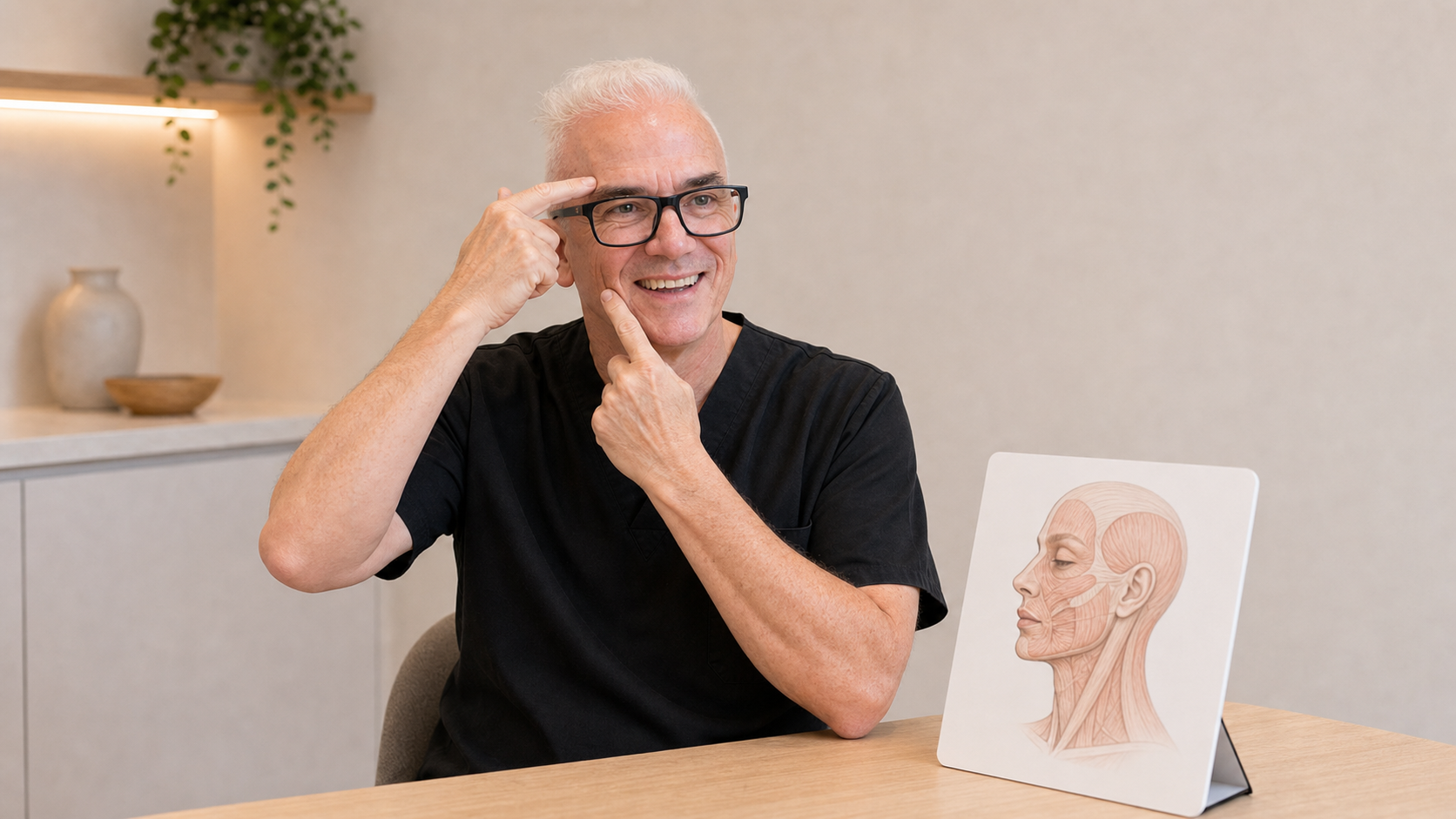
For a forehead wrinkle concern near Glen Waverley, notice what appears during ordinary conversation and after your expression settles before repeatedly checking a mirror, recording multiple takes or rehearsing a maximum brow lift. Corey Anderson RN compares natural forehead and frown movement with brow position, eyelid context, skin, resting creasing, natural asymmetry, health history and previous care. He explains suitable options, material risks, alternatives, costs, timing and follow up. When assessment and informed consent support an option, suitable care can be planned; more information or adjusted timing can be incorporated when useful.
What Appears Before You Deliberately Test It?
You do not need to make a forehead line stronger before asking about it. Notice what appears during conversation, what remains after expression settles and whether the concern still matters when you are not actively searching for it.
This gives Corey a more realistic starting point than a series of maximum brow lifts or increasingly close mirror checks.
Which Observation Is Most Useful?
Movement appears naturally
Notice the forehead during conversation without deliberately performing the concern.
One natural movement is enough
A gentle lift can show range without repeated straining or fatigue.
Some creasing remains visible
Record what you notice without using the settling time as a home diagnostic test.
The test becomes the main activity
Pause and return attention to ordinary life rather than producing more comparison material.
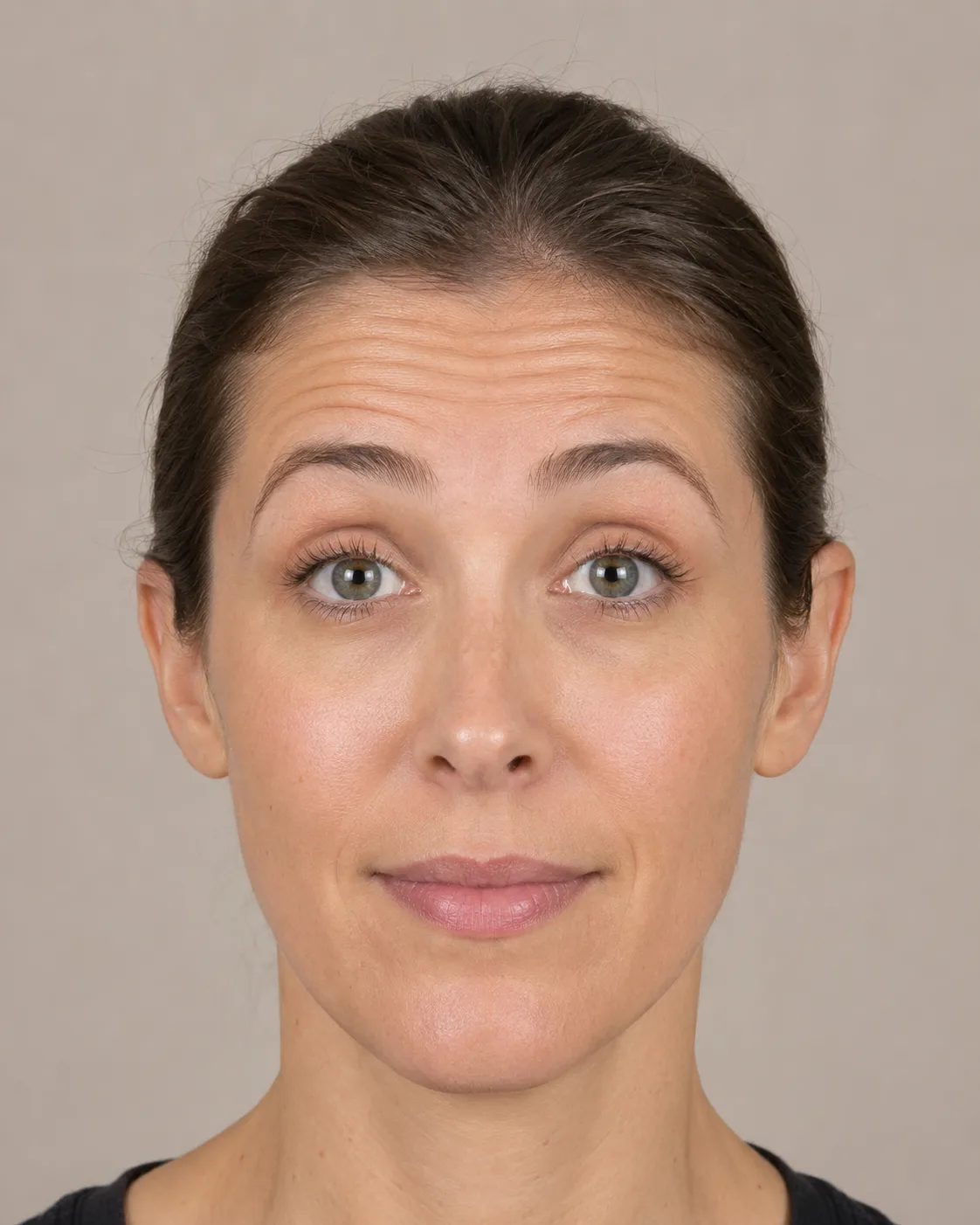
How Does Corey Assess Natural Movement?
Corey observes ordinary conversation before asking for a small number of comfortable brow and frown movements. He compares the forehead at rest with brow height, eyelid context, side differences, skin creasing and the expression you want to preserve.
Medicines, health changes, eye symptoms, previous cosmetic care and your priorities complete the assessment. A rehearsed video cannot establish diagnosis, suitability or an expected result.
Is This The Right Glen Waverley Guide?
Choose the page that matches the question rather than collecting several versions of the same concern.
Stay with this page
The forehead is the clear concern and repeated mirror or video testing is making the pattern harder to judge.
Start with the broad local guide
Use the Glen Waverley wrinkle guide when forehead, frown and outer eye movement all need sorting.
Read the main forehead guide
Use the forehead consultation guide for the wider assessment and consent sequence.
Can You Arrive Without Photos Or Video?
Yes. A simple description of when the line appears, what you want understood and what expression should stay familiar may be enough. One natural photograph or short recording can help when it genuinely captures ordinary movement.
Multiple takes, filters, unusual angles and maximum brow lifts often add performance rather than useful context. Corey can guide the movement comparison in person.
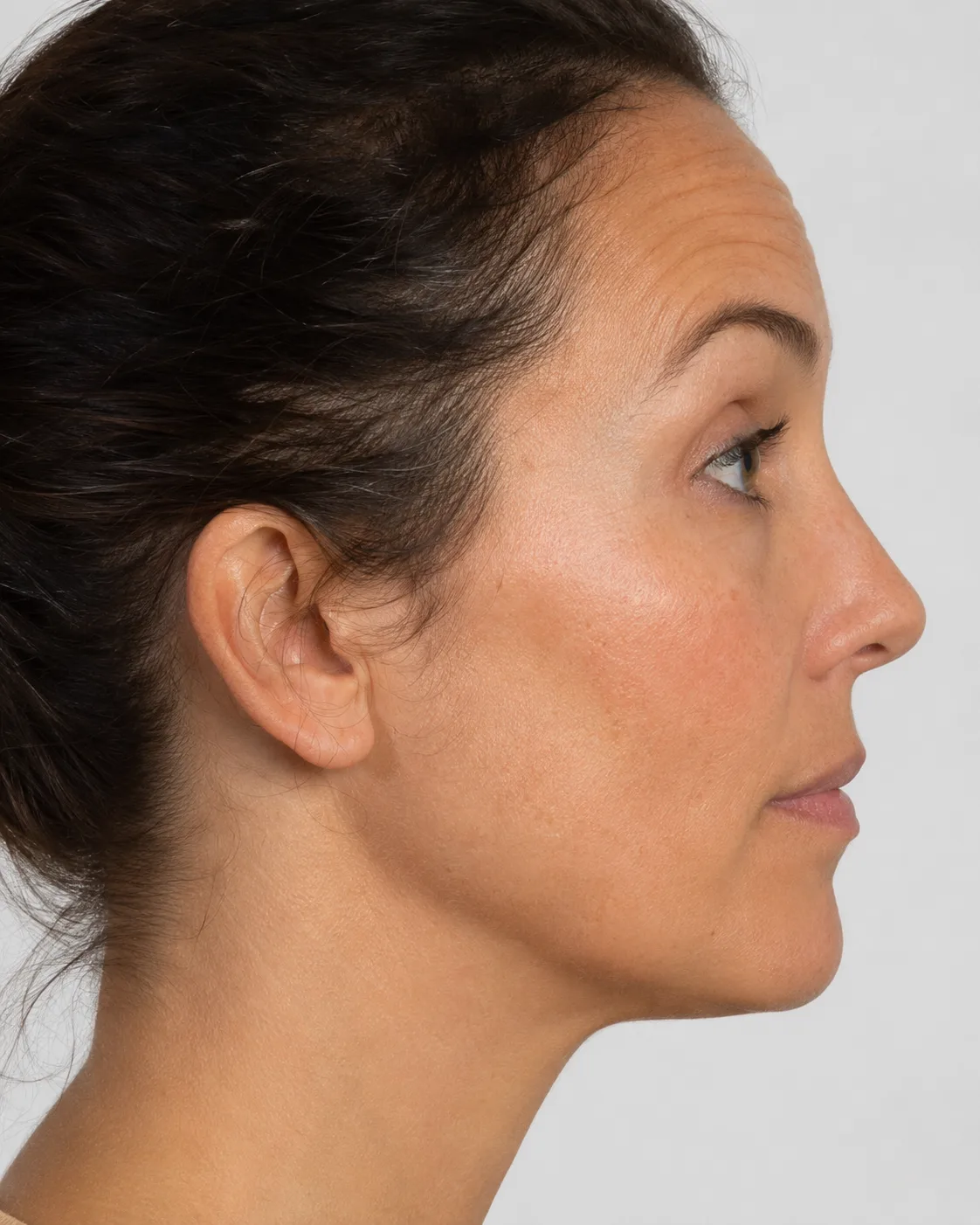
What Can A Useful Appointment Lead To?
The visit should clarify what Corey observes, how movement and settled creasing relate, which options may be suitable and what risks, limits, costs and review needs apply.
When an option is clinically appropriate and informed consent is complete, suitable care can be planned. More information, adjusted timing or another clinical pathway can be included when that supports a clearer decision.
What Should You Bring Instead Of More Takes?
| Bring this | What to note | Why it helps |
|---|---|---|
| Everyday pattern | Whether the line appears in conversation, deliberate movement, settled rest or several contexts. | Keeps assessment linked to ordinary facial use. |
| Personal boundaries | Expression, movement and asymmetry you want kept familiar. | Makes consent more specific. |
| Relevant history | Medicines, health changes, eye symptoms and previous cosmetic care. | Supports safe interpretation and timing. |
| Checking experience | Whether mirror or video checking is increasing worry or taking up time. | Helps separate a cosmetic question from support that may be useful elsewhere. |
When Does Another Kind Of Support Matter?
A sudden or unexplained change in brow, eyelid or facial movement, weakness, numbness, pain or new visual symptoms needs appropriate medical assessment. Irritated skin or care that is still settling may also change timing.
If appearance checking feels distressing, difficult to stop or starts changing daily behaviour, discuss that experience with an appropriate health professional. A cosmetic page cannot diagnose or manage that concern.
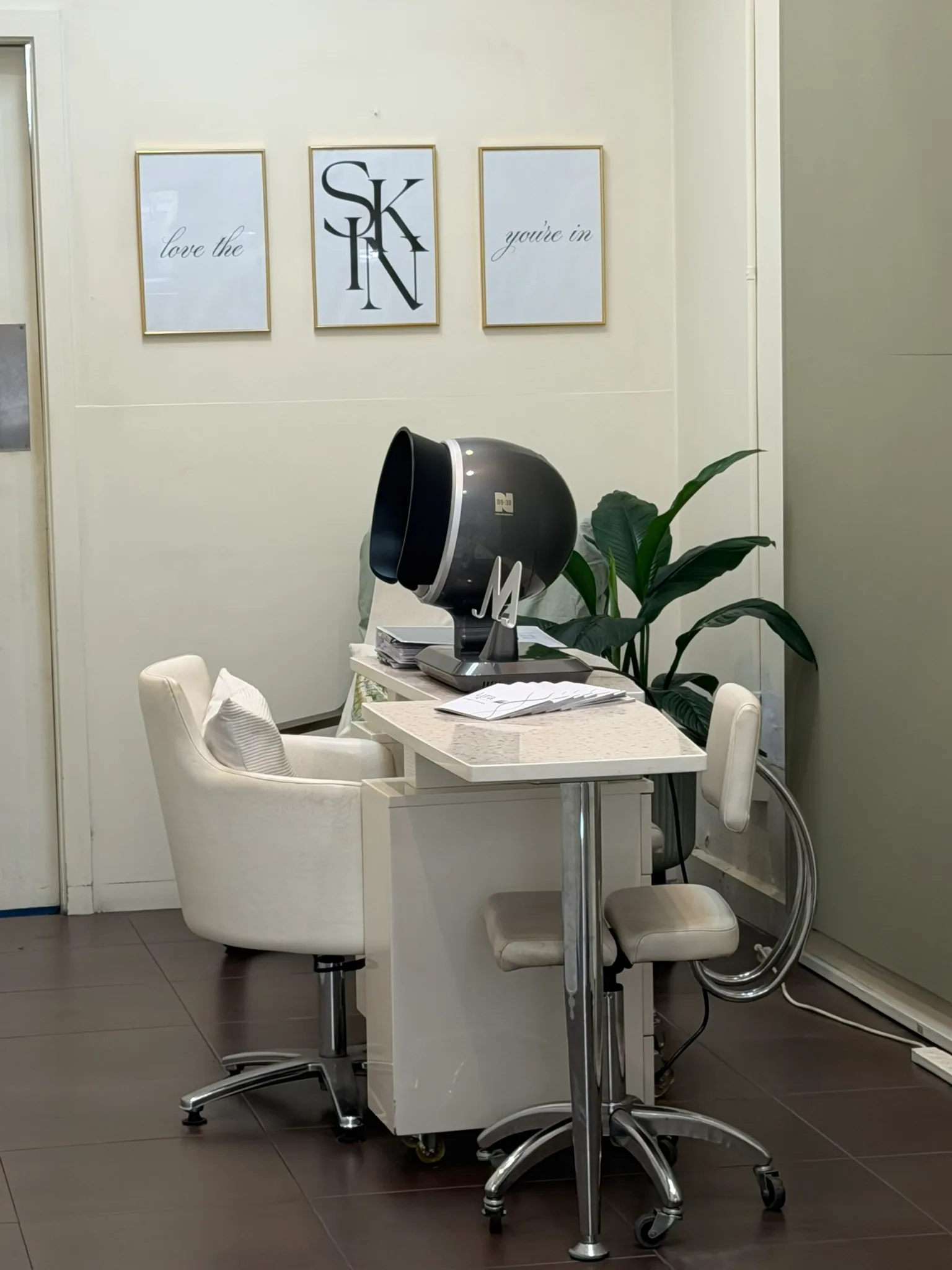
Where Can Glen Waverley Patients Bring The Question?
Core Aesthetics is at 12A Atherton Road, Oakleigh VIC 3166. Phone 0491 706 705. Corey Anderson RN leads the consultation and holds Ahpra registration NMW0001047575.
Bring your natural observation and relevant history. Confirm Corey through the verification page and check the pricing guide before booking.
Which Public Guidance Shapes This Page?
TGA guidance for advertising health services involving therapeutic goods explains why public content focuses on consultation rather than prescription products. Official guidelines for registered health practitioners who perform non-surgical cosmetic procedures support individual assessment, informed consent and appropriate follow up. These cosmetic procedure guidelines inform the consultation process.
The sources set public communication boundaries. They cannot determine what an individual forehead concern means or whether an option is suitable.
Can Suitable Care Follow A Natural Movement Review?
Bring the concern without rehearsing it
Corey explains suitable options, material risks, alternatives, costs, aftercare and follow up. When an option is clinically appropriate and informed consent is complete, suitable care can be planned around natural movement and your boundaries.
Is this for you?
Consider booking a consultation if
- Adults travelling from Glen Waverley whose main concern is horizontal forehead lines
- People who want natural expression, brow position and eyelid comfort considered together
- People who prefer a focused assessment and questions before deciding on any next step
- People open to observation, adjusted timing, review with another health professional, another care pathway or a movement-focused review where appropriate
This may not be for you if
- Anyone seeking diagnosis or urgent care for a sudden or unexplained facial movement change
- Anyone with broken, infected or acutely irritated skin in the area to be assessed
- Anyone seeking treatment without an individual assessment, risk discussion and informed consent
- Anyone expecting a photograph, mirror view or webpage to confirm suitability
Suitability is confirmed at consultation. This list is general guidance, not a substitute for clinical assessment.
Frequently asked questions
Can repeatedly raising my brows change what I see?
Repeated contraction can make folds more obvious for the moment and can create fatigue or tension. It shows a deliberate test, not necessarily your usual movement during ordinary life.
How does Corey assess natural expression?
Corey observes conversation before requesting a comfortable brow lift and frown, then lets the face settle. This compares movement, brow support and resting visibility without repeated performance.
Should I bring a video of the line?
A short natural recording may help when it captures ordinary expression, but it is optional. Multiple rehearsed takes, filters and maximum lifts are usually less useful than a clear description.
What if I keep checking the line?
Pause repeated checks and notice whether the concern still affects ordinary life. If checking feels distressing, difficult to stop or changes daily behaviour, discuss it with an appropriate health professional.
When is the broad Glen Waverley page better?
Use the broad local wrinkle guide when forehead, frown and outer eye concerns need comparing, or when timing, previous care and uncertainty matter more than one focused area.
Which changes need another clinical pathway?
A sudden change, weakness, numbness, pain, new visual symptoms or another acute concern needs appropriate medical assessment rather than relying on a routine cosmetic consultation.
Can I arrive without photographs or video of the forehead line?
Yes. Note when the line appears, what movement brings it out, whether it remains at rest and what brow position or expression you want to preserve. Corey can observe natural conversation, comfortable brow lift, release and rest in person. Images may add timing context, but repeated filming or forced movement is not required for assessment.