For a facial volume concern near Cheltenham, first check whether it persists outside close phone images. Compare a neutral mirror view with front, angled and profile views taken at a comfortable, consistent distance in ordinary light. Note what remains stable without repeatedly photographing or measuring the face. Corey Anderson RN then assesses cheek and midface support, temple and lower face relationships, skin, movement, natural asymmetry, health history and previous care. He explains suitable options, material risks, alternatives, costs, timing and follow up. When clinically appropriate and informed consent is complete, suitable care can be planned.
Start With One Calm Reality Check
A close phone image can enlarge central features, compress depth and make normal asymmetry feel more pronounced. Begin with how the face looks in an ordinary mirror at conversational distance, not the most confronting photograph.
If the concern remains, describe the area and the relationship that feels different. Avoid deciding for yourself that volume loss, ageing or one particular option is the cause or answer.
How Can You Compare Views Without Chasing A Perfect Image?
Use the same neutral expression, comfortable distance and ordinary light. The aim is consistency, not a flattering or unflattering result.
| View | What to notice | What not to conclude |
|---|---|---|
| Ordinary mirror | Whether the concern is noticeable at conversational distance. | That a fleeting impression proves structural change. |
| Front view | Overall balance, natural asymmetry and cheek width. | That both sides should be identical. |
| Angled view | How cheek, midface and lower face transitions relate. | That one shadow identifies a cause. |
| Profile | Depth relationships rather than isolated width. | That a single profile defines the whole face. |
| Natural movement | Whether the concern changes with speech or expression. | That a still image predicts a clinical plan. |

When Is This Cheltenham Guide The Useful Starting Point?
Stay with this guide
The concern became stronger in close phone images and you want to check what persists in ordinary views.
Use the focused guide
Read the cheek consultation guide when cheek width, contour or midface support is clearly central.
Use the Melbourne framework
The facial volume guide explains the wider assessment, consent and follow up framework.
Why Can Phone Distance Change Facial Proportions?
At close range, perspective changes the apparent size relationship between features nearer and farther from the lens. Wide angle camera settings, portrait processing, overhead light and an unfamiliar expression can add further distortion.
This does not mean every concern is imaginary. It means photographs need context before they are used to describe a stable facial pattern.
What Does Corey Assess In Person?
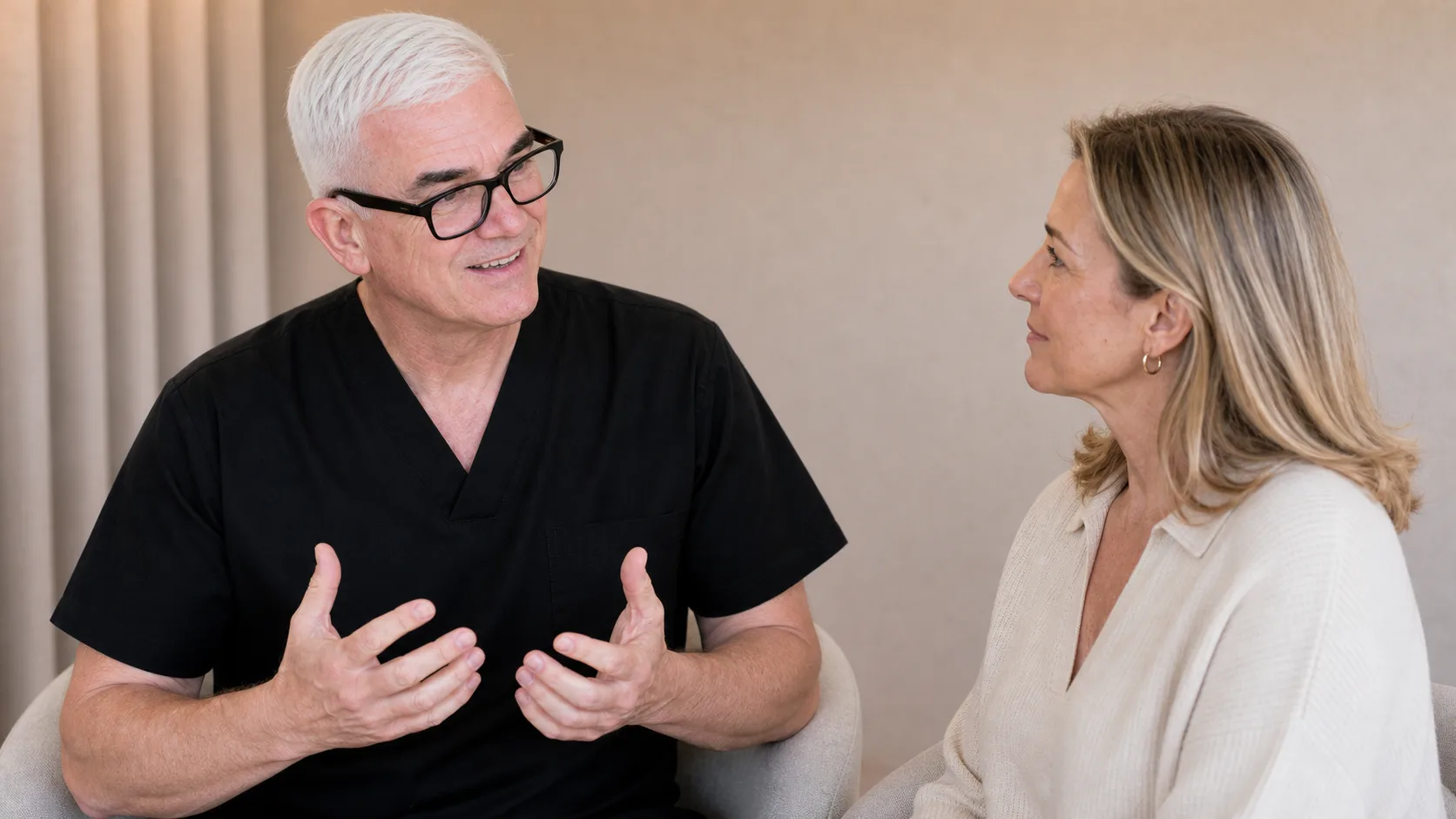
Corey observes the face from the front, angled view and profile, at rest and during natural movement. He considers cheek and midface support, temple and lower face relationships, skin, natural asymmetry and which familiar features you want preserved.
Health history, medicines, allergies, dental context, weight change and previous cosmetic care may alter the interpretation, risk or timing. A camera check cannot replace this assessment.
When Is More Information Or Another Pathway Useful?
A recent or rapidly changing concern, pain, weakness, numbness, visual symptoms, marked swelling or significant dental symptoms needs appropriate medical or dental assessment. Bring relevant records when available.
For a stable cosmetic concern, adjusted timing, more information or appropriate clinical input can be incorporated when useful. When the assessment is clear and informed consent is complete, suitable care can be planned.
Why Should Repeated Checking Stop After The Comparison?
More photographs do not necessarily create better information. Repeatedly changing distance, light, expression and filters can magnify uncertainty and shift attention toward tiny differences that other people would not see at ordinary distance.
Keep only a few representative views, write down the real question and return to normal activities. Tell Corey if checking the concern is becoming hard to limit.
Build A Cheltenham Appointment Brief From What Persists
Write one sentence naming what still looks unfamiliar after the consistent view check and one sentence naming what you want to keep familiar. Add current medicines, allergies, relevant medical or dental history and previous cosmetic care dates. One or two ordinary images can show when the concern first appeared; a large camera roll is unnecessary.
Also note work, travel and event timing, plus whether returning from Cheltenham to Oakleigh for review would be practical. This brief keeps attention on the stable question rather than the most confronting image.
Where Does The Consultation Take Place?
Core Aesthetics is at 12A Atherton Road, Oakleigh VIC 3166. Phone 0491 706 705. Corey Anderson RN leads the consultation and holds Ahpra registration NMW0001047575.
Confirm Corey through the verification page and review the pricing guide before booking.
Where Do You Go After The Camera Check?
If the concern remains stable across ordinary views, read the facial volume safety guide to prepare risk questions or the suitability guide to organise health and timing context. If it appears only in a distorted close view, step away from repeated checking and bring the uncertainty to consultation if it still matters.
Use the Highett, Moorabbin or Dingley Village guide only when one of those routes is a more accurate starting point than Cheltenham.
Questions About Camera Perspective And Facial Support
Why can a close phone image change facial proportions?
Close perspective can enlarge features nearer the lens and compress the apparent depth between features. Lens setting, lighting, expression and image processing can add further differences.
What is a useful distance for comparison?
Use a comfortable conversational distance that avoids holding the phone close to the face. Keep distance, light and neutral expression consistent rather than trying to create a precise measurement.
Which views should I compare?
An ordinary mirror view plus front, angled and profile views is enough. Notice what remains consistent at rest and in natural movement rather than judging one isolated shadow.
Can photographs diagnose facial volume change?
No. They may help describe a pattern over time, but perspective, light and processing limit what they show. Corey combines history with an in person assessment.
Should the two sides of my face look identical?
No. Natural asymmetry is expected, and camera angle or uneven light can make it appear stronger. Corey considers whether the difference is longstanding, stable across ordinary views and part of familiar movement before explaining whether it is relevant to the assessment.
What if I keep taking more photographs?
Stop after a few consistent views and write down the practical question. Tell Corey if repeated checking is becoming difficult to limit or is affecting daily life.
Can camera distance create a false impression of facial volume change?
Yes. A close phone lens, head position and side lighting can exaggerate the centre of the face or deepen a shadow. Compare front, angled and profile views from a familiar distance and in ordinary light. Corey restores whole face, movement, skin and natural asymmetry context; photographs alone cannot diagnose volume loss or decide suitability.
Is this for you?
Consider booking a consultation if
- Adults near Cheltenham wanting facial volume and structure assessment before option discussion
- Patients who want consultation first explanation of facial volume, skin quality, risk and consent
- People open to timing, review needs or another clinically appropriate pathway where that is more appropriate
- Patients who want to verify Corey Anderson RN and the Oakleigh clinic before booking
This may not be for you if
- People asking for a predetermined plan without assessment, consent or risk discussion
- People with urgent medical symptoms, active infection, acute swelling or rapidly changing facial symptoms
- People wanting a fixed cosmetic change before facial structure and skin quality are assessed
- People seeking elective cosmetic care for someone who cannot provide informed consent
Suitability is confirmed at consultation. This list is general guidance, not a substitute for clinical assessment.