
If you live near Highett and are unsure which line or facial area should lead the conversation, start with a broad consultation. Corey looks at what you notice at rest and in expression, considers how the areas relate, and then helps you decide whether focused guidance, more time or another pathway is most useful.
You do not need to choose the area first
A line may look most obvious in one place even when movement, skin quality and the support around it are all part of what you are noticing. If you are comparing the forehead, frown area, outer eyes or several areas, it is reasonable to begin with the whole pattern.
Corey Anderson RN listens to what has changed for you, observes your face at rest and in natural expression, and helps narrow the question without assuming that one service or treatment is the answer.

Start with what you notice
You might notice horizontal lines when raising your brows, a stronger crease between the brows, lines around the outer eyes when smiling, or a change that remains visible when your face is relaxed. You may simply feel that several areas now need sorting.
Bring that observation in your own words. Corey can compare rest and movement, ask about previous cosmetic care and understand what you hope to keep as well as what you would like to discuss. The aim is a clearer assessment question, not a preselected plan.
Choose the guide that matches your question
| What you are trying to understand | Best place to begin |
|---|---|
| I can see lines in several areas or cannot tell which one leads | Stay with this broad Highett consultation page. |
| Horizontal forehead movement or brow support is the clear concern | Read the focused Highett forehead guide. |
| Expression between the brows is the main question | Read the frown line consultation guide. |
| Lines beside the eyes are the clear focus | Read the outer-eye consultation guide. |
| I am deciding when to return after previous care | Read when to rebook or wait. |
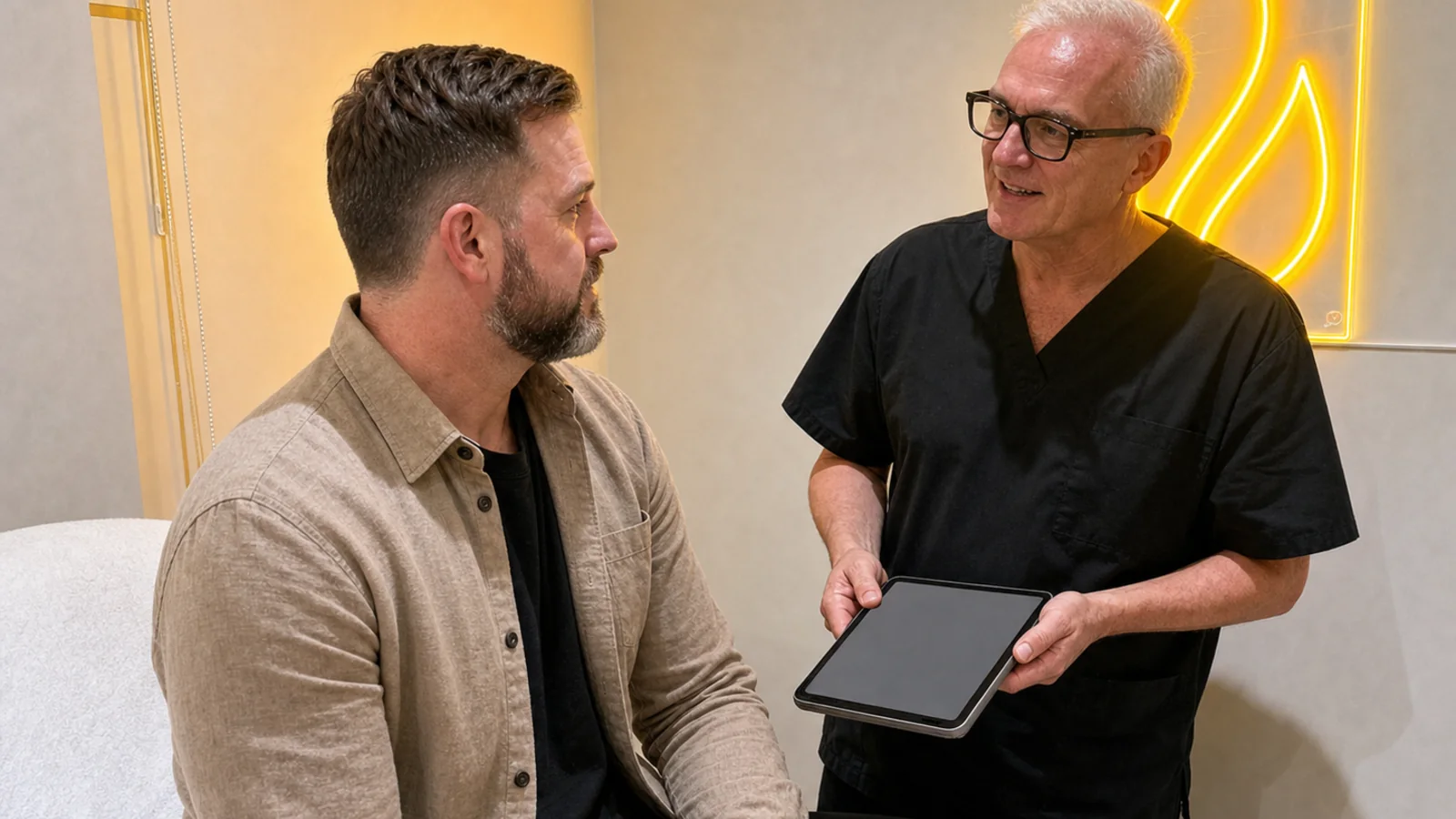
Corey considers the whole pattern
Corey considers where lines appear, how your expression changes them, skin quality, brow and eye-area context, previous care, health history and the change that matters to you. Looking across the pattern helps avoid treating one visible line as an isolated instruction.
The conversation can then become more focused. You may leave with a clearer area to explore, a reason to wait, another care pathway or reassurance that you do not need to decide today. If a clinical option is suitable, its material risks, alternatives, costs and review plan are discussed before consent.
A useful first visit can stay exploratory
You are welcome to bring a mirror observation, a photograph that helps explain the concern, or simply the words you use when you notice it. Images can start a conversation, but they cannot establish suitability or set a result target. Read how expression fits into assessment or what suitability assessment involves if you would like more context first.
When more time or another pathway makes sense
Waiting can be sensible when recent cosmetic care has not settled, the concern is still hard to describe, health information is incomplete or you do not feel ready to decide. Corey may also suggest review, referral or no cosmetic treatment when that better fits the assessment.
Any option discussed has limits and risks that depend on the person and the plan. Consultation is where those details, alternatives, aftercare and follow-up are made specific enough for an informed decision.

Plan a calm visit from Highett
Meet Corey at the private Oakleigh clinic and use the appointment to work out which concern should lead before discussing any suitable next step.
Bring relevant health information, medicines, previous cosmetic care details and the questions you want answered. Allow enough time for an unhurried conversation; booking does not commit you to treatment.
The public guidance behind this page
The TGA guidance for health-service advertising explains the boundary between promoting a practitioner consultation and directly or indirectly promoting therapeutic goods. The Ahpra cosmetic-procedure advertising guidelines set expectations for responsible public communication by registered health practitioners.
These sources shape how the service is described publicly. They do not decide which facial area should lead your consultation or whether any option is suitable for you.
Bring the concern, not a finished plan
Corey can help you understand which area or pattern deserves attention and whether a focused next step, more time or another pathway fits.
Is this for you?
Consider booking a consultation if
- Adults travelling from Highett who notice lines or changes across more than one facial area
- People who are unsure whether the forehead, frown area, outer eyes or skin should lead the conversation
- People who want an individual assessment and questions before deciding on any next step
- People open to focused guidance, waiting, referral, another pathway or no treatment where appropriate
This may not be for you if
- Anyone seeking urgent diagnosis or care for a sudden, painful or medically unusual facial change
- Anyone seeking treatment without individual assessment, risk discussion and informed consent
- Anyone expecting a photograph, mirror view or webpage to confirm suitability
- Anyone who feels pressured or is not ready to make a cosmetic decision
Suitability is confirmed at consultation. This list is general guidance, not a substitute for clinical assessment.
Frequently asked questions
Should I use this page or a narrower wrinkle page?
Use this page when the concern is broad or you are not sure which area matters. Use a narrower page when forehead movement, frown movement or another area is clearly the main issue. Corey can still redirect the discussion during consultation.
Does booking mean treatment will happen?
No. Booking starts assessment only. Corey may discuss treatment planning, recommend waiting, suggest referral, ask for more information or advise that no cosmetic treatment is appropriate after reviewing history, expectations, risks and consent readiness.
Why does Highett have its own page?
The local page helps with travel, privacy, timing and review planning. It does not diagnose a concern or change clinical suitability. The main service page remains the broader query owner, while this page has a narrower local preparation role.
Can treatment happen on the same day?
Some adults may be suitable for same day treatment discussion, but it is not automatic. Corey first needs to assess suitability, explain relevant risks and alternatives, confirm informed consent and decide whether proceeding is clinically appropriate.
Can Corey recommend waiting or no treatment?
Yes. Waiting, referral, review later or no treatment may be recommended when the concern is mild, expectations are unclear, timing is poor, risk outweighs likely benefit, symptoms need another pathway or more information is needed.
What should I bring to the appointment?
Bring current medicines, allergies, relevant medical history, previous cosmetic treatment dates, upcoming events, travel plans and questions you want answered. Bring records from another clinic or clinician if they are relevant and available.
How can I verify the clinic before booking?
Core Aesthetics lists Corey Anderson as a Registered Nurse with Ahpra registration NMW0001047575. Patients can use the Verify Core Aesthetics page, the clinic contact details and the Ahpra public register to check practitioner and clinic information before booking.
Is this page personal medical advice?
No. This page is general information for adults considering consultation. It cannot diagnose a concern, confirm suitability, replace urgent care or recommend treatment. Personal advice requires an individual assessment with a qualified health practitioner.