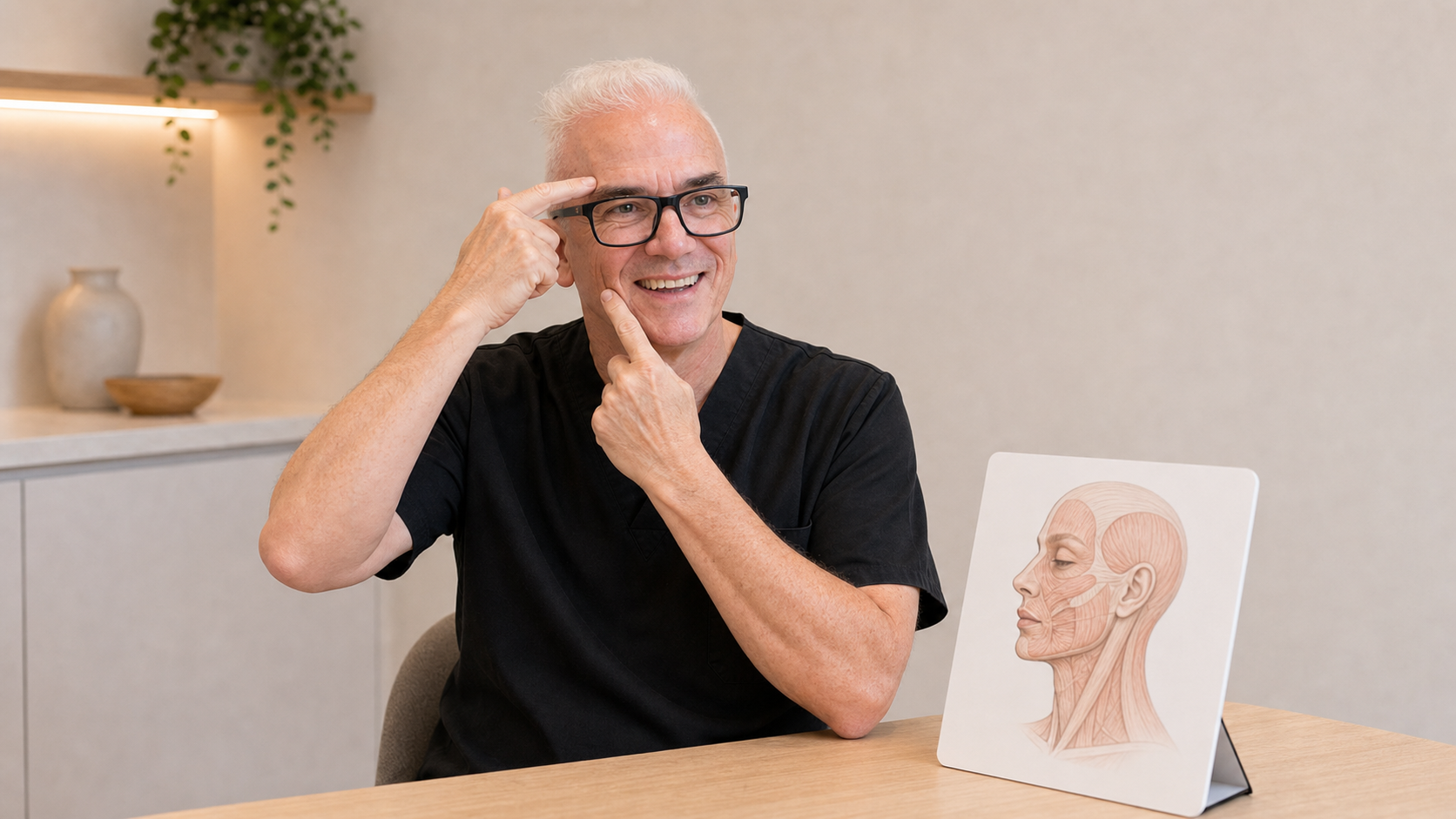
For a forehead line consultation near Ashwood, observe what your brows do during ordinary conversation, reading focus, a neutral pause, a natural blink and a comfortable forward gaze. A brow that remains lifted may be contributing to eye area comfort or expression, while a brow that releases easily presents a different planning question. Corey Anderson RN compares the sequence with resting lines, eyelid context, asymmetry, skin, health and personal priorities. Suitable care can be planned when individual assessment and informed consent support it.
Why Watch The Brow Release Instead Of Only The Line?
A forehead line is one still feature. The way the brow rises and settles can show whether forehead activity is occasional expression or part of how you maintain a comfortable gaze.
Corey allows normal conversation first. He does not push the brow down or ask you to hold an unfamiliar face.
What Does The Five Step Release Sequence Show?
| Moment | What Corey observes | Question it helps answer |
|---|---|---|
| Conversation | Spontaneous brow lift and expression | When does activity appear naturally? |
| Reading focus | Forehead effort during concentration | Does focus recruit the brow? |
| Neutral pause | Whether lift settles without instruction | Can the brow release comfortably? |
| Natural blink | Brow and eyelid coordination | Does activity return with blinking? |
| Forward gaze | Comfort, symmetry and resting position | What feels familiar rather than posed? |
How Is A Comfortable Neutral Position Found?
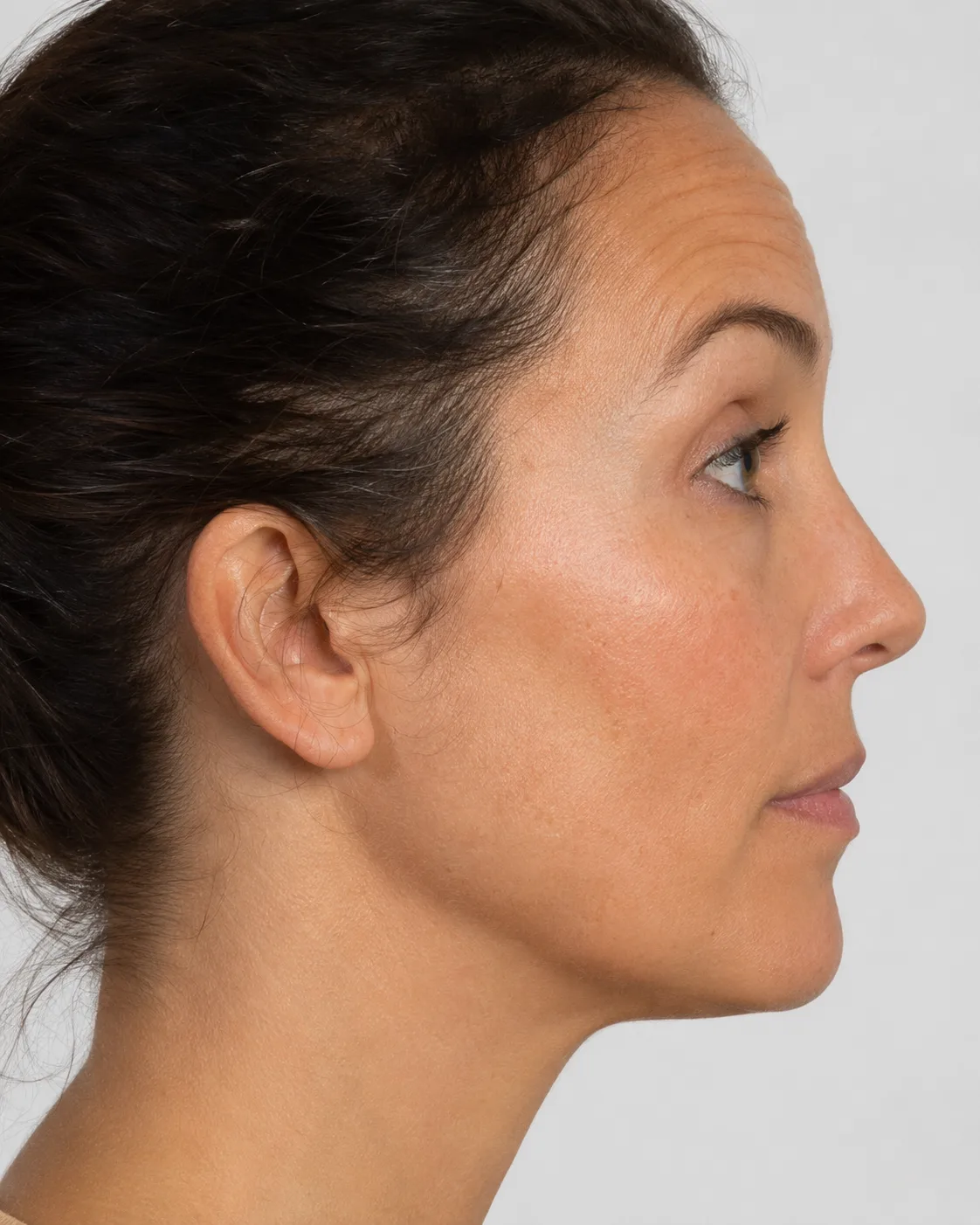
Neutral does not mean pressing the brows downward or staring without blinking. Corey gives the face time to settle after speech, then observes a comfortable gaze while you continue breathing and blinking normally.
If the position feels strained, heavy or unlike you, that response is relevant. The assessment records it rather than treating a lower brow as a target.
Why Do Reading And Screens Belong In The History?
Reading and screen focus can reveal habits that a posed photograph misses. Distance, lighting, glasses, fatigue and concentration may all change how the forehead participates.
This observation does not diagnose an eye or eyelid condition. New visual change, new drooping or unexplained symptoms need assessment through an appropriate health pathway.
How Does The Sequence Shape A Personal Discussion?
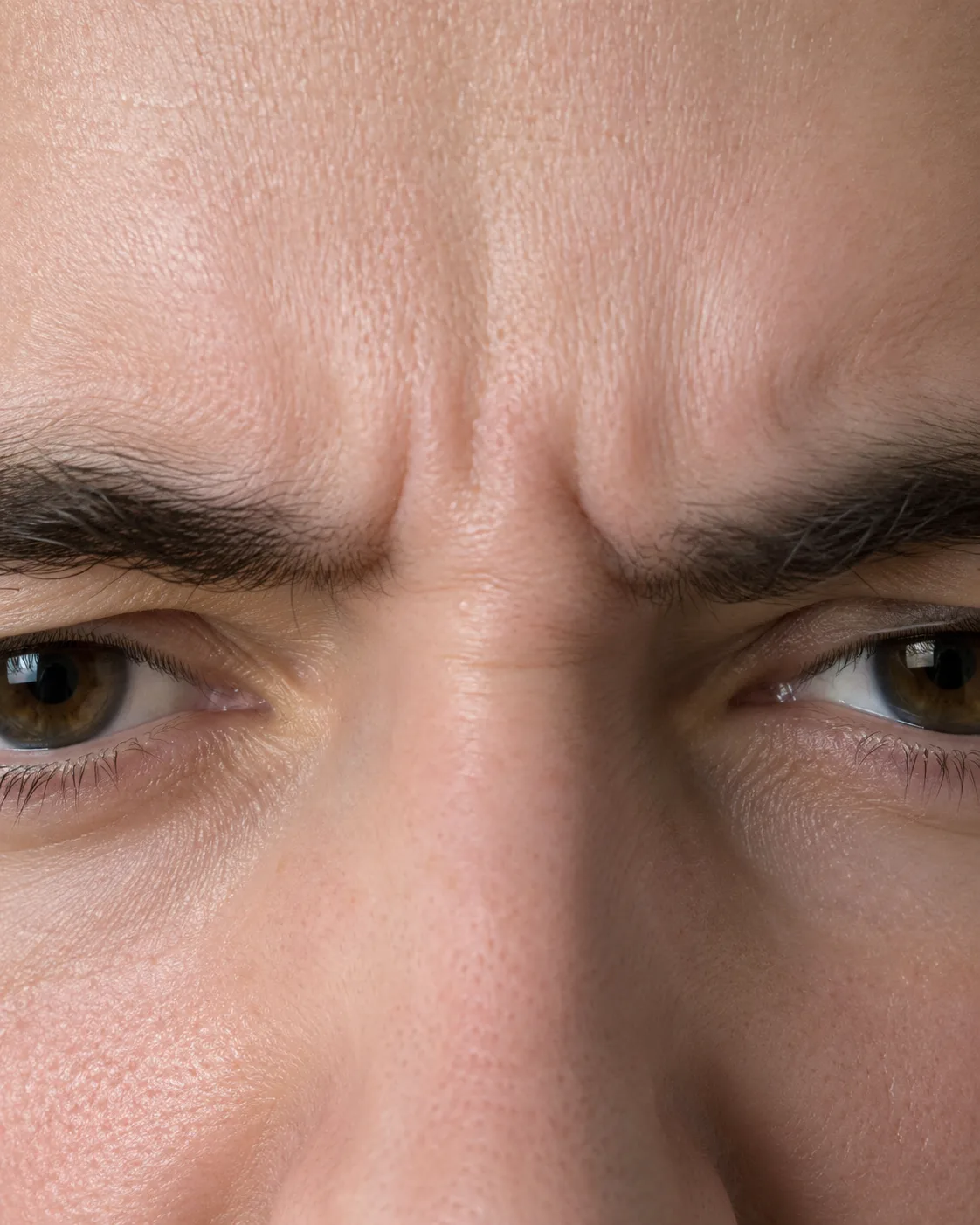
Corey compares the release pattern with lines at rest, skin, brow height, inward frown movement, eyelid context, natural asymmetry and the expression you want to preserve. Health, medicines and previous care are reviewed separately.
He then explains what appears relevant, what remains uncertain, suitable choices, material risks, alternatives, costs, timing, aftercare and follow up.
Which Forehead Question Belongs On This Page?
This page is for a forehead that seems to stay active during talking, reading or screen focus, especially when you wonder whether the brow ever settles comfortably.
Use the broader Ashwood line assessment when the frown or outer eye areas are equally important. The forehead consultation guide explains the wider assessment process.
Which Changes Should Be Assessed Outside Cosmetic Planning?
New or one sided drooping, visual change, weakness, numbness, significant pain, severe headache or another sudden unexplained symptom needs prompt assessment by an appropriate health professional.
For a stable cosmetic concern, more information, adjusted timing, another clinical review or a different pathway can be incorporated when useful.
How Do You Prepare For The Release Review?
Notice one or two ordinary moments when your brows feel active, such as conversation, reading or using a screen. You do not need repeated photographs, a forced neutral pose or a self diagnosis.
Core Aesthetics is at 12A Atherton Road, Oakleigh VIC 3166. Phone 0491 706 705. Corey Anderson is a Registered Nurse with Ahpra registration NMW0001047575.
Bring Your Familiar Expression To The Consultation
Let the brow move, pause and settle naturally
Corey can observe the sequence and explain how forehead activity, resting lines and eye area context fit together.
When clinically appropriate and informed consent is complete, suitable care can be planned. More information, adjusted timing, another clinical review or a different pathway can be incorporated when useful.
Official guidelines for registered health practitioners who perform non-surgical cosmetic procedures support individual assessment and consent. These cosmetic procedure guidelines inform the consultation process. TGA advertising guidance explains why prescription products are not promoted here.
Is this for you?
Consider booking a consultation if
- Adults near Ashwood wanting forehead line and brow position assessment before treatment discussion
- Patients who want a consultation-first explanation of movement lines, resting lines, risk and consent
- People who value a clear explanation of options, timing, follow-up and other clinical input
- Patients who want to verify Corey Anderson RN and the Oakleigh clinic before booking
This may not be for you if
- People asking for a predetermined plan without assessment, consent or risk discussion
- People with urgent medical symptoms, active infection, acute swelling or rapidly changing skin concerns
- People wanting a fixed cosmetic change before brow position and movement are assessed
- People seeking elective cosmetic care for someone who cannot provide informed consent
Suitability is confirmed at consultation. This list is general guidance, not a substitute for clinical assessment.
Frequently asked questions
What is a brow release sequence?
It is a short observation of the brow during conversation, reading focus, a neutral pause, natural blinking and comfortable forward gaze. It shows how activity appears and settles without forcing a pose.
Should I push my brows down to find neutral?
No. Neutral should feel comfortable and familiar. Corey lets expression settle after ordinary conversation and observes natural blinking rather than asking you to press the brows downward.
Why observe reading or screen focus?
Concentration may recruit the forehead differently from conversation or rest. The comparison helps describe your movement pattern, but it does not diagnose vision, eyelid or neurological conditions.
Does an active brow mean suitable care cannot be planned?
No. It means the role of brow lift, eyelid context and comfortable expression deserves careful assessment. Suitable care can be planned when the findings and informed consent support it.
What if my eyelid or vision has changed recently?
New drooping, visual change, weakness, numbness, significant pain, severe headache or another sudden unexplained symptom needs prompt assessment by an appropriate health professional, especially when it is rapid or one sided.
Will my forehead be judged from one photograph?
No. A photograph may record a moment, but Corey also observes spontaneous conversation, requested movement, a comfortable pause, blinking, symmetry and the expression you want to preserve.
Is the clinic located in Ashwood?
No. Core Aesthetics is in Oakleigh. Check the trip from your actual starting point and make sure returning to the clinic for review would be practical.
Can suitable care be planned after assessment?
Yes. Corey explains suitable choices, material risks, alternatives, uncertainty, likely limits, total cost, aftercare and follow up. When clinically appropriate and informed consent is complete, suitable care can be planned.