Treatment

Neck Bands Treatment Melbourne

Neck bands consultations at Core Aesthetics involve individual assessment of the platysmal muscle and overall neck appearance. The neck is a technically complex area that requires careful clinical assessment.

Quick summary

Neck Bands Treatment Melbourne, consultation based treatment at Core Aesthetics, Oakleigh, Melbourne. Individually assessed. Results vary between individuals and depend on factors including anatomy, skin quality, and how each person responds to treatment.

Neck bands consultations at Core Aesthetics involve individual assessment of the platysmal muscle and overall neck appearance. The neck is a technically complex area that requires careful clinical assessment. Corey Anderson, AHPRA registered nurse, assesses each client individually before any recommendation is made.

What Are Platysmal Neck Bands

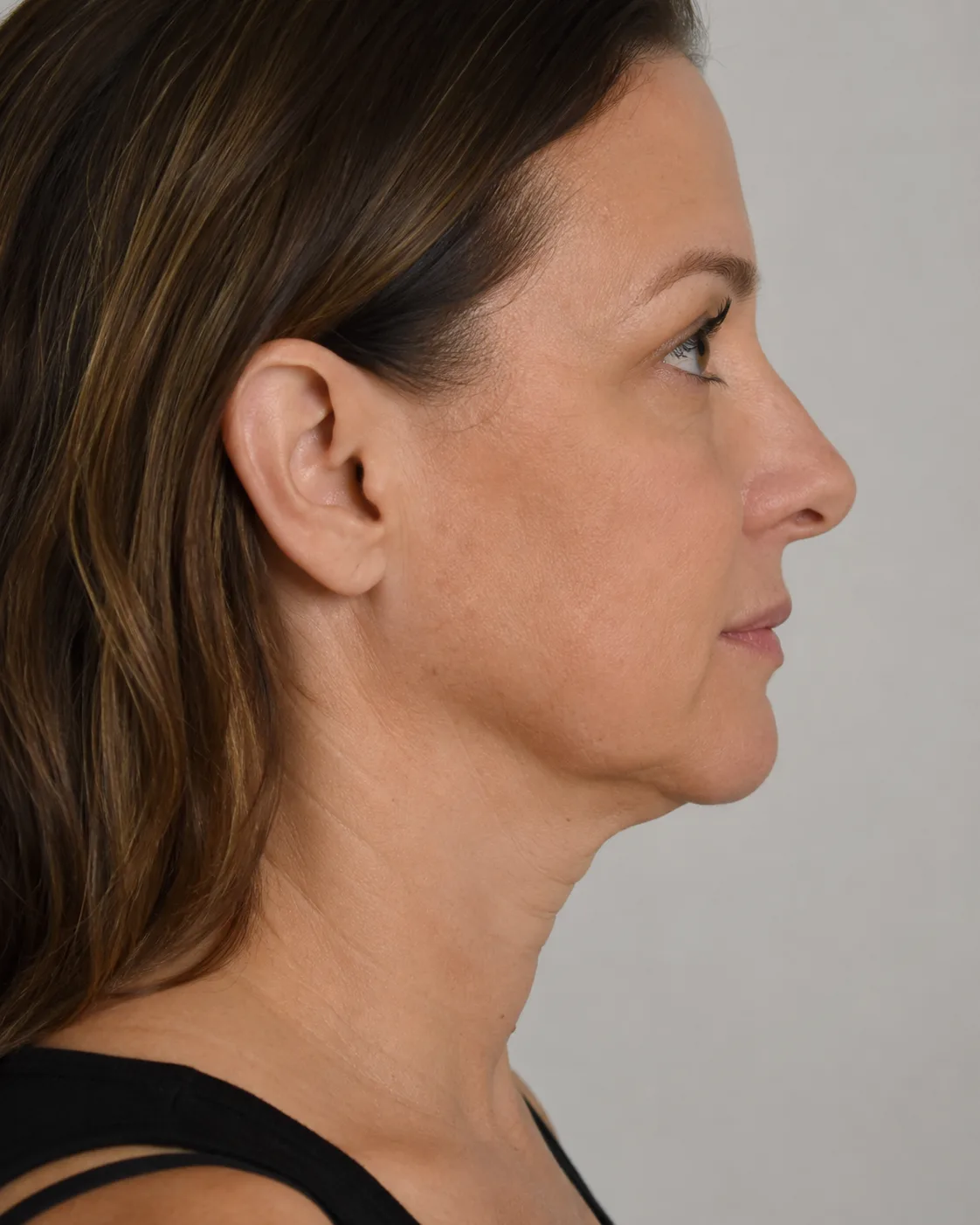
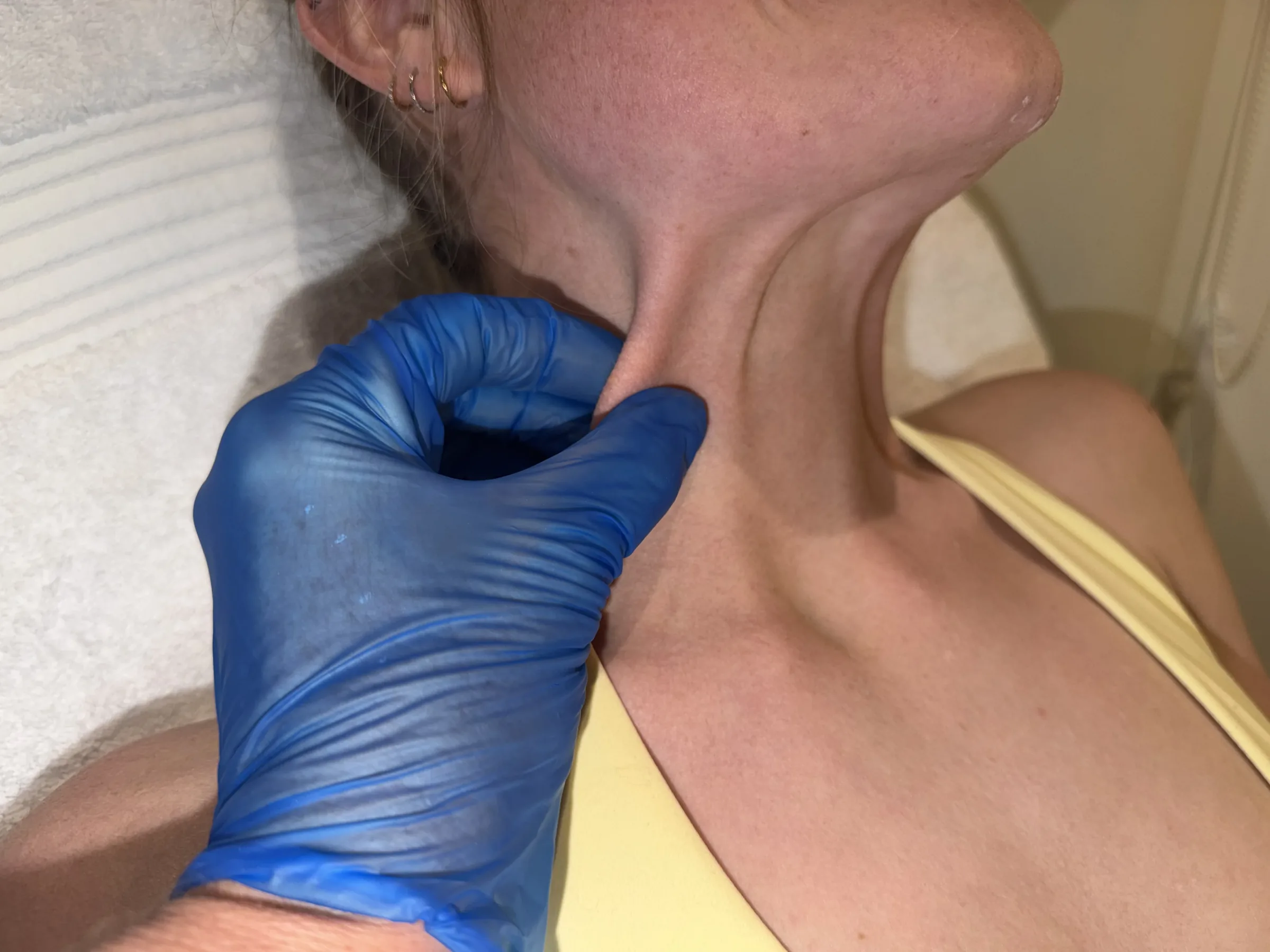
The platysma is a broad, thin muscle covering the front and sides of the neck. With age, the two edges of this muscle can separate and become visible as vertical cords running down the neck. These are platysmal bands. They are most visible during expression, particularly when speaking or smiling, but in some individuals become visible at rest as changes progress.

What This Means in Practice

“Good information changes the quality of the decision.”

Platysmal bands are a normal part of facial ageing and are not a medical concern. For many people, however, they are a visible change that affects confidence, particularly in photographs or professional settings.

Assessment at Core Aesthetics

Neck treatment requires careful consideration of anatomy, muscle tone and the overall appearance of the lower face and neck together. At Core Aesthetics, Corey assesses the neck in the context of the full lower face and jaw. Some clients who are concerned about neck appearance benefit more from treatment in the jaw or lower face area rather than direct neck treatment, and Corey will explain clearly which approach is most appropriate for your individual anatomy.

Key Considerations

Read more in our neck bands consultation guide and our broader overview of facial rejuvenation at Core Aesthetics.

What Are Neck Bands?

Neck bands, or platysmal bands, are the vertical cords that become visible in the neck with age, animation or in clients with prominent platysma muscle definition. The platysma is a broad flat muscle that runs from the jaw down through the neck and chest. As skin loses laxity and the muscle becomes more defined, these bands can create a visible cord like appearance on the front of the neck.

How Injectable Treatment Addresses Neck Bands

Wrinkle injectable treatment can reduce the prominence of platysmal bands in suitable candidates by reducing the contractile force of the platysma muscle. The treatment uses a prescription injectable product placed along the band to temporarily reduce its activity. This softens the visible prominence of the bands without surgical intervention.

Not every client presenting with neck bands is an appropriate candidate for injectable treatment. The assessment determines whether the bands are primarily muscular in origin or related to skin laxity, as injectable treatment addresses the muscular component but cannot address skin related changes.

The Assessment at Core Aesthetics

Neck band treatment at Core Aesthetics begins with a thorough individual assessment by Corey Anderson, AHPRA registered nurse. He assesses the nature and prominence of the bands, the relationship to skin laxity and jaw anatomy, and whether injectable treatment is appropriate and likely to produce a meaningful result for the individual concern.

Neck band treatment is a technically precise area that requires careful dosing and placement. Corey discusses the expected result, the realistic scope of improvement and any relevant risks at consultation before any decision is made.

What to Expect

If treatment proceeds, multiple small injections are placed along the band. There is typically returns to normal activity the same day and the area can be slightly tender and swollen for 24 to 48 hours. The effect develops over ten to fourteen days and typically lasts three to four months, with some variation between individuals.

Read more about wrinkle treatment at Core Aesthetics and about what wrinkle treatments are and how they work.

Book your consultation at Core Aesthetics, Oakleigh.
Open Tuesday to Saturday by appointment.

Book Online

General Information Only. This article is general in nature and does not replace a consultation with a qualified health practitioner. Treatment outcomes, suitability and risks vary by individual. Any medical or prescription treatment options can only be discussed and provided where clinically appropriate following an individual assessment.

Book a consultation at Core Aesthetics, Oakleigh.
Open Tuesday to Saturday by appointment.

Book Online

General Information Only. This article is general in nature and does not replace a consultation with a qualified health practitioner. Treatment outcomes, suitability and risks vary by individual. Any medical or prescription treatment options can only be discussed and provided where clinically appropriate following an individual assessment.

Safety, Suitability and Clinical Assessment

All aesthetic treatment procedures carry risk. The suitability assessment at consultation identifies any contraindications or relative risk factors specific to your circumstances, including medical history, current medications, previous procedures, and anatomical features that may affect the risk profile for a given treatment area. This information is reviewed before any treatment is planned.

For certain conditions and medications, injectable treatments are not appropriate, or require modification of technique or timing. For others, the treating practitioner may recommend that you consult with your primary healthcare provider before proceeding. These are clinical judgements that can only be made with accurate, complete medical history information, which is why the consultation history taking process is thorough.

Complication recognition and initial management are part of the clinical competency required of practitioners performing injectable treatments under AHPRA’s September 2025 guidelines for nonsurgical cosmetic procedures. The practitioner at Core Aesthetics holds current training in this area and maintains the relevant management supplies on site. Understanding that risk exists and is actively managed is more useful than assuming risk does not exist.

Review Appointments and Ongoing Care

A review appointment at four to six weeks is a standard part of every treatment cycle at Core Aesthetics. The review is not contingent on whether you have concerns, it is a clinical standard that applies to every patient. At review, the practitioner assesses the result across all treated areas, compares the outcome to the pretreatment clinical photographs, identifies any asymmetry or variation in response between sides, and determines whether any adjustment is appropriate within the same treatment cycle.

The review is also where longitudinal data about how your specific anatomy responds to treatment is recorded. Over multiple treatment cycles, this accumulated data allows the practitioner to refine the dosing and approach to better match your individual response pattern, which is one of the most significant advantages of maintaining a consistent treating practitioner rather than moving between clinics.

If you have any concerns in the period between your treatment and your review appointment, contact the clinic directly. The practitioner who treated you has the clinical context to respond accurately to any post treatment question, which is preferable to relying on general online information that may not reflect your specific situation.

About This Information

The information on this page is provided for general educational purposes. It is not a substitute for clinical advice and does not constitute a recommendation that you proceed with any particular treatment. Aesthetic treatments are prescription medical procedures. They carry risks that vary between individuals and that must be assessed and discussed in a clinical context before any treatment decision is made.

At Core Aesthetics, Corey Anderson assesses every patient individually. The consultation is the point at which your specific anatomy, medical history, and goals are evaluated together. No treatment is offered at a first appointment, and no treatment is appropriate for everyone. This page is a starting point, a way to understand what is involved before you decide whether a consultation is the right next step for you.

If you have questions about anything on this page or about whether treatment might be appropriate for your situation, you are welcome to call the clinic or book a consultation at no obligation.

This page provides clinical information about Neck Bands Treatment Melbourne. It is intended for adults aged 18 and over who are considering aesthetic treatment and want to understand the clinical process, suitability factors, and what to expect from a consultation based practice. All treatment decisions at Core Aesthetics follow individual assessment, no treatment is offered at a first appointment without a separate consultation. Results vary between individuals and are reviewed at follow up.

The Role of Anatomical Assessment in Treatment Planning

Effective aesthetic treatment begins with understanding individual facial anatomy. The same concern, loss of cheek volume, for example, may have different underlying structural drivers in different people. In one patient it reflects fat pad atrophy; in another it involves bony remodelling; in a third, skin laxity changes the way existing volume appears. These distinctions affect both whether treatment is appropriate and, if so, how it should be approached.

At Core Aesthetics, the consultation begins with a systematic assessment of facial structure, including symmetry analysis, skin quality assessment, treatment history review, and discussion of the patient’s specific goals. This anatomical baseline informs every treatment decision and helps ensure that proposed treatments address the actual underlying driver of a concern rather than a surface level presentation.

This is one of the reasons Core Aesthetics operates as a one practitioner clinic with a consultation based model. A consistent clinical relationship between patient and practitioner supports the kind of longitudinal assessment that is difficult to achieve in high volume, multi practitioner settings.

Why The Neck Is Anatomically Different From The Face And What That Means For Treatment

The neck is structurally distinct from the face in ways that matter for aesthetic treatment practice. The skin is thinner and less elastic than facial skin in most patients, the underlying platysma is a broad sheet muscle rather than the discrete bundles of facial musculature, the soft tissue support is less robust, and the ageing changes that produce visible neck appearance reflect a combination of platysmal banding, skin laxity, submental fullness, and the structural relationship between the cervico mandibular angle and the position of the chin and jawline.

Injectable treatment of the platysma can address the dynamic component of neck band appearance through targeted relaxation of the platysmal bands during contraction. The treatment does not address the static component, which reflects skin laxity and underlying soft tissue changes that respond differently to intervention. Patients whose neck appearance is dominated by static laxity rather than dynamic banding are typically advised that injectable treatment will produce only partial improvement, with the recommendation either to defer treatment or to seek surgical evaluation depending on the severity of the underlying changes.

The technical considerations are meaningful. The platysma is a broad muscle with variable anatomy between patients, and injection points must be selected with attention to the underlying vascular and neurological structures. The treatment is conservative in dose and is staged across appointments rather than executed at maximum intensity at the first session, because the response varies more in this region than in the upper face and the assessment of effect requires the documented review pattern. Adjacent muscles including the sternocleidomastoid and the depressor labii inferioris must be respected; over treatment can produce functional consequences that the patient finds more aesthetically problematic than the original concern.

Treatment is performed by Corey Anderson, Registered Nurse, AHPRA NMW0001047575. The conversation at consultation specifically addresses the limits of what injectable treatment can achieve in this region, because patient expectations sometimes exceed the realistic outcome and the honest framing matters. Patients whose assessment indicates that surgical evaluation would serve them better are advised in that direction, and the clinic does not have referral arrangements that would create a financial interest in any particular surgical destination.

What The Realistic Outcome Looks Like Over A Treatment Cycle

Patients receiving injectable treatment for platysmal neck bands typically describe the response in modest rather than dramatic terms. The dynamic banding during specific neck postures softens; the static appearance of the neck at rest changes less. The visible improvement is meaningful for patients whose primary concern is the dynamic banding component but is partial or limited for patients whose concern is dominated by static skin laxity or other anatomical changes that injectable treatment does not address.

The two week and six week reviews after treatment document the actual response. The conversation at the review typically covers what change the patient has noticed, what change has been objectively visible in standardised photography, and what the next cycle’s planning should consider. Some patients are content with the response and proceed to a maintenance cycle every four to six months. Some patients find that the response was less than they had hoped and that the realistic conversation moves towards whether surgical evaluation or device based treatment would address the components that injectable treatment cannot. The clinic at Core Aesthetics does not perform surgery or device based treatment and refers where indicated.

A Brief Note On Setting Realistic Expectations

Patients considering injectable treatment for platysmal neck bands are typically best served by entering the conversation with modest expectations about what the treatment can achieve. The visible improvement is meaningful for the dynamic component of neck band appearance but is partial for the static component. Patients who arrive expecting a dramatic change are sometimes disappointed even when the treatment has produced a clinically appropriate response. The honest framing at consultation is the single most useful preventive measure against this disappointment, and the recommendation against treatment is sometimes the appropriate clinical response when the expectation gap is too wide to bridge.

A Brief Note On Combining Neck Treatment With Adjacent Face Work

Neck bands treatment is sometimes considered alongside lower face treatment because the appearance of the neck and the lower face are visually connected and changes in one region affect the perceived appearance of the other. The conversation at consultation considers whether combining the regions in a coordinated plan would serve the patient\u2019s overall goal better than treating either in isolation. The plan is sequenced rather than executed in a single session in most cases, with each component assessed independently before the next is added.

A Final Note On Long-Term Patterns

Patients on a continuous neck bands treatment plan typically find that the response pattern stabilises across the first two or three cycles and that the maintenance interval becomes more predictable as the response is documented. The plan adapts to the patient\u2019s evolving anatomy and preferences rather than remaining fixed at the first cycle\u2019s parameters. The conversation at each cycle\u2019s review supports the appropriate refinement, and the documented record of prior cycles informs the assessment in ways that improve the precision of subsequent treatment. The clinic at Core Aesthetics operates on this longitudinal model.

A Final Note On The Multi-Modality Conversation

Patients whose neck appearance is best addressed by a combination of injectable, device based, and possibly surgical interventions benefit from a structured conversation about how the modalities sequence. The injectable component typically comes first because it is reversible and produces a rapid baseline assessment of the dynamic component; device based treatments such as radiofrequency or ultrasound can follow to address the static skin laxity component; surgical evaluation enters the conversation when the structural change has progressed beyond what the nonsurgical modalities can address. The clinic does not perform device based or surgical treatment and refers where indicated, with no referral arrangement that would create a financial interest in any particular destination. The honest conversation about the multi modality plan is conducted at consultation.

Is this for you?

Consider booking a consultation if

  • You are researching aesthetic treatment options and want to understand the consultation and assessment process
  • You are 18 or older and weighing your options
  • You want an individual clinical assessment before any treatment decision
  • You value a consultation based clinic model over same day treatment

This may not be for you if

  • You are pregnant, trying to conceive, or breastfeeding and are considering injectable treatment
  • You have an active infection or unhealed skin in a potential treatment area
  • You are under 18 years of age

Suitability is confirmed at consultation. This list is general guidance, not a substitute for clinical assessment.

Frequently asked questions

Is facial volume treatment reversible?

Yes. All volume treatment used at Core Aesthetics is hyaluronic acid based and can be dissolved using a dissolving agent. Dissolution is not always immediate and may require more than one treatment, but the option is available.

What is the difference between wrinkle treatment and facial volume treatment?

Wrinkle treatment uses prescription medicine to reduce muscle activity and soften the expression lines caused by movement. Facial volume treatment is a different category of prescription product, used to restore volume, structural support and definition. Many clients benefit from both, addressing different aspects of facial change.

How long does facial volume treatment last?

Duration varies significantly by area. Lip treatment typically lasts six to twelve months. Mid face and structural volume treatment generally lasts twelve to eighteen months or longer.

What does the assessment for facial volume treatment at Core Aesthetics involve?

Corey Anderson assesses the whole face rather than the individual areas a client mentions. The assessment covers volume distribution, structural proportions, skin quality and how changes in one area affect surrounding structures. Volume reduction in the mid face, for example, affects how the under eye and lower face appear.

Does facial volume treatment hurt?

Discomfort varies by area. The lips are the most sensitive. Mid face, cheek and structural areas are generally better tolerated.

What is the recovery time after facial volume treatment?

There is no formal recovery period. Swelling and occasional bruising are the most common post treatment effects, peaking at 24 to 48 hours and typically resolving within a week. The final settled result is visible at approximately two weeks.

What does volume treatment feel like under the skin?

In structural areas, volume treatment may be palpable as a slightly firmer texture beneath the skin, particularly in the first few weeks after treatment. This settles as the product integrates with surrounding tissue. In areas where product is placed superficially, firmness is more noticeable.

Is there a risk of migration with facial volume treatment?

Migration, meaning product moving from the intended placement to an adjacent area, is more associated with certain superficial treatment areas and can be caused by excessive volume, repeated pressure or incorrect placement. At Core Aesthetics, conservative dosing and anatomically appropriate placement are how migration risk is minimised.

Should I have wrinkle treatment if I want to prevent lines rather than treat existing ones?

Preventative treatment may be considered when muscle activity is consistently creating early dynamic lines, but whether it is appropriate depends on individual anatomy, age, skin quality and treatment goals. A clinical assessment is required to determine whether treatment makes sense at this point, and what dose and timing would be appropriate for your situation.

Is it safe to have wrinkle treatment while taking blood-thinning medications or supplements?

Certain medications and supplements, including aspirin, ibuprofen, fish oil, vitamin E and some herbal supplements, can increase bruising risk after any injectable treatment. You will be asked about these at your consultation. In most cases, treatment can proceed, though timing and approach may be adjusted. Always disclose your full medication and supplement list before any injectable appointment.

Why does wrinkle treatment sometimes require a two-week review?

The full effect of prescription neuromodulator takes seven to fourteen days to settle. Reviewing at two weeks allows the treating practitioner to assess whether the dose was appropriate, whether any asymmetry needs addressing, and whether the result aligns with the plan discussed at consultation. It is a clinical checkpoint, not a sales appointment.

Clinical references

  1. AHPRA: Guidelines for nonsurgical cosmetic procedures
  2. TGA: Advertising health services and cosmetic injections

Written and reviewed by Corey Anderson RN, AHPRA NMW0001047575 · Reviewed April 2026 · Consultation required · TGA & AHPRA compliant

Begin With A Conversation

Book your consultation.

No commitment, no pressure. A considered first step toward understanding what is and isn’t right for you.

Book Consultation

Elegance, Perfected.