
Under eye filler correction addresses a range of problems: persistent swelling, puffiness, texture irregularities, discolouration, and worsening of the original concern that prompted treatment. Assessment focuses on distinguishing true volume from fluid retention, understanding the depth and location of the filler, and determining whether reduction, dissolution, or a period of monitoring is most appropriate.
Why the Tear Trough is High-Risk
The tear trough area presents unique challenges for both treatment and correction. The skin is extraordinarily thin, as thin as 0.5 millimetres in some patients, and the area is underlain by delicate orbital structures, lymphatic vessels, and the orbicularis oculi muscle. There is minimal subcutaneous fat to provide natural volume and containment for injected material. The area is highly mobile; every blink moves the tissue, and every change in facial expression or head position alters the mechanical dynamics of the under eye skin. The tear trough is also highly visible. Even small asymmetries, irregularities, or discolourations are immediately apparent to the patient and to observers.
The vasculature of the under eye region is extensive. Large blood vessels run through this area, and inadvertent vascular injection can cause tissue necrosis and permanent scarring. The lymphatic system is also highly active here; fluid easily accumulates, and the congestion can persist for months even after the filler itself is resolved. The under eye area is more prone to inflammatory responses than other facial areas, and some patients experience marked swelling, bruising, or inflammatory reactions to filler that would be minimal elsewhere on the face.
Additionally, the under eye area is constantly in a state of mild inflammation and fluid retention due to the lymphatic and vascular dynamics. This means that distinguishing between swelling caused by new filler and the patient’s baseline lymphatic congestion is technically challenging. Some patients experience apparent improvement in the dark circles and hollowness immediately after under eye filler injection, only to discover months later that the swelling has become pronounced and the original problem has actually worsened. This delayed negative response is one of the most common reasons patients seek under eye filler correction.
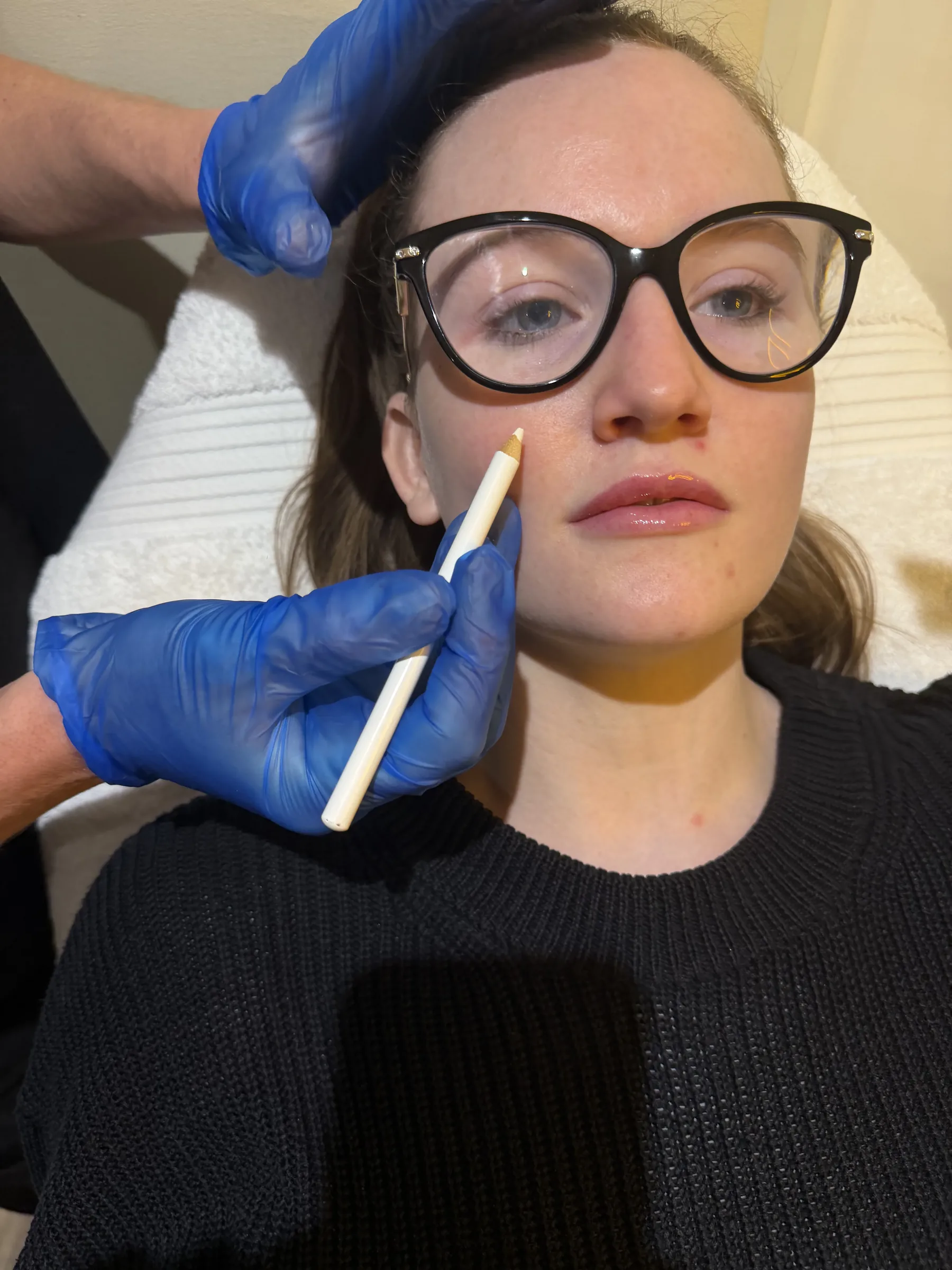
Anatomy of the Tear Trough Region
The tear trough is the groove that runs from the inner corner of the eye downward and outward towards the upper cheek. It is formed by the junction of the orbicularis oculi muscle, the orbital fat pads, and the thin skin that overlies these structures. Just deep to the tear trough lies the periosteum of the maxillary bone. The tear trough is also adjacent to the medial canthus, the inner corner of the eye where the upper and lower lids meet, and this area contains important structures including the lacrimal caruncle and the lacrimal drainage system.
When filler is injected into the tear trough, the depth of placement is critical. If placed too superficially, filler can be visible through the thin skin, creating a bumpy, irregular, or discoloured appearance. This is particularly likely with hyaluronic acid fillers, which can cause a blue-grey discolouration known as the Tyndall effect when located in the superficial dermis. If placed too deeply, filler can track along the planes of the orbital muscle or settle into the space beneath the orbital rim, where it may not provide the volume where it is intended and may instead cause hollowness or asymmetry above the inner lid. Some practitioners inject directly into the periosteal plane, which can be effective but carries a higher risk of reactive swelling.
The tear trough region is also the junction between the mobile eyelid and the relatively stationary upper cheek. Filler placement must account for these different zones of mobility. Filler intended to add volume to the tear trough itself must move with the eyelid. Filler intended to smooth the transition between the tear trough and the cheek must be placed lower and laterally. This anatomical complexity means that tear trough augmentation is one of the most technically sensitive areas for filler injection, and errors in depth, volume, or placement have visible and sometimes persistent consequences.
Common Problems After Under Eye Filler
Persistent swelling is the most frequent complaint after under eye filler treatment. Swelling is expected for the first week or two after injection, but in some patients the swelling persists for months or continues to worsen. The swelling may be due to the filler itself triggering a chronic inflammatory response, or it may be due to the filler exacerbating the patient’s underlying lymphatic congestion. Some patients discover that the filler has created a situation where fluid accumulates more readily, and the under eye area appears puffy even on mornings when other parts of the face appear normal. This kind of persistent oedema can be more bothersome than the original concern that prompted the filler treatment.
Puffiness and “bags” are distinct from swelling. True puffiness results from localised volume of filler that has settled into the tear trough or just below it. The filler adds volume where the patient may not have wanted it, creating a puffy, tired appearance. Some patients who sought to correct dark circles and hollowness find that the filler has improved the hollow appearance but created a puffy appearance in its place, and they are uncertain whether the trade-off is worthwhile. Puffiness can also result from reactive swelling that settles into a chronic mild oedema; the tissue becomes somewhat thickened and loses its natural tautness.
Discolouration is another significant problem. The Tyndall effect causes a blue-grey or blue-brown discolouration that is visible through the thin under eye skin. This occurs when hyaluronic acid filler is placed too superficially. The discolouration can persist for months and is difficult to treat without dissolving the filler. Some patients also report that the discolouration makes their under eye appearance worse than before treatment; instead of a dark shadow from hollowness, they now have a dark shadow from discoloured filler. Dark circles caused by vascular prominence and true pigmentation can also appear worse after under eye filler if the filler has shifted the skin or changed how light reflects off the area.
Texture irregularities are also common. Nodules, bumps, or areas of roughness may develop in the under eye skin, particularly if some of the filler has migrated superficially. These are sometimes visible and sometimes only palpable. They may not be apparent at rest but become visible when the patient is in certain lighting, when laughing, or when the eyes are closed. Some textural irregularities are temporary and resolve as the filler integrates or is partially absorbed. Others persist and become a source of ongoing concern for the patient.
Assessment: Distinguishing Volume from Fluid Retention
The assessment of under eye filler problems begins by understanding what is actually present: Is the problem true volume of filler that has been placed or persisted in the wrong location? Is it fluid retention and reactive swelling triggered or worsened by the filler? Is it a combination of both? This distinction is essential because treatment pathways differ significantly depending on the underlying cause.
True filler volume appears consistent from day to day and with changes in the patient’s activity level, sleep, and hydration. Fluid retention, by contrast, varies. It is typically worse in the morning or after the patient has been lying flat for several hours, and it may improve throughout the day or after activity that stimulates lymphatic drainage. It is worse during hormonal cycles in some patients, and it may fluctuate with diet, salt intake, or systemic hydration. The clinician asks the patient detailed questions about these patterns: Is the puffiness the same every morning, or does it vary? Does it improve during the day? Does it get worse or better with exercise, elevation, or changes in salt intake? Does it correlate with the menstrual cycle?
Visual assessment also helps differentiate the two. Filler volume creates localised bulging or thickness that is visible even when the patient is at rest and upright. Fluid retention creates a soft, compressible swelling that may change with position or activity. Palpation is particularly helpful. The clinician gently presses the under eye tissue to feel whether there is true volume of dense material, or whether the tissue is soft and oedematous. Oedematous tissue blanches under pressure and refills quickly. Filler material is firmer and does not compress easily. Gentle massage applied during the assessment can help determine whether the puffiness improves with lymphatic drainage stimulation, suggesting that fluid retention is a significant component.
Assessing Depth of Placement and Filler Distribution
The depth and location of existing filler within the under eye region directly determines what correction approach is most appropriate. Filler placed very superficially, in the dermis, is more likely to cause discolouration and textural problems. It is more accessible to dissolution if needed. Filler placed in the mid-dermal or supraperiosteal plane may create less visible irregularity but may contribute more to swelling and puffiness. Very deep filler, placed near the bone, may not be visible at all but may cause changes in the contour or texture of the eye area that the patient perceives as “wrong” without being able to identify exactly what the problem is.
Assessment includes careful examination under different lighting conditions and from multiple angles. In bright lighting, directional lighting, and side lighting, does the under eye show irregularities, discolourations, or bumps? In some lighting the problem is dramatic; in others it is not visible. This variation in visibility is relevant to the patient’s experience; they may be very aware of the discolouration in certain situations and barely notice it in others. Photography from multiple angles and in different lighting provides documentation and helps the patient see their under eye area as others might see it.
Palpation along the entire under eye region, from the medial canthus laterally towards the junction of the under eye and cheek, allows the clinician to map where filler is present and whether it has distributed evenly or unevenly. Has filler migrated away from the tear trough where it was intended? Is the distribution symmetrical between the two eyes? Are there areas of firmness suggesting filler, and areas of softness suggesting no filler or fluid retention? This tactile map guides the decision about whether selective dissolution of filler in specific areas would help, or whether the entire under eye filler needs to be removed.
Considering Lymphatic and Tissue Quality Factors
Some patients have a constitutional tendency towards lymphatic congestion and under eye puffiness independent of filler. These patients may have a genetic predisposition to fluid retention, or they may have a history of allergies, sinus issues, or inflammatory conditions that create ongoing under eye swelling. When filler is added to this already-compromised area, it can trigger or exacerbate the lymphatic congestion, and the patient may experience worse puffiness than they would have without treatment. Assessment must establish whether the patient has had any under eye swelling or puffiness before filler treatment, and whether the current problem represents a new development or a worsening of something that was already present.
The tissue quality of the under eye area is also relevant. Has the skin become thin, crepey, or poorly hydrated? Are there fine lines that are more prominent now than before filler treatment? Some patients report that under eye filler treatment actually accelerates the appearance of ageing in the area, creating new fine lines or making existing ones more pronounced. This may be due to the filler disrupting the skin barrier function, or to reactive inflammation, or to the physical effect of filler compressing the delicate skin. If tissue quality has been negatively affected by the filler, this is relevant to the decision about whether to continue with filler treatment, and what alternative approaches might be more suitable.
Darker circles or pigmentation changes are also assessed as part of tissue quality. Have the dark circles improved, worsened, or remained the same? Has the colour of the under eye area changed? Some patients find that their dark circles appear darker or more pronounced after under eye filler, either because the filler has highlighted the contrast between the treated and untreated areas, or because vascular prominence is now more apparent due to the changed contour. If dark circles are worse rather than better, correction may involve removing the filler entirely rather than trying to refine it.
Assessment of Sensory Changes and Functional Impact
The under eye area contains sensory nerves that may be affected by filler treatment. Some patients report numbness, tingling, or altered sensation after under eye filler injection. Ask whether sensation has returned to normal, or whether numbness or unusual sensations persist. Has the patient experienced any changes in tear production or eye comfort? Some report that their eyes feel drier after treatment, or that they are more sensitive to wind or light. Others notice that their eyes water more than before. These functional changes are relevant to the decision about whether to continue or dissolve the filler; they significantly impact quality of life and may outweigh any aesthetic benefits.
Blinking and eye closure are also assessed. Some patients report that their eyes do not close completely, or that they experience discomfort when closing the eyes forcefully, after under eye filler treatment. This is usually temporary, but it is notable because it indicates that the filler may be positioned superficially or laterally in a way that mechanically interferes with normal eye function. If this problem persists, it may be an indication for correction. Some patients also report that their eyes feel “heavy” or “weighted down” after under eye filler, particularly at the end of the day, and this sensation subsides only partially with time.
Treatment Pathway: Observation and Monitoring
Not all under eye filler problems require active intervention. If the assessment suggests that the issue is predominantly reactive swelling or fluid retention rather than true excessive filler volume, a period of monitoring may be the most appropriate approach. The patient is counselled that under eye swelling typically takes four to twelve weeks to resolve fully after injection, and that some degree of puffiness may persist at low levels for several months. During this monitoring period, the patient is advised on strategies to minimise swelling: sleeping with the head elevated, avoiding salt and alcohol, staying well hydrated, and using cold compresses or other lymphatic stimulation techniques.
If the problem is primarily related to the patient’s underlying lymphatic constitution rather than to the filler itself, treatment strategies for lymphatic drainage, such as lymphatic massage or manual therapy, may be more helpful than dissolving the filler. Some patients benefit from treatment of underlying sinus or allergic conditions that are contributing to under eye congestion. The filler may remain in place, and the swelling and puffiness may gradually improve as these other factors are addressed. A monitoring approach is conservative and allows time for both the swelling to resolve and for the patient’s perception to stabilise. In many cases, what appeared to be a problem at two or four weeks has substantially improved by twelve weeks.
Treatment Pathway: Staged Dissolution
When dissolution is indicated, it must be performed with particular care in the under eye region because of the delicate structures and high vascularity. Staged dissolution is essential; removing all the filler at once carries a higher risk of tissue injury and reactive inflammation. The first dissolution session removes a portion of the filler, with particular focus on any filler that is placed superficially and contributing to discolouration or texture irregularities. The under eye is reassessed two to three weeks later, and a second dissolution may be performed if needed.
The patient is counselled that dissolution in the under eye area may cause temporary worsening of swelling; the enzyme breaks down the filler, which triggers an inflammatory response, and the under eye may be more puffy for a few days after dissolution than it was before. This acute swelling resolves within a week. The patient is advised to use ice, elevation, and lymphatic drainage strategies aggressively in the days after dissolution to minimise the reactive swelling. Some patients choose to schedule dissolution treatments strategically, such as before a holiday or a period where they will be resting, to allow adequate time for swelling to resolve.
After dissolution, the under eye tissue needs time to settle and stabilise. Swelling that results from the dissolution procedure itself can mask the true outcome of the dissolution. Most clinicians recommend waiting at least two to three weeks between dissolution treatments to allow acute swelling to resolve, and ideally waiting one to two months before making a final assessment of how the eye area looks post-correction. During this waiting period, the patient may feel that the under eye area looks worse than it did before dissolution; this is often temporary and results from the residual swelling and the tissue’s adjustment to the removal of filler.
Treatment Pathway: Full Reset and Reassessment
In some cases, the most appropriate approach to under eye filler correction is a complete reset: dissolution of all or most of the existing filler, and a waiting period of several months before any consideration of re-treatment. This pathway is chosen when the problem is significant enough that partial correction is unlikely to be satisfactory, or when there is concern about tissue integrity or chronic complications that would likely recur if new filler is added.
The reset approach has particular value in the under eye region because it allows the tissue to fully recover and settle without any filler present. The patient can experience their natural under eye appearance, which may have changed due to ageing or due to the effects of the previous filler treatment. The original concern that prompted the initial filler treatment, such as hollow dark circles, may prove less bothersome than the complications caused by the filler. In some cases, patients discover that they prefer their natural under eye appearance to any augmented appearance, even with well-placed filler, and they choose not to pursue re-treatment. This is a valid and respected choice.
The reset timeline also allows the clinician and patient to evaluate whether there are alternative treatments that might be more suitable than filler for that particular patient’s under eye concerns. Some patients are better served by non-injectable treatments such as targeted skin care, topical depigmenting agents, or non-invasive aesthetic treatments that address dark circles through skin quality improvement rather than through volume augmentation. The waiting period provides time to explore these alternatives.
What Happens After Under Eye Filler is Dissolved
Post-dissolution, the under eye area undergoes significant changes over weeks and months. The acute swelling caused by the dissolution procedure itself resolves within one to two weeks. The tissue may appear and feel different; some patients describe it as thinner or more fragile than before treatment. This perceived fragility is usually temporary and reflects the tissue’s reaction to the dissolution process rather than true damage. Fine lines may become more visible immediately after dissolution as the volume that was plumping the skin is removed. This is expected and typically improves as the skin hydrates and stabilises.
The colour of the under eye area may change. If discolouration (Tyndall effect) was present, it resolves as the discoloured filler is broken down. Dark circles that were masked by the filler may become more apparent. Some patients find that their dark circles look worse after dissolution than they did before any treatment, and this can be emotionally disappointing. However, it is also an opportunity to assess whether the dark circles are primarily due to hollowness (which filler can address) or primarily due to vascular prominence and pigmentation (which filler does not help and may worsen).
Lymphatic swelling may persist for several months after dissolution. The area has been disrupted by filler injection and then by dissolution; the lymphatic system is reactive, and swelling may continue to fluctuate for some time. Continued lymphatic drainage strategies, including elevation, cold application, and manual lymphatic massage, support recovery. Some patients report that their under eye area does not fully return to its pre-filler state; there may be persistent mild puffiness or slight skin laxity. These persistent changes reflect the tissue’s reaction to the filler experience and are typically minor compared to the problems that prompted correction.
When Not to Refill the Under Eye Area
A critical consideration in under eye filler correction is recognising situations where re-treatment is not appropriate and where the patient would be better served by accepting their natural under eye appearance or pursuing non-injectable alternatives. If the patient’s original problem was chronic lymphatic congestion and swelling that predated the filler treatment, adding new filler is likely to exacerbate the problem again. If the patient has a history of inflammatory responses to filler or other injectable treatments, the under eye area is not an appropriate place to repeat treatment. If the patient’s concern is primarily about dark circles due to vascular prominence or pigmentation rather than hollowness, filler will not address the core problem and may create new complications.
Some patients discover, after the correction process, that they prefer their natural under eye appearance without any filler, even if it includes mild hollowness or dark circles. This preference is valid and should be respected. Not every aesthetic concern requires treatment, and the under eye area in particular carries high risk of complications relative to the benefit provided by augmentation. A patient who has experienced under eye filler complications and chosen to have them dissolved should be counselled that re-treatment carries a risk of similar complications recurring. If they choose to proceed, they do so with full understanding of this risk.
For patients whose under eye concerns are primarily about skin quality, texture, fine lines, or dark circles related to pigmentation rather than volume loss, non-injectable treatments may be more appropriate. Topical treatments addressing pigmentation, sun protection to prevent worsening of discolouration, retinoid use to improve skin quality and fine lines, and professional skin treatments such as light-based therapies or chemical peels may provide benefit without the risk of volume-related complications. A comprehensive consultation explores these alternative approaches before any decision is made to re-treat the under eye area with filler.
The No-Filler Strategy for Some Patients
Some patients decide, after under eye filler correction, that they do not want to pursue re-treatment. This decision is often based on the realisation that under eye filler, despite aiming to improve the appearance, created more problems than it solved. These patients may choose instead to focus on non-injectable approaches to addressing their under eye concerns. This is a legitimate and often excellent choice for under eye aesthetics.
The no-filler strategy for under eye areas involves accepting the natural changes that come with ageing, and focusing instead on skin quality, sun protection, and treatment of pigmentation or vascular concerns through non-invasive means. Many patients find that this approach addresses their concerns more effectively and safely than filler ever did. Some patients in this category benefit from consistent use of topical products addressing pigmentation or skin quality, from professional aesthetic treatments such as laser or light-based therapy targeting discolouration or fine lines, or from comprehensive dermatological care addressing any underlying skin conditions. The under eye area is complex and delicate, and sometimes the best aesthetic approach is conservative management focused on maintaining skin health rather than adding volume.
Psychological Considerations and Emotional Impact
Under eye filler correction often carries significant emotional weight. Many patients sought filler treatment with the hope of looking rested, refreshed, and more youthful. The discovery that the filler has created complications, or that it has not achieved the hoped-for result, can feel like a failure or a setback. Some patients experience regret about the decision to have filler treatment. Others feel anxious about proceeding with correction, worrying that dissolution will make their under eye appearance worse, or that they will regret losing the volume that the filler provided.
These emotional responses are valid and warrant empathetic acknowledgement. The clinician’s role includes helping the patient process their feelings about both the original filler treatment and the correction process. Some patients benefit from taking time to consider their options before committing to a particular correction pathway. Others need reassurance that correction, even if it results in a temporary worsening of appearance, is often the right choice because it addresses the underlying problem of filler-related complications. Setting realistic expectations about what post-correction appearance will look like, and acknowledging that the aesthetic outcome may not be identical to the pre-filler state, helps the patient prepare emotionally for the correction journey.
Realistic Outcome Expectations
The realistic outcome of under eye filler correction is resolution of the specific complications that prompted correction. If the problem was persistent swelling, the outcome is a return to a more normal state of under eye puffiness, though some baseline puffiness may persist if the patient has a constitutional tendency. If the problem was discolouration, the outcome is resolution of that discolouration and a return to the patient’s natural under eye colour. If the problem was texture irregularities, the outcome is smoothing of those irregularities and a return to normal skin texture.
Patients should not expect their under eye area to look exactly as it did before any filler treatment. The tissue has been altered by the treatment and by the correction process. Some patients note subtle changes in the appearance of the under eye area, such as slightly different contours or slightly different reflectance of light, even after complete dissolution. These subtle changes are typically minor and often not noticed by others. The primary outcome goal is resolution of complications and a return to functional, comfortable tissue that is not causing ongoing distress.
If re-treatment is chosen after a full reset period, the outcome expectation is improvement in the specific under eye concern, such as reduction of hollowness or dark circles, achieved with conservative volumes and precise placement in a plane that minimises complications. Realistic expectation is that under eye filler is a subtle enhancement rather than a dramatic transformation. If the patient’s goal is dramatic visible augmentation of the under eye area, they should be counselled that this carries higher risk of complications and may not be achievable safely in that region. The focus is on quality of result and sustainability rather than on volume or drama.
Frequently asked questions
Is under eye filler dissolution safe?
Yes, when performed carefully by an experienced practitioner. The under eye region is delicate, but dissolution is a recognised and appropriate correction strategy when complications arise. Staged dissolution is preferred.
Will my swelling go away after under eye filler is dissolved?
Acute swelling from the dissolution procedure resolves within a week or two. Reactive swelling may persist for several weeks. Some patients have baseline under eye puffiness independent of filler, which remains. Lymphatic strategies support recovery.
Can I have under eye filler treatment again after correction?
Yes, but only after a full reset period of several months, careful reassessment, and full acknowledgement that complications may recur. Not all patients should pursue re-treatment; some are better served by accepting their natural under eye appearance.
What if I have dark circles that got worse after under eye filler?
Dark circles due to vascular prominence or pigmentation are not reliably improved by filler and may appear worse with volume changes. Alternative treatments targeting skin quality, pigmentation, or vascular concerns may be more appropriate.
How long does under eye swelling last after correction?
Acute swelling from the correction procedure resolves within one to two weeks. Residual mild puffiness may persist longer. Full stabilisation of the under eye area typically takes four to twelve weeks.
Should I choose under eye filler correction or just wait to see if it improves?
This depends on the specific problem and its severity. Minor swelling often improves with time and conservative management. Significant discolouration, persistent puffiness, or texture problems benefit from active correction. Assessment in consultation will guide this decision.