Hyperhidrosis

Hyperhidrosis Consultation: What to Expect

A practical guide to attending a focal hyperhidrosis consultation at Core Aesthetics. What to bring, what the assessment covers, what outcomes are normal, and what happens between consultation and any treatment.

Quick summary

A practical guide to attending a focal hyperhidrosis consultation at Core Aesthetics. What to bring, what the assessment covers, what outcomes are normal, and what happens between consultation and any treatment.

Why hyperhidrosis consultation is its own appointment

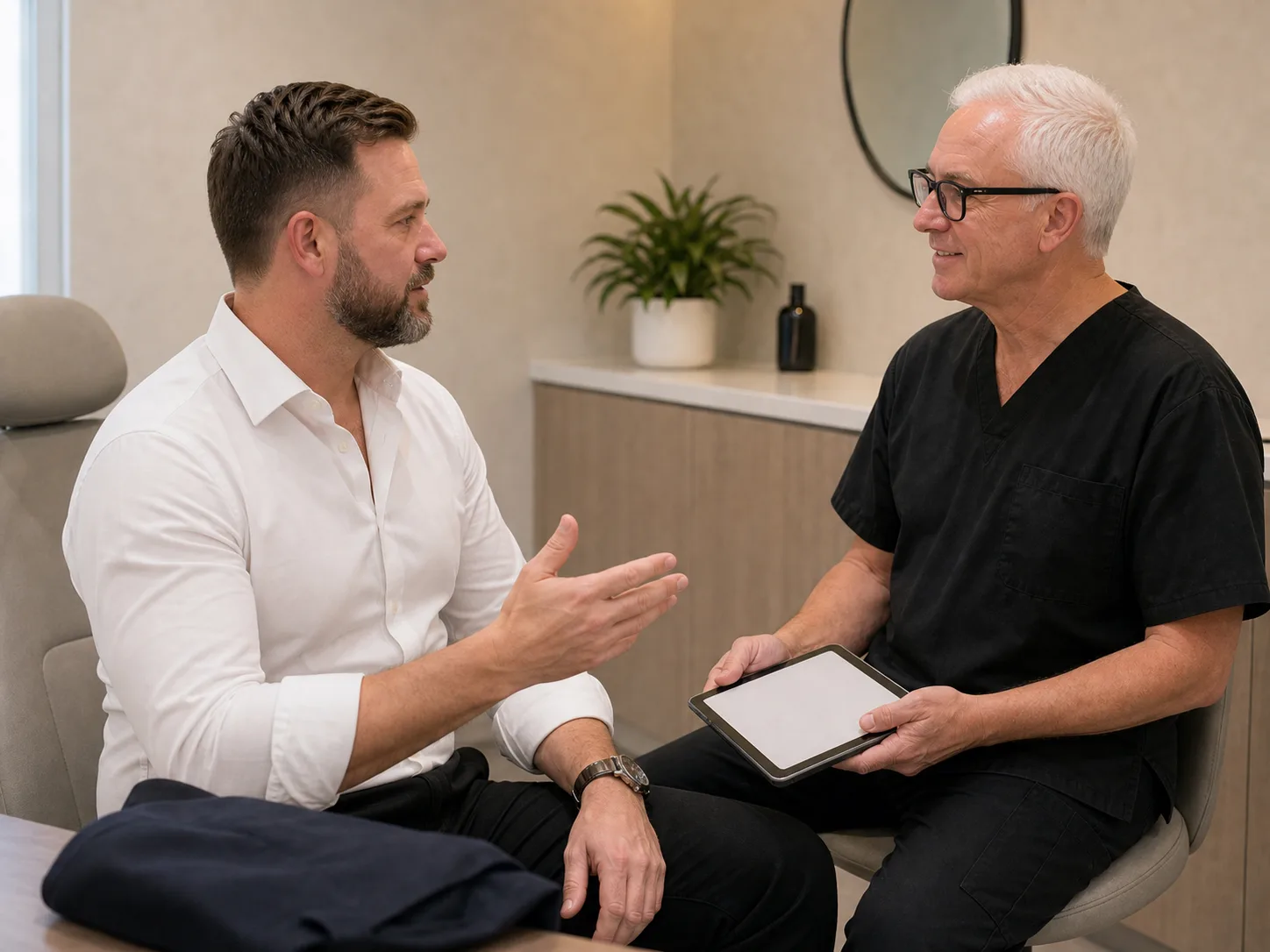
Hyperhidrosis consultation at Core Aesthetics is a separate appointment from any treatment, scheduled on a different day. This is required by the September 2025 AHPRA cosmetic procedures guidelines for new patients receiving focal hyperhidrosis treatment, and it reflects how the clinic structures every cosmetic injectable consultation.

The separation matters clinically. Hyperhidrosis treatment involves a substantive severity assessment, a discussion of what noninvasive options the patient has tried, a clinical examination of the affected areas, a medical history review, and a written treatment plan if treatment is recommended. Doing this conversation properly takes 30-45 minutes and produces a documented recommendation that the patient can consider before booking treatment. Combining the consultation with same day treatment compresses the conversation in ways that are not in the patient’s clinical interest.

What to bring to the consultation

A list of clinical strength antiperspirants the patient has tried, ideally with notes on how they were used (night application or daytime, duration of trial, response observed). This information substantially shapes the consultation discussion about whether escalation to focal injectable treatment is the appropriate next step.

A list of current prescription medications and over the counter supplements. The medication review at consultation surfaces any interactions or considerations that affect treatment planning. Anticoagulants, certain heart medications, and some prescription sweating medications are particularly relevant to mention.

A note on the specific anatomical areas affected and how sweating affects daily activities. Patients who arrive with notes about specific situations where sweating is most disruptive (work meetings, social situations, exercise, intimate situations) tend to have more focused consultations than patients who describe sweating in general terms.

Any prior medical investigations related to sweating, including blood tests, GP assessments, or previous referrals to dermatology or endocrinology. If the patient has not had any prior medical investigation and the consultation surfaces concerns about secondary causes, referral back to the GP for investigation may be recommended before any cosmetic injectable treatment.

What the consultation covers

The consultation typically takes 30 to 45 minutes and covers six main areas of discussion.

First, the severity assessment using the Hyperhidrosis Disease Severity Scale (HDSS) and a clinical examination of the affected areas. This produces a documented severity grade that informs the treatment recommendation.

Second, a review of what noninvasive management the patient has tried. Patients who have used clinical strength topical antiperspirants correctly may be ready for escalation discussion; patients who have not yet had an adequate topical trial may be advised to do so first.

Third, a medical history review including current medications, any medical conditions that may contribute to or interact with the planned treatment, and any prior cosmetic injectable treatment.

Fourth, a discussion of the treatment options available if treatment is appropriate, including which areas to treat, what to expect from the procedure, what the recovery looks like, and what the typical maintenance rhythm involves.

Fifth, a discussion of risks, realistic outcomes, and what the patient should know about the temporary nature of the treatment effect. The clinic does not present treatment as a permanent cure or claim specific individual outcomes.

Sixth, the written record of recommendations, which the patient takes away to consider. The patient is not committed to any treatment at the end of the consultation.

What outcomes are normal

Several different consultation outcomes are normal and clinically appropriate. Patients should understand what to expect rather than assume there is one correct outcome.

Treatment recommended and scheduled: For patients with HDSS grade 3-4 sweating who have tried adequate noninvasive options without sufficient response, focal injectable treatment is typically recommended. Treatment is scheduled for a separate appointment.

Topical management recommended first: For patients with HDSS grade 1-2 sweating, or for patients at higher grades who have not tried clinical strength antiperspirants correctly, the recommendation is typically to complete an adequate topical trial before reassessing. Patients leave with specific guidance on which products to try and how to use them.

Referral to GP for investigation: For patients with sudden onset, asymmetric, or generalised sweating, or for patients with accompanying systemic symptoms, the recommendation is typically referral to the GP for investigation of possible secondary causes before any cosmetic injectable treatment is considered.

Treatment deferred for clinical reasons: For patients with active skin pathology in the treatment area, current pregnancy or breastfeeding, certain medications that warrant deferral, or other clinical considerations, treatment may be deferred until the relevant factor resolves.

Treatment not recommended: For patients whose clinical picture does not support focal injectable treatment (severity below threshold, expectation gaps that the consultation cannot bridge, contraindications present), the recommendation is typically not to proceed with treatment. This is a normal outcome and the patient receives clear written guidance on alternatives.

What happens between consultation and treatment

For patients where treatment is recommended, the period between consultation and the scheduled treatment appointment is intentionally a reflection period. The consultation produces a written recommendation; the patient takes that recommendation away and decides whether to proceed.

Some patients book treatment within a few days of the consultation. Others take a week or two to consider. Some return for a second consultation before booking treatment. All three patterns are reasonable. The clinic does not pressure patients to book within a specific timeframe.

The minimum gap between consultation and treatment for new patients is overnight, per the September 2025 AHPRA cosmetic procedures guidelines. The clinic typically schedules treatment at least a few days out from the consultation to give the patient time to consider, unless the patient is on a tight timeline (an upcoming event, work travel) and specifically requests earlier scheduling.

Patients who decide not to proceed are not pursued by the clinic for follow up. The clinic does not call, text, or email patients to encourage booking after the consultation. Patients who decide not to proceed and then later change their mind can return for a second consultation; the clinical record from the first consultation informs the second.

What the treatment appointment involves (for context)

For patients planning to proceed to treatment after consultation, the treatment appointment itself is briefer than the consultation. The treatment appointment includes a brief check in, the procedural treatment, and a brief post treatment review of recovery instructions. Total appointment time is typically 30-45 minutes for axillary, 45-60 minutes for palmar, 45-60 minutes for plantar.

For palmar or plantar treatment, patients should arrive 30-45 minutes early if topical local anaesthetic is being used, since the anaesthetic needs application time before the procedure begins. The consultation will have explained this in advance so the patient can plan their day accordingly.

The 2-week review appointment after treatment is also typically brief: assessment of how the treatment has settled, documentation of the response in the clinical record, and discussion of what the patient observed during the onset period. This appointment is part of the standard treatment package, not a separately charged appointment.

How the consultation operates at Core Aesthetics

Hyperhidrosis consultations at Core Aesthetics are conducted by Corey Anderson, AHPRA registered nurse (NMW0001047575). The clinic operates as a one practitioner consultation based model, which means the same practitioner who conducts the consultation also performs the treatment if treatment is scheduled, and follows the patient through subsequent maintenance cycles. The continuity supports better clinical decision making across the long horizon treatment relationship.

The consultation is a paid clinical appointment. The fee covers the practitioner’s time, the assessment, and the written recommendations regardless of whether treatment is ultimately performed. The clinic does not waive the consultation fee in exchange for treatment booking or apply it as a credit towards subsequent treatment cost.

How to prepare so the consultation is most useful

Patients who arrive at consultation having reflected on their hyperhidrosis history and current management tend to have substantially more productive conversations than patients who arrive without preparation. The following preparation guidance is practical and worth doing in the days before the appointment.

Document your sweating pattern in specific terms. Which areas are affected: underarms, hands, feet, or multiple? When is sweating worst: morning, afternoon, evening, in specific situations? What temperature, stress level, or activity triggers worsening? How does sweating affect your daily activities: clothing choice, social situations, work performance, intimate relationships? Specific descriptions are far more useful at consultation than general statements.

List what you have tried for management. Standard antiperspirants used? Clinical strength antiperspirants tried? If yes, which brands, applied how, used for how long, with what response? Any prescription medications tried (some patients have been prescribed glycopyrrolate or oxybutynin by their GP)? Any prior cosmetic injectable treatment? The history shapes the consultation conversation about whether escalation is the appropriate next step.

Bring your current medication list. Include prescription medications, over the counter supplements, and any recent changes. Anticoagulants, certain heart medications, prescription sweating medications, and immunosuppressants are particularly relevant to mention. Patients on prescription medications should not stop them for cosmetic injectable treatment without first consulting the prescribing doctor.

Note any prior medical investigation related to sweating. Blood tests done by your GP, prior dermatology consultations, prior endocrinology referrals, prior trials of oral medications. Patients with no prior medical investigation who present with sudden onset, asymmetric, or systemically associated sweating may be referred back to their GP for investigation before any cosmetic injectable treatment.

Reflect on what you would do if the recommendation were not to proceed with treatment. Patients who would feel relieved by a deferral recommendation may already have their answer about whether they really want treatment. Patients who would feel disappointed but accepting are typically well placed for a measured conversation. Patients who would feel angry or pressured to find a clinic that would treat them anyway may benefit from waiting longer before booking.

The consultation is structured to reach the appropriate clinical recommendation rather than to confirm whatever the patient came in expecting. Patients who arrive open to all three possible outcomes (treatment recommended, alternative recommended, deferral recommended) typically have the best consultation experience. The severity assessment page covers what the formal clinical assessment involves at the appointment.

Clinical accountability for the consultation framework

The consultation framework on this page describes how Core Aesthetics structures focal hyperhidrosis consultations in clinical practice. Corey Anderson, AHPRA registered nurse (NMW0001047575), reviews this content. Results vary between individuals, and the typical consultation experience described here is the centre of the distribution rather than what every patient will encounter.

Patients reading this page can verify Corey Anderson’s AHPRA registration on the AHPRA public register at ahpra.gov.au using registration number NMW0001047575. The Core Aesthetics clinic operates from 12A Atherton Road, Oakleigh VIC 3166, Tuesday to Saturday, by consultation appointment. The severity assessment page describes the clinical scale used during the consultation, and the hyperhidrosis treatment melbourne page covers the broader treatment context including the treatment itself.

Patients planning to engage with focal hyperhidrosis treatment should understand that the clinical relationship at Core Aesthetics is structured around long horizon care rather than around individual transactions. The first treatment cycle is informational as well as therapeutic; the second and subsequent cycles refine the approach based on what the first cycle revealed about the patient’s individual response. Patients who appreciate this iterative model tend to have the strongest long term experience. The clinic does not pressure patients to commit to specific treatment intervals before they have lived through their first cycle, and patients are welcome to take pause periods between cycles to reassess whether the maintenance commitment continues to fit their priorities. The team page covers the practitioner background that supports this clinical relationship across years of treatment.

Is this for you?

Consider booking a consultation if

  • Patients considering focal hyperhidrosis treatment who want to understand the consultation process before booking
  • Patients with hyperhidrosis affecting underarms, hands, or feet who want a structured clinical assessment
  • Patients comfortable with the consultation based model where treatment is scheduled separately
  • Patients who appreciate having time to consider written recommendations before booking treatment

This may not be for you if

  • Patients seeking same day hyperhidrosis treatment without a consultation appointment
  • Patients seeking reduced or waived consultation fees in exchange for treatment booking
  • Patients seeking specific outcome assurances about sweating reduction (the consultation cannot claim individual outcomes)
  • Patients under 18 years of age
  • Patients with sudden onset, asymmetric, or generalised sweating that warrants medical investigation first

Suitability is confirmed at consultation. This list is general guidance, not a substitute for clinical assessment.

Frequently asked questions

How do I book a hyperhidrosis consultation at Core Aesthetics?

Consultations are booked online through the booking system or by calling 0491 706 705. The booking system shows hyperhidrosis consultation as a specific appointment type to ensure adequate time is allocated. New patients book the consultation only; treatment is scheduled separately after the consultation if recommended.

How long is the consultation appointment?

Hyperhidrosis consultations are typically 30 to 45 minutes. Patients with longer histories of hyperhidrosis treatment elsewhere or with more complex medical histories may need slightly longer; the booking can be extended at the time of scheduling if the patient indicates this in advance.

What does the consultation cost?

The consultation is a paid clinical appointment. Specific consultation pricing is discussed at booking. The fee is for the practitioner’s clinical time and produces a written recommendation regardless of whether treatment is performed. The fee is not waived if treatment is booked, and is not credited towards subsequent treatment cost.

Can I bring someone with me to the consultation?

Yes, you are welcome to bring a partner, friend, or family member to the consultation. Hyperhidrosis can have substantial daily life impact and some patients find a second perspective helpful in the discussion. The consultation is a private clinical conversation, so the support person should be someone you are comfortable having present.

What if I am not sure I want treatment?

This is a common reason to book a consultation. Many hyperhidrosis consultations end with the patient deciding to defer treatment or to try further noninvasive management first. The consultation is appropriate for patients who want a structured discussion of their options regardless of whether they ultimately decide to proceed with treatment.

Will I be pressured to book treatment at the consultation?

No. The September 2025 AHPRA cosmetic procedures guidelines require that any focal hyperhidrosis treatment for new patients is scheduled separately on a different day, so there is no opportunity to be pressured into same day treatment. The clinic does not contact patients after the consultation to encourage booking. Patients return when they are ready or do not return if they decide not to proceed.

How soon after the consultation can I have treatment?

The minimum gap is overnight per AHPRA guidelines. The clinic typically schedules treatment a few days to a week out from the consultation to give the patient reflection time, unless the patient is on a specific tight timeline and requests earlier scheduling. Patients on standard timelines often book treatment 1-3 weeks after consultation.

What if the consultation surfaces something that needs my GP’s input?

For patients where the assessment suggests possible secondary causes of sweating, or where current medications or medical conditions warrant coordination with the prescribing doctor, the recommendation is typically to consult the GP before any cosmetic injectable treatment is performed. The clinic provides written context the patient can take to their GP, and treatment is deferred until the GP has had a chance to provide input.

Clinical references

  1. AHPRA: Guidelines for registered health practitioners in cosmetic procedures (September 2025)

Written and reviewed by Corey Anderson RN, AHPRA NMW0001047575 · Reviewed April 2026 · TGA & AHPRA compliant

Ready When You Are

Start with a conversation.

No commitment required. Book a consultation or send a message, Corey will respond personally.

Book a Consultation

Corey Anderson RN AHPRA NMW0001047575 Registered since 1996 Oakleigh, Melbourne