Palmar hyperhidrosis affects the palms; plantar hyperhidrosis affects the soles. Both can disrupt daily life, but the practical problems and skin risks differ. Useful first steps include recording the pattern, protecting wet skin, discussing suitable nonprescription measures with a pharmacist and seeing a GP when symptoms are new, widespread, occur during sleep or need diagnosis. Other management pathways require individual clinical assessment.
Hands And Feet Are Not The Same Problem
The palms and soles contain many sweat glands, but the lived problems are different. A damp palm may interrupt a signature, instrument, steering wheel, hand tool, protective glove or touchscreen. A damp sole stays enclosed for hours, where friction and moisture can soften skin, damage footwear and encourage odour or infection.
That distinction matters. A useful plan starts with the task or skin problem you want to solve, then considers the body area, pattern, medical history and maintenance burden. It should not begin with a one size fits all treatment menu.
What Does Palmar Sweating Change In Real Life?
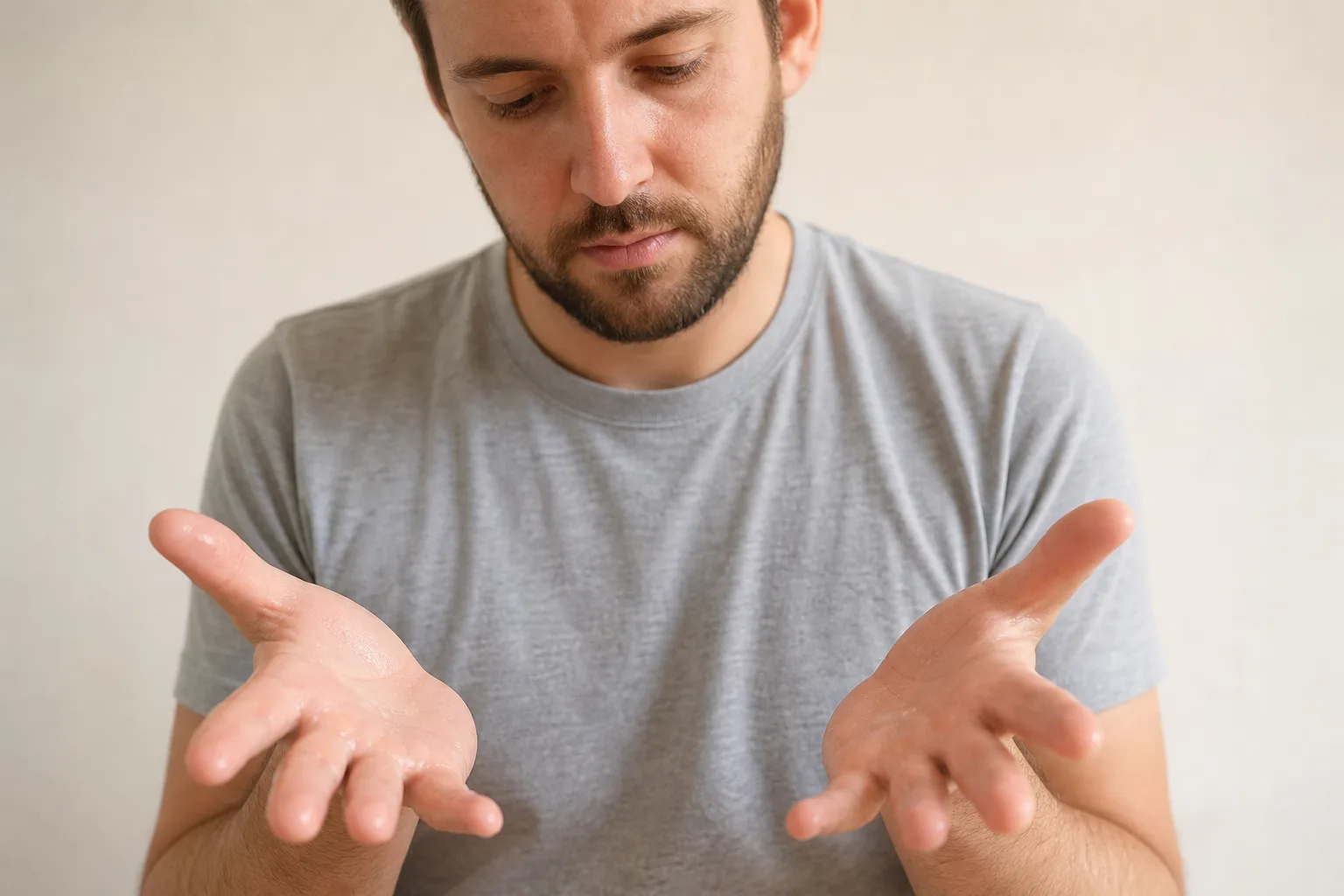
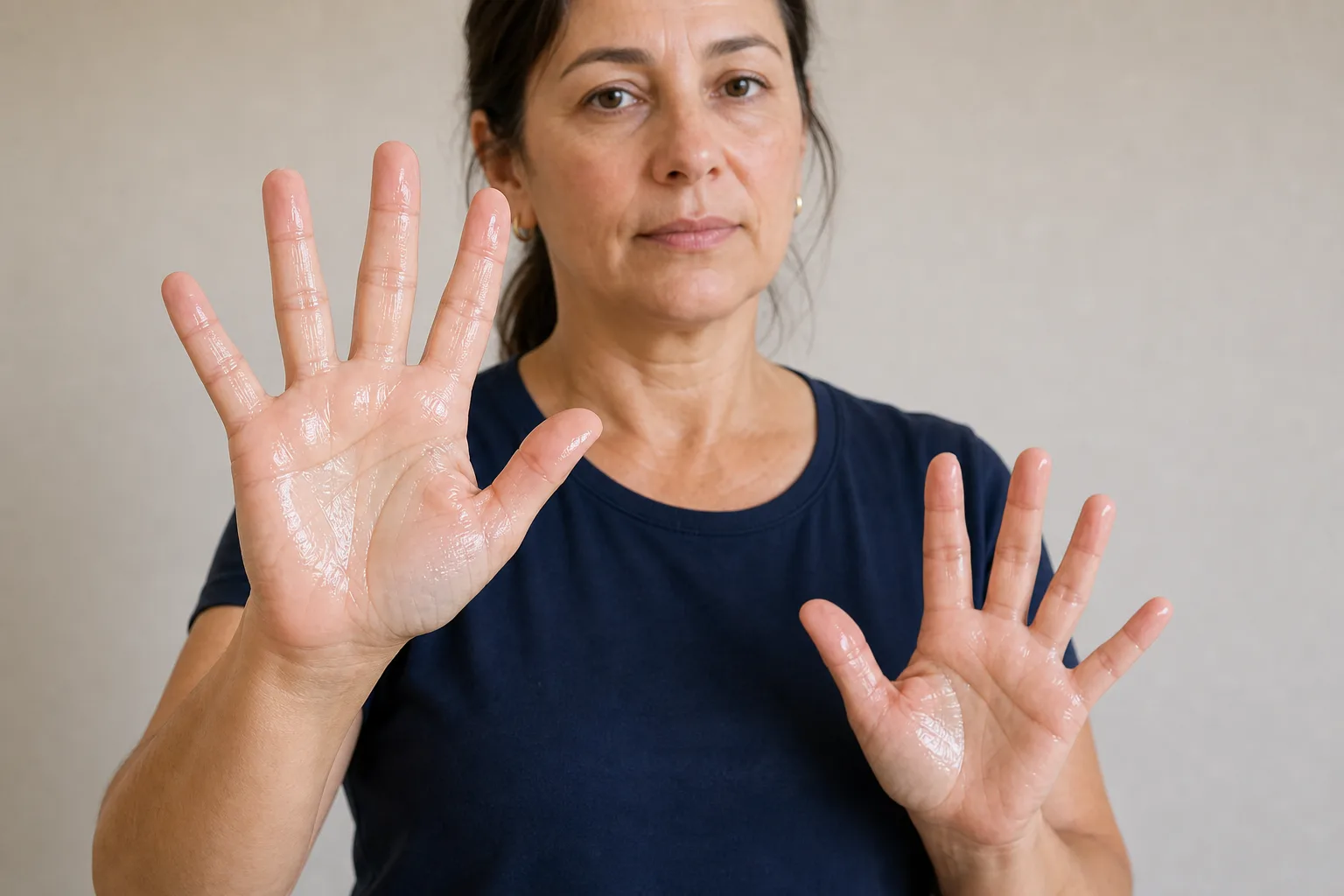
Palmar hyperhidrosis can leave marks on paper and fabric, make neat writing difficult, interfere with keypads or trackpads and make hands feel unreliable during grip. Some people plan hand contact around the chance that their palms will be wet. Others are more affected at work, in sport or while using fine tools.
Write down the exact moment the problem appears. “My hands sweat” is less useful than “I lose grip after ten minutes in gloves” or “paper tears during every long written task”. Concrete examples let a clinician understand function without guessing how much the sweating matters to you.
What Does Plantar Sweating Change In Real Life?
Plantar hyperhidrosis can soak socks, shorten the life of shoes, increase odour and make enclosed footwear uncomfortable. Moist skin may become soft or sore, particularly between toes or across pressure areas. DermNet notes that foot sweating can be associated with pompholyx, tinea pedis and pitted keratolysis.
Foot symptoms deserve their own notes. Record the shoes and socks involved, how many hours they are worn, whether the skin splits or peels, and whether there is persistent itch, pain, odour, pitting or a rash. Those details may point to a skin condition that needs a GP, pharmacist, podiatrist or dermatologist rather than a cosmetic pathway.
A Hand Versus Foot Checklist
| Area | Useful impact details | Skin details to notice |
|---|---|---|
| Palms | Paper, handwriting, tools, instruments, steering, gloves, devices and hand contact | Blisters, cracking, soreness, peeling or dermatitis |
| Soles | Sock changes, shoe damage, long shifts, sport, slipping and footwear avoidance | Soft white skin, fissures, itch, pitting, persistent odour or rash |
| Both | Age at onset, symmetry, frequency, triggers, sleep pattern and effect on work or study | Whether wetness is constant, episodic, painful or associated with infection |
This is a preparation tool, not a self diagnosis. Photographing a rash for your clinician can be useful, but a photograph of dry skin does not disprove an intermittent sweating problem.
Which Pattern Deserves Medical Review First?
Primary focal sweating often begins earlier in life, affects both sides and settles during sleep. New, one sided, whole body or night sweating can have a different explanation. Medicines and medical conditions can also contribute.
See a GP when the pattern begins suddenly, is generalised, occurs during sleep without a clear reason, changes alongside another health symptom or is difficult to explain. Call triple zero (000) if heavy sweating occurs with chest pain, lightheadedness or nausea. A routine clinic booking is not the right pathway for urgent symptoms.
What Can You Do On A Difficult Day?
For hands, keep an absorbent cloth where it is genuinely useful and allow skin to dry before prolonged glove use. For feet, rotate dry footwear, change damp socks, air shoes fully and dry carefully between the toes. Choose breathable materials when the work or safety setting allows.
A pharmacist can advise whether an antiperspirant or skin product is suitable and how to use it without worsening irritation. Stop and seek advice if a product causes marked burning, broken skin or persistent dermatitis. Do not copy another person’s prescription or use an online treatment schedule as personal medical advice.
What Management Pathways Might Be Discussed?
The pathway depends on the diagnosis, area, skin condition, severity, previous care and what maintenance is realistic. General discussions may include practical moisture control, appropriately selected antiperspirants, iontophoresis for hands or feet, prescribed medicines, procedures, dermatology review or specialist surgical advice. Each has different limitations and risks.
For example, iontophoresis is commonly used for palms and soles, but it requires a suitable device, an initial schedule and ongoing maintenance. Prescription, procedural and surgical pathways need the relevant qualified clinician. This page does not advertise a medicine, promise availability or identify one option as best.
Why Does Maintenance Matter As Much As The First Step?
A technically possible option may still be a poor fit if the schedule, skin care, cost, discomfort or review requirements cannot be sustained. Ask how often a pathway usually needs repeating, what happens when it is paused, who manages side effects and where you would seek help.
Think in months, not just the first appointment. A modest option you can use safely and consistently may be more practical than a complex pathway that does not fit work, travel, caring duties or follow up access.
What Can Core Aesthetics Clarify?
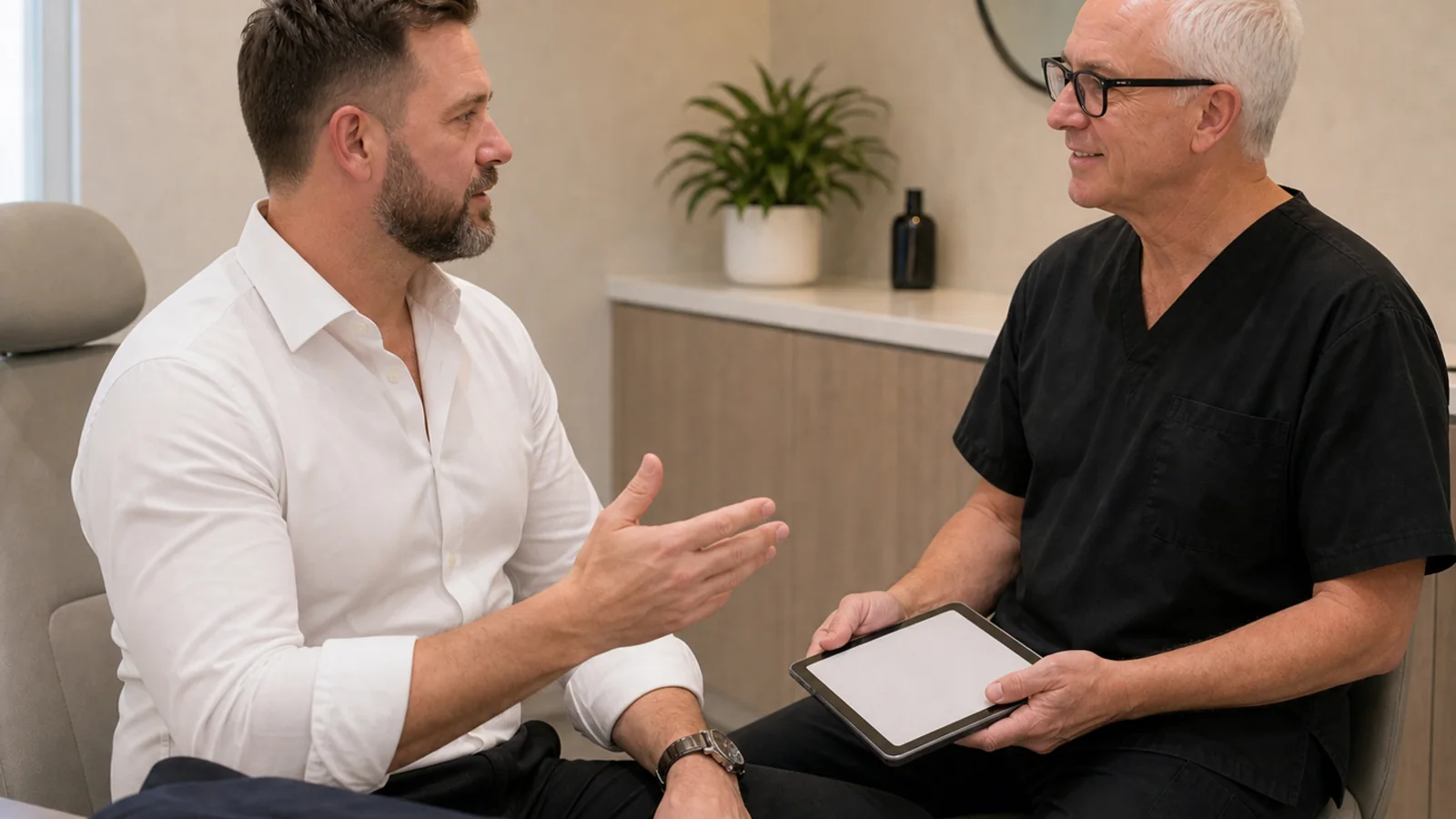
Corey Anderson RN can take a focused history, review daily impact, look at the areas within clinic scope and explain whether medical assessment or another practitioner should come first. The appointment can also clarify which questions remain unanswered and whether the clinic has any appropriate role.
It may end with education, referral, a request for records, discussion of an appropriate pathway, timing or another clinically appropriate pathway. Core Aesthetics does not diagnose unexplained generalised sweating, manage urgent symptoms or replace a GP or dermatologist.
What Should You Bring To An Appointment?
Bring a medicine and supplement list, allergies, relevant diagnoses, previous advice, photos of intermittent skin changes and a short account of the tasks affected. For feet, include footwear, sock and skin details. For hands, include the tools, gloves, paper or devices that expose the problem.
Also record onset, symmetry, frequency, triggers and whether sweating continues during sleep. If the symptom changed after a new medicine or illness, tell the prescriber or GP. Do not stop prescribed medicine without their advice.
How Is This Guide Different From The Severity Guide?
This page is about the distinct functional and skin problems of palms and soles, plus the range of clinical pathways that may be discussed. The severity assessment guide helps you describe overall interference and medical warning signs. The consultation guide explains the appointment process.
If you need a broader introduction, read what hyperhidrosis is. For the clinic pathway, use excessive sweating consultation. You can also review patient safety, practitioner verification or book a consultation.
Clinical Review And Sources
This guide was reviewed on 1 September 2026. It draws on Healthdirect Australia for excessive sweating patterns and escalation advice, DermNet for palm and sole impacts and skin complications, and published evidence reviews for quality of life and management limitations.
Core Aesthetics consultations are led by Corey Anderson RN, Ahpra registration NMW0001047575. Sources are provided for verification, not as endorsements of a particular commercial option.
Questions About Sweaty Hands And Feet
Are sweaty hands and sweaty feet assessed in the same way?
They share questions about onset, symmetry, triggers and sleep, but their practical and skin effects differ. Hands may affect grip, paper and devices. Feet remain enclosed and may develop footwear, odour, maceration or infection problems. A useful assessment records each area separately.
Can palmar hyperhidrosis damage electronic devices?
Wet palms can interfere with keypads, trackpads and other touch surfaces, and repeated moisture can make device use unreliable. Record which device and task is affected. Keep electrical safety in mind and follow the manufacturer’s care guidance rather than applying a skin product immediately before handling equipment.
Why do my feet smell more when they sweat?
Sweat itself is not the whole explanation. Moist, enclosed footwear changes the skin environment and can support bacteria or fungal problems that contribute to odour. Persistent odour with pitting, rash, itch, pain or broken skin should be assessed by a pharmacist, GP, podiatrist or dermatologist.
Is iontophoresis used for palms and soles?
Iontophoresis is a recognised management pathway for focal sweating of the palms and soles. It involves placing the area in water while a controlled electrical current is applied. Suitability, device instructions, skin precautions, initial frequency and maintenance should be discussed with an appropriate clinician.
When should hand or foot sweating be discussed with a GP?
See a GP when sweating begins suddenly, is one sided or widespread, continues during sleep, changes with another symptom, may relate to medicine or needs diagnosis. A GP should also assess persistent skin infection, marked pain or a pattern that falls outside a stable focal sweating history.
What can I do for sweaty feet during a long shift?
Where workplace rules allow, use breathable socks, carry a dry change, rotate fully dried footwear and dry carefully between the toes. A pharmacist can advise on suitable antiperspirant or skin care. Seek assessment if the skin becomes painful, fissured, persistently itchy, pitted or inflamed.
Does Core Aesthetics offer every option mentioned on this page?
No. The page explains broad management pathways so readers can ask better questions. Availability and clinical scope must be confirmed individually. Corey Anderson RN may recommend GP, pharmacy, podiatry, dermatology or specialist review, or may conclude that the clinic has no appropriate role.
What should I record before seeking help?
Record whether one or both sides are affected, age at onset, frequency, triggers, sleep pattern, skin changes and the exact tasks affected. For hands, note paper, grip, gloves and devices. For feet, note socks, footwear, odour, soreness, rash and how long feet remain enclosed.
Is this for you?
Consider booking a consultation if
- Adults whose palms or soles interfere with work, study, sport, footwear, skin comfort or social contact
- People who want to document hand and foot impacts separately before seeking clinical advice
- People willing to consider GP, pharmacy, podiatry, dermatology, clinic, waiting or different clinical pathways as appropriate
- People seeking a balanced account of practical measures, maintenance and referral boundaries
This may not be for you if
- Anyone with sweating plus chest pain, lightheadedness or nausea who needs urgent care
- People seeking diagnosis or prescription advice from a web page
- People with new, generalised, night or medically unexplained sweating who have not discussed it with a doctor
- Anyone expecting every management pathway to be available or suitable at Core Aesthetics
Suitability is confirmed at consultation. This list is general guidance, not a substitute for clinical assessment.
Clinical references
- Healthdirect: Excessive sweating (hyperhidrosis)
- DermNet: Hyperhidrosis
- Systematic review of patient centred outcomes in primary palmar hyperhidrosis
- Qualitative investigation of hyperhidrosis in daily life
- TGA guidance on advertising health services involving therapeutic goods
- Ahpra guidelines for advertising higher risk non surgical cosmetic procedures