Learn

Facial Volume Treatments in Melbourne, Core Aesthetics

Facial volume treatments are one of the most widely discussed treatments in cosmetic medicine, and one of the most misunderstood. At Core Aesthetics, the starting point is never a syringe. It is a full assessment of how your face functions as a system.

Quick summary

Facial volume treatments are injectable treatments used to influence facial structure, proportion, and balance. In clinical practice, they are structural tools, not simply volume additions. Consultation-first assessment informs every clinical decision at Core Aesthetics in Oakleigh.

What Facial volume treatments actually are

Facial volume treatments are injectable substances used to modify or support facial structure. They influence how the face looks by affecting volume distribution, structural support, contour definition, and the proportional relationships between facial regions.

This is an important distinction. Volume treatment does not simply make things larger. In some cases it restores lost support. In others it refines existing proportions. And in some cases, after a proper assessment, it is not required at all. Understanding what volume treatment can and cannot do is the foundation of appropriate treatment planning.

The face is a connected structural system

One of the most important principles in facial aesthetics is that the face is not a collection of separate features. It is an interconnected structural system. Upper face support, mid face projection, lower face balance, perioral movement, and jawline definition all influence each other.

This means that changes in one area affect how the rest of the face is perceived. Mid face support influences the appearance of the lips. Chin projection affects perceived lower face balance. Cheek structure shapes overall facial harmony. Treating one region without understanding how it relates to the others increases the risk of creating imbalance rather than improving it.

Why volume alone is not the goal

A common assumption is that facial volume treatments are primarily about adding volume to areas that look hollow or flat. While volume is part of how volume treatment works, it is only one dimension of its function. Facial appearance is determined by bone structure, fat distribution, muscle activity, skin quality, and the proportional relationships between all of these.

Small amounts of volume treatment placed with structural understanding can create significant visual change. Conversely, large amounts of volume treatment used without that understanding can produce results that look unnatural or disproportionate, not because of the product itself, but because volume was prioritised over structure.

Why not every volume change requires treatment

Not all visible changes in the face require correction. Some changes are natural variation. Some are age related but balanced. Some are part of a person’s facial identity and should not be altered.

Clinical judgement means being willing to say that treatment is not appropriate or not necessary. Treating every perceived change can lead to over correction and a gradual loss of the natural character that makes a face recognisable. This is why assessment must come before any treatment decision, not after a patient has already decided what they want filled.

How over treatment develops over time

Over treatment with facial volume treatments rarely happens in a single session. It is usually the result of cumulative decisions made over multiple treatments, each one seeming reasonable at the time, but collectively shifting the face away from its natural structure.

When volume is prioritised over structure, when areas are treated without full assessment, when treatment is repeated without reassessment, and when facial balance is not considered as a whole system, the results can include loss of natural definition, excess projection, disrupted proportions, and reduced facial expressiveness. These outcomes are not inevitable. They are the result of a specific kind of decision making, and they are preventable.

Conservative planning and what it actually means

Conservative treatment planning does not mean doing as little as possible. It means doing what is appropriate for the individual face. In practice, this involves using the minimum intervention necessary to achieve structural balance, focusing on support rather than volume increase, staging treatment when appropriate rather than correcting everything at once, and prioritising outcomes that will remain appropriate as the face continues to age.

Conservative approaches tend to produce more refined, stable outcomes than high volume approaches. They also provide more room for adjustment if the initial result is not quite right.

How the C.O.R.E. method shapes treatment at Core Aesthetics

Every facial volume treatment decision at Core Aesthetics is guided by the C.O.R.E. framework: Consult, Organise, Refine, Evaluate.

Consult means understanding what the patient is concerned about and what they are hoping to achieve. Organise means mapping the face, assessing structural balance, symmetry, volume distribution, and proportional relationships. Refine means determining whether treatment is actually appropriate and, if so, how conservative it should be. Evaluate means making a final clinical decision before any treatment is performed.

This structured process ensures that no treatment decision is made on the basis of a single concern or a visible feature alone. Every decision is made in the context of the whole face.

Facial volume treatment and clinical responsibility

Facial volume treatment is a prescription only medical procedure in Australia. It requires anatomical knowledge, appropriate product selection, sterile technique, informed consent, and a clear understanding of risks and limitations. These are not optional requirements, they are the clinical foundation on which safe treatment is built.

At Core Aesthetics, every treatment is performed by Corey Anderson, a registered nurse with AHPRA registration. Every patient is assessed as an individual, and no treatment is standardised or assumed in advance of that assessment.

What Distinguishes a Thorough Practitioner Assessment

The quality of a facial volume treatment result is determined primarily by what happens before any product is used. A thorough assessment examines facial proportions and the relationships between features, identifies any asymmetry that is present at baseline, maps the underlying bone structure and fat compartment distribution, and assesses how the skin behaves under movement and at rest. This is a clinical process, not a visual preference exercise.

Practitioners who perform this kind of assessment are working from anatomical knowledge rather than aesthetic templates. They are not trying to replicate a particular look, they are evaluating what your specific anatomy can support, where treatment is likely to achieve a proportionate result, and where caution or restraint is the more appropriate clinical choice. The outcome of that assessment may be a recommendation for less treatment than you anticipated, or for a different area than the one you came in with, because the assessment has identified something that would produce a more balanced overall result.

This approach requires time and clinical confidence. It is easier to simply agree to whatever the patient requests. Saying “not yet” or “that area is not the priority” requires both anatomical clarity and a willingness to prioritise long term outcomes over short term approval.

Common Questions Melbourne Patients Bring to Consultation

Patients at Core Aesthetics come from across Melbourne’s south east corridor and inner east, and they bring a wide range of concerns and questions to the consultation. Some are first time patients who are uncertain what to expect from the process. Some have had treatment elsewhere and are looking for a different approach, either because they were unhappy with a previous result or because they want a practitioner who will take more time with the assessment. Some have specific areas they want to address; others have a more general sense that something has changed in how they look and want an expert perspective on what treatment, if any, is appropriate.

Across all of these presentations, the most common theme in the consultation is the desire for a result that looks considered rather than treated. Patients consistently describe wanting to look like themselves, refreshed, rested, balanced, rather than looking like they have had work done. This is not a new patient preference; it has been a consistent theme in aesthetic medicine for years. What has changed is that patients are increasingly well informed about what over treatment looks like and are actively seeking practitioners who will not take them there.

Realistic Expectations and the Review Process

Managing expectations is a clinical responsibility, not a marketing exercise. At consultation, the practitioner will describe what treatment can and cannot achieve for your specific situation. There are areas and concerns that respond well to injectable treatment, and there are areas where the result will be modest, or where the anatomy does not support the outcome being requested. These conversations are important and should happen before any treatment takes place.

Following treatment, a review appointment is scheduled at four to six weeks. At review, the practitioner assesses how the product has settled, whether any adjustment is appropriate, and documents the outcome against the pretreatment baseline. The review is also where patients have the opportunity to give feedback on their experience and ask any questions that have arisen since the treatment appointment.

Results vary between individuals due to differences in anatomy, skin quality, tissue characteristics, and how each person’s body metabolises the product over time. No practitioner can absolutely claim a specific outcome, and any clinic that suggests otherwise is not providing accurate clinical information.

The South-East Melbourne Catchment

Core Aesthetics is located at 12A Atherton Road, Oakleigh, a central location that is accessible from across Melbourne’s south east and inner east. Patients travel from Carnegie, Murrumbeena, Bentleigh, Cheltenham, Clayton, Mount Waverley, Glen Waverley, Wheelers Hill, Malvern, Glen Iris, and the wider surrounding area.

Oakleigh is a practical choice for patients in this catchment because it avoids the parking and access challenges of inner city locations, while remaining genuinely accessible by both car and public transport. The clinic is a one practitioner practice, which means that every appointment is with Corey Anderson, the registered nurse who runs the clinic. There are no junior practitioners, no rotation of staff, and no variation in who performs your assessment and treatment. That consistency is built into the model by design.

How Facial volume treatment Is Used as a Structural Tool

Facial volume treatment is often described in terms of volume, adding more to make something look bigger. This framing misrepresents how volume treatment functions in skilled clinical practice. Volume treatment is a structural tool. It can restore lost support in areas where facial volume has diminished with age. It can define a contour that was never clearly pronounced. And in some cases it can shift the proportional relationships between facial regions in a way that changes how the face reads overall.

Volume, in the sense of visible fullness, is sometimes a goal. But the mechanism is anatomical. Volume treatment placed in the right tissue plane, at the right depth, with an understanding of the surrounding anatomy, produces a different result than volume treatment placed superficially to fill a surface irregularity. This is why technique, placement, and clinical knowledge matter far more than product selection.

At Core Aesthetics, treatment decisions are based on a full facial assessment. Corey evaluates the face as a whole before deciding whether volume treatment is appropriate, where it would be most effective, and what volume would be consistent with a proportionate outcome. This assessment may lead to a recommendation not to treat, and that outcome is equally valid.

Understanding Facial Volume Loss and Why It Matters

The face changes with age through a combination of processes: bone resorption, fat pad redistribution, muscle changes, ligament laxity, and skin quality decline. These processes do not happen uniformly or at the same rate in different people. Two people of the same age may present very differently because of genetics, lifestyle, sun exposure, and individual anatomical variation.

Volume loss is one of the most clinically significant contributors to an aged appearance. When the structural support provided by subcutaneous fat and bone diminishes, the overlying skin is no longer held in place by the same framework. Features that once appeared well defined become less distinct. The relationship between facial thirds can shift. Hollowing in specific areas, the cheeks, the temples, the under eye region, creates shadows and contours that are often interpreted as tiredness or loss of vitality.

Understanding the underlying anatomy is essential to treating it appropriately. Volume treatment placed to address a surface concern without accounting for the structural deficit beneath it will produce a less effective and less enduring result. The consultation process at Core Aesthetics focuses on identifying the anatomical contributors to the concerns you have raised, not just addressing the surface appearance.

The Assessment Process Before Any Volume treatment

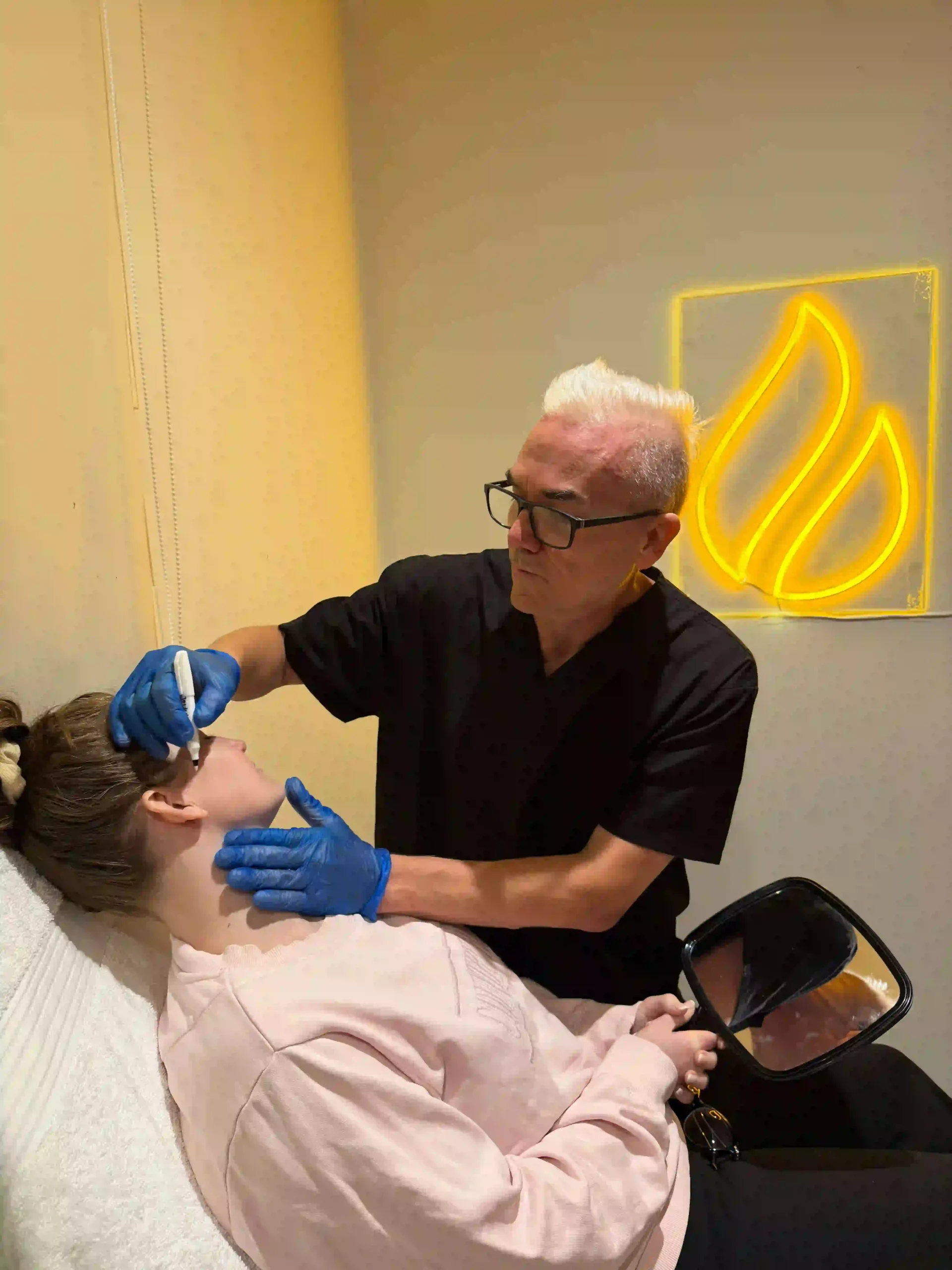
At Core Aesthetics, the consultation for facial volume treatment is a structured clinical appointment, not a sales conversation. Corey assesses the face in three dimensions, at rest, during movement, and from multiple angles. The goal is to understand the structural landscape of your face before deciding where, how much, and whether volume treatment is the right approach.

Key aspects of the volume treatment assessment include evaluating facial symmetry and identifying natural asymmetries that should be preserved or addressed; assessing the depth and distribution of any volume deficit; reviewing skin quality to determine how volume treatment would integrate; and discussing your goals in the context of what is anatomically achievable. For some concerns, volume treatment alone is sufficient. For others, a combination of treatments, or a different approach entirely, may be more appropriate.

You will leave the consultation with a written treatment plan that documents the assessment findings, the proposed approach, and the expected outcomes. Treatment is scheduled at a separate appointment, allowing time to consider the plan, ask further questions, and make an informed decision without any time pressure.

Dissolution, Complications, and Revision

Hyaluronic acid volume treatments are reversible. If a complication arises, if the result is unsatisfactory, or if a patient wishes to return to their baseline, hyaluronidase enzyme can be injected to dissolve the volume treatment. This is an important safety feature that distinguishes hyaluronic acid products from permanent or semi permanent volume treatments, which cannot be dissolved.

Dissolution does not always produce an immediate return to the pretreatment state. The process requires time, and in some cases more than one dissolution treatment. Swelling from the dissolution procedure can temporarily alter appearance. Corey will explain this clearly at consultation so that patients understand what reversal involves before they commit to treatment.

At Core Aesthetics, only hyaluronic acid formulations are used for facial volume treatment, the reversibility of these products is a deliberate clinical choice. Emergency protocols for vascular occlusion, the most serious potential complication of volume treatment, are maintained at the clinic. Patients are briefed on the signs of this complication and given emergency contact instructions as part of every treatment appointment.

Clinical accountability and how volume treatment decisions are made

The volume treatment related guidance in “Facial volume treatments in Melbourne” reflects how Corey Anderson, AHPRA registered nurse (NMW0001047575), approaches facial volume treatment decisions at Core Aesthetics: anatomy led, conservative on volume, and willing to defer or refuse treatment when the assessment doesn’t support it. Volume treatment is a structural intervention. The decisions about where, how much, what depth, and what cannula or needle approach are clinical judgements that depend on the individual face in front of the practitioner. Results vary between individuals, and the same volume can read very differently on two faces with different bone structure, fat pad distribution, or skin quality.

Specific to facial volume treatments: the assessment Core Aesthetics performs before any volume treatment includes facial proportions, skin quality, prior treatment history, and the patient’s stated goals, and considers whether facial volume treatment is the right intervention at all. For some patients, the right answer is no volume treatment this visit. For others, the right answer is a smaller amount than the patient anticipated. For others, the right answer is to address skin quality or to dissolve existing volume treatment before considering anything new. Results vary between individuals, and a conservative starting dose is almost always the better long term decision. The facial volume treatment cost Melbourne page covers an adjacent volume treatment decision in more depth.

Patients reading this page who want to verify Corey Anderson’s AHPRA registration can do so directly on the AHPRA public register at ahpra.gov.au using registration number NMW0001047575. The Core Aesthetics clinic operates from 12A Atherton Road, Oakleigh VIC 3166, Tuesday to Saturday, by consultation appointment. All new patient treatment at Core Aesthetics follows a structured clinical consultation, consistent with the September 2025 AHPRA cosmetic procedures guidelines. Treatment may be scheduled for the same day as consultation or at a subsequent appointment, depending on clinical assessment and individual circumstances. Patients with questions about the content on this page can raise them at consultation; the practitioner is happy to walk through any clinical reasoning that the written content does not fully capture. Results vary between individuals, and the consultation is the appropriate place to discuss what those individual variations mean for a specific person’s treatment plan.

Is this for you?

Consider booking a consultation if

  • You are 18 or older and in good general health
  • You want to understand how facial volume treatment may address a specific anatomical concern, volume, structure, or proportion
  • You are prepared to attend a standalone consultation before any treatment decision is made
  • You understand that injectable treatment is a medical procedure with individual risks and outcomes

This may not be for you if

  • You are pregnant, trying to conceive, or breastfeeding
  • You have an active infection, cold sore outbreak, or unhealed skin in a potential treatment area
  • You have a documented allergy to hyaluronic acid or to local anaesthetic (lidocaine)
  • You are taking anticoagulant medication or have a bleeding disorder, without clearance from your treating doctor
  • You have had recent facial surgery, trauma, or dental procedures in the treatment area
  • You are under 18 years of age

Suitability is confirmed at consultation. This list is general guidance, not a substitute for clinical assessment.

Frequently asked questions

What is the first step to getting facial volume treatment at Core Aesthetics?

The first step is a consultation. Core Aesthetics requires a structured clinical consultation before any treatment is performed. The consultation reviews your facial anatomy, existing volume treatment if any, clinical history, and whether facial volume treatment is appropriate for your specific presentation.

Are facial volume treatments safe?

Facial volume treatments are regulated therapeutic goods in Australia. When assessed and administered by a qualified practitioner following appropriate technique, they carry a known and manageable risk profile. Serious complications, while rare, exist and are discussed openly at consultation. Informed consent is mandatory before treatment proceeds.

How long does facial volume treatment last?

Duration varies by area, the volume placed, product characteristics, and individual metabolism. Many facial volume treatments last between 12 and 24 months, though some areas break down product more quickly. Results are reviewed at follow up to assess how the treatment has settled before any further intervention is considered.

What areas can be treated with facial volume treatment at Core Aesthetics?

Core Aesthetics uses facial volume treatment for the lips, cheeks, chin, jawline, tear trough, temple, midface, and perioral area. The specific area treated depends on what your assessment identifies as appropriate, not on a preset treatment menu.

How is suitability for this treatment determined?

Suitability is decided through individual consultation with Corey Anderson, AHPRA registered nurse. Anatomy, medical history, prior treatments and the realistic outcomes of treatment are all reviewed before any decision is made.

What happens if treatment is not appropriate?

If the assessment finds that treatment is not appropriate, that conclusion is part of the consultation outcome. Results vary between individuals, and the consultation may identify reasons to defer, alter, or decline the treatment plan.

Who reviews the volume treatment related clinical content on this page?

Should I get facial volume treatment if I am not certain I need it?

Uncertainty about whether treatment is appropriate is a valid reason to book a consultation rather than treatment. A clinical assessment can clarify whether volume loss, structural descent or skin quality change is the primary driver of what you are noticing, and whether injectable volume treatment is the right approach. Treatment is never assumed at assessment.

Is it safe to have facial volume treatment while pregnant or breastfeeding?

Prescription injectable products are not recommended during pregnancy or breastfeeding. There is insufficient safety data on these products in pregnant or lactating individuals, and the precautionary standard is to defer treatment until after this period. If you are pregnant, planning pregnancy, or breastfeeding, please discuss this at your consultation.

Why does facial volume treatment require an individual assessment rather than a standard dose?

Facial anatomy varies significantly between individuals in terms of fat pad position, bone structure, skin thickness and the degree of volume loss in each region. A standard dose applied without individual assessment risks over-correction, under-correction or placement that does not align with the underlying anatomy. Assessment-led dosing is the standard of care.

Written and reviewed by Corey Anderson RN, AHPRA NMW0001047575 · Reviewed 2026-04-26 · TGA & AHPRA compliant

Begin With A Conversation

Book your consultation.

No commitment, no pressure. A considered first step toward understanding what is and isn’t right for you.

Book Consultation

Elegance, Perfected.