Learn

nonsurgical Facial Rejuvenation Options

An overview of nonsurgical facial rejuvenation options, what injectable treatments address, how they differ from other nonsurgical modalities, and how decisions are made at consultation at Core Aesthetics, Oakleigh.

Quick summary

Non surgical facial rejuvenation is often presented as a collection of available treatments. This framing suggests that rejuvenation is achieved by selecting from a menu of options. In clinical reality, rejuvenation is not a selection process. It is a structural evaluation of how the face has changed over time and whether intervention is appropriate, necessary, or beneficial. This means there are no universal options. Only context dependent decisions. Results vary between individuals. All treatments are consultation based and individually assessed by a qualified, AHPRA-registered practitioner.

What nonsurgical rejuvenation addresses

Nonsurgical rejuvenation broadly refers to treatments that address the visible effects of facial ageing without surgical alteration of facial structures. The conditions these treatments address span several dimensions: expression driven lines, volume loss, structural change, skin quality reduction, and soft tissue laxity.

Each dimension requires a different type of intervention. Injectable treatments are well suited to expression lines and structural volume support. Skin quality issues, pigmentation, texture, fine lines from photodamage, are more appropriately addressed by skin focused modalities such as laser, peels, or skin needling. Significant soft tissue laxity may require surgical intervention.

The starting point for any rejuvenation plan is identifying which dimension is most contributing to the individual’s concerns. Treating the wrong dimension with the wrong modality produces disappointing results and does not address the root cause of the concern.

Anti-wrinkle injections for rejuvenation

Anti-wrinkle injections address the muscular contribution to facial lines. They temporarily reduce the activity of specific muscles, allowing expression driven lines to soften and, over time, allowing static lines to gradually improve as the skin is given extended periods without repeated mechanical reinforcement.

The upper face is the most common focus: forehead lines, frown lines, and crow’s feet are the three most frequently treated areas. Treatment in these areas produces a more rested, refreshed appearance that many patients find meaningfully improves their overall facial presentation.

The effect is temporary, typically three to five months, and requires ongoing maintenance. Consistent treatment over time produces cumulative improvement in static lines. The consultation establishes an appropriate dosing and maintenance approach for the individual.

Dermal filler for rejuvenation

Dermal filler addresses volume and structural support. Its primary application in facial rejuvenation is restoring or maintaining the structural platform over which skin sits, the mid face, cheeks, temples, periorbital region, chin, and jaw.

As the face ages, volume loss in key structural areas changes how light interacts with the face and how skin drapes over the underlying architecture. Restoring appropriate structural support can significantly improve the overall perception of facial vitality without adding bulk or changing proportions.

The goal of structural filler in the context of rejuvenation is to support what is there, not to augment to a larger or more prominent configuration. Conservative placement guided by the individual’s anatomy produces outcomes that look natural and age appropriate.

Filler also addresses specific concerns such as periorbital hollowing (tear trough), lip volume and definition changes, and perioral structural changes that contribute to the aged lower face appearance.

What injectable treatments cannot address

Injectable treatments are not the appropriate tool for all nonsurgical rejuvenation goals. Understanding what they cannot address helps patients make informed decisions about which type of treatment is most likely to be useful for their specific concerns.

Skin surface quality, pigmentation, uneven texture, fine lines from photodamage, overall skin tone, is primarily a function of skin health rather than muscle activity or structural volume. Anti-wrinkle and filler treatments do not directly address these concerns. Patients whose primary concern is skin quality are likely to benefit more from skin focused treatments such as laser, intense pulsed light, skin needling, or medical grade skin care.

Significant soft tissue laxity, significant jowling, neck laxity, or heavy upper lid skin redundancy, typically requires surgical approaches for meaningful improvement. Injectable treatments can support structure and improve minor laxity, but they do not tighten skin or alter tissue position in the way that surgical lifting procedures do.

These limitations are discussed honestly at the consultation at Core Aesthetics. Patients are not directed towards injectable treatment if another modality would more appropriately address their concern.

The relationship between injectables and other nonsurgical treatments

Injectable and non injectable nonsurgical treatments are often complementary. A patient addressing both structural volume loss and skin quality concerns may benefit from injectable treatment to support structure alongside skin focused treatment to improve surface quality.

The sequence matters. In general, structural assessment should precede surface treatment, because structural changes can influence how surface treatments perform and how relevant they are to the overall presentation. A face with significant mid face volume loss may benefit more from structural support than from surface treatment, even if surface concerns are also present.

At Core Aesthetics, the consultation identifies which contributors are most relevant and in what priority order they should be addressed. For patients where skin focused treatment is most appropriate, this is communicated clearly at the consultation and referral to a skin specialist may be recommended.

What a nonsurgical rejuvenation consultation involves

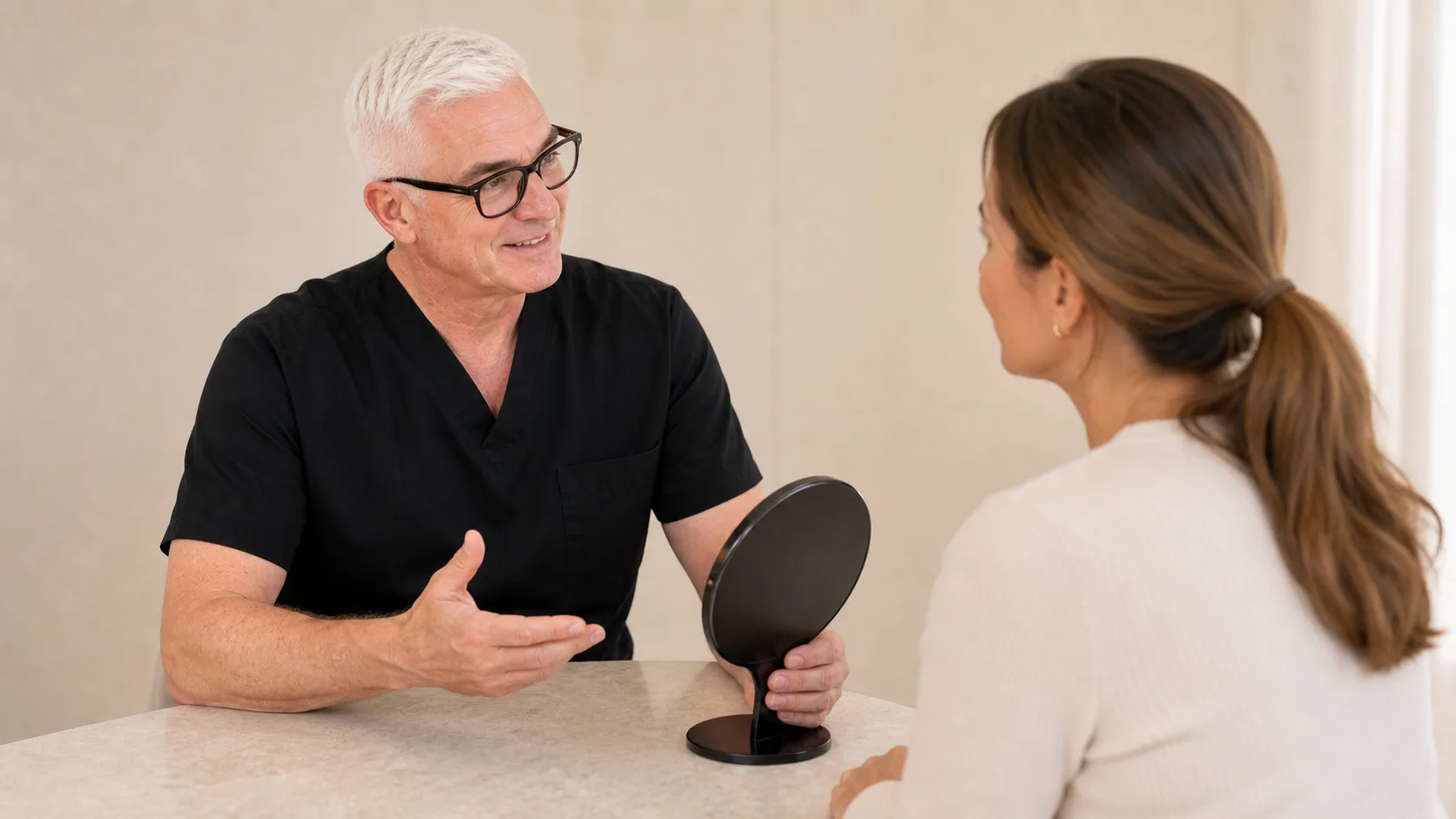
A consultation at Core Aesthetics for nonsurgical rejuvenation concerns begins with a full facial assessment, reviewing the face at rest and in expression, assessing structural volume across different regions, and identifying which contributors are most relevant to the patient’s concerns.

The practitioner discusses which treatment options address the identified contributors, what the realistic outcomes for each option are, and what the appropriate starting point would be. For patients where injectable treatment is not the most appropriate first step, this is communicated at the consultation.

Patients are not required to proceed with any treatment at or following the consultation. The consultation is designed to give patients the information they need to make an informed decision, not to direct them towards a treatment outcome.

New patients are encouraged to start with a consultation before committing to any specific treatment. The assessment at consultation frequently identifies that the most useful first treatment is different from what the patient initially assumed when booking.

Who is suitable for nonsurgical injectable rejuvenation

Suitable candidates for injectable rejuvenation are adults whose concerns include expression driven lines, soft tissue volume loss, structural support needs in specific facial regions, or targeted improvements such as periorbital hollowing, lip definition, or masseter management.

Treatment is not suitable for patients who are pregnant or breastfeeding, those under 18 years of age, those with active skin infections in or near the treatment area, those with certain autoimmune or connective tissue conditions, or those with specific medication interactions. Full suitability is assessed at consultation.

Patients whose primary concern is skin surface quality, significant tissue laxity, or concerns that require surgical correction are better served by referral to appropriate specialists. The consultation at Core Aesthetics makes this assessment and communicates it clearly.

How treatment is planned and reviewed

Treatment planning at Core Aesthetics is iterative. The first treatment establishes a baseline, the review appointment assesses the outcome, and subsequent treatment planning builds on that foundation.

New patients are typically treated conservatively at the first appointment, addressing the most significant contributor with an appropriate initial approach, then reviewing the result before extending the treatment plan. This approach avoids over-treating at the outset and builds a treatment history that informs progressively better calibrated decisions over time.

A review appointment is scheduled following each treatment, two to three weeks for anti-wrinkle treatments, two weeks for filler treatments. The review is not optional; it is the mechanism by which the treatment approach is refined.

Long term planning considers how the face is changing over time, not just the current state. Patients who attend consistently over years benefit from a practitioner who has accumulated knowledge of their individual anatomy, response patterns, and aesthetic preferences.

Why consultation based practice matters for rejuvenation

Nonsurgical rejuvenation is a broad category that encompasses treatments ranging from minimally impactful to structurally significant. Beginning with a consultation ensures that the treatment selected is appropriate for the individual’s specific presentation, not a standardised protocol applied to all comers.

It also ensures that patients have realistic expectations. A consultation that includes an honest discussion of what a proposed treatment can and cannot achieve is far more likely to produce a satisfied patient than one where treatment is performed without adequate assessment.

At Core Aesthetics, the consultation based model is central to the clinical approach. No injectable treatment is planned or performed at an initial consultation appointment. This is a deliberate policy, not a logistical constraint, it reflects the view that good treatment decisions require time, information, and space for reflection.

Managing Expectations: What Injectable Rejuvenation Can and Cannot Do

A consistent theme in consultations focused on rejuvenation is the gap between what people expect and what is achievable. Injectable treatments are effective within a specific scope, they address dynamic muscle activity, replace volume that has been lost, and can soften the appearance of lines and hollows that have developed over time. They cannot address skin texture, skin laxity, pigmentation, or the changes that occur in bony structure with age.

This matters not because it is discouraging, but because clarity at the start of a treatment relationship leads to better outcomes. A client who understands what is and is not being addressed can evaluate results accurately. A client whose expectations extend beyond what the treatment can achieve will be dissatisfied even when the clinical outcome is good.

At Core Aesthetics, the consultation includes an honest conversation about where injectable treatment fits within the broader picture of facial ageing, and what it cannot substitute for. Where skin concerns are significant, a referral to a dermatologist or other appropriate practitioner may be the more useful recommendation. The goal is not to perform a treatment; it is to help you understand your options and make a decision that serves your actual interests.

Planning for the Long Term: Rejuvenation as an Ongoing Practice

People who approach injectable rejuvenation as a long term practice, rather than as a one off event, tend to have better experiences and more consistent outcomes. This is because results from injectable treatments are incremental and cumulative over time, not transformative from a single session.

A well planned rejuvenation approach might begin with conservative anti-wrinkle treatment to soften dynamic lines, followed by selective filler placement to restore volume in specific areas, with review appointments to assess results and adjust over time. The pace is set by the individual, some people prefer to make small changes gradually over years; others want to address several concerns within a shorter period. Both approaches are valid, and the appropriate path depends on the individual’s goals, anatomy, and preferences.

At Core Aesthetics, the C.O.R.E. method. Consult, Organise, Refine, Evaluate, structures this ongoing process. Each stage has a distinct purpose: the consultation establishes the plan, treatment organises the approach, review refines based on observed results, and evaluation informs the next cycle. Clients who engage with this process over multiple treatment cycles tend to reach their goals more efficiently than those who treat each appointment in isolation.

About This Information

The information on this page is provided for general educational purposes. It is not a substitute for clinical advice and does not constitute a recommendation that you proceed with any particular treatment. Cosmetic injectable treatments are prescription medical procedures. They carry risks that vary between individuals and that must be assessed and discussed in a clinical context before any treatment decision is made.

At Core Aesthetics, Corey Anderson assesses every patient individually. The consultation is the point at which your specific anatomy, medical history, and goals are evaluated together. No treatment is offered at a first appointment, and no treatment is appropriate for everyone. This page is a starting point, a way to understand what is involved before you decide whether a consultation is the right next step for you.

If you have questions about anything on this page or about whether treatment might be appropriate for your situation, you are welcome to call the clinic or book a consultation at no obligation.

This page provides clinical information about nonsurgical facial rejuvenation options. It is intended for adults aged 18 and over who are considering cosmetic injectable treatment and want to understand the clinical process, suitability factors, and what to expect from a consultation based practice. All treatment decisions at Core Aesthetics follow individual assessment, no treatment is offered at a first appointment without a separate consultation. Results vary between individuals and are reviewed at follow up.

Clinical accountability and how this page is reviewed

The clinical content in “nonsurgical facial rejuvenation options” is written and reviewed by Corey Anderson, AHPRA registered nurse (NMW0001047575). Core Aesthetics operates as a one practitioner, consultation based, low volume clinic in Oakleigh, Melbourne, which means every recommendation on this page reflects the same clinical perspective rather than a copywriter’s interpretation of it. Results vary between individuals, and any guidance written for the general reader has to acknowledge that variance, what the published evidence supports for the average patient may not be what the assessment supports for a specific patient.

Specific to nonsurgical: this page describes the typical clinical picture for a healthy adult patient at the time of writing. Individual circumstances, medical history, current medications, prior cosmetic treatment, skin type, age, hormonal state, lifestyle, can shift any of the timelines and recommendations described here. The information is provided to help patients arrive at consultation already familiar with the underlying clinical reasoning, not to replace the consultation itself. Results vary between individuals; this page describes the centre of the distribution, not the edges. The cosmetic treatments Melbourne refined approach page covers an adjacent topic in more depth.

Patients reading this page who want to verify Corey Anderson’s AHPRA registration can do so directly on the AHPRA public register at ahpra.gov.au using registration number NMW0001047575. The Core Aesthetics clinic operates from 12A Atherton Road, Oakleigh VIC 3166, Tuesday to Saturday, by consultation appointment. All new patient treatment at Core Aesthetics follows a structured clinical consultation, consistent with the September 2025 AHPRA cosmetic procedures guidelines. Treatment may be scheduled for the same day as consultation or at a subsequent appointment, depending on clinical assessment and individual circumstances. Patients with questions about the content on this page can raise them at consultation; the practitioner is happy to walk through any clinical reasoning that the written content does not fully capture. Results vary between individuals, and the consultation is the appropriate place to discuss what those individual variations mean for a specific person’s treatment plan.

Is this for you?

Consider booking a consultation if

  • You are 18 or older and in good general health
  • You are researching cosmetic injectable treatments and want a clinical assessment of your options
  • You prefer a one practitioner, consultation based environment
  • You understand that treatment decisions are made individually, not based on a standard menu

This may not be for you if

  • You are pregnant, trying to conceive, or breastfeeding
  • You have an active skin infection or unhealed wound in a potential treatment area
  • You are under 18 years of age

Suitability is confirmed at consultation. This list is general guidance, not a substitute for clinical assessment.

Frequently asked questions

What nonsurgical rejuvenation treatments does Core Aesthetics offer?

Core Aesthetics specialises in injectable treatments, anti-wrinkle injections and dermal filler. These address muscular and structural contributors to facial ageing. Skin focused nonsurgical treatments such as laser, peels, or skin needling are outside the scope of the clinic; the consultation can provide guidance if these are more appropriate for your concerns.

How do I know if I need anti-wrinkle treatment, filler, or both?

This is determined at the consultation assessment. The assessment identifies which contributors are most relevant to your presentation. Some patients’ primary concerns are expression driven and well addressed by anti-wrinkle treatment alone. Others have structural volume concerns best addressed by filler. Many benefit from both, applied in the appropriate sequence.

Can nonsurgical treatment produce results as good as surgery?

For some concerns, yes, particularly expression lines and mid face volume support. For concerns involving significant soft tissue laxity, heavy upper lid skin, or significant jowling, surgical approaches typically produce more definitive results than injectables. The consultation will identify where your concerns fall on this spectrum.

Is there downtime with nonsurgical injectable treatments?

Anti-wrinkle injections have minimal downtime, most patients return to normal activities immediately. Dermal filler may cause swelling or bruising for a few days in the treated area. The extent varies by area and individual. Your practitioner will discuss what to expect at consultation.

How long do nonsurgical rejuvenation results last?

Anti-wrinkle treatment results last three to five months. Filler longevity varies by area and individual, typically nine months to two years or more in some areas. Both require ongoing maintenance. A maintenance schedule appropriate for your specific treatment plan is discussed at consultation.

What if my primary concern is my skin quality rather than lines or volume?

Skin quality concerns are primarily addressed by skin focused treatments rather than injectables. If the consultation assessment identifies that your concern is primarily surface level, your practitioner will discuss whether referral to a skin specialist is more appropriate than proceeding with injectable treatment.

How many treatments will I need to see a noticeable improvement?

Most patients see meaningful improvement from a first treatment. The degree of improvement from a single treatment varies by concern. A longer term programme of consistent treatment typically produces the most satisfying outcomes for rejuvenation goals, particularly for addressing static lines and maintaining structural support over time.

Who writes and reviews the clinical content on this page?

The clinical content is written and reviewed by Corey Anderson, an AHPRA registered nurse (NMW0001047575) and the practitioner at Core Aesthetics in Oakleigh, Melbourne. Core Aesthetics operates as a one practitioner, consultation based, low volume clinic, which means the recommendations on this page reflect the same clinical perspective patients encounter at the consultation itself. Results vary between individuals, and personalised guidance is provided at consultation.

Written and reviewed by Corey Anderson RN, AHPRA NMW0001047575 · Reviewed April 2026 · TGA & AHPRA compliant

Ready When You Are

Start with a conversation.

No commitment required. Book a consultation or send a message, Corey will respond personally.

Book a Consultation

Corey Anderson RN AHPRA NMW0001047575 Registered since 1996 Oakleigh, Melbourne