Facial Ageing

Why You Look Tired Even When You Feel Fine

Consistently looking drawn, flat, or exhausted when you feel perfectly well is one of the most common concerns raised at consultation. The explanation is almost always structural rather than surface-level, and understanding what is actually happening is the first step to deciding whether anything can or should be done about it.

Quick summary

Consistently looking tired when you feel fine is rarely a skin problem. In most cases it reflects structural changes in facial support and volume that alter how light interacts with the face, particularly around the eyes and midface. Subtle redistribution of volume and changes in underlying support create shadow patterns that the brain reads as fatigue, regardless of how rested you actually are. Understanding whether the cause is structural, surface level, or both is the purpose of a consultation. This page was prepared by Corey Anderson, Registered Nurse (AHPRA NMW0001047575) at Core Aesthetics, Oakleigh, Melbourne. Results vary between individuals; a consultation is required before any treatment consideration.

Feeling tired and looking tired are not the same thing

When you are physically fatigued your facial muscles relax differently, your eyes may narrow, and your expression shifts. That is temporary and resolves with rest.

What most people describing this experience are noticing is different. It is a persistent appearance that remains regardless of how well they slept, how stable their health is, or whether anything in their routine has changed.

That consistency is the diagnostic clue. When the tired appearance is present whether you are exhausted or fully rested, it is usually being driven by something structural rather than something temporary. You might recognise the pattern: your energy is good, nothing has changed, yet the mirror tells a different story. People ask if you are tired when you are not. Photographs seem harsher than you expect.

Why this is usually not a skin problem

Skin quality matters, but it is consistently overestimated as the primary cause of a tired appearance. Fine lines, texture, and mild laxity can contribute, but they do not typically generate the specific patterns people describe as looking exhausted.

If skin were the main issue you would expect diffuse changes across the face, or roughness and uneven tone as the dominant feature. Instead what people tend to notice is darkness under the eyes, hollowness or shadowing in the midface, and a flatter or less supported overall appearance. These are not surface level observations. They point to something deeper.

A useful way to think about this: skin sits over structure. When the underlying structure changes, the way skin drapes and reflects light changes with it. Improving skin quality alone may improve texture and tone but will not address the shadowing and hollowing that make the face appear fatigued.

What actually changes in the face over time

Facial ageing is not a single process. It is a combination of changes occurring simultaneously at different levels of the face.

Bone provides the underlying framework. Fat pads provide volume and contour. Ligaments maintain the position of those fat pads. Skin covers everything above. Over time there can be gradual redistribution or reduction of volume at the fat pad level, subtle shifts in structural support, and changes in how different areas relate to each other spatially.

These changes are not always obvious when you examine individual features in isolation. Collectively, they alter how the face is perceived, particularly under certain lighting conditions and in photographs. An overview of how these multiple small changes combine into a single visual impression explains why the effect can feel sudden even when the underlying process has been gradual.

The role of light, shadow, and contrast

One of the most important and least discussed aspects of a tired appearance is how light interacts with the face at a structural level.

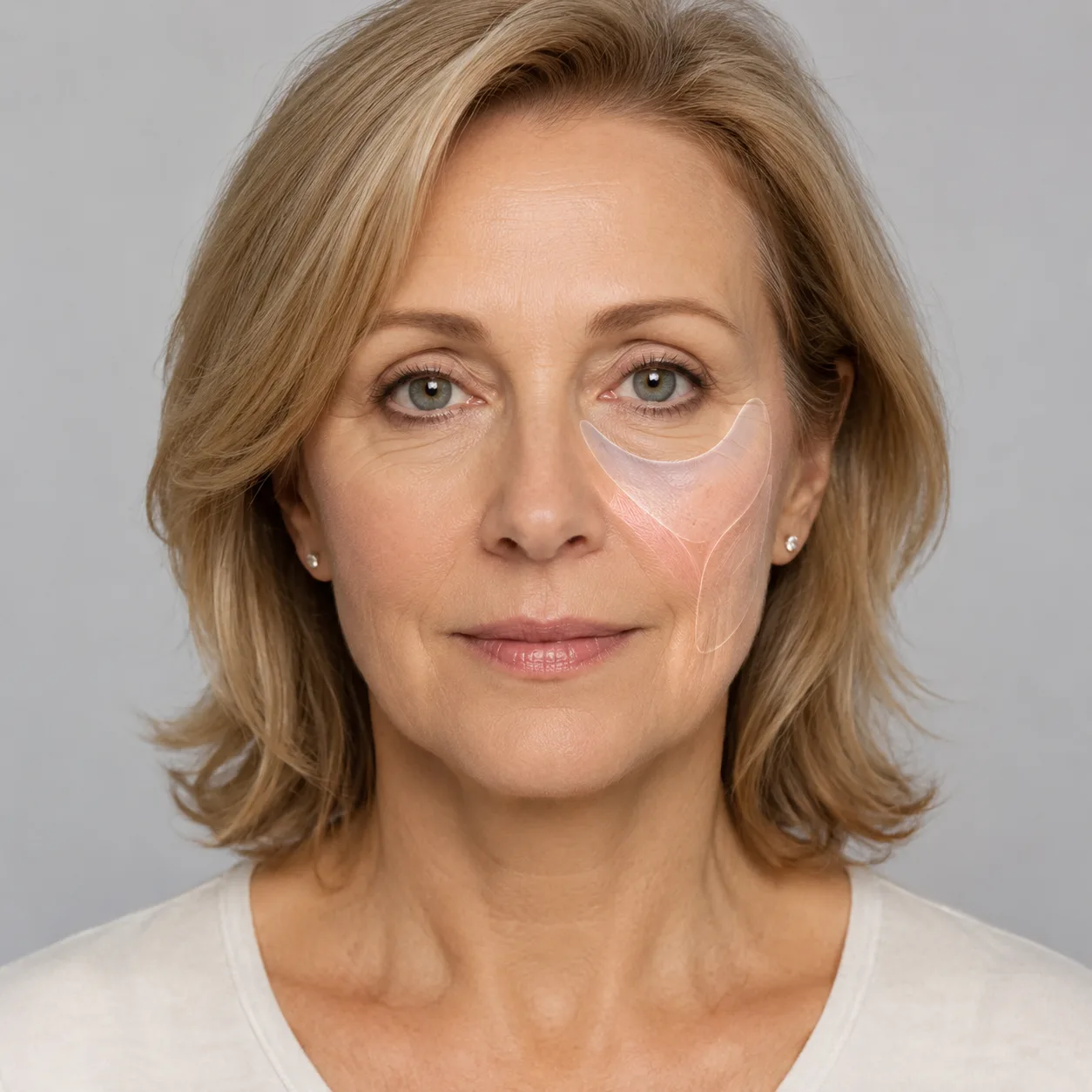
A well-supported face with consistent volume tends to reflect light fairly evenly across its surface. As structural support changes, certain areas begin to catch shadow instead of reflecting light. The most common patterns are a shadow beneath the eye, a more defined transition between the lower eyelid and cheek, and reduced light reflection across the upper cheek.

These shadow patterns are interpreted by the brain as fatigue signs, even when the person behind the face is not tired at all. This is why the descriptions people use are so consistent: drawn, flat, exhausted, hollow. They are describing a change in how light is distributed across the face, not a change in skin quality.

Why the eye area is usually the first place people notice it

The eye area is where most people first register this change, and there are clear anatomical reasons for that. The skin here is thinner than almost anywhere else on the face. The underlying support structures are more delicate. Small changes in volume or position create noticeable contrast because the margins are fine to begin with.

An in-depth explanation of why the eyes tend to show these changes before other areas covers the specific anatomy involved, but in practical terms even minor volume changes around the eye can create a hollow appearance, a darker shadow, or a more pronounced boundary between the lower eyelid and the cheek below it.

Because the eye area is central to how we read facial expression and emotional state, these changes are rapidly interpreted by others as signs of tiredness or stress. The person looking at you is not wrong to perceive it that way. They are responding to real changes in shadow and contrast. They are simply misattributing the cause to fatigue rather than structure.

The connection between the eye area and the midface

The eye area does not function in isolation. One of the most clinically important relationships in the face is the transition between the lower eyelid and the upper cheek, a region sometimes called the tear trough or the lid-cheek junction.

When this transition is smooth and well supported, light reflects evenly across it and the face appears rested. When support in the midface changes, the transition becomes more defined, slightly hollow, or shadowed. This can happen through volume redistribution in the midface itself or through changes in the structures that support the lower eyelid from beneath.

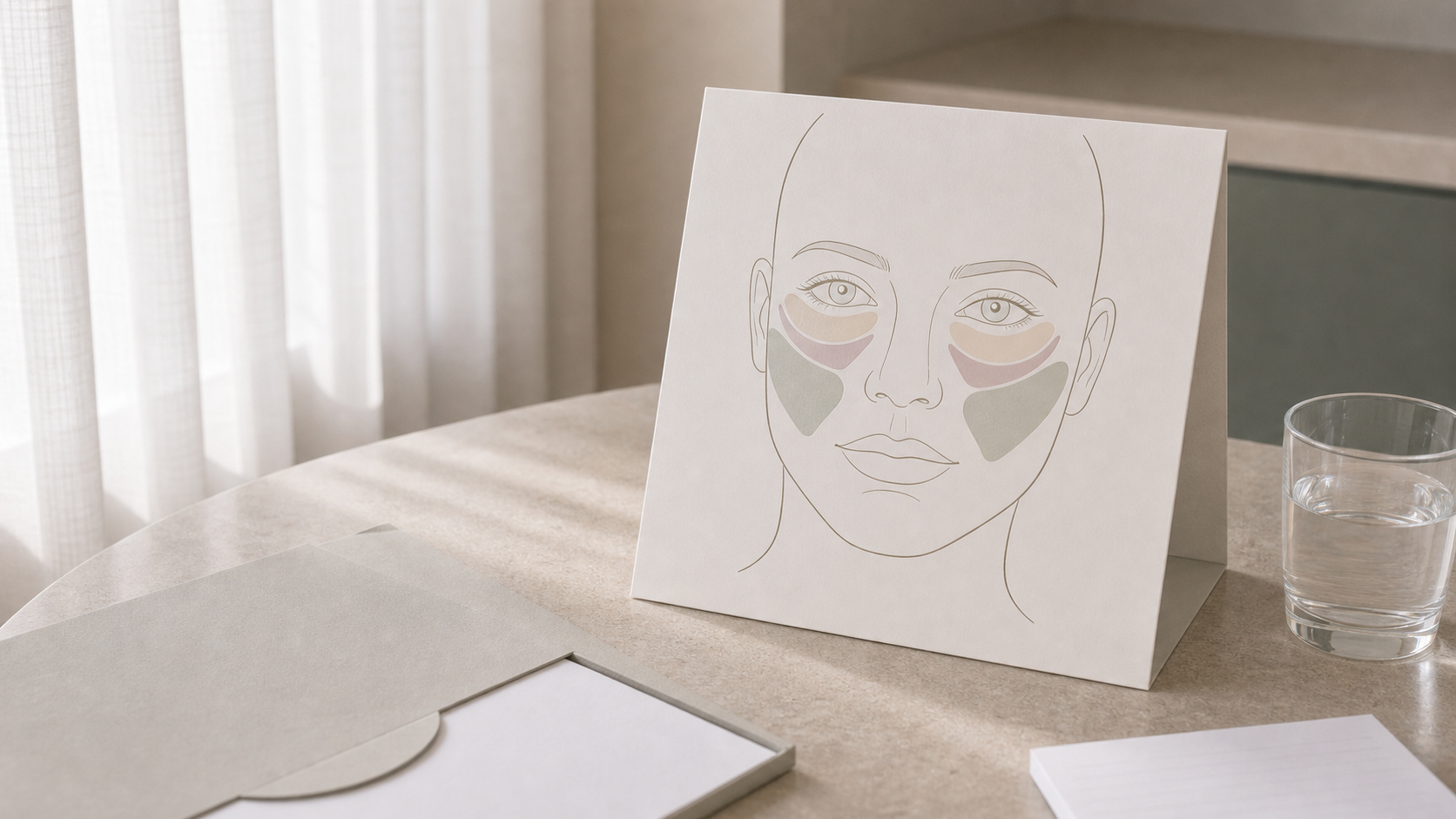
The result is a combined effect. The eyes look more fatigued. The cheeks look flatter. The whole face appears less rested than its owner actually is. Treating one without understanding the other is a common source of partial or inconsistent outcomes, which is why a full face assessment is typically more useful than a single area approach.

Why lifestyle changes do not always resolve it

People often attempt to address a persistent tired appearance by improving sleep quality, increasing hydration, or upgrading their skincare. These are all genuinely worthwhile. But they do not always address the underlying issue if that issue is structural.

Sleep, hydration, and skincare may improve skin quality and reduce temporary puffiness. They are unlikely to reduce persistent shadowing, reverse hollowing, or restore volume and contour where it has redistributed over time.

This is why someone can be doing everything right, sleeping well, eating well, looking after their skin, and still consistently look more tired than they feel. It is not a failure of their routine. It is a different category of change that lifestyle adjustments are not designed to address.

When a clinical assessment might be worth considering

A consultation is not a commitment to treatment. Its purpose is to determine what is actually causing the appearance, whether it is structural, skin related, or a combination of both, and whether any intervention is clinically appropriate.

People typically consider an assessment when the appearance is persistent rather than occasional, when it does not reflect how they feel or function, when it is noticeable in photographs or commented on by others, or when skincare and lifestyle changes have had limited effect on it.

Not everyone who comes to a consultation proceeds to treatment, and that is an expected and appropriate outcome. In many cases the most valuable thing a consultation provides is a clear explanation of what is happening and realistic expectations about what can and cannot be addressed.

What treatment is actually targeting when it is considered

When treatment is appropriate in this context, it is not about making someone look different. It is about understanding where structural support has shifted, how that shift is affecting light and shadow across the face, and whether a subtle adjustment could rebalance that relationship.

In the under-eye and tear trough area, treatment options for appropriate candidates are focused on reducing the depth of shadowing, softening the lid-cheek transition, and supporting more even light reflection. The aim is not to add volume indiscriminately. Volume placed inappropriately in this area can create its own problems, which is why precise assessment and conservative technique matter more here than almost anywhere else on the face.

In some cases the midface may also be relevant. In others, the most appropriate recommendation is no treatment at all.

When treatment is not the right answer

This is an essential part of the clinical picture. Treatment may not be appropriate when the appearance is primarily driven by skin factors rather than structural ones, when the concern is mild and not meaningfully affecting quality of life, when expectations about what treatment can realistically achieve do not align with what the clinical picture supports, or when observation and reassurance are the better clinical course.

A conservative, assessment-led model means that the consultation is as likely to end with a recommendation against treatment as with one. That is not a failure of the consultation process. It is the intended outcome when the clinical evidence does not support intervention.

Why a whole-face view matters more than a single area focus

One of the most consistent errors in addressing a tired appearance is focusing exclusively on the area that looks tired. Treating only under the eyes without considering the relationship to the cheeks, or addressing a single feature without understanding the surrounding structural context, often produces outcomes that feel incomplete or imbalanced.

The face functions as a connected system. A change in one area typically has relationships to adjacent areas. An assessment that considers the full face, rather than a single complaint, is more likely to identify the actual cause, avoid unnecessary treatment in areas that do not need it, and produce a proportionate and natural result where treatment is appropriate.

Book a consultation at Core Aesthetics

If a persistent tired appearance is affecting how you see yourself in photographs, how others respond to you, or simply how you feel day to day, a clinical assessment is a straightforward way to understand what is actually happening.

The consultation at Core Aesthetics is a standalone appointment with Corey Anderson, Registered Nurse. Corey assesses the relevant anatomy directly, explains the structural factors contributing to the appearance, and provides an honest recommendation about whether treatment is appropriate. Not every assessment leads to treatment. For some presentations, observation and reassessment is the right outcome. For others, a targeted structural approach may be appropriate.

The consultation is not a commitment to treatment. It is a commitment to understanding the problem clearly.

Book a Consultation

Is this for you?

Consider booking a consultation if

  • Adults who consistently appear more tired than they feel
  • People whose tired appearance persists regardless of sleep and lifestyle
  • Those where skincare changes have had limited effect on the appearance
  • Individuals where the appearance is noticeable in photographs or to others

This may not be for you if

  • Those whose tired appearance is temporary and resolves with rest
  • Those primarily concerned with skin texture or tone rather than structural shadowing
  • People seeking a dramatic change rather than a subtle structural correction

Suitability is confirmed at consultation. This list is general guidance, not a substitute for clinical assessment.

Frequently asked questions

What is causing my persistent tired appearance if I am sleeping enough?

A persistent tired appearance that does not resolve with rest is almost always structural rather than a skin problem. Over time, gradual changes in facial fat pad volume, bone density, and ligament support alter how light reflects across the face. The resulting shadow patterns, particularly under the eyes and in the midface, are what the brain reads as fatigue. These changes are independent of how well-rested you actually are.

Will eye cream or skincare address this kind of tired appearance?

Skincare can improve surface quality, reduce temporary puffiness, and support overall skin health. It is unlikely to address the shadow patterns and structural changes that produce a persistent tired appearance. If the cause is primarily structural, surface-level products work at the wrong level of the face. A clinical assessment helps identify which factor, skin, structure, or a combination, is the primary driver.

Is the under-eye area the main cause of looking tired?

The under-eye area is usually where the appearance is first noticed, but it is rarely the complete picture. The tear trough region is strongly influenced by the volume and support of the midface directly below it. In many cases, the midface is the primary structural driver, and treating the tear trough in isolation without considering the broader facial context can produce incomplete outcomes. A whole-face assessment is more useful than a single-area focus.

What does a clinical assessment for a tired-looking face involve?

At Core Aesthetics, the consultation involves a thorough medical history, a direct assessment of the relevant facial anatomy, and a discussion of the specific structural factors contributing to the appearance. Corey Anderson will explain the cause of the changes observed, whether treatment is appropriate, and if so, what approach would be considered. No treatment is performed at the consultation appointment.

What treatments might be considered for a structurally tired appearance?

Treatment options depend entirely on the individual clinical assessment. Where structural volume changes are the primary driver, treatment may focus on the tear trough, midface, or a combination of these, depending on what the anatomy supports. Not all presentations are appropriate for treatment. Corey Anderson will advise honestly on whether and what intervention is warranted based on the assessment findings.

How do I know if my tired appearance is structural or skin-related?

A clinical assessment is the most reliable way to determine this. Structural causes tend to produce shadow patterns under the eyes and in the midface that remain constant regardless of skin hydration, sleep, or other variables. Skin-related causes tend to be more diffuse and may respond to skincare or lifestyle changes. Many presentations involve both, and understanding the relative contribution of each informs what, if anything, would meaningfully help.

Is it possible that treatment will not make a meaningful difference?

Yes, and this is an important part of the clinical conversation. Not every structural tired appearance is suitable for treatment, and not every treatment that is technically possible will produce a result that is meaningful to this individual. Corey Anderson approaches the consultation honestly, including advising against treatment when the expected outcome does not justify the procedure. This is standard practice at Core Aesthetics.

Is it too early to have a consultation if the change is mild?

No. A consultation is useful at any stage of the process, including when a change is still mild and you are not yet certain whether you want to do anything about it. Understanding what is happening structurally, why it is happening, and what options exist is valuable regardless of whether you proceed with treatment. Early assessment also allows for consideration of a gradual, preventative approach if that is clinically appropriate.

Clinical references

Written and reviewed by Corey Anderson RN, AHPRA NMW0001047575 · Reviewed 2026-05-01 · TGA & AHPRA compliant

Begin With A Conversation

Book your consultation.

No commitment, no pressure. A considered first step toward understanding what is and isn’t right for you.

Book Consultation

Elegance, Perfected.