A first facial assessment should examine four lenses: the face at rest, natural movement, skin behaviour and personal context such as health history, previous care, timing and preferences. Corey Anderson RN then connects those observations to one priority you have identified. This helps explain what is relevant, what remains uncertain and which suitable choices can be discussed without turning the whole face into a list of problems.
Why Use Four Lenses Instead Of A Treatment List?
A treatment list starts with possible actions. A facial assessment starts with what you notice and the conditions in which you notice it. The four lenses of rest, movement, skin and personal context keep that distinction clear.
Corey then returns to one priority chosen by you. This prevents a broad facial review from becoming a catalogue of supposed faults and keeps the discussion relevant to the reason you booked.
What Does Each Lens Add To The Assessment?
Each lens answers a different question. None can provide the whole explanation alone.
| Lens | What is observed | Question it helps answer |
|---|---|---|
| Rest | Proportion, contour, symmetry, shadows and features visible without expression | What remains present when the facial muscles are relaxed? |
| Movement | Natural smile, brow, eye, lip and jaw movement | When does the concern appear, deepen or change? |
| Skin | Texture, hydration, colour variation, elasticity and surface condition | Could the surface contribute to what is being noticed? |
| Personal context | Health, medicines, earlier care, timing, preferences and important commitments | What changes suitability, consent, priorities or timing? |
| Priority anchor | The feature or situation the guest wants to understand first | Which observations are relevant to this consultation? |
How Is The Face Observed At Rest?
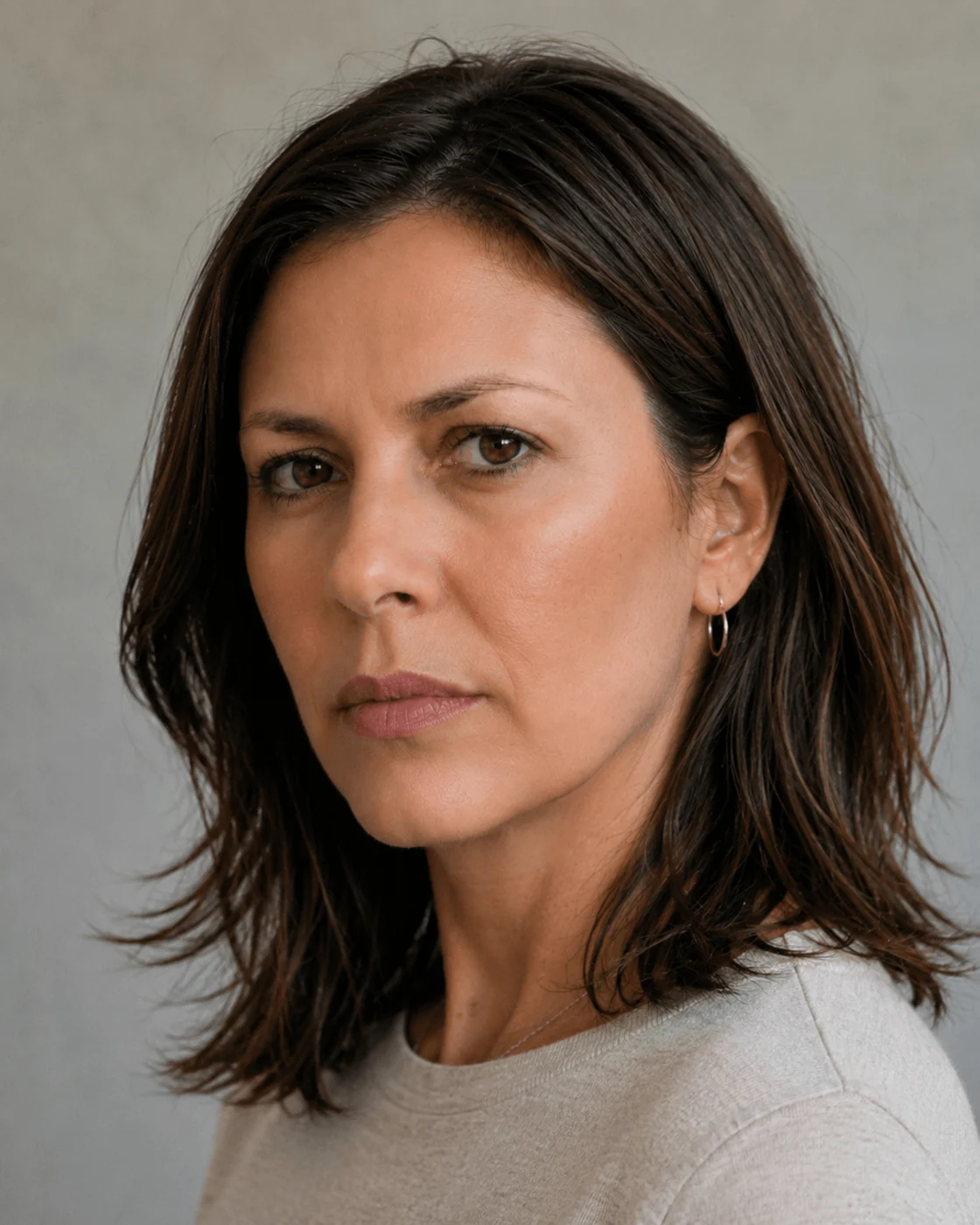
You may be asked to sit comfortably, relax the expression and look ahead. Corey considers the feature you identified alongside surrounding proportions, ordinary asymmetry, contour and the way light falls across the face.
This is not an exercise in finding every difference. Human faces are not perfectly symmetrical. The useful task is to decide which resting observations help explain the chosen priority and which are simply part of the person’s normal facial character.
Why Does A Wider View Matter?
A concern can look different when isolated in a close mirror or cropped photograph. A wider view shows how neighbouring features, head position and expression influence the overall impression. It can also reveal when a single angle exaggerates a shadow or contour.
Looking more widely does not imply broader treatment. It provides context for a narrower discussion. Any option should still be tied to the agreed priority, current assessment and informed consent.

How Is Natural Movement Considered?
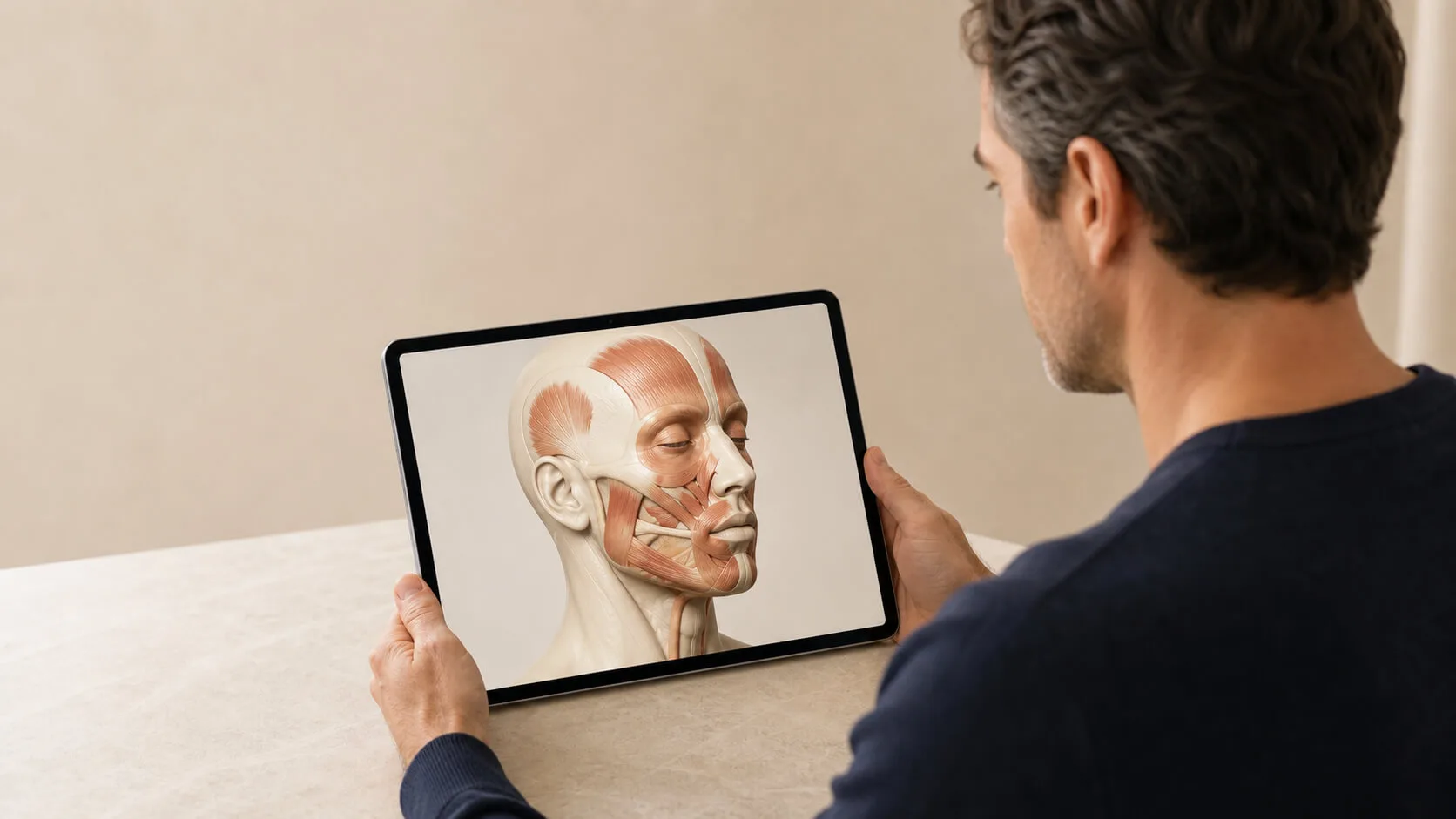
Corey may ask for an ordinary smile, frown, brow raise, lip movement or jaw movement when relevant to the concern. The aim is to see the sequence and range that occur naturally, not to force an extreme expression for a dramatic photograph.
Movement can show whether a feature appears only during expression, remains at rest or changes because neighbouring areas move together. It also helps you explain which expressions you want to preserve.
What Does The Skin Lens Contribute?
Skin texture, hydration, colour variation, elasticity and current irritation can influence how lines, shadows and contours are perceived. The skin lens helps avoid attributing every visible concern to structure or movement.
Corey can explain what is observable within the consultation and where another type of assessment may add useful information. A public page cannot diagnose a skin condition or decide an individual pathway.
How Does Personal Context Change The Map?
Your health history, medicines and supplements, allergies, pregnancy or breastfeeding where relevant, earlier cosmetic care, recent illness, dental or medical plans, travel and important events can change the questions that need answering.
Preferences matter too. A person who prioritises expressive movement, a familiar family feature or minimal appointment disruption may interpret the same observation differently from someone with another priority. This context belongs inside the assessment, not as an afterthought.
Where Can You Explore Each Lens Further?
Use the full face consultation guide for a broader overview, the facial change guide for changes over time, and the expression guide for movement priorities.
Read suitability guidance, the consent guide, the safety guide, verification or booking for the next practical question.
Who Conducts The Assessment In Oakleigh?
Core Aesthetics is at 12A Atherton Road, Oakleigh VIC 3166. Consultations are conducted by Corey Anderson RN, Ahpra registration NMW0001047575. The clinic telephone number is 0491 706 705.
Use the verification page and the Ahpra public register to confirm practitioner details. Corey is responsible for explaining how each observation relates to your priority and where uncertainty remains.
What Happens Once The Map Is Clear?
Corey summarises the observations that relate to your priority, the limitations of the assessment and the choices that are reasonable to discuss. When individual assessment and informed consent support a suitable option, care on the day can be discussed. More information, adjusted timing, another clinical review or a different pathway can be incorporated when useful.
These cosmetic procedure guidelines inform the consultation process. The Ahpra guidelines for registered health practitioners who perform non-surgical cosmetic procedures and the TGA guidance for advertising health services involving therapeutic goods provide official context.
This page is general education, not personal medical advice, diagnosis, urgent care, a treatment recommendation or confirmation of suitability. Individual advice requires assessment and informed consent.
Is this for you?
Consider booking a consultation if
- Adults attending a first aesthetic consultation who want to understand how facial assessment works
- Patients who want structure, movement, skin and suitability reviewed before a plan is discussed
- People who value conservative assessment and honest no-treatment advice
- Patients in Oakleigh, Melbourne or South East Melbourne seeking consultation with Corey
This may not be for you if
- Urgent symptoms or medical concerns that need immediate care
- People seeking a promised cosmetic outcome from assessment alone
- People wanting treatment without medical history, consent, risk discussion or suitability review
- Concerns that require GP, dental, dermatology or other medical review before cosmetic planning
Suitability is confirmed at consultation. This list is general guidance, not a substitute for clinical assessment.
Frequently asked questions
What are the four lenses in a facial assessment?
The four lenses are the face at rest, natural movement, skin behaviour and personal context. Rest shows features present without expression. Movement shows when a concern changes. Skin adds surface context. Health history, previous care, timing and preferences help determine which observations are relevant to suitability and consent.
Will Corey assess my whole face even if I have one concern?
Corey may look more widely to understand how neighbouring features, movement and light influence the concern you identified. That wider view does not imply whole face treatment. The discussion should return to your chosen priority and explain only the observations that help clarify it.
Why am I asked to make facial expressions?
Natural expressions show when a feature appears, deepens or changes and how neighbouring areas move together. Corey may ask for an ordinary smile, frown, brow raise, lip movement or jaw movement when relevant. The aim is to observe normal movement and understand which expressions you want to preserve.
Does a facial assessment identify everything that could be changed?
No. The purpose is not to compile a list of faults or possible procedures. It is to connect your chosen priority with relevant observations across rest, movement, skin and personal context. Ordinary asymmetry and familiar facial character are acknowledged rather than automatically presented as problems.
What health and timing details should I share?
Are photographs part of a first facial assessment?
Consented photographs may help document the current baseline and support later comparison. Ordinary personal photographs can also help explain when you notice a concern. Images do not replace current examination, and differences in lighting, lens, expression and head position should be considered before drawing conclusions.
Can suitable care be discussed after the assessment?
Yes. When the individual assessment and informed consent support a suitable option, care on the day can be discussed. It is not predetermined by booking. More information, adjusted timing, another clinical review or a different pathway can also be incorporated when useful, based on the actual findings and your priorities.
How do I verify Corey and the Oakleigh clinic?
Use the Core Aesthetics verification page and the Ahpra public register to confirm Corey Anderson RN, registration NMW0001047575. The contact page provides the current Oakleigh address and communication details. Independent verification confirms who is responsible for the assessment and clinical discussion.