This guide was prepared by Corey Anderson, Registered Nurse (AHPRA NMW0001047575) at Core Aesthetics, a cosmetic injectables clinic in Oakleigh, Melbourne. Results vary between individuals; a consultation is required to assess suitability and develop a personalised treatment plan.
mid face volume loss often shows up before people can quite name it. The face can look flatter, more tired, or less supported through the cheeks, even when skin quality is still good and lines are not the main concern. For many adults in Melbourne, especially those balancing work, family, and a polished professional image, this change is less about age alone and more about facial structure, lifestyle, and the gradual shift in how light sits across the face.
At Core Aesthetics in Oakleigh, conversations around facial rejuvenation are approached with clinical care and aesthetic restraint. The aim is not to change how someone looks, but to understand what has altered and whether there are suitable, nonsurgical options that may support facial balance in a refined way.
What is mid face volume loss?
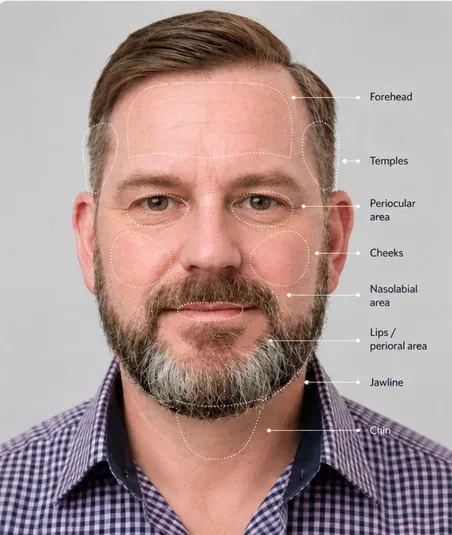
The mid face refers broadly to the area from the lower eyelids to the upper cheeks. It plays a central role in facial harmony because it supports the transition between the eyes, cheeks, nose, and mouth. When this area loses volume, the face may appear less lifted, the under eye region can seem more shadowed, and folds around the nose and mouth may become more noticeable.
This does not happen in exactly the same way for every person. Some people naturally have flatter cheeks and notice change earlier because there is less structural fullness to begin with. Others maintain cheek shape for longer but start to see descent or softening in the surrounding tissues. In practice, mid face volume loss is rarely just one issue. It is usually a combination of volume reduction, tissue movement, skin changes, and bone remodelling over time.
Why the mid face changes with age
Ageing in the face is a layered process. Skin, fat, muscle, ligament support, and bone all contribute to facial shape. In the mid face, one of the more noticeable changes is the reduction and repositioning of fat pads that create youthful contour through the cheeks. As these structures change, the face may reflect light differently and lose some of its natural softness.
There is also gradual change in the deeper framework of the face. Bone support around the cheeks and eye area can reduce with age, which affects how the overlying tissue sits. This is one reason why a face can look more hollow or tired even when skin is well cared for. Good skincare matters, but skincare alone cannot replace lost structural support.
Environmental and lifestyle factors can also influence how early or how strongly these changes appear. Sun exposure, weight fluctuations, smoking history, stress, and poor sleep may all affect skin quality and facial fullness. Genetics matter as well. Some people in their thirties notice mid face changes, while others may not be concerned until much later.
Common signs of mid face volume loss
The most common sign is flattening across the upper cheek. This can reduce the soft curve that is often associated with facial freshness and support. Some people also notice that the under eye area looks more hollow, especially in certain lighting. Others become more aware of folds beside the nose or a heavier appearance lower in the face.
These signs can be subtle. In many cases, the person does not feel they look dramatically older, only less rested or less defined. That distinction matters. A careful assessment should look at the whole face rather than focusing on one isolated line or area.
Why assessment matters more than assumption
Searches for mid face volume loss often lead people straight to treatment options, but assessment should come first. That is particularly important in cosmetic medicine, where the same visible concern can have different underlying causes. For example, under eye shadowing may relate to cheek support, pigmentation, skin thinning, facial anatomy, or all of the above.
A consultation allows for a broader view of facial proportion, skin quality, movement, and structural support. It also creates space to discuss medical history, previous aesthetic treatments, and what the person is actually hoping to improve. In a premium clinical setting, subtlety is not an afterthought. It is part of the treatment philosophy.
This consultation led approach is especially relevant for clients around Oakleigh and greater Melbourne who want a discreet result and a plan that aligns with their features rather than current trends. Suitability, not speed, should guide next steps.
How mid face volume loss is approached in clinic
Management depends on the individual. In some cases, the concern is primarily structural and may be discussed in the context of facial volumisation. In others, skin support, hydration, or overall facial balancing may be more relevant. A responsible medical consultation should explain options, limitations, and whether treatment is appropriate at all.
For suitable patients, nonsurgical approaches may be considered as part of an overall rejuvenation plan. The purpose is not to create exaggerated cheek fullness or alter identity. The focus is usually on support, proportion, and softness through the central face. Small adjustments can have a meaningful effect on how balanced the face appears, but appropriateness varies from person to person.
It is also worth noting that not everyone with mid face volume loss needs immediate intervention. Some clients benefit first from an evidence based skincare plan, sun protection, or a staged approach that reviews facial changes over time. Clinical judgement matters here, particularly when the goal is elegance and restraint.
mid face volume loss in younger adults
A common misconception is that volume loss is only a concern for mature patients. In reality, younger adults may notice early change due to genetics, low body fat, high stress, intense exercise, or previous weight loss. In these patients, the concern is often described as looking drawn or fatigued rather than aged.
For this group, conservative planning is especially important. A balanced face does not require unnecessary correction. The best approach is usually the one that respects natural anatomy and keeps the overall look understated.
Skin quality versus structural loss
People often confuse dehydration, dullness, and laxity with volume loss. While these can occur together, they are not the same. Skin quality concerns affect texture, tone, and luminosity. Structural volume loss affects contour, support, and the way facial shadows form.
This distinction helps explain why one person may invest in excellent skincare and still feel their face looks flatter or more tired. Skin can be healthy and glowing, yet the face may still benefit from a deeper assessment of support through the mid face. Equally, some people do not need structural treatment at all and are better served by focusing on skin health first.
How Dermal Filler Is Used as a Structural Tool
Dermal filler is often described in terms of volume, adding more to make something look bigger. This framing misrepresents how filler functions in skilled clinical practice. Filler is a structural tool. It can restore lost support in areas where facial volume has diminished with age. It can define a contour that was never clearly pronounced. And in some cases it can shift the proportional relationships between facial regions in a way that changes how the face reads overall.
Volume, in the sense of visible fullness, is sometimes a goal. But the mechanism is anatomical. Filler placed in the right tissue plane, at the right depth, with an understanding of the surrounding anatomy, produces a different result than filler placed superficially to fill a surface irregularity. This is why technique, placement, and clinical knowledge matter far more than product selection.
At Core Aesthetics, treatment decisions are based on a full facial assessment. Corey evaluates the face as a whole before deciding whether filler is appropriate, where it would be most effective, and what volume would be consistent with a proportionate outcome. This assessment may lead to a recommendation not to treat, and that outcome is equally valid.
Understanding Facial Volume Loss and Why It Matters
The face changes with age through a combination of processes: bone resorption, fat pad redistribution, muscle changes, ligament laxity, and skin quality decline. These processes do not happen uniformly or at the same rate in different people. Two people of the same age may present very differently because of genetics, lifestyle, sun exposure, and individual anatomical variation.
Volume loss is one of the most clinically significant contributors to an aged appearance. When the structural support provided by subcutaneous fat and bone diminishes, the overlying skin is no longer held in place by the same framework. Features that once appeared well defined become less distinct. The relationship between facial thirds can shift. Hollowing in specific areas, the cheeks, the temples, the under eye region, creates shadows and contours that are often interpreted as tiredness or loss of vitality.
Understanding the underlying anatomy is essential to treating it appropriately. Filler placed to address a surface concern without accounting for the structural deficit beneath it will produce a less effective and less enduring result. The consultation process at Core Aesthetics focuses on identifying the anatomical contributors to the concerns you have raised, not just addressing the surface appearance.
The Assessment Process Before Any Filler Treatment
At Core Aesthetics, the consultation for dermal filler treatment is a structured clinical appointment, not a sales conversation. Corey assesses the face in three dimensions, at rest, during movement, and from multiple angles. The goal is to understand the structural landscape of your face before deciding where, how much, and whether filler is the right approach.
Key aspects of the filler assessment include evaluating facial symmetry and identifying natural asymmetries that should be preserved or addressed; assessing the depth and distribution of any volume deficit; reviewing skin quality to determine how filler would integrate; and discussing your goals in the context of what is anatomically achievable. For some concerns, filler alone is sufficient. For others, a combination of treatments, or a different approach entirely, may be more appropriate.
You will leave the consultation with a written treatment plan that documents the assessment findings, the proposed approach, and the expected outcomes. Treatment is scheduled at a separate appointment, allowing time to consider the plan, ask further questions, and make an informed decision without any time pressure.
Dissolution, Complications, and Revision
Hyaluronic acid fillers are reversible. If a complication arises, if the result is unsatisfactory, or if a patient wishes to return to their baseline, hyaluronidase enzyme can be injected to dissolve the filler. This is an important safety feature that distinguishes hyaluronic acid products from permanent or semi permanent fillers, which cannot be dissolved.
Dissolution does not always produce an immediate return to the pretreatment state. The process requires time, and in some cases more than one dissolution treatment. Swelling from the dissolution procedure can temporarily alter appearance. Corey will explain this clearly at consultation so that patients understand what reversal involves before they commit to treatment.
At Core Aesthetics, only hyaluronic acid formulations are used for dermal filler treatment, the reversibility of these products is a deliberate clinical choice. Emergency protocols for vascular occlusion, the most serious potential complication of filler, are maintained at the clinic. Patients are briefed on the signs of this complication and given emergency contact instructions as part of every treatment appointment.
Managing Expectations and the follow-up Process
One of the most important conversations at a filler consultation is about what the treatment can and cannot do. Filler can address anatomical concerns related to volume, structure, and proportion. It cannot reverse all signs of ageing, change skin quality, alter bone structure, or produce a different face. Approaching treatment with an accurate understanding of its scope produces better outcomes than approaching it with the expectation of transformation.
After filler treatment, a follow-up appointment at four to six weeks is standard practice at Core Aesthetics. This allows Corey to assess how the product has settled and integrated, to evaluate the result against the treatment plan, and to determine whether any refinement is appropriate. Minor asymmetries or areas where volume distribution could be adjusted are addressed at this review, not at the initial appointment where swelling and bruising can obscure the final result.
Results are always reviewed. Treatment at Core Aesthetics is not a transactional event, it is the beginning of a clinical relationship aimed at supporting your facial health over time.
About This Information
The information on this page is provided for general educational purposes. It is not a substitute for clinical advice and does not constitute a recommendation that you proceed with any particular treatment. Cosmetic injectable treatments are prescription medical procedures. They carry risks that vary between individuals and that must be assessed and discussed in a clinical context before any treatment decision is made.
At Core Aesthetics, Corey Anderson assesses every patient individually. The consultation is the point at which your specific anatomy, medical history, and goals are evaluated together. No treatment is offered at a first appointment, and no treatment is appropriate for everyone. This page is a starting point, a way to understand what is involved before you decide whether a consultation is the right next step for you.
If you have questions about anything on this page or about whether treatment might be appropriate for your situation, you are welcome to call the clinic or book a consultation at no obligation.
This page provides clinical information about What Causes mid face Volume Loss?. It is intended for adults aged 18 and over who are considering cosmetic injectable treatment and want to understand the clinical process, suitability factors, and what to expect from a consultation-based practice. All treatment decisions at Core Aesthetics follow individual assessment, no treatment is offered at a first appointment without a separate consultation. Results vary between individuals and are reviewed at follow-up.
Is this for you?
Consider booking a consultation if
- Adults 18+ who have noticed mid face flattening or hollowing
- Those wanting to understand the anatomy behind facial volume loss before consulting
- People who have been assessed as suitable through a clinical consultation
This may not be for you if
- Anyone under 18
- People with active infection, pregnancy, or relevant contraindications
- Those expecting significant change from treatment without proper clinical review
Suitability is confirmed at consultation. This list is general guidance, not a substitute for clinical assessment.
Frequently asked questions
How is dermal filler different from anti-wrinkle treatment?
anti-wrinkle treatment works by temporarily reducing the activity of specific muscles responsible for expression lines. Dermal filler works by adding structure, volume, or support to a facial area, it does not affect muscle activity. The two treatments address different anatomical concerns. Many treatment plans involve both, depending on individual assessment.
How long does dermal filler last?
Dermal filler longevity varies considerably between individuals and between treatment areas. Denser, structural areas such as the jaw and cheek tend to maintain filler longer than softer, higher movement areas such as the lips. Most people find that filler in a given area lasts between nine months and two or more years. Metabolism, movement patterns, and lifestyle factors all influence longevity. This is reviewed at follow-up appointments.
At what age does midface volume loss typically become noticeable?
Midface volume loss tends to become visible in the mid to late thirties for most people, though it varies with genetics, sun exposure, weight changes, and lifestyle factors. Some people notice it earlier, particularly after significant weight loss or extended periods of high physical stress.
How is suitability for this treatment determined?
Suitability is decided through individual consultation with Corey Anderson, AHPRA registered nurse. Anatomy, medical history, prior treatments and the realistic outcomes of treatment are all reviewed before any decision is made.
What happens if treatment is not appropriate?
If the assessment finds that treatment is not appropriate, that conclusion is part of the consultation outcome. Results vary between individuals, and the consultation may identify reasons to defer, alter, or decline the treatment plan.
Are cosmetic injectables prescription medicines in Australia?
Yes. All cosmetic injectables used at Core Aesthetics are prescription medicines in Australia and can only be administered by an AHPRA registered health practitioner following individual clinical assessment.
How long does the consultation take?
A first cosmetic consultation typically takes 30 to 45 minutes and includes anatomy review, medical history, and discussion of realistic outcomes. There is no obligation to proceed with treatment afterwards.
Can I bring questions to the consultation?
Yes. Coming with a list of questions and concerns is encouraged. The consultation is designed to give you accurate information so you can make a considered decision.