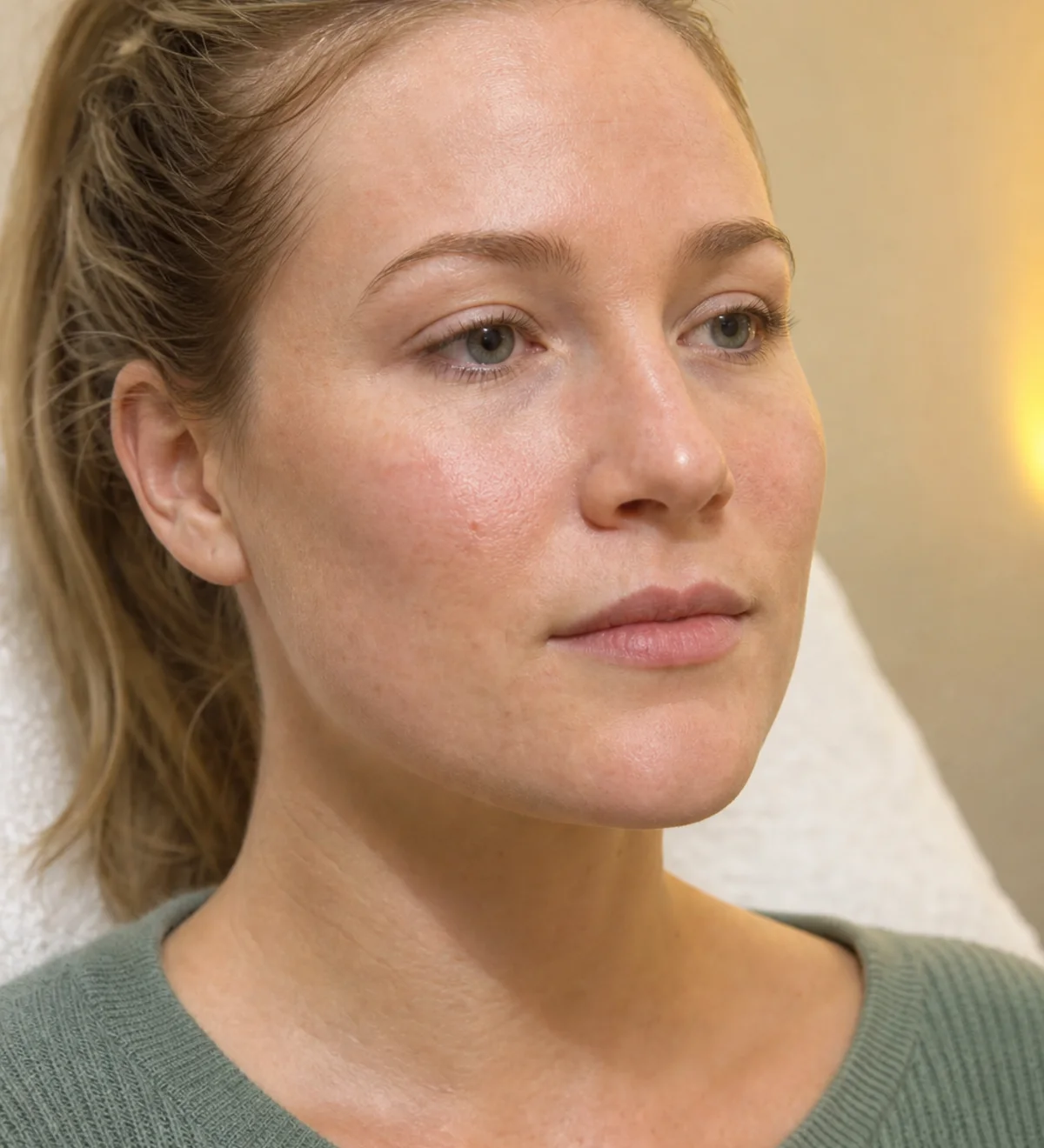
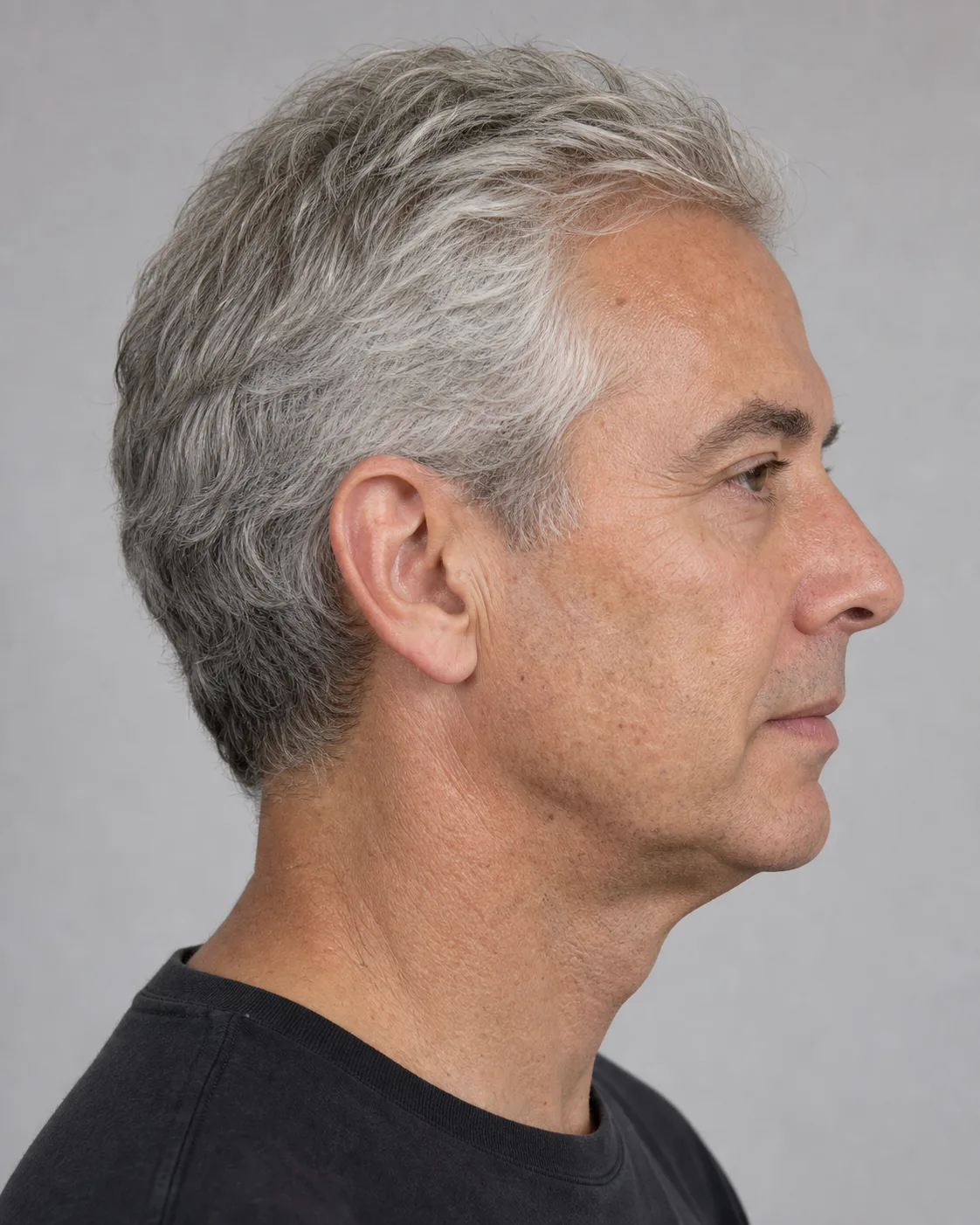
Cheek volume treatment typically lasts between 12 and 24 months, depending on placement depth, the product used, individual metabolism and the degree of facial movement in the treated area. A consultation-first approach and long-term planning guide treatment decisions at Core Aesthetics.
Why the midface holds volume treatment longer than other areas
The cheek and midface region is generally one of the longer lasting placements for injectable volume treatment, and this comes down to anatomy and mechanics. The muscles that govern cheek movement during smiling and facial expression are present but produce far less repetitive stress on volume treatment than the muscles around the lips, jaw or forehead. Volume treatment placed in a low movement environment degrades more slowly because it is not being constantly worked and displaced.
Placement in the deeper tissue planes, close to the bone, also contributes to longevity. Products placed at the periosteal level sit in a stable environment with relatively little mechanical disruption. Superficial placement in the cheek, by contrast, tends to fade faster and may be more visible as it does.
The combination of reduced movement, deep placement and the structural products commonly chosen for the midface means that many patients find cheek volume treatment among their most durable treatments.
Typical duration ranges for cheek volume treatment
Most patients find cheek volume treatment lasts between 12 and 18 months, with a meaningful proportion maintaining results to 24 months or beyond. The wide range reflects genuine variation in individual physiology rather than differences in technique alone.
Patients who metabolise injectable products quickly, often those with very active lifestyles or naturally fast metabolic rates, may find their results at the lower end of the range. Those with slower metabolism and less physical intensity in their day to day routines often see results lasting towards the upper end.
It is worth noting that fading in the midface tends to be gradual and subtle. Rather than a defined point where the volume treatment is clearly gone, most patients notice over several months that the projection and volume they had immediately after treatment begins to soften. This makes timing reviews a matter of clinical assessment rather than a fixed date on a calendar.
How placement depth affects longevity in the cheek
Where volume treatment is placed in the tissue layers of the cheek has a direct effect on how long it lasts. The cheek has multiple anatomical layers, skin, subcutaneous fat, superficial fat compartments, deeper fat compartments, and the periosteum immediately above the bone. Different layers serve different purposes and behave differently over time.
Deep placement on or near the periosteum provides structural projection and lift, and this is where longer lasting results tend to occur. The tissue at this depth is less vascular and less subject to the fluid dynamics that accelerate product breakdown at more superficial levels.
Placement in the superficial fat layers can soften fine surface irregularities and add subtle plumpness, but product at this depth is closer to the skin, more exposed to sun and environmental factors, and more subject to facial movement. Duration tends to be shorter.
A practitioner experienced in midface anatomy will assess which tissue planes are appropriate for your specific concern before recommending an approach. This is one reason why consultation before treatment is essential, not every cheek concern requires deep structural placement, and the right depth depends on what is actually driving your presentation.
The role of product selection
Volume treatment used in the cheek is typically a firmer, higher cohesivity product than what would be used in the lips or tear trough. Firmer products provide the structural support needed to lift and restore midface projection, and they also tend to have greater longevity than softer, more pliable formulations.
The specific product chosen at your consultation will depend on the degree of volume loss, the depth of placement, your anatomy and the outcome being planned. At Core Aesthetics, this decision is made as part of the consultation assessment, it is not a decision made in isolation from your individual presentation.
From a compliance standpoint, we do not name specific product brands in our clinical communications, in line with TGA advertising guidelines. Your practitioner will discuss the clinical rationale for product selection at your appointment.
Individual factors that affect how long results last
Beyond anatomy and placement, several individual factors influence how long cheek volume treatment lasts for any given patient.
Metabolic rate. Some individuals break down hyaluronic acid based products more quickly than others. This appears to be partly genetic and partly related to overall activity levels and inflammatory status. Patients who have noticed consistently shorter than expected duration across different treatments may have a higher baseline degradation rate.
Sun exposure and skin health. Chronic UV exposure increases skin inflammation and accelerates the breakdown of the underlying tissue environment. This is a modifiable factor, patients who are diligent about sun protection tend to see better longevity from injectable treatments overall.
Degree of volume loss at baseline. Patients with significant midface deflation who require larger initial volumes may notice that the visual result changes faster than those with mild volume loss, even if the volume treatment itself is degrading at the same rate. This is because a larger restoration has more to lose before the change becomes noticeable.
Previous treatment history. Patients who have had repeat treatments in the same area over time sometimes notice that subsequent treatments last longer. This is thought to relate to the tissue environment becoming more receptive as it adapts to the presence of volume treatment, though this observation remains anecdotal in clinical experience rather than definitively established in research.
What fading cheek volume treatment looks like
One of the distinguishing features of cheek volume treatment, compared with lip treatment, is how gradually it fades. Rather than a noticeable change over a few weeks, midface treatment typically fades over months in a way that many patients describe as simply returning to how they looked before.
The first sign is often a loss of the lift and projection immediately beneath the cheekbone. The face may begin to look slightly flatter in the midface, with the undereye to cheek transition becoming less defined. If volume treatment was placed to address jowling indirectly by supporting midface structure, patients may notice that the lower face begins to look heavier again as midface support diminishes.
Because the change is gradual, it is worth attending a review appointment rather than waiting until you feel the volume treatment has fully resolved. Early review allows a practitioner to assess whether a small maintenance volume would sustain results, or whether a fuller retreatment is more appropriate.
Anatomy assessment: not every cheek concern is a volume problem
Cheek concerns are driven by several different anatomical changes that occur with ageing, and not all of them respond to volume treatment in the same way. Bone resorption in the midface, redistribution of fat compartments, ligament laxity and skin changes all contribute to what a patient sees when they look in the mirror. Volume treatment addresses volume and support, but it cannot reverse skin laxity or correct concerns primarily driven by bony change.
This is why assessment is essential before any treatment. A consultation at Core Aesthetics focuses on identifying what is actually driving your concern, not simply responding to a request for cheek volume treatment. In some cases, a patient presenting with a desire for cheek enhancement may benefit more from treatment in a different area, or from understanding that their concern is not one volume treatment can address effectively.
We sometimes say no, or suggest an approach the patient has not considered, when the anatomy warrants it. This is part of what a consultation based model means in practice.
Planning a Long-Term midface approach
The midface is one of the first areas to show age related volume loss, and for many patients it becomes an area of ongoing, periodic treatment over time rather than a single episode of care. Understanding this from the outset allows for more realistic planning.
A long term approach typically involves an initial treatment to establish the desired volume and structure, a review at six to eight weeks to assess the settled result, and subsequent maintenance appointments as the product begins to fade. Some patients maintain with a smaller volume at each subsequent treatment; others prefer to allow more significant fading before re treating.
These decisions are made collaboratively at each review appointment rather than decided in advance, because the right timing and volume depend on how your individual anatomy responds and what you observe between appointments.
Questions to consider before your consultation
If you are exploring cheek volume treatment or a review appointment, it is useful to come prepared with your own observations about how your face has changed over time. Useful things to reflect on include: which aspect of your midface concerns you most, loss of projection, a flatter undereye to cheek transition, a change in the definition of the cheekbone area, or something else. Photos from several years ago can be genuinely helpful as a reference for what has changed.
It is also worth considering whether you have had previous volume treatment in this area, when it was treated, what volume was used and whether you were happy with the result. This history helps a practitioner calibrate what is likely to work for you and how to approach the current presentation.
Finally, be open to the possibility that the consultation may lead to a recommendation that differs from what you came in expecting. This is not a failure of communication, it is the clinical process working as it should.
Clinical accountability and how volume treatment decisions are made
The volume treatment related guidance in “How Long Does Cheek volume treatment Last? A Clinical Duration Guide” reflects how Corey Anderson, AHPRA registered nurse (NMW0001047575), approaches facial volume treatment decisions at Core Aesthetics: anatomy led, conservative on volume, and willing to defer or refuse treatment when the assessment doesn’t support it. Volume treatment is a structural intervention. The decisions about where, how much, what depth, and what cannula or needle approach are clinical judgements that depend on the individual face in front of the practitioner. Results vary between individuals, and the same volume can read very differently on two faces with different bone structure, fat pad distribution, or skin quality.
Specific to how long does cheek volume treatment last: the assessment Core Aesthetics performs before any volume treatment includes facial proportions, skin quality, prior treatment history, and the patient’s stated goals, and considers whether facial volume treatment is the right intervention at all. For some patients, the right answer is no volume treatment this visit. For others, the right answer is a smaller amount than the patient anticipated. For others, the right answer is to address skin quality or to dissolve existing volume treatment before considering anything new. Results vary between individuals, and a conservative starting dose is almost always the better long term decision. The how long does facial volume treatment last page covers an adjacent volume treatment decision in more depth.
Patients reading this page who want to verify Corey Anderson’s AHPRA registration can do so directly on the AHPRA public register at ahpra.gov.au using registration number NMW0001047575. The Core Aesthetics clinic operates from 12A Atherton Road, Oakleigh VIC 3166, Tuesday to Saturday, by consultation appointment. All new patient treatment at Core Aesthetics follows a structured clinical consultation, consistent with the September 2025 AHPRA cosmetic procedures guidelines. Treatment may be scheduled for the same day as consultation or at a subsequent appointment, depending on clinical assessment and individual circumstances. Patients with questions about the content on this page can raise them at consultation; the practitioner is happy to walk through any clinical reasoning that the written content does not fully capture. Results vary between individuals, and the consultation is the appropriate place to discuss what those individual variations mean for a specific person’s treatment plan.
One additional consideration for volume treatment decisions: the patient’s prior treatment history matters more than most patients realise. Volume treatment that was placed years ago by another practitioner may still be present in tissue, may have migrated from its original placement, or may have changed how the area responds to new treatment. The consultation includes a careful history of any prior cosmetic treatment, and may include physical examination findings that inform the decision about whether new volume treatment is appropriate at all. Patients researching the topic in more depth may find the patient safety aesthetic treatments page and the consultation guide Melbourne page useful as further reading; both are written and reviewed under the same clinical accountability framework as this page.
Is this for you?
Consider booking a consultation if
- Adults aged 18 or over experiencing age related midface volume loss
- Patients who prefer a longer lasting treatment option with periodic maintenance
- Those willing to attend a consultation assessment before any treatment is recommended
- Patients seeking structural midface support as part of a gradual, planned approach
This may not be for you if
- Anyone under 18 years of age
- Those who are pregnant or breastfeeding
- Patients with active skin infection, inflammation or open wounds in the treatment area
- Anyone with a history of severe allergic reactions to volume treatment components
- Those seeking treatment on the same day as their first consultation at this clinic
Suitability is confirmed at consultation. This list is general guidance, not a substitute for clinical assessment.
Frequently asked questions
How long does cheek volume treatment typically last?
Most patients find cheek volume treatment lasts between 12 and 24 months, with 12 to 18 months being a common range. The midface tends to hold volume treatment longer than the lips or lower face because of deeper placement and lower levels of repetitive muscle activity in the treated area.
Why does cheek volume treatment last longer than lip treatment?
Cheek volume treatment is typically placed in deeper tissue planes, closer to the bone, where there is less mechanical disruption. The lips, by contrast, are subject to constant movement from speaking, eating and expression. This continual muscular activity accelerates the breakdown of volume treatment placed in that area. The midface simply provides a more stable environment for the product.
Does placement depth affect how long cheek volume treatment lasts?
Yes. Volume treatment placed at the periosteal level, directly above the cheekbone, tends to last longer than product placed in the superficial fat layers. Deep placement provides structural support and sits in a more stable tissue environment. Your practitioner will assess which depth is appropriate for your anatomy and concern at consultation.
What makes cheek volume treatment fade faster than expected?
Individual metabolic rate is the primary driver of faster than expected fading. High levels of physical activity, significant sun exposure and a naturally faster baseline metabolism can all shorten duration. In some cases, volume treatment placed at a more superficial depth may also fade faster than product placed in deeper structural planes.
What does fading cheek volume treatment look like?
Cheek volume treatment fades gradually rather than disappearing suddenly. The first signs are often a softening of midface projection and a less defined transition from the undereye to the cheek. The face may begin to look slightly flatter in the midface over a period of months. Many patients describe it as gradually returning to how they looked before treatment.
Can I do anything to make cheek volume treatment last longer?
Consistent sun protection is the most evidence based modifiable factor. Chronic UV exposure accelerates breakdown of the tissue environment and appears to shorten volume treatment longevity. Attending a review appointment at around six to eight weeks allows your practitioner to assess whether a small maintenance volume would extend the result before significant fading occurs.
How do I know when my cheek volume treatment needs reviewing?
Rather than waiting for a specific date, review appointments are best timed when you notice the result beginning to soften. This is typically a gradual change, a loss of projection or lift that occurs over months. Your practitioner can assess at review whether a maintenance treatment is appropriate or whether a full retreatment is indicated.
Is cheek volume treatment the right approach for my concern?
Cheek concerns can be driven by several different anatomical changes, not all of which respond to volume treatment alone. A consultation at Core Aesthetics assesses what is actually driving your presentation, bone resorption, fat redistribution, skin laxity or a combination, before any treatment is recommended. In some cases, volume treatment may not be the most appropriate approach, and the consultation is the place to work that out.
Who reviews the volume treatment related clinical content on this page?
Should I get facial volume treatment if I am not certain I need it?
Uncertainty about whether treatment is appropriate is a valid reason to book a consultation rather than treatment. A clinical assessment can clarify whether volume loss, structural descent or skin quality change is the primary driver of what you are noticing, and whether injectable volume treatment is the right approach. Treatment is never assumed at assessment.
Is it safe to have facial volume treatment while pregnant or breastfeeding?
Prescription injectable products are not recommended during pregnancy or breastfeeding. There is insufficient safety data on these products in pregnant or lactating individuals, and the precautionary standard is to defer treatment until after this period. If you are pregnant, planning pregnancy, or breastfeeding, please discuss this at your consultation.