Facial Volume Treatment Duration

How Long Does Under-eye Treatment Last?

The tear trough is one of the most anatomically complex areas for injectable volume treatment. Thin skin, small treatment volumes, constant eye movement and the periorbital anatomy all affect how long results last, and how predictable the outcome is. Understanding the unique characteristics of this area helps set realistic expectations.

Quick summary

Under-eye treatment typically lasts between 9 and 18 months, but this area is less predictable than the cheek or jawline due to the extreme thinness of periorbital skin, constant eye movement, the small volumes used and the complexity of the anatomy. Core Aesthetics — consultation-first.

Why the tear trough behaves differently from other volume treatment areas

The tear trough is not simply a hollow that needs to be filled. It is a complex anatomical junction between the lower eyelid and the upper cheek, formed by the interaction of bone, ligaments, fat compartments, muscle and the thinnest skin on the face. This complexity makes it both one of the most rewarding areas when treatment is well suited, and one of the most technically demanding and less predictable in terms of longevity.

Unlike the cheek or jawline, where moderate volumes can be placed with reasonable confidence about duration, the tear trough is typically treated with very small amounts of a soft, low cohesivity product. Small volumes are inherently harder to track over time, changes in even half a millilitre can meaningfully affect the appearance of the area.

Eye movement is constant and vigorous. Every blink, every upward gaze, every squint engages the orbicularis oculi muscle and creates mechanical stress on any product in this region. This combination of thin skin, small volumes and continuous movement makes duration genuinely harder to predict than in more structurally stable areas.

Typical duration ranges for under-eye treatment

Most patients find under-eye treatment lasts somewhere between 9 and 18 months, though outliers in both directions exist. Some patients notice the undereye area beginning to hollow again at around 6 to 9 months; others maintain a good result for two years or more.

The variability here is greater than in other areas, and it reflects the genuine unpredictability of a region where so many anatomical factors interact. For this reason, a practitioner should not give a confident single number for expected duration in this area, honest clinical communication involves acknowledging the range.

It is also important to distinguish between the volume treatment fading and the appearance of the area changing. Swelling and fluid retention in the periorbital area can cause the undereye to look more prominent even after the volume treatment itself has largely resolved. Similarly, skin thinning and pigmentation changes that are not related to the volume treatment can affect how the area looks over time. This is why review appointments focus on a full assessment of the area rather than simply asking how the volume treatment looks.

The role of skin thickness in the periorbital area

The skin under the eye is the thinnest on the body, sometimes measuring less than half a millimetre in depth. This creates particular considerations for volume treatment in this area that do not apply to thicker skinned regions like the cheek or jawline.

Thin skin is more transparent, which means any product placed beneath it is more visible, both in terms of the change it creates and any changes that occur as it degrades or migrates. This is one reason why very soft, highly spreadable products are preferred in this area; firmer products that work well in the cheek would create visible lumps or an unnatural texture under such thin skin.

The softness required of periorbital volume treatment also contributes to why it does not last as long as the structural products used in the midface. There is a clinical trade off between the properties that make a product safe and appropriate for the tear trough and the properties that give products in other areas their longevity.

Treatment migration and what it means for duration

Migration, where volume treatment moves from its original placement site, is a consideration in any volume treatment area, but the periorbital region is where it has the greatest clinical significance. Soft products placed under the very thin undereye skin can migrate towards the skin surface over time, creating visible swelling or puffiness that does not represent the original treatment result.

This is distinct from the volume treatment simply lasting a long time. A patient who notices persistent swelling or a puffy appearance in the undereye months or years after treatment may be seeing migrated rather than remaining product. This can be assessed clinically and, where appropriate, managed with dissolving solution.

Understanding this distinction matters for setting expectations about duration. Under-eye treatment lasting in the undereye does not always mean the result continues to look as intended over that time. This is why experienced practitioners in this area emphasise follow up assessment rather than simply leaving patients to self report when they want retreatment.

Individual factors affecting under-eye treatment longevity

Several individual characteristics affect how long under-eye treatment lasts and how predictably it behaves.

Fluid retention tendencies. The periorbital area is particularly susceptible to fluid accumulation, and patients who tend towards puffiness or retain fluid after salty meals, alcohol or disrupted sleep may find that the appearance of their undereye changes more visibly than in patients without this tendency. This is not directly about volume treatment duration, but it affects how consistently the result looks over time.

Hollowness severity. Patients with very deep tear troughs, often associated with significant bony recession or loss of the fat pad that normally cushions the undereye, may require more product to create a noticeable improvement. Greater volume in this delicate area increases the risk of visible swelling and migration, and may not always produce the result a patient hopes for. In such cases, the consultation may result in a recommendation against treatment, or for a different approach.

Metabolism and activity levels. As with other volume treatment areas, individual metabolic rate affects breakdown speed. Patients with high cardiovascular activity levels may find the product resolves more quickly than those who are less active.

Age and skin quality. As skin thins further with age, the clinical suitability of under-eye treatment may change. In older patients with very thin, crepey periorbital skin, the risks of visible product outweigh the benefit for many presentations. This is an assessment that can only be made in person.

Why under-eye treatment is not right for everyone

The tear trough is one of the areas where experienced injectors most commonly advise against treatment, not because the concern is not valid, but because the anatomy does not support volume treatment as the appropriate solution for every presentation.

Dark circles under the eyes have multiple causes, pigmentation (a skin level problem), visible blood vessels (a vascular problem), skin laxity (a skin quality problem) and volume loss (an anatomical problem). Volume treatment only addresses the last of these. Treating dark circles with volume treatment when the primary driver is pigmentation or skin quality will not produce the expected outcome and may create complications that are harder to manage than the original concern.

Similarly, significant skin laxity or excess lower eyelid skin creates a situation where adding volume may make the area look fuller without addressing the underlying texture and quality change. These situations are identified at consultation, not by guessing from a photo.

A practitioner who assesses you thoroughly and recommends against under-eye treatment is doing you a service, not refusing to help. This is the kind of clinical judgment that a consultation based approach is designed to provide.

Managing and monitoring the tear trough over time

Given the complexity and variability of this area, ongoing monitoring is more important here than in most other volume treatment regions. A review at six to eight weeks allows assessment of how the product has settled and whether the result is what was intended. Beyond this, periodic check ins allow a practitioner to identify early signs of migration, swelling or volume loss before they become a concern requiring active management.

Dissolving solution (hyaluronidase) is available and effective for managing complications or over treatment in the tear trough. Knowing that complications can be reversed is reassuring, but this is also a reason to choose a practitioner who is experienced in assessing when to dissolve and how to approach the area conservatively from the outset.

At Core Aesthetics, conservative initial volumes and careful patient selection are central to how this area is approached. Not every consultation for tear trough results in treatment being recommended, and this is by design.

When retreatment is and is not appropriate

Retreatment of the tear trough is not simply a matter of adding volume when the volume treatment appears to have resolved. Before any retreatment, a practitioner should assess whether the original result was what was intended, whether any migration has occurred, whether the current presentation is primarily one of volume treatment having resolved or a different concern developing, and whether the anatomy continues to support volume treatment as the appropriate approach.

Adding to the tear trough without this assessment risks compounding any existing issues. Patients who have had multiple rounds of volume treatment in this area without regular professional assessment are at greater risk of visible accumulation and ongoing swelling that becomes increasingly difficult to manage.

If you are considering retreatment of a previous tear trough, a full consultation review is the appropriate first step, including a clear conversation about what has changed since the last treatment and what you are hoping to achieve.

Questions to bring to your tear trough consultation

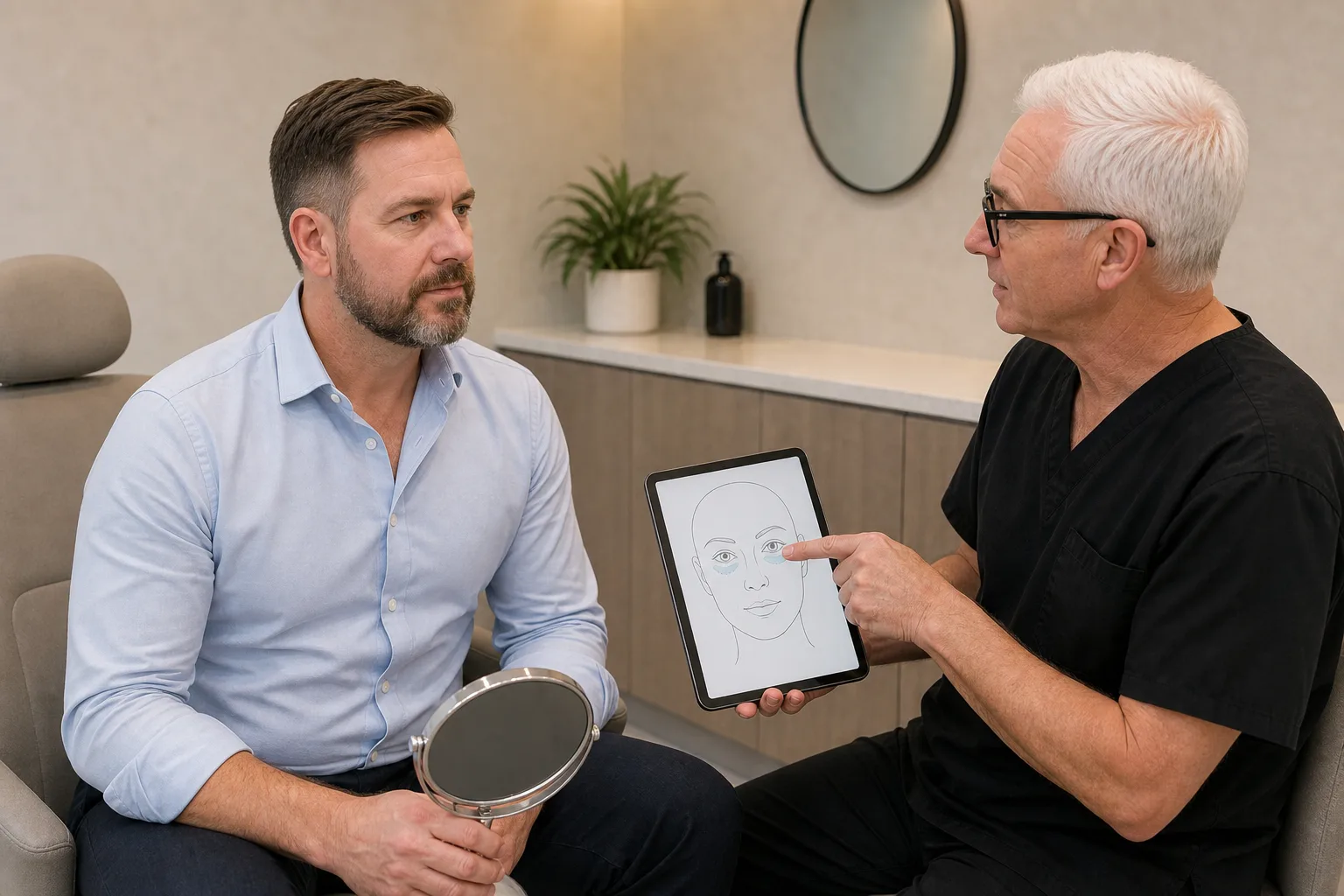
If you are considering under-eye treatment, the consultation is where the most important decisions are made. It is worth coming prepared to discuss: what exactly concerns you about your undereye area, hollowness, darkness, puffiness or a combination; how long the concern has been present and whether it has changed over time; any previous treatment to the area and how you felt about the result; and your general tendencies around fluid retention, sleep and lifestyle.

Being honest about your expectations and open to hearing that volume treatment may not be the most appropriate solution for your particular presentation is the most valuable thing you can bring to this appointment. The tear trough is an area where patient expectations and clinical reality can sometimes diverge significantly, and the consultation is the right place to navigate that gap, before treatment, not after.

Clinical accountability and how volume treatment decisions are made

The volume treatment related guidance in “How Long Does Under-eye treatment Last? What the Anatomy Tells Us” reflects how Corey Anderson, AHPRA registered nurse (NMW0001047575), approaches facial volume treatment decisions at Core Aesthetics: anatomy led, conservative on volume, and willing to defer or refuse treatment when the assessment doesn’t support it. Volume treatment is a structural intervention. The decisions about where, how much, what depth, and what cannula or needle approach are clinical judgements that depend on the individual face in front of the practitioner. Results vary between individuals, and the same volume can read very differently on two faces with different bone structure, fat pad distribution, or skin quality.

Specific to how long does under-eye treatment last: the assessment Core Aesthetics performs before any volume treatment includes facial proportions, skin quality, prior treatment history, and the patient’s stated goals, and considers whether facial volume treatment is the right intervention at all. For some patients, the right answer is no volume treatment this visit. For others, the right answer is a smaller amount than the patient anticipated. For others, the right answer is to address skin quality or to dissolve existing volume treatment before considering anything new. Results vary between individuals, and a conservative starting dose is almost always the better long term decision. The how long does facial volume treatment last page covers an adjacent volume treatment decision in more depth.

Patients reading this page who want to verify Corey Anderson’s AHPRA registration can do so directly on the AHPRA public register at ahpra.gov.au using registration number NMW0001047575. The Core Aesthetics clinic operates from 12A Atherton Road, Oakleigh VIC 3166, Tuesday to Saturday, by consultation appointment. All new patient treatment at Core Aesthetics follows a structured clinical consultation, consistent with the September 2025 AHPRA cosmetic procedures guidelines. Treatment may be scheduled for the same day as consultation or at a subsequent appointment, depending on clinical assessment and individual circumstances. Patients with questions about the content on this page can raise them at consultation; the practitioner is happy to walk through any clinical reasoning that the written content does not fully capture. Results vary between individuals, and the consultation is the appropriate place to discuss what those individual variations mean for a specific person’s treatment plan.

One additional consideration for volume treatment decisions: the patient’s prior treatment history matters more than most patients realise. Volume treatment that was placed years ago by another practitioner may still be present in tissue, may have migrated from its original placement, or may have changed how the area responds to new treatment. The consultation includes a careful history of any prior cosmetic treatment, and may include physical examination findings that inform the decision about whether new volume treatment is appropriate at all. Patients researching the topic in more depth may find the patient safety aesthetic treatments page and the consultation guide Melbourne page useful as further reading; both are written and reviewed under the same clinical accountability framework as this page.

Is this for you?

Consider booking a consultation if

  • Adults aged 18 or over with age related hollowness at the tear trough junction
  • Patients with realistic expectations about the variable duration and outcome in this area
  • Those willing to attend a thorough consultation before any treatment is considered
  • Patients open to being advised against treatment if anatomy does not support it

This may not be for you if

  • Anyone under 18 years of age
  • Those who are pregnant or breastfeeding
  • Patients whose undereye concern is primarily pigmentation, skin laxity or vascular visibility rather than volume loss
  • Those with active infection, inflammation or skin conditions in the periorbital area
  • Anyone seeking same day treatment without prior consultation and assessment

Suitability is confirmed at consultation. This list is general guidance, not a substitute for clinical assessment.

Frequently asked questions

How long does under-eye treatment typically last?

Most patients find under-eye treatment lasts between 9 and 18 months, though the range is wider than in other areas. The periorbital region is more variable than the cheek or jawline due to thin skin, constant eye movement and the small volumes used. Duration cannot be predicted with the same confidence as in more structurally stable areas.

Why is the tear trough less predictable than other volume treatment areas?

Several factors make this area uniquely complex: the skin under the eye is the thinnest on the face, making any product more visible; eye movement is constant and vigorous, creating mechanical stress on the volume treatment; and very small volumes are used, meaning even small changes are noticeable. These factors combine to make duration and longevity harder to predict than in the cheek or jawline.

Can under-eye treatment migrate?

Yes. Soft products placed in the periorbital area can migrate from their original placement site over time, sometimes appearing as persistent puffiness or swelling in the undereye. This is distinct from the volume treatment simply lasting a long time. Migration can be assessed at a review appointment and managed where appropriate.

Is under-eye treatment suitable for everyone with undereye concerns?

No. Dark circles under the eyes can be caused by pigmentation, visible blood vessels, skin laxity or volume loss, and volume treatment only addresses volume loss. A consultation is needed to identify which factors are driving your concern. In some cases, volume treatment is not appropriate, and a practitioner who recommends against it is providing honest clinical guidance, not refusing to help.

What does fading under-eye treatment look like?

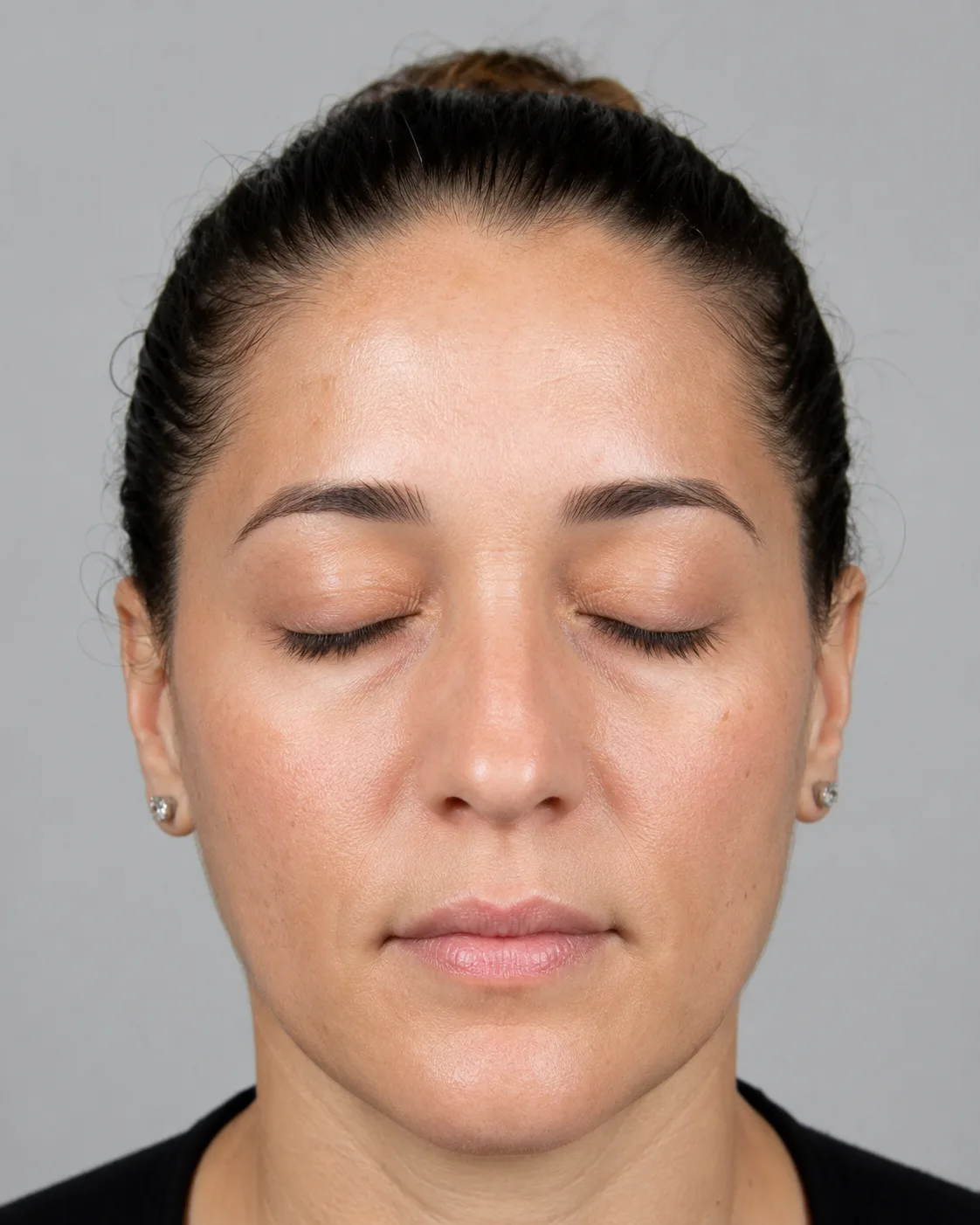
Fading under-eye treatment typically appears as a gradual return of the hollowness that was present before treatment. The transition from the lower eyelid to the cheek may begin to show a more shadowed or concave appearance over months. However, because the area is also subject to fluid retention and skin changes, what looks like fading may sometimes involve other factors, which is why review assessments are useful.

Can I extend how long under-eye treatment lasts?

Consistent sun protection helps maintain skin quality in the periorbital area, which supports better outcomes over time. Minimising factors that cause periorbital fluid retention, such as high salt intake, alcohol and disrupted sleep, may help the area look more consistent between treatments. A review at six to eight weeks allows assessment of whether early maintenance is appropriate.

How do I know if I need more volume treatment or if my volume treatment has migrated?

This requires in person assessment. Puffiness or swelling in the undereye can reflect either remaining (possibly migrated) volume treatment or new fluid retention unrelated to treatment. Adding more volume treatment to an area that has product accumulated elsewhere can worsen the appearance. A consultation review is the right first step before any retreatment is considered.

What happens at a tear trough review appointment?

A tear trough review typically involves assessing the current appearance of the periorbital area, discussing how it has changed since treatment, identifying any migration or swelling, evaluating skin quality and considering whether retreatment, dissolving or simply monitoring is the most appropriate next step. It is a clinical assessment, not automatically a retreatment appointment.

Who reviews the volume treatment related clinical content on this page?

Should I get facial volume treatment if I am not certain I need it?

Uncertainty about whether treatment is appropriate is a valid reason to book a consultation rather than treatment. A clinical assessment can clarify whether volume loss, structural descent or skin quality change is the primary driver of what you are noticing, and whether injectable volume treatment is the right approach. Treatment is never assumed at assessment.

Is it safe to have facial volume treatment while pregnant or breastfeeding?

Prescription injectable products are not recommended during pregnancy or breastfeeding. There is insufficient safety data on these products in pregnant or lactating individuals, and the precautionary standard is to defer treatment until after this period. If you are pregnant, planning pregnancy, or breastfeeding, please discuss this at your consultation.

Written and reviewed by Corey Anderson RN, AHPRA NMW0001047575 · TGA & AHPRA compliant

Begin With A Conversation

Book your consultation.

No commitment, no pressure. A considered first step toward understanding what is and isn’t right for you.

Book Consultation

Elegance, Perfected.